Washing Off at an Iowa Park Gate
A muddy ATV or UTV can leave clay packed around the tires, footwells, and skid plates just as you’re ready to head home. But not every Iowa riding area has a wash station, and washing in the wrong place can create a mess or damage trails. This guide explains how to handle cleanup at the park gate and plan a sensible wash afterward.
Before You Load Up, Check the Park’s Wash Rules
Don’t assume there’s a wash station at the gate
A park entrance, staging lot, and wash bay are different things. Some riding areas may have a place to rinse machines, while others may not offer one—or may have specific rules about where and when washing is allowed. Even if you’ve visited before, facilities and operating conditions can change.
Before leaving home, check the park’s official information or contact the operator and ask directly: Is a machine wash area available? Is it open during my visit? Are there restrictions on soap, runoff, or where I can park while rinsing? This is especially useful when heading to a park you don’t know well, such as Gypsum City near Fort Dodge, Bluff Creek near Eddyville, or Rathbun near Plano. Don’t plan your whole trip around a wash station until you’ve confirmed it.
A quick check of Iowa Trail Conditions Before You Ride can also help you think through whether the day’s conditions are likely to leave your machine lightly dusty or caked with wet Iowa clay. If recent rain has affected the trails, review Iowa Trails Closed After Rain and Iowa Riding After Heavy Rain before you set out. A wet-trail closure is a reason to change plans, not to search for a way around the gate.
Ask what the park expects riders to do
If washing is permitted, find out where it should happen and what the park asks riders to keep out of the drainage area. Muddy runoff can carry sediment, oils, and other residue into places where it doesn’t belong. A designated wash area, when available, is preferable to rinsing in a parking space, ditch, campground, or near a stream.
If there is no official wash area, ask whether a light rinse at the staging lot is allowed or whether the expectation is to leave the machine dirty and clean it elsewhere. Don’t assume that a hose, drain, or paved surface is a public wash facility just because it’s visible. It could serve park staff, maintenance equipment, or another purpose.
A short call can prevent the awkward moment of unloading a pressure washer only to learn that washing is prohibited. For park-specific questions, Calling a Park Before You Load is a useful habit, particularly if you’re traveling with a trailer and need to know whether there is room to turn around or wait.
Choose the Right Cleanup for the Mud You Have
Remove the worst buildup without making a mess
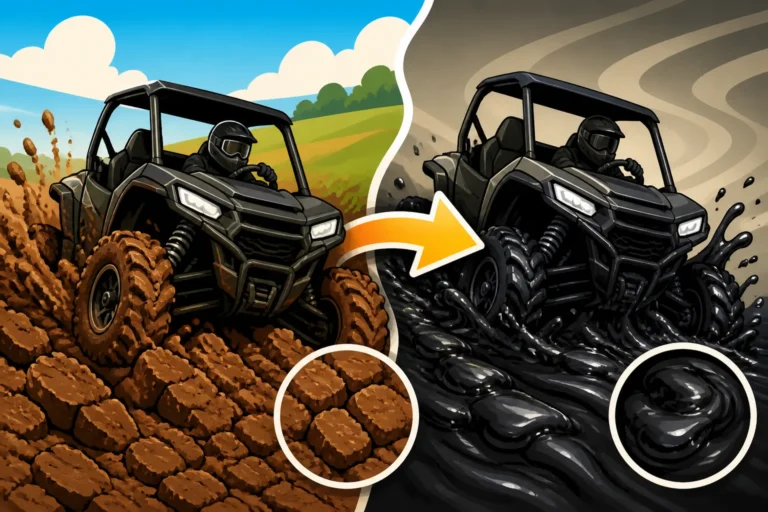
If the park permits cleanup, start by removing clumps of mud rather than trying to blast every surface spotless. Mud can collect beneath fenders, around suspension parts, on the underside of racks, and in the tread. Use a hand brush or scraper where practical, and keep removed material contained instead of pushing it across the lot or into a drain.
Be considerate of other riders waiting to load. A machine that needs a thorough wash may take longer than a quick rinse, so avoid occupying a shared area while you work through every detail. If there’s a line, remove the heaviest buildup, secure the machine, and finish the deeper cleaning at a suitable wash location later.
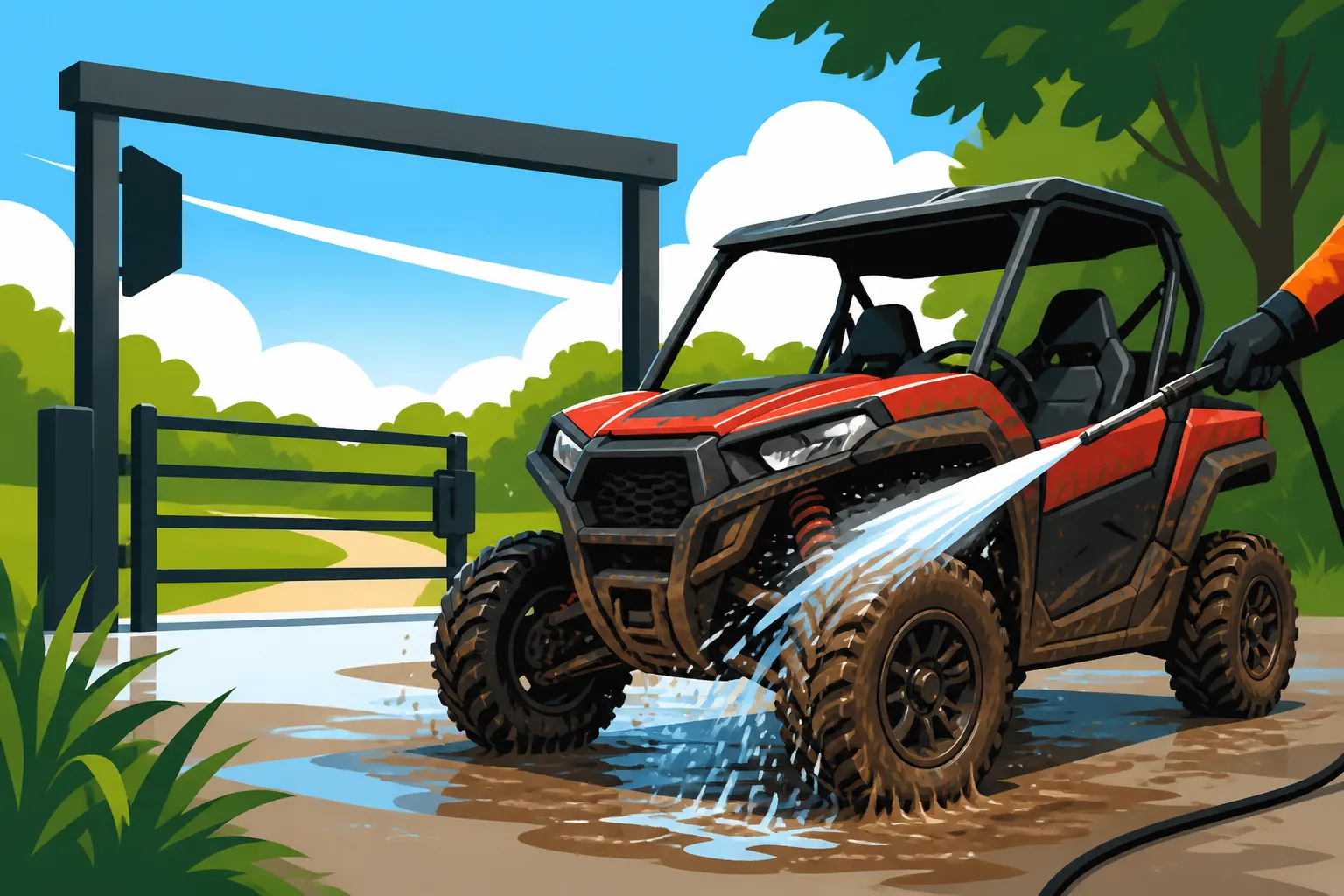
High-pressure water can force grit and moisture past seals or into electrical connections if it’s aimed carelessly. Keep the spray away from vulnerable parts, and follow the machine manufacturer’s cleaning guidance. For some riders, a careful rinse and a final inspection are more practical at the gate than a full wash. The goal is to control the mess and get home safely—not to make the ATV look showroom-clean in the parking lot.
Know when to skip the rinse
If the park has no wash facility and doesn’t allow rinsing in the staging area, don’t improvise with a bucket or hose in the parking lot. Avoid washing a machine beside a road, in a public ditch, at a campsite, or on someone else’s property without permission. The fact that water can carry mud away doesn’t make the runoff harmless or the location appropriate.
Instead, secure the machine on the trailer and plan to clean it at home or at a wash facility that permits off-road vehicles. Use tie-downs that keep the machine stable, and check that mud hasn’t collected in a place where it could loosen or fall onto the road during transport. If the machine is heavily coated, take an extra look at the trailer deck and ramp before driving away.
| Situation | Sensible next step | Avoid |
|---|---|---|
| The park confirms a wash area is open | Follow posted instructions and clean only in the designated area | Assuming any hose or drain is available for riders |
| The park has no wash area | Secure the machine and clean it later at an approved location | Rinsing into a ditch, stream, or parking-lot drain |
| Mud is packed around critical parts | Remove loose buildup carefully and inspect the machine before transport | Aiming high-pressure spray at seals or electrical connections |
| Trails are very wet or closed | Follow the closure and choose another ride plan | Riding around barriers or onto closed sections |
Keep Mud From Becoming a Trail and Transport Problem
Protect trails by riding within the conditions
Mud at the end of a ride can be a reminder to consider the conditions you started with. Iowa soil can become slick and heavy after rain, and repeated traffic on saturated ground can deepen ruts or damage trail surfaces. If a park closes a trail, follow the closure even if your machine seems capable of getting through. Trail Damage From Riding Too Wet explains why staying off soft ground protects the riding area for everyone.
Before the next outing, check the park’s updates and look for signs at the entrance. A route that was fine during a dry weekend may be unsuitable after a storm. If you arrive and the trail is closed, don’t ride around the barrier to find a different entry. Use Iowa Trail Closures to Check First as part of your trip planning, and keep a backup destination in mind when the forecast is unsettled.
This matters at popular places such as Gypsum City, Bluff Creek, Lakeview near Solon, or Nicholson-Ford near Marshalltown. A long drive can make it tempting to ride no matter what, but damaging a wet trail can affect future access. If conditions look marginal, call ahead, check official park notices, and be ready to postpone.
Check the machine before it goes on the trailer
A quick inspection after riding can catch problems that are easy to miss beneath mud. Look at the tires, brakes, lights, radiator area, suspension, and the underside of the machine. Clear mud from places where it could interfere with moving parts or block airflow, following the owner’s manual for cleaning and inspection guidance.
Check the trailer too. Mud packed into the tread or lodged on the deck can make loading slippery. Give the ramp and the area where you’ll walk a careful look before you drive the machine up. Once loaded, confirm the machine is positioned securely and that tie-downs are attached as intended. A few minutes of checking in the staging area is easier than discovering a problem on the shoulder later.
If a machine has taken a hard hit, started running hot, or developed a strange noise during the ride, don’t count on washing it to reveal the issue. Let it cool, inspect it safely, and arrange appropriate service if needed. Cleaning is helpful, but it isn’t a substitute for checking damage or following the manufacturer’s maintenance instructions.
Plan a Practical Wash After the Ride
Find an appropriate place before you leave the park
If the park doesn’t offer washing, identify a suitable place before you arrive. A home driveway may work if you can manage the runoff responsibly and your local rules allow it. A commercial wash may be another option, but ask first whether the facility accepts ATVs or UTVs, trailers, and heavy mud. Some locations may restrict off-road vehicles or ask customers to remove large clumps of dirt before entering.
When planning a route, use a map to locate your destination and avoid arriving at an unfamiliar wash bay with a full trailer and no place to maneuver. Riders who already use onX Offroad can save their riding-area access point as a trip reference, then separately confirm any wash facility with its operator. Don’t rely on a trail map alone to establish that a wash area exists or is open.
You can also use onX Offroad as one part of a broader trip-planning routine: note where you parked, keep the park’s official contact details handy, and plan a route to a confirmed cleaning location if you need one. The important step is verifying the facility directly rather than assuming a map listing covers its vehicle rules, water access, or hours.
Make the next trip easier with a simple routine
A repeatable end-of-ride routine helps when everyone is tired, the kids are ready to go, and the trailer is already loaded. Before leaving, take a last look at the machine, remove loose mud only where allowed, check the ramp and trailer deck, and secure the load. At home or at an approved wash location, clean the machine carefully and inspect it again once the mud is gone.
If you ride with a group, agree on the cleanup plan before the trip. One person can check park rules, another can confirm the wash location, and everyone can bring appropriate brushes, gloves, and tie-downs. That avoids the familiar end-of-day scramble of one rider looking for a hose while others are waiting to leave.
For a future visit, make a note of what worked: whether the park had a permitted rinse area, how muddy the trail was, and where you were able to clean the machine afterward. If you use onX Offroad for trip notes or navigation, keep that information separate from assumptions about park facilities and verify it again before your next ride. Conditions and access arrangements can change, so a fresh check is still worthwhile.
Disclaimer
This article is for general informational purposes only and does not constitute professional advice. Laws, prices and regulations vary by location and change over time. Consult a qualified professional for guidance on your specific situation.