Parking a Trailer at an Iowa Park Lot
A trailer can turn an Iowa ATV outing into a headache before the ride even starts: a tight entrance, a crowded staging area, or nowhere obvious to turn around. A little planning makes parking and unloading safer and less stressful. This guide covers how to choose a suitable spot, handle your trailer at the lot, and check park-specific conditions before you leave home.
Plan for the parking lot before you reach the trail
Check the park’s parking instructions first
There is no single trailer-parking layout that applies to every Iowa OHV park. Lot size, entrance design, staging areas, and the person or organization managing the site can all affect where you may park. A setup that works at Gypsum City OHV Park near Fort Dodge might not work the same way at Bluff Creek OHV Park near Eddyville, so avoid assuming that a previous visit tells you everything about another destination.
Before loading, look for current park rules, a site map, or instructions posted by the park operator. If you cannot tell whether trailers are allowed, whether overnight parking is permitted, or which area is intended for unloading, contact the park before you drive. A quick call can prevent the frustration of arriving with a long trailer and discovering that the available lot is already full or unsuitable.
A useful starting point is Calling a Park Before You Load. For an overview of riding areas and their facilities, Iowa’s Eight Designated OHV Parks can help you identify possible destinations, but always confirm details for the particular park you plan to visit. Maps and directories are helpful planning tools; the operator’s posted directions are what you should follow when you arrive.
Match your trailer and tow vehicle to the site
Think about the full combination, not just the ATV or UTV. A long trailer behind a pickup needs more room to turn and back up than a short utility trailer behind a smaller vehicle. A wider side-by-side may also require more careful positioning when you unload, especially if the lot is busy or vehicles are moving through the staging area.
Before the trip, consider whether your trailer can make the approach into the lot without cutting across a ditch, grass, or a neighboring parking space. If you are uncertain, look at the entrance and lot layout in advance, then choose a route that gives you room to maneuver. onX Offroad can be useful as one planning aid for reviewing the area around a riding destination, but do not treat a map view as confirmation that a particular lane or parking area is open to trailers.
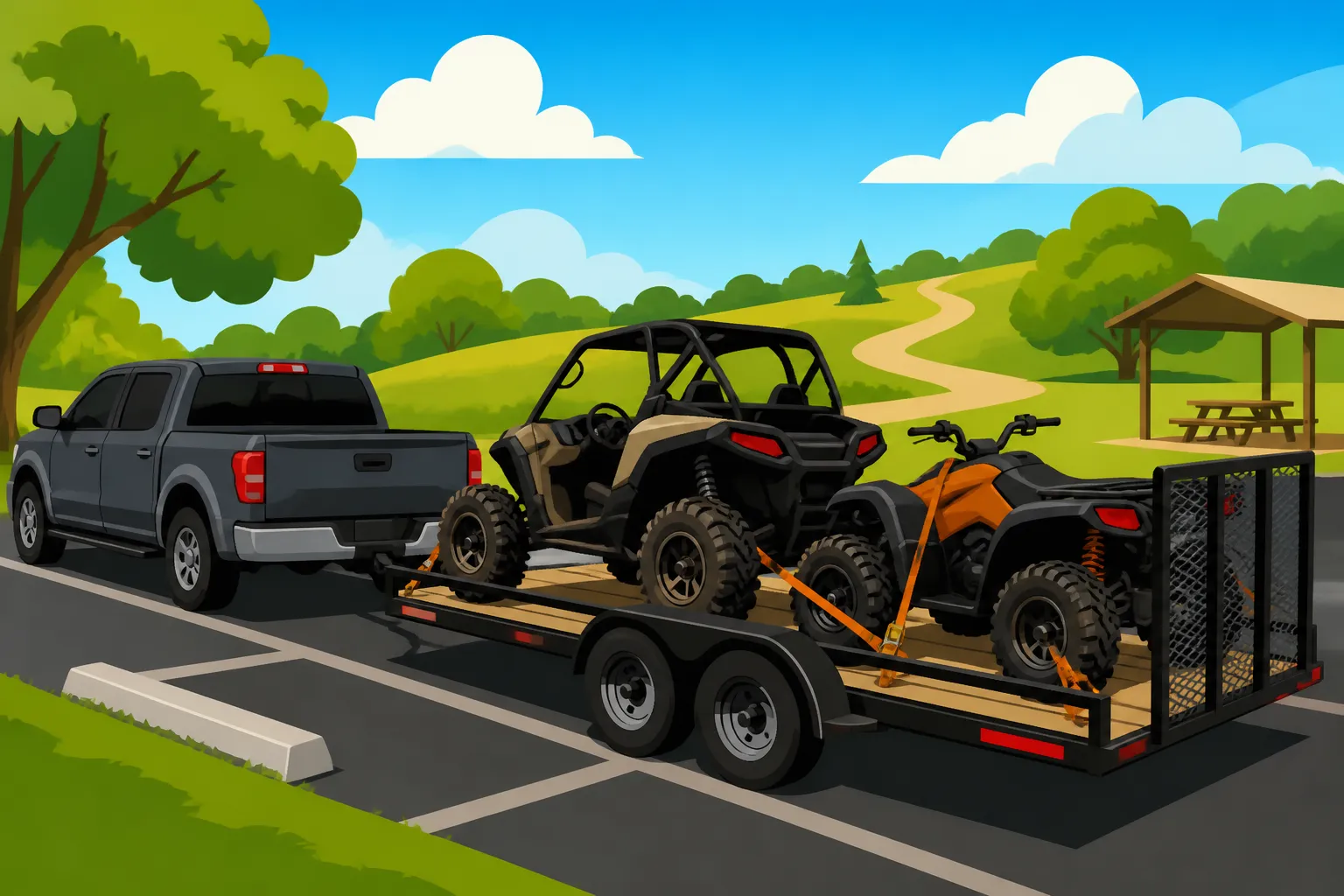
If you are hauling more than one machine, allow for extra space to unload and secure the trailer afterward. A spot that fits the truck and trailer may still be awkward if the ramps need to extend into a travel lane. For broader hauling preparations, see Trailering an ATV Across Iowa. If the lot is especially tight, arriving with a clear plan for where the driver will turn, stop, and unload can save time and reduce unnecessary backing.
Park, unload, and secure your equipment safely
Choose a spot that leaves room for others
When you enter the lot, slow down and look for posted signs, marked spaces, and any directions from park staff or volunteers. Use the designated parking or staging area rather than assuming that an open patch of grass is available for trailers. Grass can be soft after rain, and driving across it may damage the ground or create ruts that make the next visitor’s arrival harder.
Try to park so that your vehicle and trailer do not block the entrance, a gate, a marked aisle, or access for emergency vehicles. Leave room for other trailers to turn and unload. At a busy park, the most convenient space may not be the best one if your truck and trailer would occupy the only clear turning area. Follow any instructions from the person managing the lot, even if the space you initially chose seems easier.
Be especially thoughtful when the lot is filling up. If you need to reposition your trailer, ask a passenger or another adult to watch your blind spots, and move slowly. Avoid backing while people are walking behind the trailer or unloading machines nearby. A calm, deliberate maneuver is better than trying to squeeze into a spot quickly while other visitors wait.
Unload without blocking traffic
Before lowering ramps, check the surface and the space around your trailer. Ramps should sit securely, and the machine should have a clear path from the trailer to the staging area. Keep people—especially children—out of the space behind the ATV or UTV while it is being unloaded. If the lot is active, have one adult watch for approaching vehicles while another handles the machine.
Unload only where the park allows it. Do not assume that an open access lane is an acceptable place to stop, even for a few minutes. Once the machine is off the trailer, move it to the appropriate staging area or approved route rather than leaving it where vehicles need to pass. Keep ramps and tie-down straps contained so they do not create a tripping hazard.
After unloading, secure the ramps and loose gear, then park the tow vehicle and trailer as directed. If you are using an onX Offroad map to find the riding area, keep that navigation check separate from the physical unloading process: stop in a safe place first, and do not focus on a phone while moving through a busy lot. When everyone has reached a safe staging spot, confirm that your group understands where the approved trail access begins.
| Trailer or setup | What to consider in the lot | A practical approach |
|---|---|---|
| Short utility trailer | Space to lower ramps and move the machine clear | Unload only in an approved area, then secure the ramps |
| Long enclosed trailer | Turning radius, backing room, and aisle clearance | Check the approach in advance and avoid tight spaces |
| Trailer carrying two machines | Extra unloading time and room for both machines | Unload one at a time and keep the travel lane clear |
| Trailer with a large tow vehicle | Combined length and difficulty turning around | Follow lot directions and avoid improvised grass routes |
| Trailer arriving after rain | Soft ground, mud, and possible ruts | Stay on firm, designated surfaces and check for closures |
Check conditions, access, and overnight rules
Confirm the lot and trails are usable
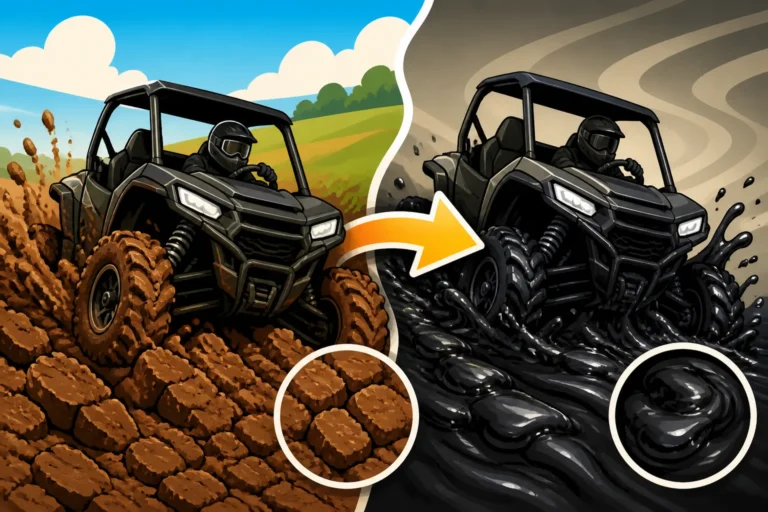
Rain can change an Iowa riding trip quickly. A lot that was firm during your last visit may be muddy, and a park may close trails or restrict access when conditions are too wet. Do not assume the parking area is available simply because a map shows the park or because the entrance is easy to find. Check current notices before leaving and again if weather changes during the drive.
This is particularly important for trailers. Turning around on a narrow approach or pulling out of soft ground can be difficult, and a trailer can cause damage if it sinks or leaves deep ruts. Check Iowa Trail Conditions Before You Ride and Iowa Trail Closures to Check First as part of your trip planning. Iowa’s Weather-Driven Trail Closures is also relevant when recent rain, thawing, or other changing conditions may affect access.
onX Offroad may help you orient yourself while planning a route, but verify park access and closures through the park’s own updates or contact information. A map can help you prepare for the drive; it cannot guarantee that the lot is open, that a gate is unlocked, or that a trail is available on the day you arrive. If anything is unclear, call before towing a long distance.
Ask before leaving a trailer overnight
Parking a trailer during the day and leaving it overnight are different questions. Some visitors may be camping near a riding area, while others may be considering leaving a trailer in a lot and returning later. Do not assume overnight parking is allowed just because the park has a campground or because other trailers are present. The rules may differ between the lot, camping area, and trail access point.
Ask the park operator where a trailer may stay, whether it needs to be attached to the tow vehicle, and whether any posted restrictions apply. If you are camping, confirm how the campground’s rules relate to parking the tow vehicle and trailer. The guide Camping at an Iowa OHV Park can help you think through the camping side of the trip, while park-specific instructions should settle the details of where your rig may be left.
Before walking away, check that the trailer is secured, ramps are locked or stowed, and equipment is not left where it could obstruct a path or attract unwanted attention. Take valuables with you when practical. If a storm is expected, consider whether the trailer is parked on stable ground and whether you can access it without driving across a closed or soft area. A little caution is easier than sorting out a stuck trailer or missing gear after the ride.
Make arrival and departure smoother
Prepare your loading and parking routine at home
A lot of the stress at a crowded staging area can be avoided before you leave the driveway. Check that the trailer lights, tires, hitch, safety chains, and tie-downs are ready for the trip. Arrange gear so ramps and straps are easy to reach, but do not leave loose equipment where it can shift during the drive. If you are traveling with children or a group, agree on who will watch the machines and who will help guide the tow vehicle.
Talk through the arrival routine before you reach the entrance. Decide where the driver will pause to read signs, where passengers should wait, and who will guide backing if needed. If no safe guide is available, it may be better to pull forward and reassess than to attempt a difficult maneuver with people standing close to the trailer. A spotter should remain visible to the driver and stay out of the path of the vehicle.
Using onX Offroad before the trip can help your group discuss the general route and destination, while the park’s own map or instructions should guide you around the actual site. You can also review Iowa Trail Maps From the DNR when preparing for the ride. Download or save the directions you need before heading into areas where phone service may be unreliable, and keep the driver focused on driving rather than navigating a screen.
Leave the lot as carefully as you arrived
Before departing, walk around the trailer and tow vehicle. Check that ramps are secured, tie-downs and tools are accounted for, and the hitch connection is in place. Look for anything left on the ground, including straps, trash, or small pieces of gear that can be easy to miss after a long ride. If the lot has a designated wash or cleanup area, follow its instructions rather than rinsing mud wherever it is convenient; Washing Off at an Iowa Park Gate covers that practical part of preparing to leave.
When pulling out, watch for people walking between parked vehicles and for trailers backing into spaces. Use the exit route indicated by signs or staff, and do not cut across closed areas to avoid a queue. If conditions have become wet during the ride, take extra care around soft shoulders and muddy entrances. A tow vehicle that handled the lot easily in the morning may have a harder time on a slick surface later in the day.
Finally, keep in mind that the best parking plan is the one that respects the site’s rules and leaves room for everyone else. Check the specific park before departure, follow signs and staff directions, unload only where permitted, and avoid blocking access. That routine makes it easier for you to get riding and helps keep the staging area safe for the next family arriving with a trailer.
Disclaimer
This article is for general informational purposes only and does not constitute professional advice. Laws, prices and regulations vary by location and change over time. Consult a qualified professional for guidance on your specific situation.