Frozen Ruts at Bluff Creek in January
January can make Bluff Creek look like a winter playground: frozen ground, crisp air, and ruts that seem firm enough to ride. But one sunny afternoon or a thaw can turn that surface slick and fragile. This guide explains how to judge conditions, prepare your machine and gear, and avoid damaging trails or getting stranded near Eddyville.
What January Ruts at Bluff Creek Are Like
Frozen ground is not always dependable ground
At Bluff Creek near Eddyville, winter riding conditions can change quickly. A rut that feels solid in the morning may soften as temperatures rise, especially where sunlight reaches the trail or snow has insulated the ground. Frozen dirt can also be slick beneath a thin dusting of snow, so traction may be less predictable than the surface first suggests.
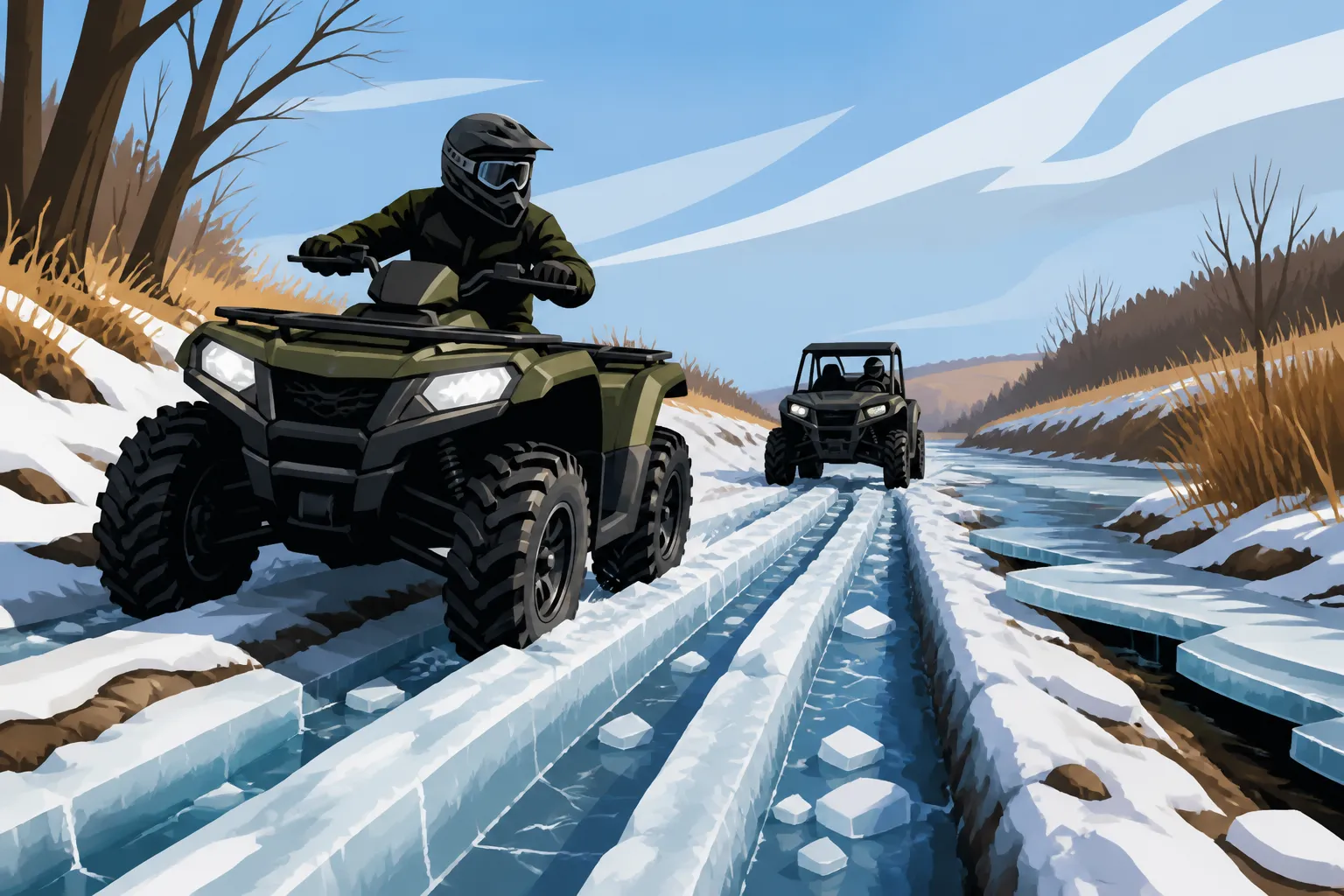
Ruts left by earlier rides can freeze into uneven channels. Your tires may track along them, but the sides can be hard and abrupt, making it difficult to steer out smoothly. On a quad, that can tug the handlebars; in a side-by-side, it can jar the suspension or pull a tire toward the rut edge. Slow down before entering, keep a relaxed grip, and avoid sharp steering or sudden throttle changes.
A frozen surface also doesn’t automatically mean the trail is ready for traffic. Thawing soil can be soft underneath a crust, and repeated wheelspin can break through that layer. If your tires start digging, leave deep marks, or fling wet soil, turn around rather than trying to power through. Iowa Riding After Heavy Rain explains why wet ground deserves extra caution, and the same damage concern applies when a winter thaw makes frozen trails soft again.
Freeze-thaw cycles create changing traction
The word “frozen” can describe several different conditions: hard-packed earth, icy patches, frozen mud, or a firm crust over soft soil. Those surfaces behave differently. A tire that grips packed dirt may slide over glazed ice, while churned mud that froze overnight can create ridges sharp enough to unsettle a machine.
Pay attention to transitions. Shaded trail sections may stay icy after an exposed area has softened, and a sunny open stretch can have more give than the woods nearby. Bridges, low spots, and compacted areas may also feel different from surrounding ground. Ease off the throttle when approaching a change in surface and give yourself room to respond without braking hard.
If you’re unsure whether the trail is frozen all the way through, treat the first section as a test rather than a warm-up lap. Ride slowly, check whether the tires leave marks, and notice if the machine sinks or slides. When conditions vary from one part of the park to another, reduce your pace for the whole ride instead of assuming the next trail will be just as firm.
Check Conditions Before You Load
Confirm that the park and trails are open
Winter weather can change trail conditions faster than a planned drive to the park. A route that looked manageable at home may be icy, muddy, or affected by a closure by the time you reach Eddyville. Check current park information before loading, and check again before you leave if temperatures, precipitation, or wind have changed.
Don’t treat an open gate as a guarantee that every trail is suitable for your machine or riding style. Follow posted signs and any closure instructions, and stay off marked closed sections. If a trail is closed, riding around a barrier can damage the ground and create problems for everyone who helps maintain the area. For a practical pre-trip routine, see Iowa Trail Conditions Before You Ride and Iowa Trail Closures to Check First.
If information is unclear, call the park or check its official updates before making the trip. That short step can save you a long drive with a trailer, particularly when a mild afternoon follows a freezing night. Calling a Park Before You Load is a useful reminder that a quick confirmation can prevent an unnecessary haul.
Read the forecast as a trail-condition clue
The day’s high temperature alone doesn’t tell you whether the trails will hold up. Look at the pattern: recent rain or snow, overnight lows, daytime warmth, cloud cover, and how many hours the ground has had to thaw. A few degrees above freezing in direct sun can soften exposed soil even when shaded areas remain hard.
Wind and precipitation matter, too. Blowing snow can hide ruts and make it harder to see the trail edge. Fresh snowfall can cover slick patches without improving traction. If freezing rain or a rapid warm-up is in the forecast, consider postponing the ride rather than trying to judge conditions from the parking area.
A map can help you plan a route and understand where you intend to go, but it cannot tell you whether a trail is icy or soft today. Some riders use onX Offroad to organize a route before leaving home; check its available map details in advance and don’t rely on a phone signal in every area. You can also carry a paper map or save important information offline where the app allows it. The day’s posted park information and what you see on the ground should guide your decisions.
Prepare Your Machine and Riding Plan
Set up for cold-weather traction and control
Before leaving, inspect tires for damage and check pressure according to the machine manufacturer’s guidance. Cold temperatures can affect tire pressure, and the right setup depends on the specific machine and tire. Avoid making an aggressive adjustment just because the trail looks icy; a change that helps in one condition may reduce control in another.
Check the basics that matter when it’s cold: battery condition, lights, brakes, throttle return, and fuel. A machine that starts in the driveway may still give you trouble after sitting in freezing temperatures. Bring the tools and recovery equipment appropriate to your vehicle, and make sure you know how to use them before you need them. A winch is not a substitute for choosing a safe route or avoiding soft ground.
Cold-weather layers should let you steer and operate controls comfortably. Bulky gloves or sleeves that restrict movement can make it harder to respond quickly. Wear eye protection that won’t fog easily, and bring an extra dry layer in case snow, slush, or a breakdown leaves you exposed longer than expected. Iowa Trail Seasons and Conditions offers broader planning context for matching a ride to the season.
Keep the route conservative and the group together
Choose a route that fits the least experienced rider and the machine with the least traction or ground clearance in your group. Don’t let a confident rider disappear around a blind bend while everyone else struggles through frozen ruts. Agree on a pace, a stopping point, and a simple way to regroup if someone gets separated.
If you use onX Offroad or another mapping tool to plan, share the intended route with your group before setting out. Keep the plan flexible: a trail that is too icy, too soft, or clearly being damaged is a reason to turn back. A short ride on firm ground is better than pushing toward a longer loop and having to recover a stuck machine in worsening conditions.
| Trail condition | What you may notice | Safer response |
|---|---|---|
| Firm, frozen surface | Tires leave little or no mark; machine stays predictable | Ride at a controlled pace and watch for icy transitions |
| Glazed or polished ice | Tires slide during gentle steering or braking | Slow down, increase space, and avoid abrupt inputs |
| Frozen ruts | Hard channels tug at tires or jolt the machine | Enter slowly and steer smoothly; avoid crossing sharply |
| Softening ground | Tires sink, leave deep marks, or throw wet soil | Turn around and stay off the soft section |
| Snow hiding the trail | Ruts, edges, or obstacles are difficult to see | Reduce speed and avoid unfamiliar or obscured routes |
The table is a decision aid, not a guarantee that any trail is safe. If you cannot tell whether the ground is holding up, don’t test it with repeated passes. Conditions can differ within a short distance, and a firm parking area does not prove that the trails beyond it are ready.
Ride Responsibly and Know When to Turn Back
Avoid making ruts worse
When tires spin, they can tear through a thin frozen crust and expose the softer ground below. Once that happens, another rider may follow the same line and deepen the damage. If you notice fresh soil being pushed aside or a rut getting deeper with each pass, stop and choose a different route if one is open and appropriate.
Don’t widen a trail to get around a muddy or icy section. Going around a difficult spot can flatten vegetation and create an unauthorized second track. Stay on marked routes, respect closures, and follow the park’s instructions. [Iowa Rules for Riding Off a Marked Trail] covers why staying within designated riding areas matters.
If you become stuck, avoid repeated high-throttle attempts. Spinning can dig the machine deeper and damage the trail. Stop, assess the surface, and use a safe recovery method only if it won’t put people in danger or make the damage worse. If the trail is soft, the best recovery decision may be to get the machine out carefully and end the ride.
Make a clear call to shorten or cancel the ride
Turn around if your machine slides unpredictably, the ground starts to break through, visibility drops, or the route is more difficult than your group can manage. Also be ready to stop if someone becomes cold, tired, or uncomfortable. Winter rides can be demanding even when the distance is short, and a rider who is stiff or distracted may have a harder time controlling a machine.
Set a turnaround point before you start. That could be a time, a specific trail junction, or a condition such as the first sign of soft soil. A pre-agreed limit helps avoid the familiar pressure to keep going because the group has already driven to the park. A second route option is useful only if it’s open and in suitable condition; Picking a Backup Park an Hour Down the Road offers a planning idea for trips where conditions may disrupt the original plan.
After the ride, check your tires and undercarriage for packed snow, ice, or mud, and clear anything that could interfere with moving parts. Look over the machine for damage before towing it home. If you noticed a trail concern or closure issue, use the park’s appropriate contact channel rather than returning to investigate on your own.
A good January outing at Bluff Creek is not measured by how many ruts you cross or how long you stay. It’s a ride where the surface can support the machine, everyone understands the plan, and you’re willing to turn back before a questionable stretch becomes a recovery job. Keep checking conditions, stay on open trails, and let the ground—not the calendar—decide whether it’s a riding day.
Disclaimer
This article is for general informational purposes only and does not constitute professional advice. Laws, prices and regulations vary by location and change over time. Consult a qualified professional for guidance on your specific situation.