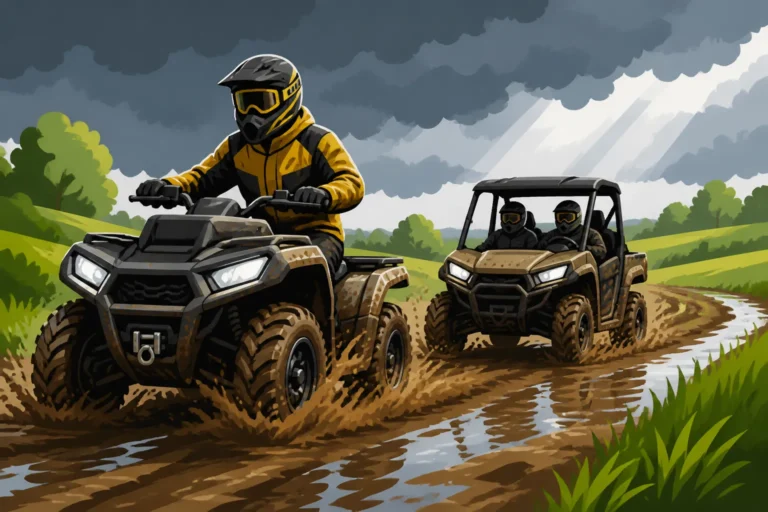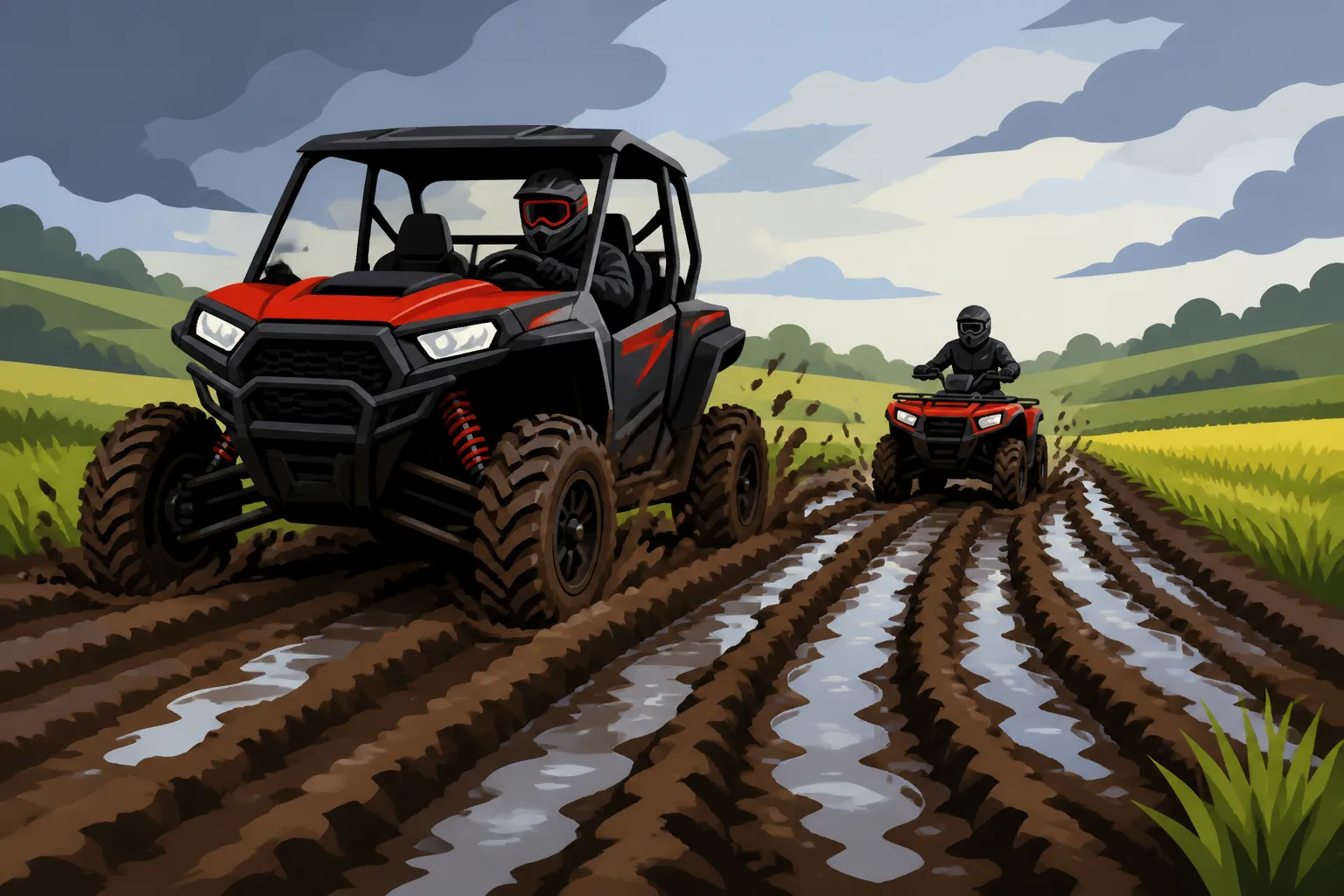
Ruts Left by a Wet Weekend in Mahaska County
A wet weekend can turn a familiar Iowa trail into a set of deep, slippery ruts—and one ride can make the damage worse for everyone who comes after you. In Mahaska County, the smart move is to pause, check whether the riding area is open, and decide whether the ground can handle tires without tearing it up. Here’s how to assess conditions and choose a responsible plan.
Why wet Iowa trails rut so easily
Rain changes the ground beneath your tires
Iowa trails can look firm from the parking area and still be soft underneath. Rain loosens the soil, and repeated tire passes press into that softened surface. In clay-heavy areas, the result can be especially slick: tires lose traction, spin, and dig into the trail instead of rolling cleanly over it.
A rut often starts small. One rider climbs a short muddy slope, spins a tire, and leaves a groove. The next rider follows the same line, makes the groove deeper, and pushes loose soil to the sides. Before long, the track may be difficult to ride without dropping into the rut or steering into the vegetation beside it.
That damage matters beyond appearance. Deep grooves can channel runoff, allowing later rain to wash soil farther downhill. They can also make a trail harder to use safely, especially for newer riders, children, and people on machines with different widths or ground clearance.
A trail can be wet even after the rain stops
Blue sky does not mean the ground is ready. Water can linger in shaded sections, low spots, wooded areas, and places where the soil drains slowly. A sunny parking lot may be dry while a shaded trail farther in remains greasy.
Think about a ride after a Saturday storm. By Sunday afternoon, the roads may look fine, but the trail’s low sections may still be soft. If your tires pick up thick mud as soon as you leave the staging area, or your machine slides when you turn gently, those are useful warning signs—not an invitation to test the next hill.
Conditions also vary across a route. One exposed stretch may be firm, while a nearby dip or creek approach is saturated. For a broader look at how rain affects riding areas, see Iowa Riding After Heavy Rain and Iowa Trails Closed After Rain.
Ruts are a signal to stop, not a challenge
It’s tempting to treat a muddy rut as a riding obstacle. But if your tires are digging deeper with each attempt, continuing can turn a minor soft patch into a trench. Trying to power through can also cause a machine to slide sideways, high-center, or become stuck.
A good rule of thumb is to watch what your machine is doing, not just what the trail looks like. If the tires spin without moving you forward, the trail is deforming under your weight. If the rut grows visibly deeper as you pass, turn around when it is safe and permitted to do so. Don’t create a new line around the mud: that can widen the trail and damage plants and soil outside the established route.
| What you notice | What it may mean | A responsible response |
|---|---|---|
| Tires gather thick, sticky mud quickly | The surface may be saturated | Turn back if the trail is soft or traction is poor |
| A rut deepens after one pass | The soil is deforming under tires | Stop using that section and avoid making another line |
| Water sits in a low spot | Drainage may be slow | Don’t assume the ground beneath it is firm |
| A trail or gate is marked closed | The manager has restricted access | Do not enter; check for an official update |
| The staging area is dry but wooded trails are slick | Conditions vary across the route | Don’t use the lot as your only measure of trail conditions |
How to assess conditions before you unload
Check the area’s status through reliable channels
Before you haul a machine toward a riding area, check the latest information from the land manager or park operator. A trail can close temporarily because of wet conditions, maintenance, or another site-specific concern. Pay attention to posted signs and gate notices when you arrive, too. A map showing a route does not override a closure or grant permission to ride there.
For Iowa OHV areas, the official alert information is a sensible starting point. You can also contact the park or operator directly if the status is unclear. Reading the Iowa DNR Alert Feed explains why checking alerts matters, while Calling a Park Before You Load covers a practical way to avoid a wasted trip.
A map app can help with planning and orientation, but it cannot tell you that a trail is open unless the relevant authority has provided that information. If you use onX Offroad to review your planned route, treat it as one planning tool—not as proof of access or a current trail-condition report. Confirm the route with the land manager, posted signs, or the park’s own updates.
Read the ground at the trailhead
Once you arrive, take a minute before unloading. Look for standing water, fresh tire tracks, mud being carried out of the trail, and visible ruts near the entrance. Ask staff or other riders what they have seen, but make your own assessment as well. Conditions may have changed since someone last rode through.
Pay attention to how the machine behaves in a safe, permitted area. If the tires slide easily on a gentle turn, or the tread fills with mud before you reach the trail, that is a reason to reconsider. Don’t test traction by charging at a hill or accelerating through a wet patch; doing so may create the damage you are trying to avoid.
A quick assessment is not a substitute for a posted closure. If signs say the trail is closed, stay out even if the soil looks dry. And if the ground is visibly soft but the area remains open, use judgment. Open does not necessarily mean every section is in good shape for every machine or riding style.
Use maps for planning, then verify on the ground
Route planning can help you avoid arriving at a place that is inaccessible or unsuitable for your group. onX Offroad may be useful for organizing a route and understanding where you intend to ride, but confirm that the route is authorized and open before setting out. Keep the land manager’s information and trail signage as your final guide.
It also helps to make a backup plan. If your first choice is closed or too wet, don’t pressure yourself to ride somewhere else without checking its access rules and conditions. A second destination should be confirmed just as carefully as the first. Checking Two Iowa Parks Before You Drive and Picking a Backup Park an Hour Down the Road offer ideas for planning around changing conditions.
If you ride with friends, agree in advance that anyone can call off a route when conditions look poor. That avoids the awkward moment when one person sees a deep rut but feels pushed to keep going because the group has already unloaded. A good ride plan includes permission to turn around.
What to do when you encounter ruts
Don’t widen the trail to get around mud
When a rut looks rough, riders sometimes steer around it onto the shoulder or into the grass. That may feel like the gentler option, but repeated detours can widen the disturbed area and start new tracks. In wooded or natural areas, the edge may also contain vegetation, drainage features, or ground that is even softer than the marked trail.
If there is a clearly established, authorized route around the obstacle, follow the posted guidance. Otherwise, don’t create your own bypass. If you can safely return the way you came, do that. If turning around would put you or another rider at risk, stop in a safe location and make a careful plan rather than forcing the machine through the worst section.
This is especially important when riding with a group. Keep enough space between machines to avoid following directly into a fresh rut, and don’t let pressure to keep moving turn a manageable situation into a recovery problem. Trail Damage From Riding Too Wet looks more closely at why repeated passes can have lasting effects.
Avoid spinning tires and aggressive throttle
When a machine loses traction, adding more throttle may deepen the rut and throw soil onto the trail. If you feel the tires spinning, ease off instead of trying to power through. If the machine is stuck, avoid repeated attempts that dig it in farther. A calm recovery plan is safer for riders and easier on the trail.
If your group is unsure how to get a machine out without causing more damage, stop and consider whether assistance is available. Don’t use trees, trail markers, or other infrastructure as improvised anchors. On a managed trail, follow the operator’s rules for recovery and contact the park if the situation calls for help.
Also consider the other people on the route. A machine that suddenly slides or sinks can surprise a rider behind it. Let the group know what is happening, keep people clear of moving machines and recovery equipment, and avoid blocking the trail if you can move to a safe, permitted spot.
Leave the site as you found it, or better
Don’t try to repair ruts yourself unless the land manager has specifically asked riders to help and explained what work is appropriate. Shoveling soil, cutting branches, moving drainage material, or driving across the shoulder can make the problem worse or conflict with the site’s maintenance plan.
Instead, report a significant rut or damaged section to the park operator or land manager. Share a clear location and a brief description, such as the trail name or nearby marker if one is posted. If you use onX Offroad to orient yourself, you can use your route notes to help describe where you encountered the issue, while still relying on official trail names and markers when available.
A thoughtful report is more useful than a social post that simply says the trail is ruined. Mention whether water is standing, whether the trail is passable, and whether you saw a closure sign. Then respect any decision to close the area while it recovers. Iowa Trail Conditions Before You Ride and Iowa Trail Closures to Check First are useful related reads for building a habit of checking conditions and closures.
Planning a safer ride after a wet weekend
Choose a route that suits the conditions
If the riding area is open but the ground remains damp, keep your plans flexible. A shorter, familiar route may be a better choice than attempting every loop. Avoid repeatedly riding the same soft section, and turn back when the surface begins to deform beneath your tires.
Machine size and tire setup can affect how a trail feels, but neither makes a saturated trail immune to damage. A wider or heavier machine may have different handling and ground pressure than a smaller ATV. If you ride with mixed machines, choose a route that everyone can navigate without forcing a smaller rider or less experienced driver into deep mud.
Check the route’s posted difficulty and restrictions before choosing it. For ideas on matching trails to different experience levels, see Iowa Trails for Beginners. For help thinking through narrow routes and larger machines, Iowa Trails for a Wide Machine is another relevant guide.
Prepare for changing conditions, not just the forecast
Pack for a ride that may take longer than expected. Bring suitable riding gear, water, and a way to communicate if your group becomes separated. A phone may help with navigation, but service can vary by location, so don’t rely on a map app as your only plan. Let someone know where you intend to ride and when you expect to be back.
If the forecast suggests more rain, consider postponing instead of gambling on a narrow dry window. The cost of a wasted trip can feel frustrating, especially after loading machines and driving across the county. But a ride cancelled before departure is usually easier to deal with than a damaged machine, a stuck group, or a trail that needs repairs after preventable rutting.
Use onX Offroad or another mapping tool to prepare a route and keep your group oriented, then verify access and conditions through the appropriate official channels. That combination—planning ahead, checking the ground, and being willing to turn around—helps protect both the ride and the trail.
Make turning around part of the plan
Riders sometimes feel that turning back means the outing has failed. It doesn’t. If the ground is too soft, a closure is posted, or the route looks unsafe for your group, changing plans is a good decision. You can still make the trip worthwhile by exploring an open area, taking a break, or saving the route for firmer conditions.
For a wet weekend in Mahaska County, keep the key steps simple: check the riding area’s official status before leaving, look closely at conditions when you arrive, avoid making fresh ruts or detours, and report major damage to the operator. Respecting a muddy trail today helps keep it rideable for the next dry day.
Disclaimer
This article is for general informational purposes only and does not constitute professional advice. Laws, prices and regulations vary by location and change over time. Consult a qualified professional for guidance on your specific situation.