Calling a Park Before You Load
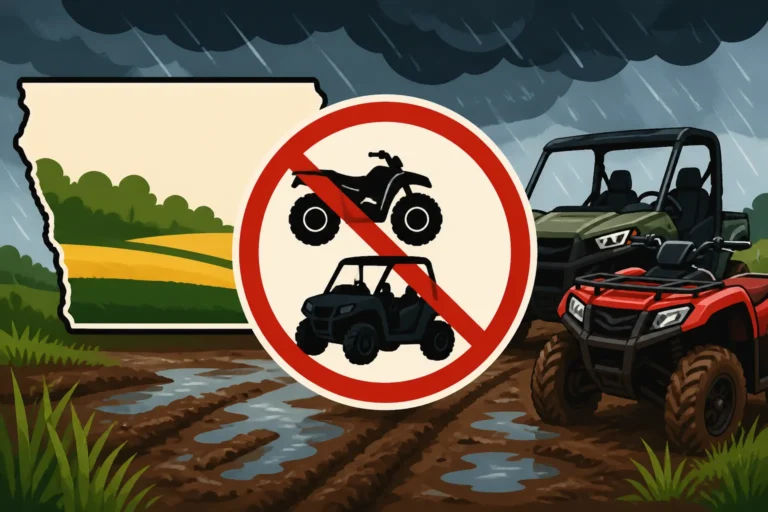
A clear forecast can still end in a wasted drive if an Iowa OHV park closes a trail after rain, changes access, or has no room for your trailer. A quick call before loading helps you confirm the details that matter for your specific ride: whether the park is open, what conditions are like, and whether your machine and group can use the trails.
Why call an Iowa OHV park before you leave
Conditions can change after you make your plan
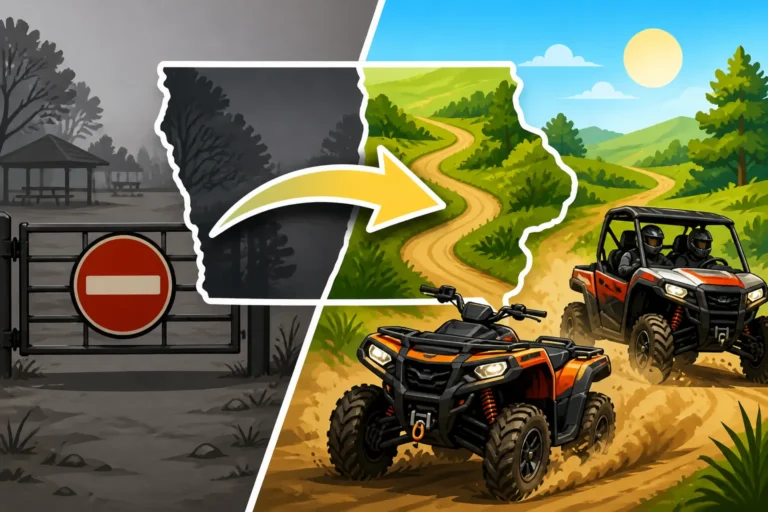
Iowa trail conditions are weather-dependent. A stretch of rain can leave clay trails slick, soft, or too vulnerable to ride without causing lasting damage. Some parks close trails or the entire riding area when the ground is wet. A park that was open when you checked earlier in the week may have changed its status by the morning you plan to go.
This is especially frustrating when you have already loaded the machine, packed lunch, and gathered the family. A quick call can help you avoid hauling a trailer to a closed gate. Ask about the specific riding area you intend to visit, and make sure you understand whether the answer applies to the whole park or only certain trails.
For a wider pre-trip routine, see [Iowa Trail Conditions Before You Ride] and [Iowa Trail Closures to Check First]. These checks are useful even if the weather looks fine where you live; conditions at a park several counties away may be quite different. The [Iowa's Weather-Driven Trail Closures] guide can also help explain why a park may close after rain.
Park details are not always the same from one place to another
Iowa riding areas differ in their terrain, facilities, management, and operating practices. Gypsum City OHV Park near Fort Dodge, Bluff Creek OHV Park near Eddyville, Lakeview OHV Park near Solon, and other parks each have details worth checking directly before you travel. Do not assume that a rule or amenity at one location applies at another.
Ask whether the park is open to the type of machine you plan to bring. A wide side-by-side, youth machine, dirt bike, or full-size rig may need different trail options or may be subject to site-specific restrictions. If your group includes new riders or children, ask whether the trails you plan to use are appropriate for their experience and whether any youth areas are open.
It also helps to confirm basic logistics. Ask about access hours, the location of the entrance, parking and trailer staging, restrooms, camping, and any posted rules that could affect your visit. The overview of [Iowa's Eight Designated OHV Parks] is a good starting point for comparing destinations, but a direct check is more useful for what is happening on the day you intend to ride.
A call can protect your time and your equipment
A long drive to a closed park is more than an inconvenience. You may be hauling a machine that is not easy to unload, coordinating several vehicles, or trying to fit a ride into a tight weekend schedule. If a park is muddy, riding anyway can also damage trails and create ruts that make conditions worse for everyone.
Calling ahead gives you a chance to adjust before you leave. If your first-choice park is closed, you can check another riding area, postpone the trip, or choose a different activity. When you are considering a backup park, confirm its status separately rather than assuming it has the same weather and closure conditions.
The call is also an opportunity to ask about anything that is unclear on a map or notice. For route planning, tools such as onX Offroad can help you understand the area and organize a ride, but do not treat a mapping app as confirmation that a park is open. Use it alongside the park’s own updates and direct answers.
What to ask when you call
Start with the questions that determine whether the trip is possible
Keep the first part of the call simple. You want to establish whether the park is open to riders that day and whether the trails you hope to use are available. Ask about the expected situation for your arrival time, particularly if you will be driving a considerable distance.
A practical set of questions includes:
- Is the park open to riding on the day we plan to visit?
- Are all trails open, or are some areas closed?
- Have recent weather conditions affected access or trail surfaces?
- Are there restrictions for the machine type or size we plan to bring?
- Are there any temporary notices or rule changes visitors should know about?
If the person answering says conditions are changing, ask when the information was last checked and whether you should call again before leaving. A brief follow-up can be worthwhile if rain is forecast or if the park is making decisions based on current ground conditions.
Confirm the practical details for your group
Once you know riding is possible, ask questions that will affect the day itself. For example, if you are bringing a trailer, ask where it can be parked and whether the staging area has any limitations. If you plan to camp, confirm whether the facility you need is available rather than relying on an old listing or a remembered visit.
A useful comparison checklist looks like this:
| What to confirm | Why it matters | Helpful follow-up |
|---|---|---|
| Open status | Prevents a trip to a closed entrance | Ask whether the whole park is open |
| Trail availability | Some areas may be closed while others remain usable | Ask which loops or sections are affected |
| Recent conditions | Rain, mud, or soft ground may change the ride | Ask whether the park recommends delaying |
| Machine restrictions | Size or type can affect where you may ride | Describe the machine, including whether it is a side-by-side |
| Access and hours | Helps your group arrive and leave within operating rules | Confirm the entrance and any cutoff times |
| Parking and trailers | A crowded or limited staging area can complicate arrival | Ask where to park and whether trailers fit |
| Camping and facilities | Availability and amenities can vary | Confirm the specific facility you intend to use |
| Required documents or equipment | Avoids discovering a missing requirement at the gate | Ask what riders should carry or display |
For additional trip planning, [Parking a Trailer at an Iowa Park Lot] covers the kinds of staging questions that are easy to overlook. [Iowa Trail Difficulty Ratings] can also help you think through whether the terrain fits your group, but ask the park about current conditions and any temporary changes.
Make your questions specific
“Is the park good?” is hard to answer because it could mean anything from trail difficulty to parking. Give the staff enough context to respond usefully: the day you plan to arrive, the machine you are bringing, the number of riders, and whether you have beginners or children in the group.
For example, you might say: “We’re planning to arrive Saturday morning with two ATVs and a side-by-side. One rider is new. Are the trails open, and is there a route or area that would be a better fit?” This gives the person answering a clearer picture than simply asking whether riding is allowed.
If you are using a navigation app such as onX Offroad, you can refer to the route or area you are considering, but ask the park to confirm that it is open and appropriate. Maps can help you orient yourself; park staff or official notices are the better place to confirm temporary closures, access changes, and local requirements.
How to prepare before and after the call
Find the right contact and check official updates
Use the park’s official information channel to find a current contact method. Some Iowa OHV areas are managed by a club, county, or other local operator, so the best place to check may depend on the park. Avoid relying solely on an old phone number saved from a previous visit or information copied into an unrelated directory.
Before calling, check for official closure notices or updates. The [Reading the Iowa DNR Alert Feed] guide can help you understand how to look for DNR-related alerts, while a park’s own channel may provide local details. If the written update and the information you receive by phone seem inconsistent, ask which notice is the most recent and whether it applies to your planned arrival.
Keep your questions and the answer together in your trip notes. A simple note such as “called this morning; east loop closed; remaining trails open; trailer parking available” is more useful than trying to remember details after you have packed. If conditions are likely to change, write down when you should check again.
Plan a backup without assuming another park is open
A backup plan can save a weekend, but only if you check it too. Weather may affect multiple parks across the region, and a destination that looks close on a map may still involve a substantial detour with a trailer. Before setting out for a second park, verify its open status, rules, and parking arrangements directly.
Tools like onX Offroad can be helpful when comparing locations, mapping the drive, and keeping a route organized. They should not replace a park-status check. For the final decision, rely on the destination’s official notice or direct confirmation, especially after rain or when a closure update may have been posted recently.
It can also help to have a non-riding backup. If both your preferred park and alternate are closed, you can avoid making a rushed decision to ride somewhere unauthorized or on trails that are not open. Respecting a closure helps protect the trail surface and the relationships that keep riding areas available.
Keep the call short, polite, and useful
Park staff and volunteers may be answering questions while also handling maintenance, visitors, and daily operations. A focused call is more likely to get you the information you need. Start with your date and machine type, ask the key questions, and then add any details that could affect access or safety.
If the line is busy or there is no answer, check the park’s official updates and try again if the trip depends on a specific detail. Do not assume that no response means the park is open. When the answer is uncertain, treating the trip as unconfirmed is safer than making a long drive based on a guess.
After the call, share any relevant details with the rest of your group. Someone who arrives later should know about closures, parking instructions, or required items too. If the information changes before departure, update everyone rather than relying on the original plan.
A simple pre-loading routine
Work through the decision in order
You do not need an elaborate checklist to avoid most preventable surprises. Follow the same sequence each time, especially when the ride involves a long drive or several machines.
- Choose a primary park and a possible backup.
- Check the park’s official updates for closures or restrictions.
- Call the park to confirm open status and current trail access.
- Describe your machine and group, including any young or inexperienced riders.
- Confirm hours, entrance details, parking, and any facilities you plan to use.
- Ask whether you should check again before leaving.
- Share the confirmed details with everyone traveling.
- If conditions change, reassess before loading rather than at the gate.
This order helps separate the essential question—can you ride there?—from the comfort and convenience questions. If the park is closed, there is no need to spend time planning where to park. If it is open, you can then confirm the details that make the visit smoother.
Know when to delay the trip
Sometimes the useful answer is not a different park but a different day. If staff say the ground is soft, trails are closed, or conditions are likely to worsen, postponing may be the most sensible choice. Riding on a closed trail can damage it and may result in enforcement consequences. Riding on a wet trail that is still technically open can also leave deep ruts, so follow the park’s instructions rather than trying to judge the surface from a distance.
That can be disappointing, especially when the trailer is ready and the whole group has been looking forward to the ride. But a rescheduled trip is usually less frustrating than a wasted drive, a damaged trail, or a difficult ride that does not suit the people who came along. Consider the broader planning guidance in [What Riding an Iowa Park Actually Costs You] when weighing the time and travel involved in a last-minute change.
For a useful route overview, onX Offroad can support your planning by helping you organize possible destinations and travel. Keep the final go-or-no-go decision grounded in the park’s own status and instructions. When you call before loading, you are not just checking whether the gate is open; you are making sure the day you planned still makes sense for your riders, your machine, and the trail.
Disclaimer
This article is for general informational purposes only and does not constitute professional advice. Laws, prices and regulations vary by location and change over time. Consult a qualified professional for guidance on your specific situation.