Two Natural-Terrain Tracks on the Cedar River
Paul Huting Recreation Area near Waterloo offers a very different ride from a groomed, predictable trail system: two natural-terrain tracks beside the Cedar River, where ground conditions and the day’s weather can change the experience. This guide explains how to plan a visit, choose suitable equipment, ride responsibly, and check what’s open before loading up.
Understanding the Two Natural-Terrain Tracks
What makes these tracks different
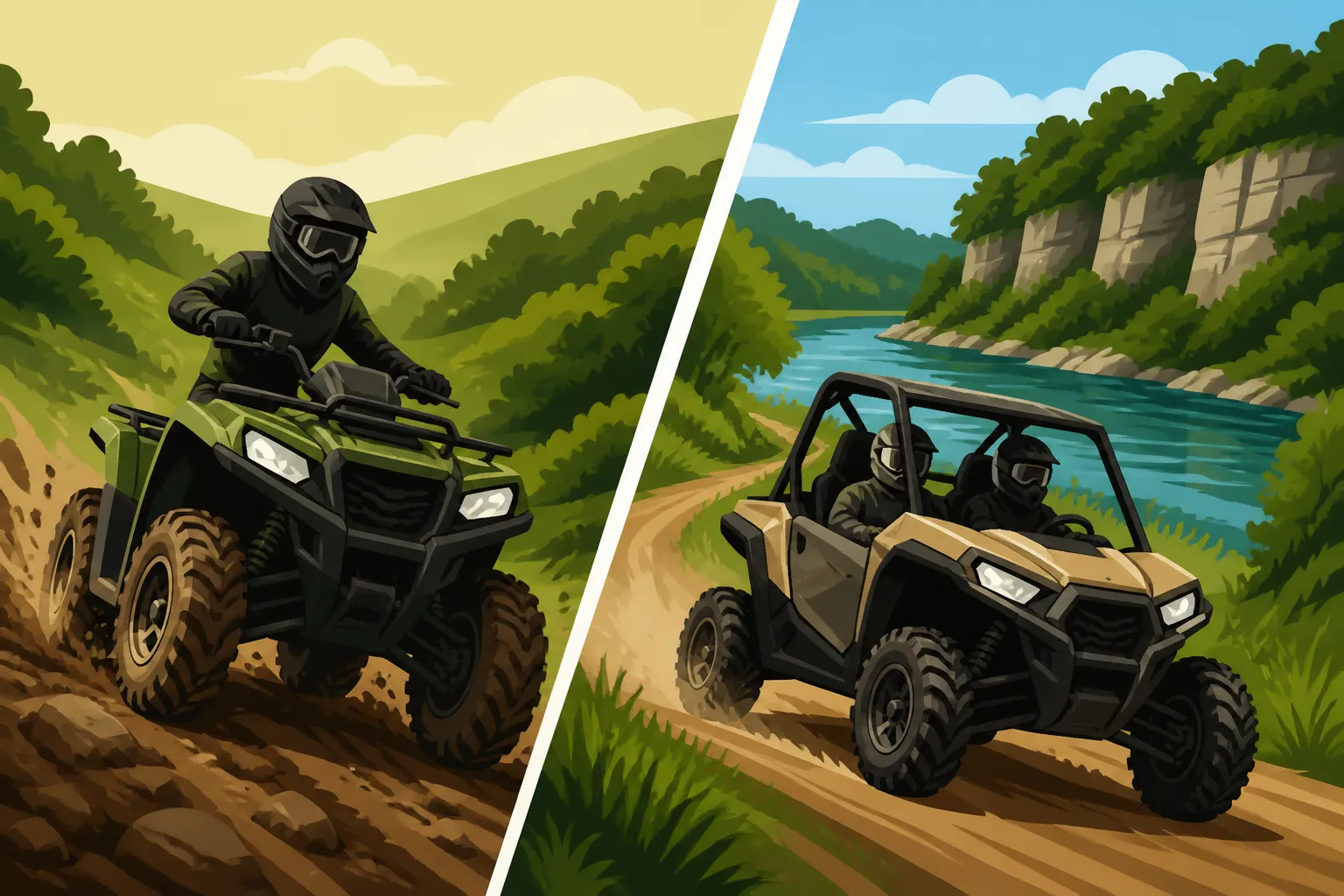
Paul Huting Recreation Area sits beside the Cedar River in Waterloo and is known for two natural-terrain tracks. Rather than imagining two identical, carefully graded loops, think of the riding as shaped by the landscape. Natural terrain can mean uneven ground, changing surfaces, and features that feel different depending on recent weather and how the area has been maintained.
That character can be part of the appeal. A rider looking for varied ground may enjoy a setting that feels less uniform than a purpose-built, highly groomed route. But it also means that “I rode it last month” is not a guarantee that today’s conditions will feel the same. Rain, standing water, erosion, and maintenance can all affect how comfortable a route is.
The area has about 180 acres, but that number doesn’t tell you how much riding is open on a particular day or how the available routes are laid out. Avoid assuming that acreage equals a certain number of miles, or that every visible track is open to every machine. Check current park guidance before setting out, especially if you’re visiting for the first time.
If you’re comparing riding destinations, [Paul Huting's 180 Acres] offers more context about the site, while [Two Tracks Beside the Cedar River] focuses on its natural-terrain riding. For a broader look at how the area fits into the state’s riding options, see [Iowa's Eight Designated OHV Parks].
Set expectations before you arrive
A natural-terrain track may ask more of a rider than a broad gravel route. You may need to adjust your speed, choose a line carefully, and leave extra room for another rider to move through a section. The right approach is not to chase the quickest lap; it’s to ride within your ability and make decisions based on what’s actually under your tires.
That matters especially for newer riders. A track that looks manageable from a distance can feel more demanding once you encounter uneven ground, a narrow section, or a change in traction. If you’re unsure whether a particular feature is appropriate for you or your machine, slow down, assess it, and turn back if needed. There’s no prize for pushing through a section that feels beyond your comfort zone.
The two tracks are also not a reason to assume every type of off-highway vehicle is allowed or suited to the site. Machine eligibility and operating rules can vary by recreation area. Before you travel, confirm that the park accepts your vehicle type and check any current restrictions. If you’re choosing among destinations, [Riding Paul Huting at Waterloo] provides more general visit-planning context.
Planning a Visit to Paul Huting
Confirm access and current conditions
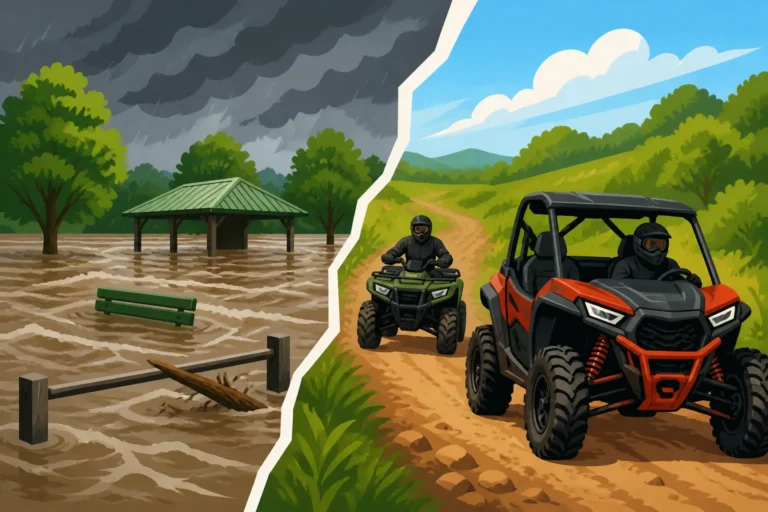
A long drive can turn into a frustrating day if you arrive to find that riding is restricted or conditions have changed. Before loading, check for park notices and any available information from the area’s managing organization. Wet weather is especially worth taking seriously: natural surfaces can become slippery or vulnerable to damage, and a closure may be in place to protect the riding area.
Don’t rely only on an old social media post, a saved map, or a report from a friend who visited on a different day. Use recent park information where available and pay attention to any signs at the entrance. If the status is unclear, contact the park or the responsible local organization before leaving home. [Iowa's Weather-Driven Trail Closures] explains why conditions can affect access across Iowa riding areas.
It’s also useful to choose a backup plan. If Paul Huting is closed or unsuitable for your group that day, decide in advance whether you’ll postpone the ride or visit another legal riding area. Avoid treating nearby open land, river edges, or an unmarked path as an alternative route unless public access and vehicle use are clearly allowed there. [Where Iowa Riders Go When Parks Close] can help you think through alternatives.
Prepare for a riverside ride
A location beside a river can make for a memorable setting, but the river is not permission to ride beyond the designated area. Stay on routes that are clearly open to riding, respect barriers and signs, and don’t use the shoreline or adjacent ground as a shortcut. Even a short detour can create environmental damage or conflict with land-management rules.
Pack for a day outdoors rather than assuming that everything you need will be close at hand. Bring drinking water, weather-appropriate clothing, a basic first-aid kit, and the tools or supplies needed for your machine. A phone is useful, but don’t build your plan around having dependable cell service everywhere. Let someone know where you’re riding and when you expect to be back.
A map app can help with the drive and general orientation. Some riders use onX Offroad to review mapped recreation areas and plan a route before leaving, but an app should not replace current park notices, posted signs, or confirmation that a track is open to your vehicle. If you use onX Offroad, download or prepare any maps you may need before entering an area where reception could be unreliable.
Choosing a Machine and Riding Gear
Match your equipment to the site
The best machine for a natural-terrain track is not necessarily the biggest or most powerful one. Consider your experience, the type of riding you want to do, and whether your vehicle is permitted at Paul Huting. A machine that is comfortable and easy for you to control is often a better choice than one that feels intimidating or difficult to maneuver.
Before the trip, check the basics: tire condition and pressure, brakes, throttle response, steering, lights, fluid levels, and any protective equipment fitted to the vehicle. Look for loose fasteners or damage that could become a problem on uneven ground. A short inspection at home is much less stressful than trying to diagnose a mechanical issue at the staging area.
Pack recovery and repair supplies that suit your machine and the outing. A small tool kit, tire repair supplies where appropriate, and a way to contact your group can make a minor problem easier to manage. If you ride with others, agree on what you’ll do if someone’s machine breaks down or a rider needs to stop. [Choosing a First Machine for Iowa Parks] and [Iowa Trails for a Wide Machine] offer additional factors to consider when matching a vehicle to a riding area.
Wear protective gear and use it properly
Protective gear is part of the ride, not an optional extra to think about at the last minute. Wear a properly fitting helmet and suitable eye protection, gloves, sturdy clothing, and boots that protect your feet and ankles. Depending on your riding style and equipment, additional protection such as a chest protector may make sense. Make sure the gear is comfortable enough that you’ll keep it on throughout the ride.
Check the park’s rules before arrival. Paul Huting has been associated with a helmet requirement, but don’t rely on a remembered rule or a secondhand description for the details of current entry requirements. Confirm what is required for your vehicle and riding activity, and follow any posted instructions. [Helmets Required at the Paul Huting Gate] is a useful related read, while [Iowa Helmet Rules at an OHV Park] discusses helmet rules more broadly.
If children are riding, gear fit and supervision deserve extra attention. A helmet that shifts around or blocks a child’s view is not a good fit. Talk through basic signals and stopping expectations before starting, and keep the ride appropriate to the youngest or least experienced rider in the group. If you’re unsure whether a child’s vehicle or riding arrangement is permitted, check the park rules and Iowa requirements before the trip.
Riding Responsibly on Natural Terrain
Ride within your ability and leave space
Natural terrain rewards patience. Keep a speed that gives you time to respond to the ground ahead, and leave enough following distance to avoid riding into dust or a sudden stop. When visibility is limited, reduce your speed rather than relying on the rider ahead to choose a safe line for you.
If you come to a section that feels uncertain, stop somewhere safe and assess it before proceeding. Don’t block a track while deciding what to do; move out of the way if there’s a safe place to do so. When riding in a group, agree that anyone can call for a pause without being pressured to continue. A rider who is uncomfortable may need a different line, more coaching, or a break.
Be considerate when another group approaches. Follow signs and local instructions about traffic flow, yield as appropriate, and avoid sudden maneuvers. A quick conversation at a safe stopping point can prevent confusion, especially if your group includes riders with different experience levels. The goal is to share the tracks without turning every encounter into a rushed pass.
Protect the site and respect closures
Stay on designated routes. Cutting across vegetation, making a new path around mud, or riding around a closed section can widen damage and create a route that other visitors may mistakenly follow. A closure is a signal to stop, not an invitation to find a way around the barrier.
Wet ground deserves special care. Iowa soil can become slick and easily damaged after rain, and repeated tire traffic may deepen ruts or make a section harder to maintain. If conditions seem too soft, or if the park has asked riders to stay off, postpone the trip. [Iowa Trails Closed After Rain] explains why waiting can protect trails and reduce the chance of a difficult ride.
Pack out your trash and keep noise and behavior appropriate for a shared recreation area. Don’t assume that a riverbank, parking area, or adjoining property is part of the riding zone. Respecting boundaries helps preserve access and keeps the experience better for riders, nearby residents, and other visitors. If a posted rule is unclear, pause and check with the responsible organization rather than guessing.
A Practical Checklist Before You Go
Compare key planning details
Use this checklist to make the trip easier to organize. It is a planning aid, not a substitute for current park rules.
| Planning question | What to check | Why it matters |
|---|---|---|
| Is the recreation area open? | Recent notices, posted signs, or direct confirmation | Conditions and maintenance can affect access |
| Is your machine allowed? | Current vehicle eligibility and park rules | Not every area accepts every type of OHV |
| Are the tracks suitable for your group? | Rider experience, terrain expectations, and current conditions | Helps avoid pushing a beginner beyond their comfort |
| What gear is required? | Helmet and other posted safety requirements | Prevents a trip from ending at the entrance |
| Is your machine ready? | Tires, brakes, steering, controls, and basic supplies | Reduces the chance of a preventable breakdown |
| What is your backup plan? | Another legal destination or a plan to reschedule | Avoids improvising on land that may not be open to riding |
| Will navigation work offline? | Downloaded maps and a separate route plan | Reception can be unreliable in some areas |
For navigation, you may find onX Offroad useful for preparing a general route and reviewing mapped areas. Treat mapped information as a planning tool, not proof of access. A line on a screen does not override a closure, property boundary, posted restriction, or the park’s current directions. Check [Iowa Trail Maps From the DNR] for additional map-planning context, and compare app information with official notices before riding.
Make the day easier for your group
Agree on a simple plan before unloading: who is leading, where the group will stop, what signal means “slow down,” and what everyone should do if the group gets separated. Keep the plan manageable. On a short ride, a clear meeting point and a quick headcount at each stop may be enough; a larger group may need a designated sweep rider at the back.
Leave time for a pre-ride briefing and a final equipment check. Ask newer riders whether they feel comfortable with the plan instead of assuming they’ll speak up once the group is moving. If someone wants to sit out a section, make that an ordinary choice, not a reason for embarrassment. The best riding day is one everyone can finish safely.
After the ride, check the machine for mud or debris that could hide damage, particularly around the tires, brakes, and cooling system. Note any issues before the next outing, and share useful condition updates with the park or local riding organization if there is an appropriate way to do so. For more trip-planning ideas, see [Iowa Trail Conditions Before You Ride] and [Calling a Park Before You Load].
Disclaimer
This article is for general informational purposes only and does not constitute professional advice. Laws, prices and regulations vary by location and change over time. Consult a qualified professional for guidance on your specific situation.