Iowa’s Largest Park at 800 Acres
If you’re planning an ATV or UTV trip near Fort Dodge, the headline number can be tempting: Gypsum City OHV Park covers about 800 acres. But acreage alone won’t tell you what a ride feels like, how to prepare for changing trail conditions, or whether the park suits your group. This guide explains what the size means in practice and how to plan a safer, less stressful visit.
What Iowa’s largest OHV park is like
Where Gypsum City fits into an Iowa riding trip
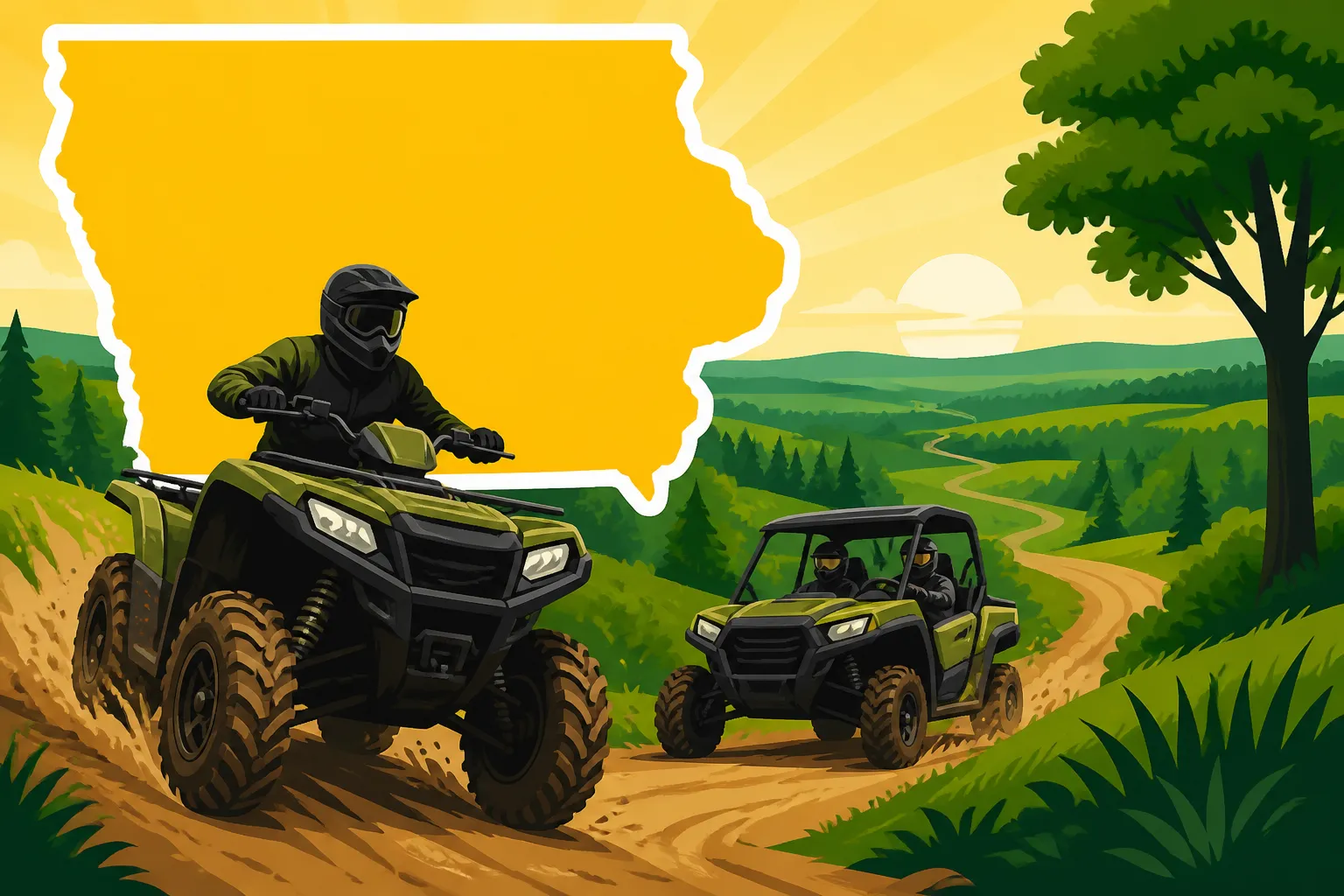
Gypsum City OHV Park sits near Fort Dodge in Webster County and is widely known as Iowa’s largest off-highway vehicle park. Its roughly 800 acres make it a substantial destination by Iowa standards, especially for riders who want more than a short loop close to home. The park’s size creates room for different riding experiences, but it doesn’t mean every acre is open trail or that every route is suitable for every machine.
The setting also makes Gypsum City a practical option for a weekend trip from other parts of Iowa. Fort Dodge gives riders a recognizable point to plan around, while Webster County’s rural landscape means it’s worth sorting out fuel, food, lodging, and trailer logistics before you leave. If you’re still comparing destinations, [Best Places to Ride an ATV in Iowa] offers a useful starting point for thinking beyond a single park.
A large park can feel less predictable than a small, familiar riding area. Your group might spread out, take a wrong turn, or underestimate the time needed to return to the staging area. Before unloading, agree on where to regroup, what to do if someone gets separated, and how you’ll check trail access and conditions. That simple conversation can prevent a fun day from turning into a stressful search for the parking lot.
What the 800-acre figure does and does not tell you
The acreage is a measure of the park’s overall footprint, not a promise that you can ride over every part of it. Public riding areas commonly include a mix of trails, tracks, staging or parking spaces, facilities, land buffers, and areas that may be unavailable to riders. Boundaries, signs, and posted rules matter more than the impressive number on a map.
It also doesn’t tell you how many hours of riding your group will get. A confident rider on a familiar machine may cover ground faster than a beginner learning how to handle loose soil, turns, or changing grades. A family with younger riders may choose to repeat an easy section rather than explore farther. Your actual day depends on skill, machine type, trail availability, breaks, and the conditions under your tires.
Think of the acreage as a sign of potential variety, not a guarantee of unlimited access. A park can be large and still have routes that are closed after rain, reserved for a particular machine type, or inappropriate for a new rider. For a fuller picture of the scale, compare the land area with [65 Miles of Trail at Gypsum City] and remember that mileage, acreage, and rideable terrain describe different things.
Understanding trails and riding options
Trail variety matters more than raw size
A good ride is about finding terrain that fits the people and machines in your group. A route that feels straightforward to an experienced ATV rider might be tiring or intimidating for a child, a first-timer, or someone on a wider UTV. Before setting out, look for current maps and posted information that distinguish trail types, skill levels, restrictions, and closed sections.
If you ride with a mixed group, plan around the least experienced person rather than the fastest. For example, a confident adult may be eager to take a longer route, while a younger rider needs frequent breaks and predictable turns. Agreeing on a manageable route at the beginning makes it easier to stay together, and it leaves room to add riding if everyone is comfortable.
A map app such as onX Offroad can help you review route information and keep your bearings while you plan. Treat any digital map as a planning aid rather than permission to ride wherever a line appears. Confirm park boundaries and follow signs on the ground; a mapped path never overrides a closure, a trail marker, or a park rule.
Matching the route to the machine and rider
ATVs and UTVs don’t always move through the same terrain in the same way. A full-size side-by-side may need more space than a narrow ATV, and a machine’s width, turning ability, ground clearance, and tires can all affect how comfortably it handles a route. Don’t assume that a section suitable for one machine is automatically appropriate for another.
Rider experience matters just as much. A beginner benefits from a calmer pace, room to stop safely, and a clear understanding of how to handle corners and uneven ground. More experienced riders may want longer routes or more demanding terrain, but should still leave a margin for fatigue, changing conditions, and less experienced companions. If the park has a separate area for young riders, review [Gypsum City's Kids' Track for Young Riders] before deciding where children should ride.
When you’re unsure whether a route fits your machine, ask park staff or consult posted guidance before heading out. Don’t use a difficult section as an experiment with a new rider or an unfamiliar UTV. A conservative choice at the trailhead is usually easier to revise than a decision made halfway through a challenging stretch.
| Planning question | Why it matters | A practical approach |
|---|---|---|
| Is the route open? | Closures can change where riding is permitted | Check park notices before unloading and follow signs |
| Does the route suit the machine? | Width, clearance, and handling affect safe passage | Confirm machine-specific restrictions and route guidance |
| Can everyone in the group manage it? | Skill levels influence pace and comfort | Choose a route for the least experienced rider |
| How far is the regroup point? | Large areas can make it easy to separate | Set meeting points and a return plan before riding |
| Have conditions changed? | Rain or other weather can affect traction and access | Recheck alerts before departure and during the day |
Planning a visit to Gypsum City
Check conditions before you tow
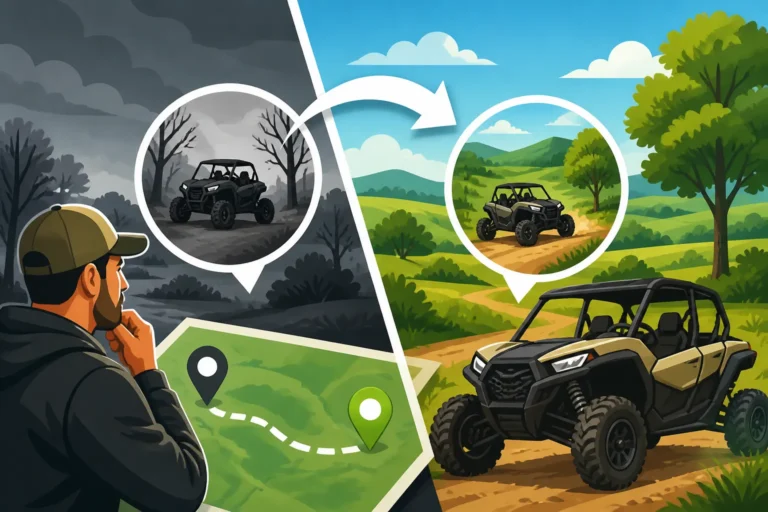
Trail conditions can shape the entire day. Rain may leave soft or slippery ground, while a period of dry weather can bring dust and loose surface material. A route that seemed easy on a previous visit may feel quite different after weather changes, maintenance, or a closure. Check park notices close to your trip, not only when you first start planning.
This matters even more when you’re hauling from another Iowa town. Loading an ATV, packing the family, and towing a trailer can take much of the morning; discovering at the gate that conditions have changed is a frustrating way to begin. Keep a backup plan in mind, such as another riding destination or a different activity near Fort Dodge. [Iowa Trail Conditions Before You Ride] can help you build the habit of checking before you commit to the drive.
Digital tools can be useful for preparation. Riders may use onX Offroad to review available mapping information and get oriented before a trip, but should compare it with official park updates and signs. If your phone loses reception, you don’t want your entire plan to depend on a live map. Save or review essential information ahead of time and make sure everyone knows the basic route and regroup points.
Pack for a full day, not just the ride
A little preparation makes an all-day outing more comfortable. Bring water, weather-appropriate layers, snacks, a charged phone, and basic items you may need if a ride takes longer than expected. If your group includes children, plan for extra breaks and pack enough food and water for delays. A tired, thirsty rider is more likely to make rushed decisions.
Before leaving home, check the machine itself. Look over tires, brakes, lights, fluids, and any gear that needs to be secured. Carry the equipment appropriate to your machine and route, and make sure helmets and protective gear fit properly. A pre-ride check is especially worthwhile if your ATV or UTV has been stored between trips or used for farm work since its last outing.
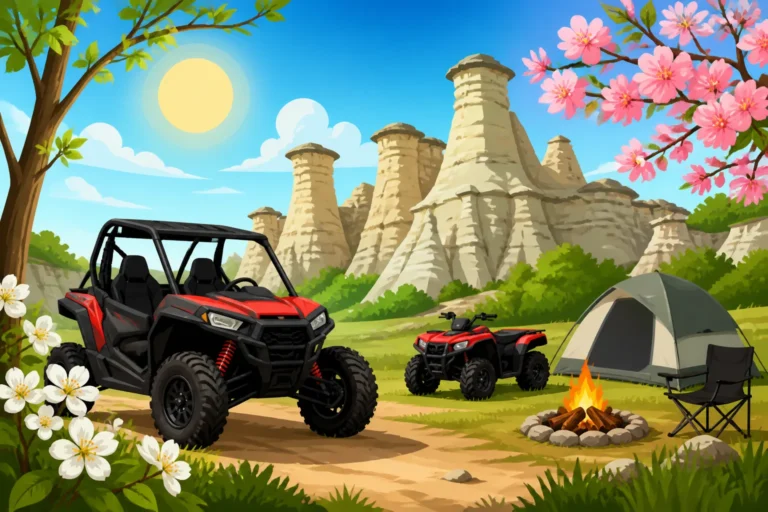
Think through the vehicle and trailer too. Confirm that tie-downs are sound, equipment is loaded securely, and the tow vehicle is ready for the trip. If you plan to camp, sort out your reservation and setup needs separately from your riding plan; don’t assume that park access automatically means a campsite is available. [Camping at Gypsum City in May] and [Gypsum City's Thirty-Three Site Campground] are helpful related topics to explore when an overnight stay is part of the plan.
Riding responsibly in a large park
Stay on permitted routes and respect closures
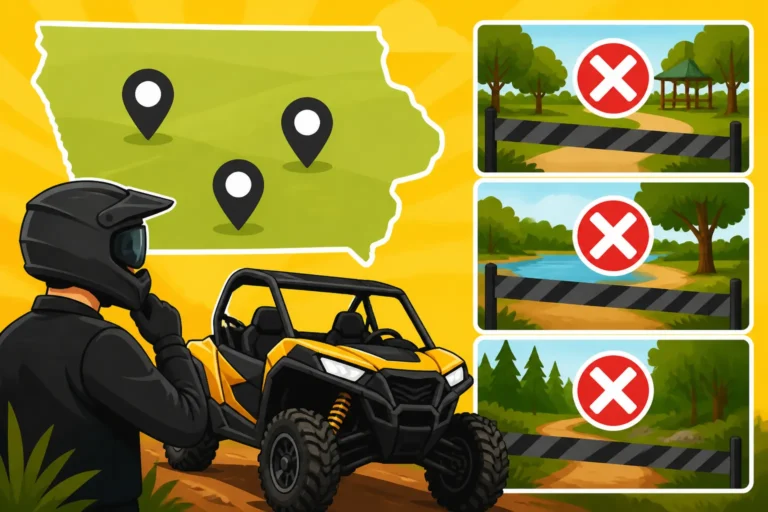
A large park can make it tempting to follow a track that looks inviting, cut across an open-looking area, or explore beyond a marked boundary. Resist that urge. Ride only where the park permits, and take closures seriously even if the trail looks passable. A barrier or notice may reflect conditions that aren’t obvious from the trailhead, including maintenance needs or risks farther along the route.
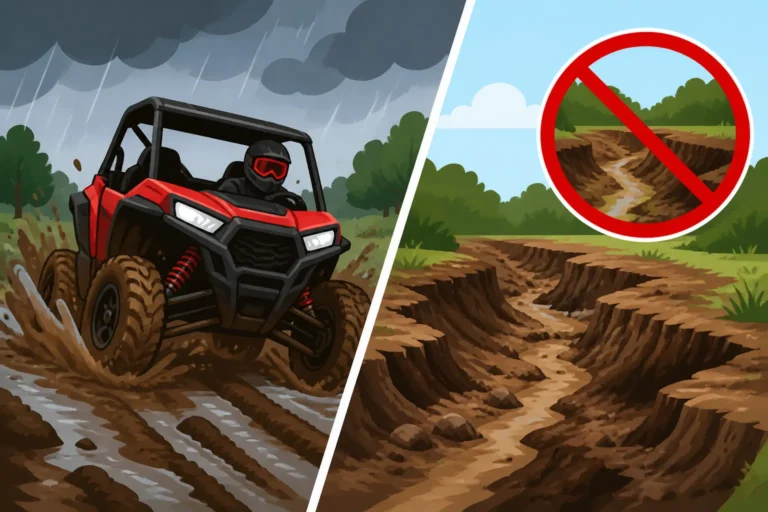
Staying on designated routes also protects the riding experience for other visitors. Going around a muddy section can widen the trail, damage the surrounding ground, or create a new path that someone else mistakes for an approved route. If a club or park asks riders to stay off a wet section, following that request helps protect the trails for the next visit. For a closer look at how weather affects access, see [Iowa's Weather-Driven Trail Closures].
Make sure every rider in your group understands the basic plan before you depart. Explain that signs and barriers take priority, that riders should not race ahead beyond sight or agreed meeting points, and that no one should leave the group without telling someone. These habits are particularly valuable when the party includes children or people who have not ridden together before.
Share the park with other users
A busy trail is a shared space. You may meet another ATV or UTV, a dirt bike, or riders moving at a different pace. Slow down when visibility is limited, leave enough room to stop, and avoid assuming that another rider has seen you. Dust, bends, terrain changes, and engine noise can all make it harder to judge what’s coming.
Give other riders space when they stop or need to pass safely, and keep your group organized rather than spreading across the trail. If a rider in your party has trouble, move to a safe location where you aren’t blocking others. A large park offers room to explore, but that doesn’t make every section wide enough for careless passing or a rushed recovery.
Good trail manners also mean leaving the area as you found it. Pack out your rubbish, respect facilities, and avoid spinning tires or making unnecessary detours. Clubs and local partners help maintain riding areas, and responsible use is one way visitors can support the park’s long-term future.
Making the most of an 800-acre visit
Build a flexible itinerary
Instead of trying to cover as much ground as possible, set a few realistic goals. You might plan to explore a beginner-friendly section, take a longer ride if conditions and energy allow, and reserve time for food or a break. That approach leaves room to adapt if a trail is closed, a young rider needs rest, or the group discovers that the terrain is more demanding than expected.
Decide in advance how your group will handle separation. Choose a meeting point that everyone can recognize, establish a simple rule for what to do if someone loses sight of the others, and make sure each rider knows the way back to the staging area—or knows to wait at the agreed location. For larger groups, a head count at natural stops can prevent someone from being left behind.
Use onX Offroad or another mapping option to help organize your route, but pair digital planning with a paper or offline backup when practical. Before you ride, explain the route in plain language: where you expect to go, where you’ll stop, and what to do if conditions change. A map is most useful when everyone has at least a basic sense of the plan.
Decide whether the park fits your group
Gypsum City’s size can be a real advantage for a group that enjoys variety and is comfortable planning ahead. It may be a strong choice for riders looking for an Iowa destination with room to explore, especially when the group has a mix of interests. But the biggest park isn’t automatically the best park for every outing. A smaller or more familiar area may be easier for a first ride, a short visit, or a day focused on very young riders.
Ask what your group needs most. Are you looking for a full day on trails, a place to introduce a teenager to riding, an outing that works for different machine types, or a destination with an overnight option? Compare those needs with current park information, the conditions expected for your visit, and the abilities of the least experienced rider. [Iowa Trails for Beginners] may help if you’re prioritizing a comfortable first outing.
Most importantly, leave room for the day to be enjoyable rather than turning it into a mileage challenge. Take breaks, change plans when conditions call for it, and end the ride before fatigue leads to poor decisions. The scale of an 800-acre park is impressive, but a good visit comes down to choosing appropriate routes, preparing for the trip, and riding with consideration for everyone sharing the trails.
Disclaimer
This article is for general informational purposes only and does not constitute professional advice. Laws, prices and regulations vary by location and change over time. Consult a qualified professional for guidance on your specific situation.