Dust Behind a Grain Truck
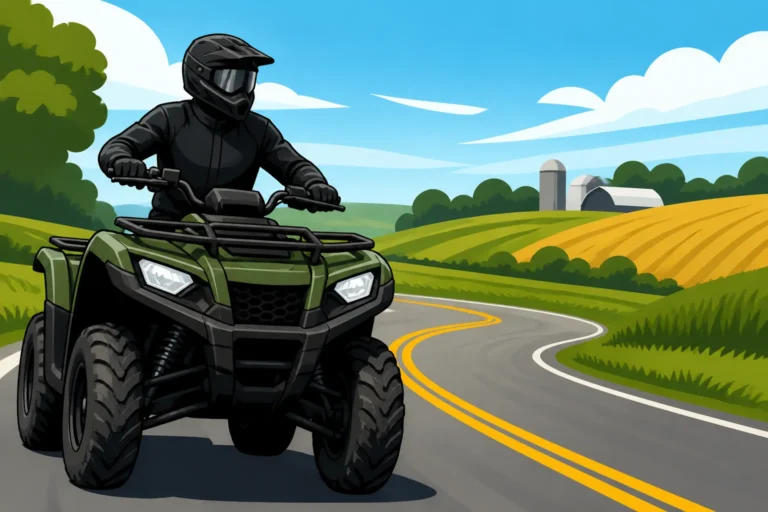
A grain truck can turn an ordinary Iowa gravel ride into a wall of dust in seconds. If you cannot see the road edge, an approaching vehicle, or the truck’s brake lights, pressing closer is not the answer. This guide explains how to respond, how to reduce the chance of getting caught in the dust, and what road-use rules to check before you set out.
Why Dust Behind a Grain Truck Can Become Dangerous
The cloud hides more than the truck
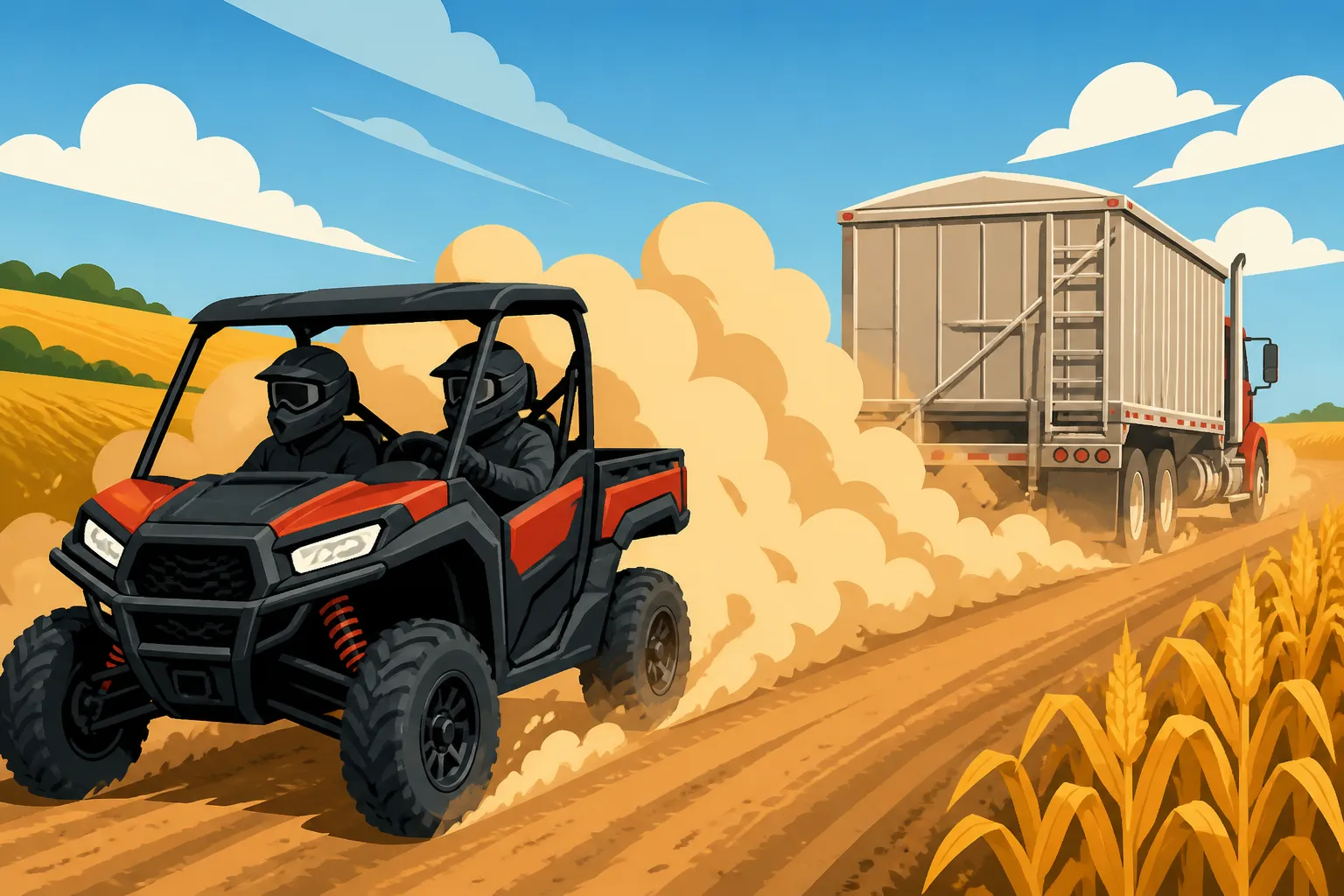
On a dry Iowa gravel road, a loaded grain truck may leave a broad, lingering cloud behind it. The dust can hide potholes, washboards, loose gravel, road edges, driveway entrances, and oncoming traffic. It can also make it difficult for the truck driver to see a rider following behind.
That loss of visibility changes the ride quickly. You might feel as though you are keeping up safely because the truck is moving at a steady pace, but the cloud can make it hard to judge how far away it is. If the truck slows for a turn, a mailbox, or a field entrance, you may not notice until the gap has already closed.
Dust is not only a comfort problem. Grit can irritate your eyes and throat, and a sudden gust can push the cloud across the road in an unexpected direction. A rider who blinks, looks down, or reaches for a face covering while moving may drift toward the shoulder or center of the road. The safest response is to prioritize visibility and control, not to keep pace with the vehicle ahead.
Do not ride into a cloud you cannot see through
If the dust has become thick enough that you cannot clearly identify the road ahead, slow down smoothly and increase your distance. Avoid a hard brake unless you need one to prevent an immediate collision; loose gravel can make abrupt braking or steering less predictable. Keep your ATV or UTV pointed along the road rather than making a sudden move toward a ditch or an unseen driveway.
If slowing does not restore a safe view, find a suitable place to leave the traveled portion of the road, where stopping is allowed and the surface is stable. Make sure you are not stopping in a lane, at a blind hill, or where another driver might reasonably expect you to continue. Wait for the dust to clear before proceeding.
A grain truck may also slow or turn without much warning. Leave enough space that you can react without relying on a last-second view of its brake lights. Do not assume the driver can see you in the mirrors, and do not follow so closely that the truck’s tires, dust, or debris become an immediate hazard.
How to Ride Safely When a Truck Raises Dust
Create distance before visibility disappears
The easiest dust cloud to manage is the one you never enter. If you see a grain truck ahead on a dry road, reduce your pace early and leave a generous following gap. The right gap depends on road conditions, speed, wind, and how much dust the truck is producing; there is no single number that makes every situation safe.
Use the truck as a reason to ride more conservatively, not as a target to catch. If the cloud is drifting across the road, slowing down may let it move ahead or blow away from your route. If the wind pushes dust back toward you, stop somewhere safe and wait rather than trying to ride through by feel.
Keep your attention on the full road environment. Watch for cross traffic, farm equipment entering from a field, roadside mailboxes, and vehicles coming the other way. On a narrow gravel road, a truck may need more room than a car, and the dust may conceal how much of the roadway it occupies.
Choose protective gear for dust, but do not treat it as a substitute for visibility
A properly fitted helmet and eye protection help keep grit out of your eyes and face. A neck covering or other dust barrier may make a ride more comfortable, but it cannot make it safe to travel when you cannot see where you are going. If your eyes are watering or your vision is blurred, stop at a safe location and clear your gear before continuing.
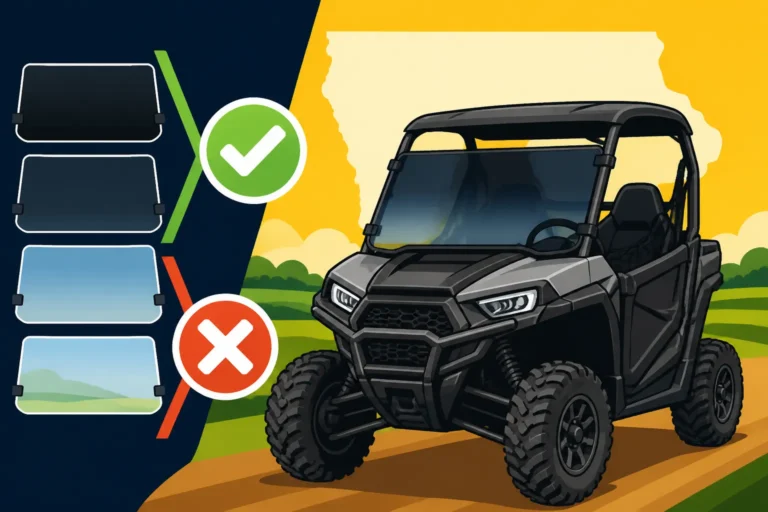
A UTV windshield can reduce the amount of dust entering the cab, though it does not remove the need to maintain a safe following distance. Riders considering an aftermarket windshield, including products from SuperATV, should compare the intended fit, visibility, ventilation, and ease of cleaning for their specific machine. Dust and fine grit can build up quickly, so a windshield that is difficult to see through or clean may become a problem rather than a solution.
If you already have a windshield, check it before leaving. Scratches, dried mud, and dust films can make glare worse, especially when the sun is low. SuperATV is one option riders may encounter while researching aftermarket accessories, but the useful question is whether a particular windshield suits your machine and the conditions you ride in. No accessory makes it safe to follow closely into a dust cloud.
| What you notice | Safer response | Avoid |
|---|---|---|
| Dust begins to reduce your view | Ease off the throttle and increase your gap | Closing in to keep the truck in sight |
| You cannot see the road surface clearly | Slow down and move to a suitable safe stopping place if needed | Continuing at speed by memory or guesswork |
| Dust blows across the road from the side | Wait for visibility to improve before proceeding | Swerving toward an unseen shoulder |
| Your eye protection is coated or your eyes are irritated | Stop safely and clean or adjust your gear | Reaching for gear while moving |
| The truck begins slowing near a driveway or field entrance | Leave room to react and expect a turn | Riding close enough that a stop becomes abrupt |
Iowa Road Rules to Check Before Your Ride
Confirm that the road and route are allowed
A gravel surface does not automatically mean every ATV or UTV route is legal. Check the road’s classification, local restrictions, and any posted signs before riding. Iowa rules distinguish among road types and can treat an unpaved secondary road differently from a paved road, city street, or state highway. The guide to [Iowa Rules for Riding a Gravel Road] and the explanation of [Iowa's Unpaved Secondary Road Rule] are useful places to review the distinction.
Also consider why you are on the road. Some road travel may be subject to route and destination limits, so a road ride should not be treated as permission to roam wherever a gravel surface appears. If you are traveling to a designated riding area, check the rules for the route rather than assuming the most convenient road is permitted. See [Iowa's Most Direct Route Rule] for the route question.
Before setting out, verify that your machine has the required registration and that you meet the applicable operator requirements. If you are visiting from another state, do not assume your home-state documents alone satisfy every Iowa requirement. Rules can also vary based on where you are riding, so check the route and destination rather than relying on a general statement that “ATVs are allowed on gravel.”
Make sure your machine and riding plan are road-ready
Road use involves more than steering around potholes. Iowa’s road requirements may include equipment, lighting, insurance, and operator qualifications. Review [Iowa's 35 mph Cap] and [Insurance Iowa Requires on a Road] before taking a machine onto a public road. A speed limit is a ceiling, not a recommended speed: dust, loose gravel, narrow shoulders, and farm traffic may call for much less.
Check required lights and other equipment before you leave. A headlight that works in the driveway may still be difficult for another driver to notice if it is dirty, poorly aimed, or obscured by dust. Review [Iowa Lighting Requirements for ATVs], and make sure required road-use equipment is in place and functioning.
Carry the documents required for your ride and make sure everyone in the group understands the plan. A passenger who is unfamiliar with gravel-road handling may not realize why you are slowing behind a truck. Agree in advance that riders will not pressure one another to maintain speed through poor visibility, and that the group will stop at a safe location if conditions deteriorate.
What to Do When the Dust Follows You
Use a simple stop-and-reset routine
When dust suddenly becomes heavy, keep your movements smooth. Ease off the throttle, hold a steady line, and look for a safe place to stop if you cannot see far enough ahead to ride confidently. Do not stop in the middle of the road simply because the cloud is uncomfortable; choose a location where you are visible and out of the travel path.
Once stopped, let the truck get farther ahead and allow the cloud to thin. Check behind you for other traffic before rejoining the road. Clean your goggles or windshield only when the machine is stationary in a safe spot. A quick wipe while moving can take your attention away at precisely the wrong moment.
If you are riding with others, use a clear and agreed-upon signal to tell the group to slow or stop. Keep enough separation that the rider behind you is not forced to brake sharply when you do. A group stretched out through a dust cloud can lose sight of one another, so regroup only at a safe pull-off or another location away from traffic.
Know when to change the route or end the road section
Sometimes the sensible choice is to wait for the truck to move well ahead. Other times, road conditions are so dry, busy, or dusty that continuing is not worth the risk. If visibility stays poor, find an alternative permitted route, postpone the ride, or turn back where it is safe and legal to do so.
Do not pass a grain truck simply because its dust is frustrating. Passing requires a clear view of the road ahead and enough space to complete the maneuver safely and legally. A dust cloud removes the information you need to judge oncoming traffic, road width, and entrances. If you cannot see beyond the truck, you do not have a safe basis for passing.
After the ride, consider whether your route, timing, or equipment needs to change next time. A less busy road, a cooler or less windy part of the day, or a route that avoids heavy agricultural traffic may make the trip more comfortable. If you regularly use public roads, review [A Deputy at an Iowa Roadside Stop] so you understand the documents and equipment a rider may be expected to show. For rides that extend into low-light conditions, check [Iowa Rules for Riding After Dark] rather than assuming daytime visibility practices are enough.
Dust behind a grain truck is a cue to create space, slow down, and protect your ability to see—not a challenge to keep up. Plan a legal route, use suitable gear, and stop safely whenever the road ahead disappears. A patient pause is far less costly than guessing your way through a cloud of gravel dust.
Disclaimer
This article is for general informational purposes only and does not constitute professional advice. Laws, prices and regulations vary by location and change over time. Consult a qualified professional for guidance on your specific situation.