What a Deputy Checks on a Visiting Quad
Riding your ATV or UTV across state lines into Iowa for some scenic trail riding or to access public lands can be an exciting prospect, but it also brings a host of questions about what’s allowed on our public roads. Many out-of-state riders worry about running afoul of local laws, especially when it comes to a roadside stop. This guide aims to clear up that confusion, detailing exactly what an Iowa deputy will check on your visiting quad or side-by-side if you're pulled over on an unpaved secondary road or other approved public thoroughfare.
The Essential Paperwork: Registration and Insurance
When you're enjoying Iowa's scenic backroads on your ATV or UTV, the first thing any law enforcement officer will want to see is your paperwork. It's the foundation of legal operation, and without it, your ride can quickly turn from enjoyable to expensive. Iowa has specific requirements for both residents and visitors, so understanding these is paramount.
Your Out-of-State Registration & Iowa's Nonresident Permit
Let's talk about registration first. If your ATV or UTV is properly registered in your home state, that's a great start. Iowa generally honors out-of-state registrations for machines that are just visiting. However, here’s where a lot of riders get tripped up: if you plan to ride your off-highway vehicle (OHV) on Iowa's designated public riding areas – like our fantastic OHV parks – or if you're using it on roads where OHVs are permitted, you're going to need an Iowa Nonresident User Permit. This isn't just a suggestion; it's a requirement to legally operate on those specific public grounds.
A deputy will look for proof of your home-state registration, typically a current sticker or a registration card. But they'll also expect to see that Iowa nonresident permit decal if you're riding in areas that require it. Think of it as a small, separate fee that contributes to maintaining our trails and riding opportunities, ensuring that everyone who enjoys them pitches in a little. This permit is unique to one machine and cannot be transferred, so make sure the one you've got matches the quad you're riding. If you're wondering about the specifics, you can dive deeper into [Iowa's Nonresident User Permit] to understand how to get one.
Proving You're Insured for Iowa Roads
Beyond registration, insurance is a non-negotiable for operating an ATV or UTV on any public road in Iowa. This isn't just about protecting yourself; it's about protecting others in case of an accident. Iowa law mandates minimum liability coverage for any OHV being operated on a public highway or right-of-way. A deputy will ask to see proof of this insurance. This usually comes in the form of an insurance card, just like you'd carry for your car.
The minimums Iowa requires are pretty standard: specific amounts for bodily injury per person, total bodily injury per accident, and property damage. Without this insurance, you're not just risking a ticket; you're risking significant financial liability if something goes wrong. It’s always a good idea to check with your insurance provider before you cross into Iowa to ensure your policy meets our state's requirements. You definitely don't want to be caught off guard when an officer asks for your insurance details. For a full breakdown, check out [Iowa ATV Insurance Requirement].
Driver Requirements: Age and License
Just like with any other vehicle, the person operating an ATV or UTV on public roads in Iowa needs to meet certain criteria. It’s not enough for the machine to be legal; the operator has to be as well. Iowa has clear rules regarding age and licensing, and these are points a deputy will scrutinize during a stop.
The Eighteen-Year-Old Rule
One of the most crucial rules to remember for road riding in Iowa is the age requirement. To legally operate an ATV or UTV on an approved public road in Iowa, the driver must be at least 18 years old. This isn't a recommendation; it's a hard and fast rule. We understand that in some states, younger riders might be allowed on certain roads with supervision or a permit, but Iowa draws a firm line at 18 for road use.
This rule is in place for safety, recognizing the maturity and experience needed to safely navigate public roads alongside other traffic. A deputy encountering a driver under 18 on an Iowa road will almost certainly issue a citation, regardless of their home state's laws or any safety course they may have completed. If you're traveling with younger riders, ensure they stick to private land or designated OHV parks where age rules are different and supervision is key. You can find more details about this in [Iowa Minimum Age to Ride a Road].
Carrying Your Driver's License
Alongside being 18, you must possess a valid driver's license from your home state. This isn't a special "ATV license"; it's your standard automobile driver's license. The deputy will ask to see this, just as they would if you were driving a car. It serves as proof of your identity and your legal authorization to operate a motor vehicle.
Make sure your license is current and not suspended or revoked. Carrying it on your person while riding is essential. A deputy doesn't want to hear that it's back at the campground or in your tow vehicle. Have it readily accessible, perhaps in a waterproof pouch, along with your registration and insurance documents. It’s all part of demonstrating responsible and legal operation, which helps ensure a smooth roadside interaction.
Machine Equipment: What Iowa Demands
Beyond the paperwork and driver qualifications, the physical state and equipment of your ATV or UTV are also critical. Iowa has specific requirements for lighting, safety features, and other components when operating on public roads. These aren't just aesthetic preferences; they're legal necessities designed to enhance visibility and safety for everyone sharing the road.
Lights, Horns, and Mirrors
When your machine is on an Iowa road, it needs to be visible and capable of communicating with other vehicles. This means functional headlights, taillights, and brake lights are an absolute must. Your headlights must be on at all times, even in broad daylight, when operating on an Iowa public road. The taillights should be visible from a certain distance, and your brake lights need to illuminate clearly when you slow down or stop. Many riders choose aftermarket upgrades from companies like SuperATV to enhance their lighting, ensuring they meet or exceed visibility requirements, which can be a smart move for safety.
A deputy will also check for a working horn. This is a basic safety device for warning others of your presence, especially on blind corners or when needing to signal. Finally, you must have at least one rearview mirror. While two are always better for comprehensive visibility, Iowa law typically requires a minimum of one mirror that allows the operator to see at least 200 feet to the rear. Again, aftermarket options abound for mirrors, and SuperATV offers a range of robust options designed for off-road machines that also serve well for road use. These equipment requirements are in place to make sure you're seen and can react appropriately in traffic. For specifics on what's required, review [Iowa Lighting Requirements for ATVs] and [Iowa Mirror Requirement for Road Use].
The Slow-Moving Vehicle Triangle
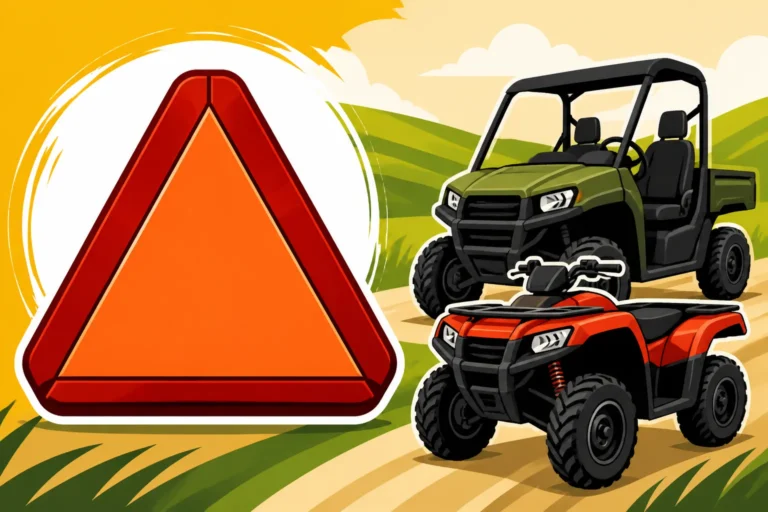
This might seem like a minor detail, but it's a very important safety feature for ATVs and UTVs on Iowa roads: the slow-moving vehicle (SMV) triangle. If your ATV or UTV is being operated on a public road and is unable to maintain speeds comparable to normal traffic flow (which is often the case for ATVs), it must display a standard fluorescent yellow-orange and reflective red slow-moving vehicle emblem on the rear of the machine.
This distinctive triangle warns other drivers that your vehicle will be moving at 25 mph or less. It's a critical visual cue, especially on gravel roads where dust can sometimes reduce visibility, or on winding routes. A deputy will be looking for this, as its absence makes your machine a much greater hazard to faster-moving traffic. It must be clean, visible, and properly mounted. Ensuring your SMV triangle is in place and in good condition is a quick check that can prevent both an accident and a citation. For more information, you can read [Iowa Slow-Moving Vehicle Sign Rules].
Following the Rules of the Road
Just like any other vehicle, when your ATV or UTV is on an Iowa public road, it's subject to the same traffic laws as cars and trucks. This includes adherence to speed limits, understanding which roads are permissible, and following general rules of navigation. Deputies enforce these to ensure an orderly and safe flow of traffic for everyone.
Speed Limits and Road Types
One of the most important rules for ATV/UTV road use in Iowa is the speed limit. When riding on authorized unpaved secondary roads or other designated routes, your speed is capped at 35 miles per hour. This is a crucial distinction from off-road riding where terrain, not a sign, often dictates speed. Exceeding this limit on a public road is not only illegal but also significantly increases the risk of accidents, especially given the handling characteristics of ATVs and UTVs compared to traditional road vehicles.
It's also vital to understand which roads are open to OHVs. Generally, this primarily includes unpaved county secondary roads. While some counties and cities may have ordinances opening specific paved secondary roads or city streets, these are localized exceptions and not the norm. A deputy will know exactly which roads are authorized in their jurisdiction. Riding on a paved primary highway, an interstate, or city streets not specifically designated for OHV use will result in a ticket, even if you’re otherwise compliant. Always check local ordinances or stick to well-known gravel roads if you’re unsure. To learn more about this, check out [Iowa Rules for Riding a Gravel Road] and [Iowa Rules for Riding a Paved Secondary Road].
Designated Routes and Direct Travel
Beyond just the type of road, Iowa law also often stipulates how you can use those roads. For example, if you're using a road to get from one section of private property to another, or to access a designated OHV park or trail system, you typically need to take the "most direct route." This means you can't just joyride for miles on public roads; the intent of your road use must be for access or transition. A deputy might ask about your destination and why you're on a particular road if your travel seems circuitous or without clear purpose.
Additionally, while crossing a multi-lane highway at an intersection is generally permissible, continuous travel on such roads is strictly prohibited. Understanding these nuances is key. It’s about respectful and intentional use of the public road system, not treating it as an extension of an off-road park. Being clear about your travel intentions and sticking to direct routes helps ensure you're riding within the spirit and letter of Iowa's OHV road use laws.
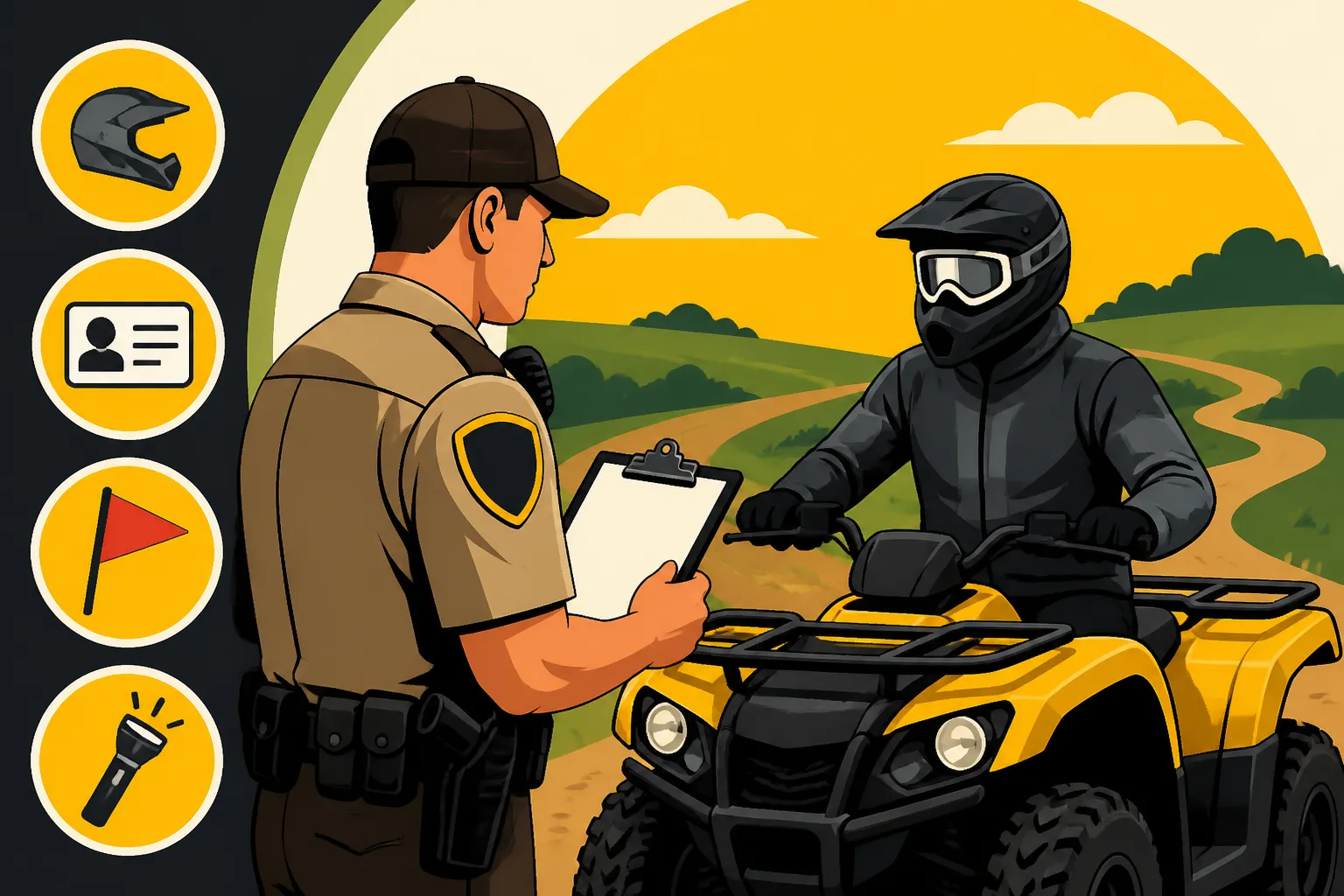
To help visualize these requirements, here's a quick summary of what a deputy will typically check:
| Category | What a Deputy Checks |
|---|---|
| Documentation | Valid home-state registration & proof (sticker/card) |
| Current Iowa Nonresident User Permit (decal on machine if applicable) | |
| Proof of liability insurance meeting Iowa minimums | |
| Operator | Must be 18 years of age or older |
| Possession of a valid driver's license from home state | |
| Machine Equipment | Functional headlights (on at all times), taillights, and brake lights |
| Working horn | |
| At least one rearview mirror, properly adjusted | |
| Properly displayed Slow-Moving Vehicle (SMV) triangle on the rear | |
| Road Rules Adherence | Speed not exceeding 35 mph on approved roads |
| Operating only on authorized road types (primarily unpaved secondary roads, some authorized paved roads/city streets) | |
| Following the "most direct route" rule for access to private land or OHV parks | |
| No operation on interstates, primary highways, or unauthorized multi-lane roads |
Remember, the goal of these checks isn't to discourage visitors but to ensure everyone's safety on Iowa's public roads. By being prepared and understanding the requirements, you can enjoy your ride through our beautiful state without any unexpected bumps in the road.
Disclaimer
This article is for general informational purposes only and does not constitute professional advice. Laws, prices and regulations vary by location and change over time. Consult a qualified professional for guidance on your specific situation.