A Visiting Quad on an Iowa Gravel Road
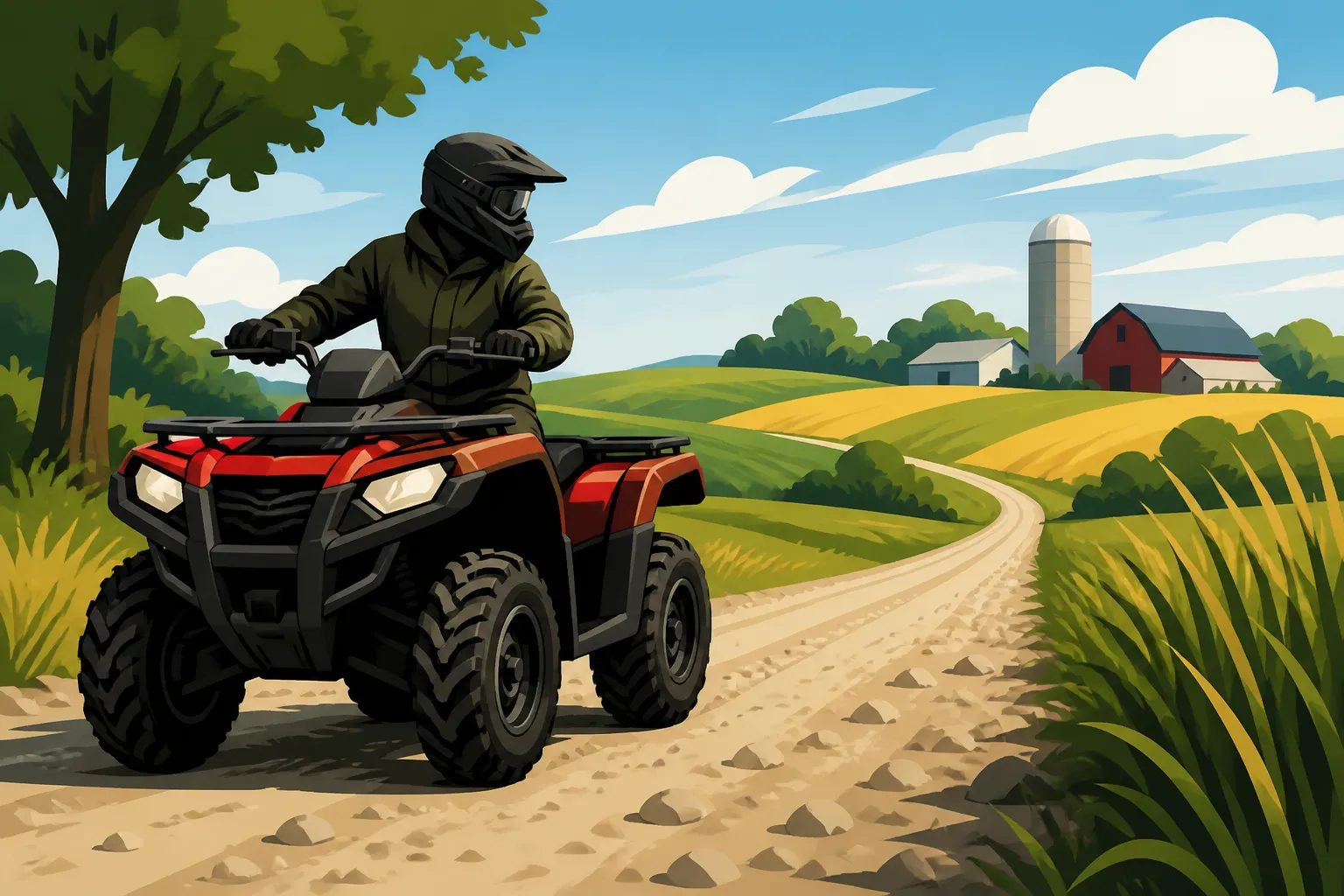
So, you’ve loaded up your trusty quad or side-by-side, maybe hooked up your trailer, and you're heading to Iowa for some riding. You've heard about our great OHV parks and the miles of beautiful countryside, but you're probably wondering what the deal is with riding your machine on public roads, especially those inviting gravel lanes. It can feel like navigating a legal maze, especially when you're from out of state and just want to enjoy the ride without any surprises. This guide is here to untangle Iowa's rules for visiting riders who want to hit our gravel roads legally and safely.
Understanding Iowa's Road Riding Landscape for Visitors
Iowa has a unique approach to Off-Highway Vehicles (OHVs) on its roads, and it's easy for visitors to get confused. Unlike some states where any road use is strictly forbidden, Iowa offers some avenues for ATV and UTV riders, particularly on its vast network of gravel secondary roads. However, it's not a free-for-all, and there are crucial distinctions that every nonresident needs to understand before they even think about turning a wheel onto public ground.
The General Rules for Off-Highway Vehicles OHVs on Iowa Roads
First off, let's talk about what "off-highway vehicle" means here. In Iowa, this covers ATVs, UTVs, and off-road motorcycles. The state generally allows these machines on unpaved county secondary roads, but only under specific conditions. It's not like driving your car; there are age restrictions, lighting requirements, and even speed limits you absolutely must adhere to. For instance, any operator on a public road in Iowa must be at least 18 years old and possess a valid driver's license. This isn't just a suggestion; it’s a hard and fast rule. If you're traveling with a younger rider who's used to riding on roads back home, this is a critical difference to be aware of. Additionally, your machine needs proper lighting, including a headlight that's on at all times, taillights, and often a slow-moving vehicle triangle mounted on the rear. These aren't just for visibility; they're legal requirements. [Iowa Rules for Riding a Gravel Road] details more about what's expected.
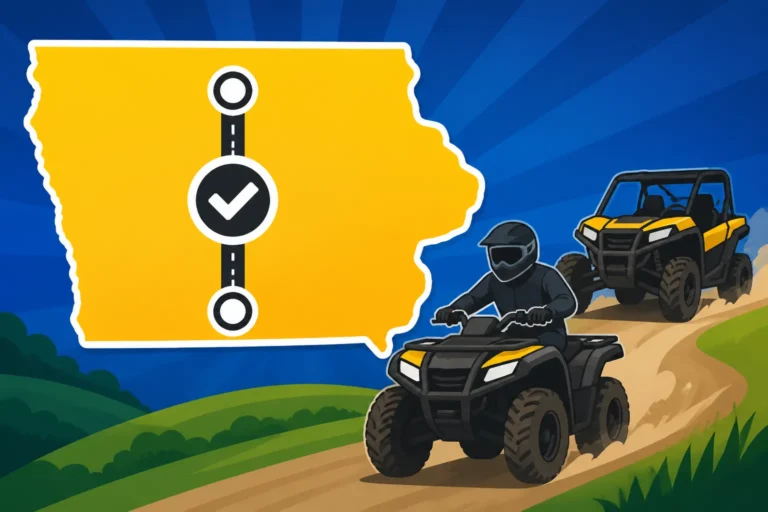
One of the biggest questions we hear is, "Can I just ride from my campsite to the trail?" The answer is often yes, but with a significant caveat: you must take the "most direct route" to or from a designated OHV trail or park. You can’t just cruise around aimlessly on public roads for pleasure. The purpose of your road use must be to get to an authorized riding area or back home. This "most direct route" rule is something deputies keep an eye on, so sticking to the shortest, most logical path is key. Also, even on gravel, you're usually capped at 35 mph, which can feel slow on a powerful machine but is critical for safety and compliance.
Special Considerations for Gravel and Secondary Roads
Iowa boasts thousands of miles of secondary roads, many of which are gravel. These roads are often tempting for ATV and UTV riders because they offer scenic views and connect various parts of the rural landscape. While gravel roads are generally where ATVs and UTVs are permitted, it's still not as simple as just hitting the gas. Unlike paved secondary roads, which often require county authorization to be open to OHVs, unpaved gravel roads are typically open by default, provided you follow the general rules mentioned above. However, this doesn't mean all gravel roads are fair game. There can be exceptions, and signage will always be your best friend.
It's vital to remember that these are shared roads. You’ll encounter cars, trucks, farm equipment, and even cyclists. Dust can be a major issue, especially in dry conditions, reducing visibility for everyone. You need to ride defensively and respect the other users of the road. Sometimes, riders enhance their visibility with extra lighting or mirrors, and while companies like SuperATV offer a range of products designed for off-road performance, many of their lighting and mirror solutions can also be adapted to ensure you meet Iowa’s road-specific safety requirements. Think about how a wider machine, like a UTV with a lift kit, might handle different gravel conditions and blind corners; extra care is always needed.
What a Nonresident Needs to Ride an ATV on Iowa Roads
As a visitor, your machine might be registered in your home state, but Iowa has its own specific requirements for nonresidents. Assuming you're planning to ride on any public land or designated OHV park, you'll need to make sure your machine is properly authorized for use in Iowa. Ignoring this step can lead to a fine and put a real damper on your trip.
The All-Important Nonresident User Permit
This is perhaps the most critical piece of paperwork for any out-of-state rider. Iowa does not recognize other states' ATV/UTV registrations as valid for public land use within its borders. Instead, you need to purchase an Iowa Nonresident User Permit. This permit acts as your Iowa registration decal and allows your machine to be ridden on Iowa's designated trails and, crucially, on public roads where allowed. You can purchase this permit online through the Iowa Department of Natural Resources (DNR) licensing system or in person at a county recorder’s office or a license agent. [Iowa's Nonresident User Permit] explains this in detail.
It's essential to understand that this permit is specific to one machine and is non-transferable. If you bring two ATVs, you'll need two separate permits. Once purchased, you'll receive a decal that needs to be affixed to the rear of your machine, visible to law enforcement. A temporary paper permit might be available immediately if purchased online, allowing you to ride while awaiting the physical decal in the mail, but always confirm the latest procedures. Don't assume your home-state registration covers you for public riding here; it simply doesn't for OHVs.
Reciprocity and Your Home-State Registration
While Iowa requires its own nonresident permit for public land and road access, your home-state registration still matters. When riding on Iowa roads, a deputy might ask to see proof of your home-state registration in addition to your Iowa Nonresident User Permit. Think of your home-state registration as proving ownership and primary registration, while the Iowa permit grants you the privilege to operate on Iowa's specific OHV-friendly public lands and roads.
There isn't a direct "reciprocity agreement" in the way some states have for vehicle registrations. You still need the Iowa permit. However, showing a valid, unexpired registration from your home state demonstrates that your machine is legally recognized where you primarily reside. So, always carry both your Iowa Nonresident User Permit and your original state's registration card. This combination ensures you've met all the legal bases for operating your ATV or UTV in Iowa. [What a Deputy Checks on a Visiting Quad] elaborates on roadside interactions.
Essential Gear and Riding Etiquette for Visiting Riders
Once you've got your permits and paperwork in order, it's time to think about your machine and how you'll present yourself on Iowa's roads. Safety and respect are paramount, and meeting Iowa's specific requirements can prevent unwanted attention from law enforcement.
Safety Equipment and Machine Requirements
When riding on Iowa roads, your ATV or UTV isn't just an off-road toy anymore; it's a vehicle sharing the asphalt and gravel with others. Iowa has specific requirements for road-legal OHVs. Here's a quick rundown:
- Headlights and Taillights: Your machine must have an operating headlight (which must be on at all times, even in daylight) and a taillight. For machines that primarily see off-road use, it's worth checking if your factory lighting meets the necessary brightness and visibility for road use. Many riders opt for aftermarket LED light bars or auxiliary lights for improved visibility, and brands like SuperATV offer durable, high-lumen options that can greatly enhance your presence on rural roads.
- Brakes: Functional brakes are a given, but ensure they are in top condition.
- Muffler/Spark Arrester: Your machine must have a muffler in good working order and a U.S. Forest Service approved spark arrester. Excessive noise can draw unwanted attention.
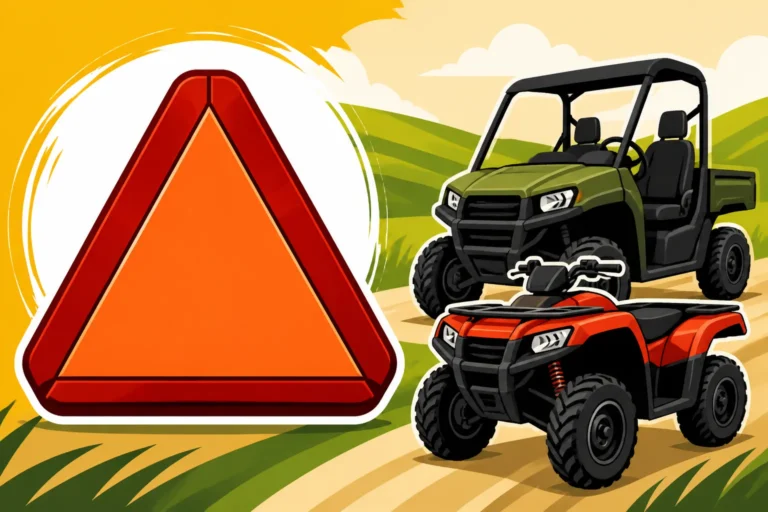
- Slow-Moving Vehicle (SMV) Triangle: This orange and red triangle must be affixed to the rear of your machine when operating on public roads. It signals to other drivers that you're moving slower than typical traffic.
- Rearview Mirror: At least one rearview mirror is required for road use. While many UTVs come with these, some ATVs might not. If yours doesn't, it's an easy and inexpensive addition to ensure compliance. [Iowa Mirror Requirement for Road Use] discusses this further.
- Horn: A working horn is also required. Again, many ATVs might lack this from the factory, but it’s a simple aftermarket add-on.
- Insurance: This is absolutely non-negotiable for road use. Iowa law requires liability insurance with specific minimum coverage amounts (typically $20,000 for bodily injury to one person, $40,000 for bodily injury to two or more people, and $15,000 for property damage). You must carry proof of insurance with you. [Iowa ATV Insurance Requirement] is a must-read.
Beyond these legal requirements, consider wearing appropriate safety gear, even if Iowa doesn't mandate helmets for adults on roads. A helmet, eye protection, sturdy boots, and gloves are always wise investments for your personal safety, especially on unpredictable gravel surfaces.
Respecting Local Laws and Land
Iowa is a beautiful state with a strong sense of community, especially in its rural areas. When you’re riding through, whether on designated trails or permitted gravel roads, it’s crucial to ride with respect for the land, other residents, and the rules. This means:
- Stay on the Road: Do not stray off the designated gravel road onto private property or into ditches unless it's a designated trail entry/exit. Trespassing is illegal and can damage the reputation of all riders.
- Mind the Dust: On dry gravel roads, your machine can kick up a significant dust cloud. When approaching other vehicles or homes, slow down to minimize dust. This small act of courtesy goes a long way with locals.
- Quiet Hours: If you're camping near an OHV park, be mindful of noise, especially late at night or early in the morning.
- Leave No Trace: Pack out everything you pack in. Don't litter or leave behind any trash.
- Check Local Ordinances: While counties generally permit OHVs on unpaved secondary roads, some cities and towns may have their own specific ordinances that restrict or prohibit OHV use on city streets, even if those streets are gravel. Always check with local authorities if you plan to enter an incorporated area.
By riding responsibly and showing respect, you help ensure that Iowa remains a welcoming place for OHV enthusiasts.
Common Pitfalls and How to Avoid Them
Even with the best intentions, it's easy to make a mistake when unfamiliar with local laws. Visitors often run into trouble due to misunderstandings about where they can and cannot ride, and the specific rules that apply.
Misunderstandings About Public Versus Private Land
One of the biggest areas of confusion revolves around the distinction between public and private land. In Iowa, just because a piece of land looks open doesn't mean it's public or that you have permission to ride on it.
| Land Type | General Rule for OHVs in Iowa | Important Considerations for Visitors |
|---|---|---|
| Designated OHV Parks | Open for registered OHVs (with Iowa Nonresident Permit for visitors) on marked trails during operating hours. | Always check park specific rules, weather closures, and trail conditions before you go. Your Iowa Nonresident User Permit acts as your admission. |
| Unpaved Secondary Roads | Generally open to registered OHVs (with Iowa Nonresident Permit) for transit on the "most direct route" under specific conditions (18+ driver, insurance, lights, SMV, horn, mirror, 35 mph cap). | These are shared roads. Ride defensively, respect other users, and be aware of dust. Always carry your driver's license, proof of insurance, and Iowa Nonresident User Permit. |
| Paved Secondary Roads | Generally closed to OHVs unless a specific county board of supervisors has passed an ordinance authorizing their use. | Do not assume paved roads are open. Look for specific signage or check with the county. Riding on a closed paved road can result in a significant fine. |
| City Streets/Alleys | Generally closed to OHVs unless a city council has passed an ordinance authorizing their use. These ordinances are rare and often have strict limitations. | Most cities prohibit OHVs on their streets. Never assume you can ride in town. Always verify with the city clerk. |
| Private Land | You must have explicit permission from the landowner to ride on private property. | Even if it looks abandoned or unkempt, it's someone's property. Always get permission. Written permission is best to avoid any misunderstandings. |
| Ditches/Road Shoulders | Generally not for recreational riding. These are often considered part of the road right-of-way and fall under road rules, or they may be private property. | Stick to the traveled portion of the gravel road. Riding in ditches can lead to trespassing charges or traffic citations. |
| Wildlife Management Areas | Generally closed to OHV use, often with exceptions for specific administrative purposes or designated trails. | Do not assume you can ride in state or county wildlife areas unless explicitly signed as an OHV trail. These areas are for conservation and often have very strict rules to protect habitats. |
It’s easy to see an inviting-looking track leading off a gravel road and assume it’s fair game. However, that could be a private farm lane, or worse, someone’s backyard. Always err on the side of caution. If you're unsure, don't ride there.
Navigating Iowa's Unique Local Ordinances
One of the frustrating aspects for any rider, especially a nonresident, is that Iowa doesn't have a single, statewide list of county or city ordinances regarding OHV use on paved roads or city streets. While the state law dictates that unpaved county secondary roads are generally open, the authority to open paved secondary roads or city streets rests with local governments.
This means that one county might vote to open certain paved roads to OHVs, while the neighboring county might keep all theirs closed. The same goes for cities. You might ride into a small town where the council has decided to open certain streets for OHVs, only to find the next town over has a strict ban. This patchwork of rules can be incredibly confusing.
What's the solution?
- Plan Your Route: Before your trip, if you anticipate needing to use any paved roads or travel through towns, do your homework. Check the websites of the specific county sheriff's departments or county supervisor boards for ordinances, or call the county recorder's office.
- Look for Signage: When you're on the ground, always pay attention to signs. Counties and cities are required to post signs indicating if a road is open or closed to OHVs. No sign usually means "follow the general state rule."
- Stick to Gravel: If in doubt, stick to unpaved county secondary roads, ensuring you meet all other state requirements (age, insurance, lighting, etc.). This is generally the safest bet for visitors.
Navigating these nuances can be tricky, but being prepared and respectful will ensure your Iowa riding adventure is memorable for all the right reasons. Enjoy the incredible trails and the scenic beauty that Iowa has to offer!
Disclaimer
This article is for general informational purposes only and does not constitute professional advice. Laws, prices and regulations vary by location and change over time. Consult a qualified professional for guidance on your specific situation.