Iowa Trespass Rules for Riders
It’s a scenario many of us dread: you’re out enjoying a beautiful day on your ATV or UTV, exploring what you think is a perfectly legitimate trail or access road, only to find yourself face-to-face with an angry landowner or, even worse, a law enforcement officer. The truth is, accidentally straying onto private property can happen all too easily, especially in a state like Iowa with its mix of rolling farmland, timber, and public-access areas that aren't always clearly marked. This guide is here to help you understand Iowa’s trespass rules for riders, so you can avoid those uncomfortable (and potentially costly) encounters and enjoy your ride responsibly.
Understanding What Constitutes Trespassing in Iowa
Trespassing, at its core, means entering or remaining on someone else's property without their permission. While it might sound straightforward, the nuances often trip up even the most well-meaning riders. It’s not always about grand acts of defiance; sometimes, it’s simply a matter of misunderstanding where one property line ends and another begins, or assuming that an old track is fair game.
The Basic Definition and Intent
In Iowa, the legal definition of trespassing covers situations where you enter another person's land, premises, or property without their express permission. This can include residential areas, agricultural fields, wooded lots, or even abandoned structures. What's crucial to understand is that "intent" plays a role, but even accidental trespassing can lead to legal issues. While knowingly and maliciously trespassing carries harsher penalties, simply being on someone else's land without permission, even if you thought it was public or didn't see a sign, can still be a problem. The law places the burden on the rider to know where they are.
Consider this: you're riding along a gravel road, enjoying the scenery, and you see what looks like an inviting path heading off into a patch of timber. You assume it's an old logging trail or a public access point, so you follow it. If that path is, in fact, on private land and the landowner hasn't given you permission, you are trespassing. It doesn't matter if you "didn't mean to" or "didn't know." The act of being on their land without authorization is the issue. It’s why carrying a good GPS and pre-planning your routes on known public trails is so vital.
When "No Trespassing" Signs Aren't Present
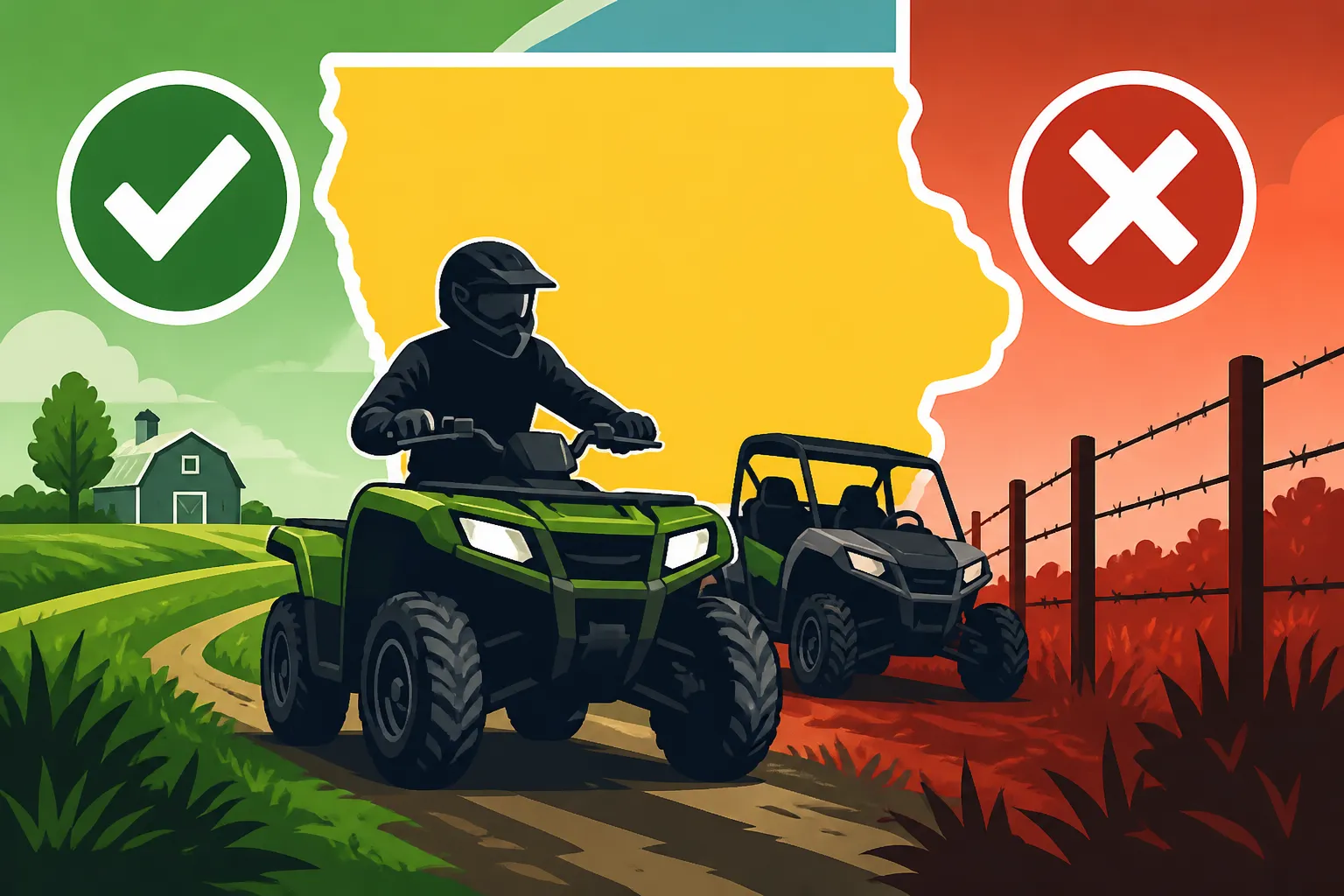
Here’s a common misconception that causes a lot of trouble: many riders believe that if there isn't a "No Trespassing" sign posted, the land is fair game or implies public access. This is absolutely not the case in Iowa. The absence of a sign does not grant you permission to ride on private land. A landowner is not legally required to post signs to assert their right to privacy and property. Their land is inherently private unless specifically designated and marked as public.
Imagine rolling up to a vast expanse of un-fenced prairie or timber, with no signs in sight. It feels open, wild, and tempting. However, nearly all land in Iowa is owned by someone – be it a private individual, a farming operation, or a corporation. Unless it's a clearly marked public park, state forest, or designated trail system, you must assume it's private and seek explicit permission. Relying on the "no sign, no problem" logic is a surefire way to get into hot water and receive a citation or worse, face the wrath of an upset landowner.
The Importance of Clear Boundaries
Property boundaries can be tricky, especially in rural areas where natural features like creeks, tree lines, or old fence rows might serve as unofficial markers. What looks like a logical boundary to you might not align with the actual deeded property lines. Furthermore, sometimes these boundaries are not visibly marked at all, making it even more challenging for riders to discern where public land ends and private property begins.
This is where planning and caution become paramount. If you're riding near a known public area, like an [Iowa OHV Park], always stick to the marked trails within that park's boundaries. Even a few feet off a marked trail could put you on adjacent private land. For those who enjoy venturing further, utilizing GPS maps that show property lines (many apps offer this feature) can be an invaluable tool. It’s a small investment in technology that can save you a huge headache later. Remember, a landowner's patience wears thin quickly when their property is being used without consent, regardless of whether you meant to cross the line or not.
Navigating Public vs. Private Land for ATV/UTV Riders
Iowa offers some fantastic riding opportunities, but knowing where you can legally ride is the critical first step to a responsible and enjoyable experience. The distinction between public and private land isn't always obvious from the seat of your machine.
Public Land: Designated Trails and Off-Limit Areas
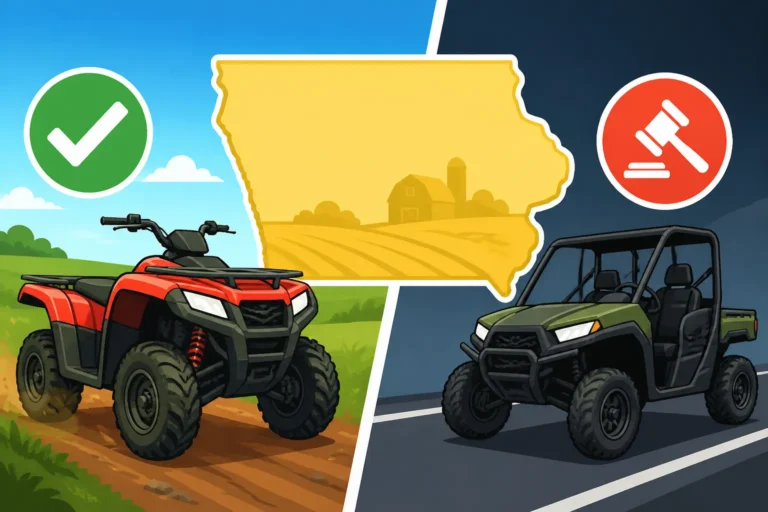
When we talk about public land for ATVs and UTVs in Iowa, we're primarily referring to the state's designated Off-Highway Vehicle (OHV) parks and trails. Places like Gypsum City OHV Park or Bluff Creek OHV Park are managed specifically for off-road recreation. These areas have marked trails, staging areas, and clear rules about where and how you can ride. Your Iowa registration decal serves as your admission ticket to these state-managed parks. [Your Registration Decal Is the Park Admission].
However, "public land" doesn't mean "any land not owned by an individual." Many public areas, such as state parks, wildlife management areas, and county conservation parks, explicitly prohibit ATV/UTV use, or restrict it to paved roads only, if at all. It’s crucial to understand that access to these areas for hunting, fishing, or hiking does not automatically extend to off-road vehicle use. Always check with the specific land management authority (Iowa DNR, county conservation boards) for their rules before you ever unload your machine. Don't assume. A quick call or a check of their website can prevent a frustrating and costly citation.
Private Land: The Absolute Necessity of Permission
This cannot be stressed enough: you must have explicit permission from the landowner to ride on private property in Iowa. There are no gray areas here. "Explicit permission" means they have directly told you, in no uncertain terms, that you are allowed to ride on their land. Ideally, this permission should be in writing, especially if you plan to ride there regularly or if the land is extensive. [Iowa Landowner Permission Rules] are clear on this. Verbal permission can be useful in a pinch, but it's harder to prove if a dispute arises or if a new family member takes over the property.
Let's imagine you have a friend who owns a large farm with some timber and fields. They tell you, "Sure, ride anytime!" That's verbal permission. It's a start. But what if your friend sells the land, or their elderly parent forgets they gave you permission, or a neighbor sees you and assumes you're trespassing? A written agreement, even a simple one signed by both parties, outlining the scope and duration of your permission, can save a lot of grief. It clarifies expectations and provides a clear defense if questioned.
Common Scenarios and Misunderstandings
Sometimes, riders genuinely believe they have permission when they don't. Perhaps you heard from a friend that "everyone rides there," or you're riding on what appears to be a field access road that connects two public roads. These assumptions are dangerous.
Consider the scenario of riding ditches along county roads. While some areas of Iowa allow limited ATV/UTV use on the shoulders or ditches of certain public roads, this is often restricted to specific conditions or only applies to the public right-of-way. The ditch, or the land immediately beyond the gravel, might still be private property belonging to the adjacent landowner. [Iowa Rules for Riding a Ditch] are very specific. The only way to be certain is to know the local ordinances and to be absolutely sure you are not encroaching on private land beyond the public easement. This is another situation where products from companies like SuperATV, offering clear rearview mirrors and side mirrors, can help you maintain awareness of your surroundings and potential property lines when riding along public thoroughfares.
Another common misunderstanding involves agricultural land. Farmers might leave fields fallow for a season, or a pasture might not have livestock in it, making it look like open space. However, these are still private working lands. Riding through a farmer’s field, even if it appears unused, can damage soil, crops, or future planting areas, leading to significant financial losses for the landowner. This kind of damage is especially infuriating for farmers and can result in much more severe legal consequences than just a simple trespass citation.
Consequences and Prevention of ATV/UTV Trespassing
Nobody wants a fun day of riding to turn into a legal headache or a confrontation. Understanding the potential repercussions and taking proactive steps can help you stay on the right side of the law and maintain good relationships with landowners.
Legal Repercussions and Penalties
Trespassing in Iowa can carry various penalties, depending on the severity of the offense and whether damage occurred. It often starts with a simple misdemeanor charge, which can still mean fines, court costs, and a criminal record. If you damage property – say, rutting up a field, breaking a fence, or disturbing livestock – the charges can escalate to a higher degree of misdemeanor or even a felony, potentially involving restitution for damages. [Iowa Fines for Illegal ATV Road Use] sometimes includes penalties for trespassing if you're caught riding where you shouldn't be.
Beyond fines, there's the possibility of your ATV or UTV being impounded. Imagine having your machine towed, paying for impound fees, and then facing the legal process to get it back. That alone can cost hundreds, if not thousands, of dollars. Furthermore, repeated trespassing can lead to stricter penalties, including prohibitions from riding in certain areas or even forfeiture of your machine in extreme cases. It's a risk simply not worth taking when a little bit of research and respect can prevent it all.
Practical Steps to Avoid Accidental Trespassing
The best defense against trespassing is a good offense of preparation and awareness. Here are some actionable steps you can take:
- Map Your Ride: Before you even leave home, plan your route using detailed maps. Utilize GPS apps that show property boundaries. Many dedicated off-road GPS units, or even smartphone apps, offer satellite imagery and property line overlays. This is invaluable for identifying where public land truly ends and private property begins.
- Look for Markers: While "no trespassing" signs aren't required, look for any signs that do exist, along with fences, gates, or changes in land use (e.g., a groomed trail ending and a cultivated field beginning). These are all clues about property ownership.
- Seek Written Permission: If you want to ride on private land, always, always, always get written permission. A simple, signed document stating the landowner's name, your name, the dates or duration of permission, and a description of the allowed riding area is sufficient. Keep a copy on you while you ride. [Riding Private Ground in Iowa] emphasizes this point.
- Stay on Marked Trails: When in a designated OHV park or public riding area, stick to the marked trails. Do not venture off-trail, as this can lead to environmental damage, safety hazards, and potentially straying onto adjacent private land.
- Be Visible and Respectful: If you're riding near inhabited areas or where you might encounter landowners, consider equipping your UTV with a flag or bright lighting (like those offered by SuperATV) to increase your visibility. Slow down, be courteous, and wave. A positive impression goes a long way.
Building Good Relationships with Landowners
One of the most powerful tools in preventing trespassing issues is fostering positive relationships with landowners. When landowners see ATV/UTV riders as responsible, respectful members of the community, they are far more likely to be understanding, or even open to granting permission for riding.
Think about it: an irritated landowner who has repeatedly dealt with riders damaging their property is going to be far less forgiving than one who has never had a problem or has seen riders actively being respectful. If you live near potential riding areas, consider introducing yourself to landowners. Offer to help with a task, or simply ask for permission to cross a small section of their land to access another area. Even if they say no, your polite approach can leave a lasting positive impression, making them less likely to immediately assume the worst if an innocent mistake occurs. Remember, landowners are often part of tight-knit rural communities, and a bad reputation can spread quickly.
Specific Scenarios and Gray Areas
While the basic rule is "get permission for private land," some situations can be confusing for even experienced riders. Let's delve into a few common "gray areas" that often lead to accidental trespassing.
Riding Ditches and Road Rights-of-Way
This is perhaps one of the most contentious topics for ATV and UTV riders in Iowa. You're cruising along a county gravel road, which you know is legal for your machine under certain conditions. But what about the ditch beside the road? Or the area beyond the ditch, into what looks like a field margin?
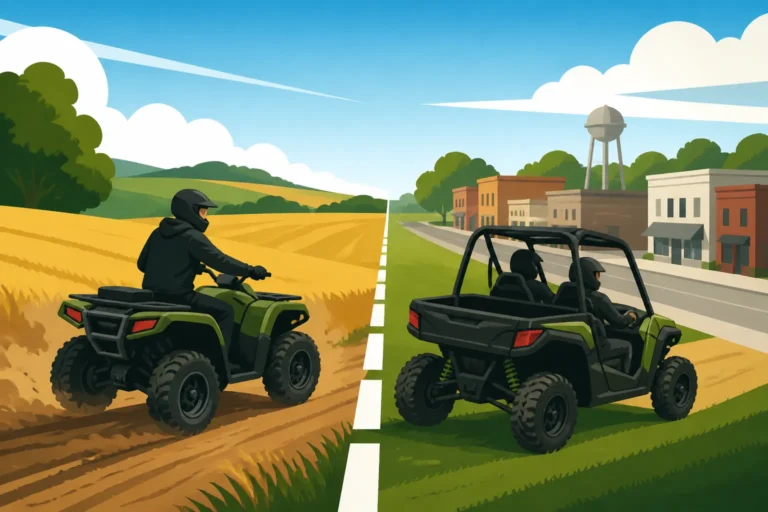
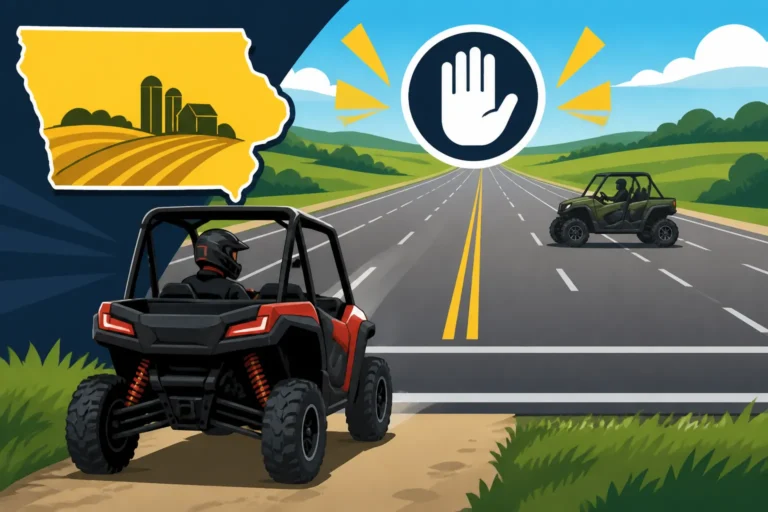
In Iowa, county secondary roads and even some paved secondary roads may be open to ATVs and UTVs under specific county ordinances. However, the right-of-way for a road (the land owned by the public for the road itself) typically extends only so far beyond the traveled surface. The ditch, and especially the land beyond it, often belongs to the adjacent private landowner. Just because you're legally on the road doesn't mean you can ride freely in the ditch or on the field edge. This varies significantly by county and even by specific road. Always assume the ditch and beyond are private unless local regulations explicitly state otherwise and you have confirmation of the public easement. If you're trying to skirt a difficult section of road by dipping into the ditch, make sure you know exactly where the public right-of-way ends. [Unpaved County Secondary Roads in Iowa] and [Paved Secondary Roads and County Authorization] delve into these specific rules.
Farm Fields and Agricultural Land
As mentioned earlier, agricultural land presents a unique challenge because its appearance can change dramatically throughout the year. A harvested cornfield in late fall might look like a huge, open playground. A hayfield after its last cutting might seem like a perfect place to open up the throttle. However, these are active farms.
Riding on farm fields, even when crops aren't visibly growing, can compact the soil, create ruts that interfere with future planting, spread invasive weeds, or damage delicate subsurface drainage tiles. Farmers invest heavily in their land, and any damage, intentional or accidental, can be incredibly costly. Furthermore, farm operations often include sensitive areas like livestock pastures, feedlots, or machinery storage. Riding too close to livestock can scare them, potentially causing injury to the animals or even to you. The implement of husbandry exemption for ATVs is for farm work, not for recreation. [The Implement of Husbandry Exemption in Iowa] clarifies that your machine needs to be actively used for farming to qualify.
Abandoned Properties and Unmarked Trails
"But it looked abandoned!" This is another common justification for trespassing that won't hold up. Just because a property appears neglected, overgrown, or has an old, crumbling farmhouse doesn't mean it's public or fair game. It still has an owner, and that owner still has property rights.
Similarly, an old, faint trail winding through the woods might seem like a forgotten path, ripe for exploration. In reality, it could be a deer trail, a private logging road, or an old access route that's part of someone's private timber. Without explicit knowledge that it's a public trail (like those clearly marked in an OHV park), you must assume it's private. The thrill of discovery is not worth the legal or confrontational risk. Stick to known and marked trails, or secure written permission before venturing into the unknown. If you're exploring, reliable gear like a SuperATV winch could get you out of a sticky situation, but it's no substitute for knowing where you're legally allowed to ride.
A Quick Reference: Public vs. Private Riding
To help you keep it straight, here’s a simple comparison table:
| Feature | Public Land (Designated OHV Areas) | Private Land (Any Non-Public Property) |
|---|---|---|
| Permission | Not required beyond valid registration/permit | ALWAYS REQUIRED (ideally written) |
| Signage | Clearly marked trails and park boundaries | Absence of "No Trespassing" signs DOES NOT grant permission |
| Access | Restricted to designated trails; other public areas often prohibited | No access whatsoever without explicit landowner consent |
| Responsibility | Adhere to park rules, stay on trails, respect other users | Know property lines, follow landowner's specific rules, avoid damage |
| Consequences | Citation for rule violation (e.g., off-trail), park ban | Trespassing charges, fines, restitution for damages, potential impoundment |
| Best Practice | Check DNR websites for park status/closures, carry current registration | GET WRITTEN PERMISSION, use GPS with property lines, be respectful |
No one wants to be the rider who gives all off-road enthusiasts a bad name. By understanding Iowa's trespass rules, always securing permission for private land, and sticking to designated public trails, you can ensure your adventures remain thrilling, legal, and respectful of your fellow Iowans.
Disclaimer
This article is for general informational purposes only and does not constitute professional advice. Laws, prices and regulations vary by location and change over time. Consult a qualified professional for guidance on your specific situation.