Iowa Rules for Riding a Level B Road
There's a special kind of freedom that comes with exploring Iowa's backroads on an ATV or UTV, but those "Level B" roads can be a real head-scratcher for riders trying to stay on the right side of the law. Many folks assume these unmaintained routes are fair game for anything, often leading to confusion, frustration, and sometimes even unexpected fines. This guide is here to untangle the complexities of riding an ATV or UTV on Iowa's Level B roads, providing clear, actionable information to help you enjoy your ride responsibly and legally.
Understanding Iowa's Level B Roads
Before we dive into the rules, it's crucial to understand exactly what a "Level B" road is in Iowa. These aren't just any old dirt tracks; they're a specific legal designation that comes with its own set of characteristics and, yes, rules.
What Makes a Road "Level B"?
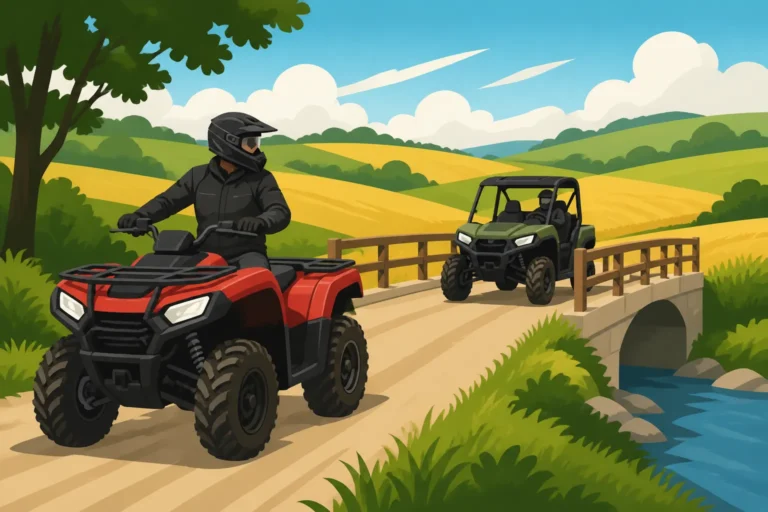
In Iowa, a Level B road, sometimes referred to as a "minimum maintenance road," is a public road that the county has officially designated as such. This means the county has chosen not to perform the same level of maintenance as they would on a paved road or even a regularly graded gravel road. Think of it less as a road and more as a historical right-of-way that retains its public status but receives minimal upkeep. You might encounter deep ruts, significant mud, overgrown vegetation, and generally unimproved conditions. They often lack signage, clear shoulders, and sometimes even a defined gravel surface, making them a true adventure.
The legal designation of a Level B road often means the county only commits to things like ensuring culverts aren't completely blocked or that the road is generally passable, though "passable" can be a subjective term when you're talking about heavy mud or deep snow. It's easy to assume that because the county isn't maintaining it, it's a free-for-all, but that's not the case at all. The underlying public right-of-way remains, and with that comes the application of traffic laws, including those specific to off-highway vehicles. These roads represent a unique blend of public access and rugged terrain, which is precisely why riders are so drawn to them.
Why Level B Roads Exist
The existence of Level B roads often stems from a combination of historical access needs and practical economic decisions by county governments. Many of these routes were established decades, or even a century, ago to provide access to isolated farmsteads or timber plots. Over time, as population centers shifted and main transportation corridors were developed, the traffic volume on these older, less direct routes dwindled significantly. Maintaining miles of road for very few users becomes a huge financial burden for counties.
Rather than abandoning these roads entirely and cutting off potential access, counties opt for the Level B designation. This allows them to significantly reduce maintenance costs while still preserving public access. It's a pragmatic solution that keeps a network of public ways open without draining limited budgets. For ATVs and UTVs, these roads offer exciting opportunities to explore areas that might otherwise be inaccessible, providing a taste of true off-road adventure without technically trespassing on private land. However, this designation doesn't absolve riders of responsibility; it simply changes the county's commitment to maintenance, not necessarily your obligations as an operator.
The Legal Framework for ATVs and UTVs on Level B Roads
Just because a road is "unmaintained" doesn't mean it's unregulated. This is one of the biggest misconceptions riders have about Level B roads. When you take your ATV or UTV onto any public roadway in Iowa, even one that's barely more than two tire tracks, you are subject to specific laws and requirements. Ignoring these can lead to significant penalties, spoiling an otherwise great ride.
Registration and Decal Requirements
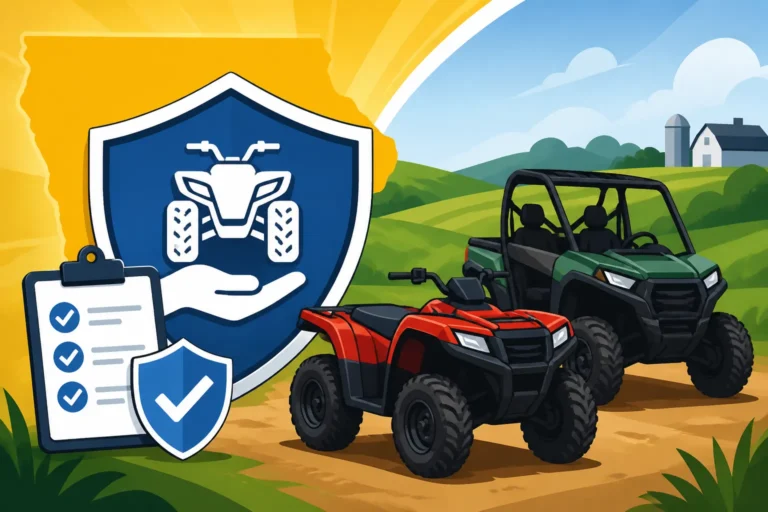
First and foremost, your ATV or UTV absolutely must be registered with the Iowa Department of Natural Resources (DNR) through your county recorder's office if you plan to ride it on any public land or roadway, including Level B roads. This isn't just for organized trails; it applies to all public rights-of-way. Once registered, you'll receive a distinctive decal that must be prominently displayed on the rear of your machine. This decal signifies that you've met the state's basic registration requirements and contributed to the fund that supports Iowa's OHV program.
Many riders, especially those new to the state or to the OHV scene, mistakenly believe that if a road is rarely patrolled, they can skip registration. This is a risky gamble. Law enforcement, whether it's a county sheriff's deputy or an Iowa conservation officer, can and will enforce registration laws on these roads. Getting caught without proper registration can result in fines and disrupt your ride. Think of it this way: your ATV or UTV decal is your admission ticket to legally operate on public lands, and that includes those rugged Level B paths. Don't leave home without it. You can learn more about this by checking out [Iowa Rules for Riding an ATV on Iowa Roads].
Operator Requirements
Operating an ATV or UTV on any public road in Iowa, including Level B roads, comes with specific operator requirements designed to ensure safety. The most crucial of these is age. In Iowa, to operate an ATV or UTV on a public road, including Level B roads, you must be at least 18 years old and possess a valid driver's license. This rule is firm and aims to ensure that operators have the maturity and training associated with licensed drivers. There's no special "Level B license" or exemption for these roads; the standard road-use rules apply.
For younger riders, even if they've completed an ATV safety course, the public road age limit still holds. Children under 18 may operate ATVs on private property with landowner permission and proper supervision, but they are not permitted to ride on public roads, including those less-traveled Level B routes. This is a common pitfall for families, as it's easy to assume that a secluded Level B road is akin to private land. Always ensure that anyone operating your machine on a public road meets the age and licensing criteria. Review [Iowa Minimum Age to Ride a Road] and [Iowa Driver's License Rules for ATVs] for more specifics.
Equipment Requirements for Road Use
Here's where many riders get caught off guard: even on a Level B road, your ATV or UTV needs to meet specific equipment standards for road use. This isn't just for paved highways; it applies to all public roads where OHVs are permitted. Failing to equip your machine properly can lead to citations, even if you're deep in the county's back forty.
Here's what you'll typically need:
- Headlights and Taillights: Your machine must have functioning headlights and taillights. While riding during daylight hours, headlights must still be illuminated. If you're riding from [Riding Home After an Iowa Sunset], this becomes even more critical.
- Mirrors: At least one rearview mirror is required. Typically, this would be mounted on the left side of the handlebars for ATVs or the left side of the cab for UTVs.
- Horn: A working horn is necessary to signal other traffic or warn pedestrians.
- Slow-Moving Vehicle (SMV) Triangle: This reflective orange and red triangle must be affixed to the rear of your machine, pointing upwards. It alerts faster-moving traffic to your presence.
- Insurance: This is non-negotiable. You must carry liability insurance with minimum coverage limits (often referred to as 20/40/15, meaning $20,000 for one injury, $40,000 for two, and $15,000 for property damage). Law enforcement can ask for proof of insurance during a roadside stop, even on a Level B road. Without it, you could face significant [Iowa Fines for Illegal ATV Road Use].
It’s tempting to think these requirements are overkill for a road where you might not see another vehicle for miles, but the law doesn't make that distinction. A deputy encountering you on a Level B road expects your machine to be road-ready. For robust components that stand up to the rigors of Level B roads, many riders turn to aftermarket options. Brands like SuperATV offer heavy-duty tie rods, skid plates, and suspension components that can handle the abuse, ensuring your machine stays compliant and capable. Remember, these roads can be rough, and having reliable equipment is not just about legality, but also about safety and avoiding a breakdown far from anywhere. Check out [Iowa Lighting Requirements for ATVs], [Iowa Mirror Requirement for Road Use], [Iowa Horn Requirement for Road Use], [Iowa Slow-Moving Vehicle Sign Rules], and [Iowa ATV Insurance Requirement] for more details.
Riding Etiquette and Safety on Level B Roads
Beyond the legal requirements, riding Level B roads safely and respectfully requires a certain mindset. These aren't designated OHV parks with clear trail markers and dedicated facilities. They are shared spaces, often adjacent to private land, and navigating them thoughtfully is key to a positive experience for everyone.
Navigating the Terrain
Level B roads, by their very definition, are not maintained, which means the terrain can be incredibly challenging and unpredictable. You'll encounter deep mud holes, washouts, large rocks, exposed culverts, and dense vegetation. This isn't the place for high speeds or careless riding. Always ride within your skill level and the capabilities of your machine. Before heading out, consider equipping your ATV or UTV for the conditions. Aggressive tires are a must for traction in mud and loose gravel. A winch can be a lifesaver if you get stuck, and heavy-duty skid plates from a company like SuperATV can protect vital components from hidden obstacles.
Remember that conditions can change rapidly, especially after rain or during spring thaw. A puddle that looked shallow could be a bottomless mud pit. Scout ahead when unsure, or walk a questionable section if possible. Always carry recovery gear, a first-aid kit, and enough supplies to handle an unexpected delay. The remoteness of many Level B roads means help could be a long time coming. This is not a place to take unnecessary risks; the adventure is in the challenge, not in pushing your luck.
Encountering Other Users
While Level B roads see minimal traffic, you are not alone out there. You might encounter local residents accessing their property, farmers moving equipment, hunters, hikers, or even horseback riders. Your ATV or UTV might be loud and startling to others, so always approach blind corners and crests slowly and be prepared to stop. When you see another user, reduce your speed to a crawl, move to the side of the road, and be courteous. Turn off your engine if you're stopped near someone on horseback or a pedestrian, allowing them to pass without being disturbed by engine noise.
Remember, these roads are part of a community, and maintaining a good reputation for OHV riders is crucial for continued access. A negative interaction with a local landowner or resident can quickly lead to calls to the county sheriff and potential restrictions. A simple wave, a friendly nod, and respectful slowing down go a long way in building goodwill. The goal is to share the road, not dominate it.
Environmental Considerations
Riding Level B roads means riding through natural environments, and respecting these areas is paramount. Stick to the established road prism – the actual path of the road – and avoid riding off into ditches or adjacent private property. While a ditch might seem like a fun challenge, riding [Riding a Ditch Beside a Level B Road] is typically illegal and can cause significant erosion, damage habitat, and invite landowner complaints. Do not create new tracks or widen the existing road by cutting around obstacles. If a section is impassable, turn around; don't blaze a new trail.
Be mindful of litter and leave no trace. Pack out everything you pack in, including any trash you might find. Be aware of private property boundaries, which are often marked by fences, No Trespassing signs, or changes in vegetation. Just because a Level B road borders private land doesn't give you permission to enter that property. Always have clear landowner permission before setting a tire on private ground. [Iowa Trespass Rules for Riders] are serious, and violations can lead to hefty fines and legal trouble. Maintaining these principles helps preserve access for all and protects the natural beauty of Iowa's rural landscapes.
Avoiding Penalties and Common Misconceptions
It’s easy to misunderstand the nuances of Level B roads, and these misconceptions can lead directly to penalties. Being informed is your best defense against accidental violations and ensures your riding experience remains enjoyable and legal.
The Myth of "Anything Goes"
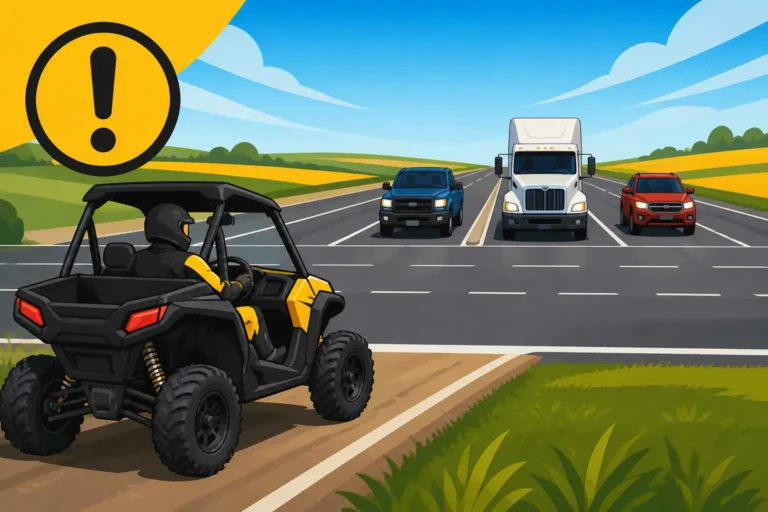
The most dangerous misconception about Level B roads is that they are lawless zones where "anything goes." This simply isn't true. While they are minimally maintained, they remain public roads and are subject to Iowa's traffic laws and off-highway vehicle regulations. This includes rules regarding speed, operating under the influence, vehicle requirements, and operator licensing. A county sheriff's deputy or an Iowa DNR conservation officer has every right to patrol these roads and issue citations for violations.
Thinking you're immune from enforcement because the road is remote is a gamble you don't want to take. Officers are familiar with these routes and often patrol them specifically to address illegal activity, including unregistered machines, underage operators, or machines not equipped for road use. Don't let the rugged appearance fool you into thinking it's a free-for-all. Always assume you are on a public roadway and act accordingly. Check out [Getting Cited for Riding Without a Recorder Decal] for examples of penalties.
Insurance is Key
We touched on insurance earlier, but it bears repeating: your ATV or UTV must be insured for liability when operating on any public road in Iowa, Level B roads included. Accidents happen, even on secluded tracks. You could lose control, collide with a natural obstacle, or, though rare, encounter another vehicle or person. If you're involved in an accident and don't have the required insurance, the financial consequences can be devastating, far outweighing the cost of a policy.
Even if you're certain you won't encounter another vehicle, your insurance protects you from potential liability if your machine causes damage to property or injury to someone else, even if they were trespassing or the situation is complex. It's a fundamental requirement for legal road use in Iowa, and law enforcement can issue fines for [Iowa Fines for No Proof of Insurance]. Don't risk it; secure proper coverage before you hit those Level B roads.
When in Doubt, Check
Iowa's road system can be confusing, and what constitutes a Level B road can sometimes be unclear on older maps or simply by observation. If you're unsure about the status of a particular road or whether it's legal for ATV/UTV use, your best bet is to contact the county engineer's office or the county recorder's office in the specific county you plan to ride. They maintain records of road designations and can provide definitive answers.
Never rely solely on mapping apps or anecdotal information from other riders, as rules and designations can change, and not all apps are updated with the latest county-specific information. A quick phone call or email can save you a lot of hassle and potential fines down the road. It's always better to verify upfront than to face an unexpected citation. This proactive approach ensures you're riding legally and responsibly, preserving the privilege for all of us.
Quick Reference for Iowa ATV/UTV Road Rules
| Rule Category | Paved Secondary Road (County Authorized) | Unpaved Secondary Road (Gravel/Dirt) | Level B Road (Minimum Maintenance) | City Street (Council Authorized) |
|---|---|---|---|---|
| Registration/Decal | Required | Required | Required | Required |
| Operator Age | 18+ | 18+ | 18+ | 18+ |
| Driver's License | Required | Required | Required | Required |
| Headlights On (Daylight) | Required | Required | Required | Required |
| Taillights | Required | Required | Required | Required |
| Mirrors | Required (at least one) | Required (at least one) | Required (at least one) | Required (at least one) |
| Horn | Required | Required | Required | Required |
| SMV Triangle | Required | Required | Required | Required |
| Insurance | Required | Required | Required | Required |
| Speed Limit | Varies (check posted limit, often 35mph cap for OHVs) | Varies (check posted limit, often 35mph cap for OHVs) | Varies (35mph cap for OHVs, caution advised) | Varies (check posted limit, often 35mph cap for OHVs) |
| Direct Route Rule | Applies | Applies | Applies | Applies |
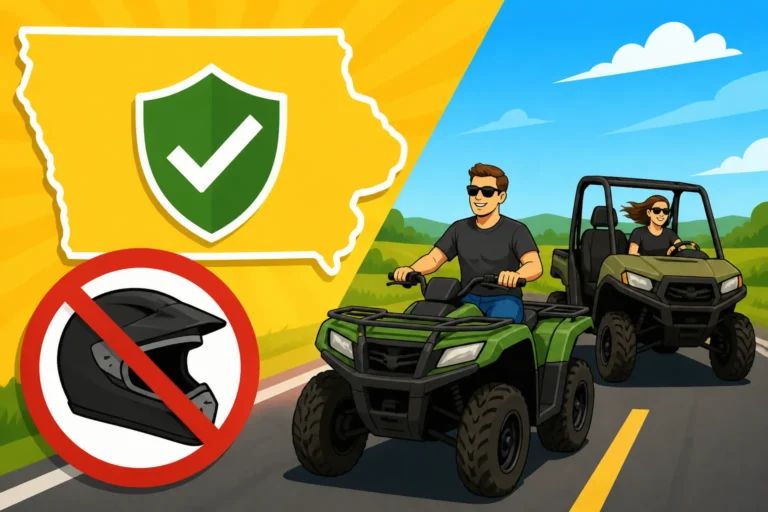
| Helmet Required | No (Iowa leaves to rider) | No (Iowa leaves to rider) | No (Iowa leaves to rider) | No (Iowa leaves to rider) |
Navigating Iowa's Level B roads on your ATV or UTV can be one of the most rewarding experiences you can have, offering a unique blend of adventure and exploration. However, the key to truly enjoying these routes without stress or penalties lies in understanding and respecting the rules. By ensuring your machine is properly registered and equipped, that you meet operator requirements, and that you ride safely and courteously, you contribute to a positive future for off-highway vehicle recreation in Iowa. Don't let the rugged beauty of these roads lead you into a false sense of unregulated freedom. Ride smart, ride safe, and enjoy the adventure that awaits on Iowa's backroads.
Disclaimer
This article is for general informational purposes only and does not constitute professional advice. Laws, prices and regulations vary by location and change over time. Consult a qualified professional for guidance on your specific situation.