How an Iowa City Authorizes a Street
It can be incredibly frustrating to look at your ATV or UTV, itching to take it for a quick spin down to the local store or connect two riding spots, only to wonder if it's even legal on your city's streets. Navigating the rules for riding off-highway vehicles in Iowa municipalities feels like trying to solve a complicated puzzle with missing pieces. This guide is here to walk you through exactly how an Iowa city can authorize its streets for ATV and UTV use, demystifying the process and helping you understand what it means for your next ride.
The Frustration of City Street Riding for ATVs/UTVs
We've all been there, right? You're in your garage, looking at your shiny new SuperATV lift kit installed on your UTV, and you think, "Man, it would be awesome to just hop on this thing and grab some milk without trailering it." But then that nagging doubt creeps in: Can I actually do that? The truth is, Iowa's laws around ATV and UTV use on public roads can feel like a tangled mess, especially when you start talking about city streets.
The Patchwork of Rules Across Iowa
One of the biggest headaches for riders in Iowa is the sheer inconsistency from one town to the next. You might be able to cruise your quad down the main drag in [Waukon's Open Streets and Alleys], but cross the county line into another municipality, and suddenly, you're looking at a potential ticket for illegal operation. There's no statewide blanket rule that says, "Yes, all Iowa city streets are open to OHVs," or "No, absolutely none are." Instead, it's left up to each individual city council to decide, and that leads to a real patchwork of rules.
This local control is why you can find yourself asking your buddies if their town allows it, because what's legal in one place might be strictly forbidden just a few miles down the road. It makes it tough to plan a ride that crosses city limits, or even to know if your quick trip to the hardware store is above board. This is precisely why articles like [Iowa Cities That Allow ATVs on Streets] are so sought after; riders are desperate for clarity in this inconsistent landscape.
Why Cities Even Consider Opening Streets
So, if it's such a complicated issue, why do cities even bother opening their streets to ATVs and UTVs in the first place? Well, there are a few common reasons. Sometimes, it's about tourism. Towns near popular riding areas, or those looking to attract more visitors, see the benefit in allowing riders to easily access local businesses, restaurants, and gas stations. Think about a small town that sits right on the edge of a fantastic trail system; it only makes sense for riders to be able to get from their lodging to the trailhead, or to grab a bite to eat, without having to load their machines back onto a trailer.
Other times, it's about connecting parts of the community that might be separated by a public road, especially in more rural settings where an OHV might be a primary mode of transport for some residents. We've also seen it where local ATV/UTV clubs advocate strongly for access, demonstrating the economic and social benefits to the community. It's rarely a decision made lightly, and it almost always comes from a perceived benefit to the local populace or economy, whether it's economic growth or simply improving convenience for its citizens.
The Legal Framework: How Iowa Cities Get Authority
It's not like a city council can just wake up one morning and decide to open all their streets for ATV and UTV use on a whim. There's a specific legal path they have to follow, rooted deeply in Iowa state law. Understanding this framework is key to grasping why some cities say "yes" and others stick with a firm "no."
Understanding Iowa Code 321.234A
The foundational authority for cities to allow off-highway vehicles (OHVs) on their streets comes directly from Iowa Code 321.234A. This particular section of the code outlines the general rules for OHVs on public roads, and critically, it gives specific municipalities — cities, in this case — the power to pass their own ordinances. Essentially, the state law sets the default (usually "no riding"), but then provides an "opt-in" clause for local governments. This is a critical distinction from how, for example, [How an Iowa County Authorizes a Paved Road] might work, as the specific code sections and levels of authority can differ.
It’s important to note that this isn't a free-for-all. The state code still imposes certain restrictions that even an authorizing city must adhere to, such as [Iowa Minimum Age to Ride a Road] requirements for riders, [Iowa ATV Insurance Requirement] mandates, and equipment standards. So, while a city can open its streets, it can't, for example, waive the requirement for an 18-year-old driver to operate on a public road, or ignore the need for proper lighting. This state law is the very thing that prevents total chaos and ensures a baseline of safety, no matter what a local ordinance might say about specific streets.
The Role of the City Council
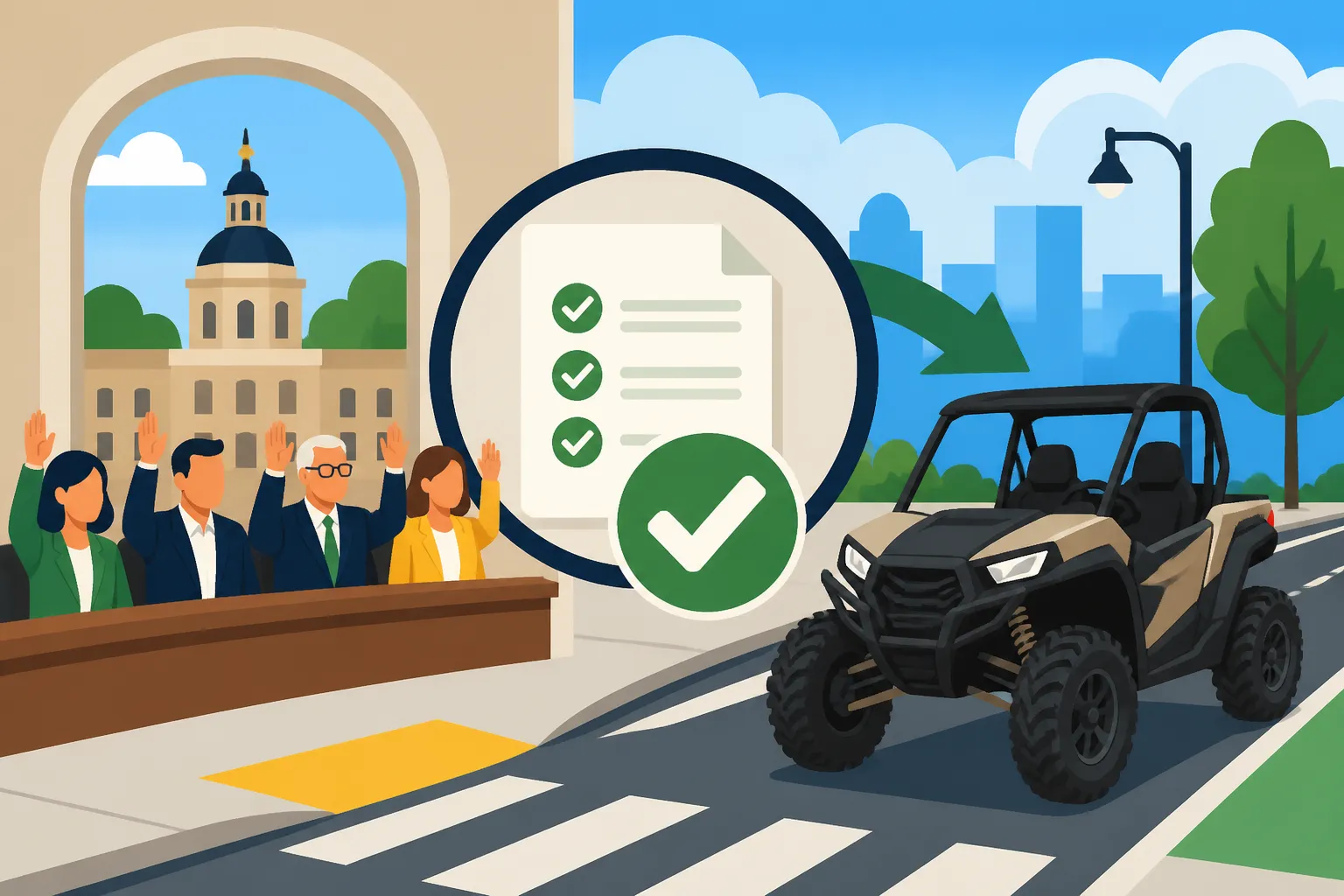
At the heart of the authorization process is the city council. These are your locally elected officials who represent the community's interests. When it comes to allowing ATVs and UTVs on city streets, it's the council's job to weigh the potential benefits against the potential drawbacks. They'll consider everything from public safety concerns to noise complaints, from the economic boost for local businesses to the impact on regular vehicle traffic. This isn't a one-person decision; it's a collective vote by the council members.
Typically, the process involves public hearings where residents can voice their opinions, both for and against the proposal. If you're passionate about seeing your city open its streets, attending these meetings and respectfully presenting your case, perhaps even highlighting the safety features of aftermarket parts like those from SuperATV, can make a real difference. Conversely, if you have concerns, those meetings are your chance to be heard. It's a truly democratic process, and the council acts as the ultimate gatekeeper for local road access, shaping the riding landscape of their town.
The Authorization Process: What Happens in a City Council Meeting
So, you've got an idea or a local club has put forth a proposal to open certain city streets. What happens next? It's not as simple as a quick "yay or nay" vote. There’s a structured process that most city councils follow to ensure due diligence and public involvement. This is where the rubber meets the road, or more appropriately, where the council decides if your tires can legally meet their asphalt.
From Public Input to Official Vote
The journey to an authorized street usually begins with a request or a discussion item placed on the city council's agenda. This can come from a concerned citizen, a local business, or an organized group like an ATV club. Once it's on the agenda, the council will typically schedule a series of public meetings or workshops. This is your prime opportunity to participate! Residents can come forward and share their perspectives, data, and personal experiences. For example, a local business owner might highlight how much more traffic they'd see from riders passing through, while a resident on a quiet street might express concerns about noise or speeding.
The council members listen, ask questions, and gather information. Sometimes, they'll even conduct their own research, consulting with the police department, public works, or even neighboring communities that have already adopted similar ordinances. All this feedback and research eventually leads to a draft ordinance. This draft is then formally presented, debated, and finally, brought to a vote. Many ordinances require multiple "readings" over several council meetings before a final vote is cast, ensuring ample time for consideration and public input, and allowing the community to truly shape the outcome.
Crafting the City Ordinance
If the council decides to move forward, the next critical step is crafting the actual city ordinance. This isn't just a casual "okay, you can ride here now." A well-written ordinance is a detailed legal document that outlines exactly where, when, and how ATVs and UTVs can be operated on city streets. It needs to be precise to avoid confusion and enforceability issues. The city attorney often plays a significant role here, ensuring the ordinance complies with existing state laws, like those referenced in [Iowa's Unpaved Secondary Road Rule] or [Iowa Rules for Riding a Gravel Road], and doesn't create unintended legal loopholes.
They'll consider aspects like:
- Which specific streets or sections of streets are open (e.g., all secondary streets, specific connector roads, designated routes to OHV parks).
- Any time restrictions (e.g., sunrise to sunset, no riding after 10 PM).
- Additional equipment requirements beyond state minimums (though generally, state law sets the baseline).
- Speed limits, often stricter than for cars.
- Enforcement mechanisms and penalties for violations.
This careful drafting process is why you often see differences in ordinances from one town to the next. Some might open almost everything, while others are very restrictive. It's a balance between access and maintaining community order, and a good ordinance reflects that balance clearly, providing clear guidelines for everyone involved.
What an Ordinance Typically Covers
So, what kind of specifics can you expect to find in one of these city ordinances once it's passed? Beyond the basic "where and when," a good ordinance will typically address a whole host of operational details. For example, it will often reiterate state-level requirements that apply to all road use, such as the need for proper headlights and taillights, a horn, and a mirror. It will almost certainly remind riders of the [Iowa Driver's License Rules for ATVs] and the minimum coverage limits that apply. Many ordinances will also specify the age of the operator, often mirroring the state's 18-year-old minimum for public road use. Some may designate specific staging areas or routes to connect directly to trails or out of town, or even specify rules for things like [Iowa Rules for Riding a City Alley].
For instance, an ordinance might say something like: "Off-road vehicles are permitted on all streets within city limits, except for Primary Highway 14 and Main Street between 1st and 5th Avenues. Operation is permitted from one-half hour before sunrise to one-half hour after sunset. All operators must possess a valid driver's license, be 18 years of age or older, and carry proof of liability insurance meeting state minimums. Speed limits shall not exceed 25 mph on authorized streets."
This level of detail is crucial for both riders and law enforcement. It provides clarity and avoids ambiguity, ensuring everyone understands the rules of the road. If your machine is equipped with quality accessories, perhaps from SuperATV, that meet or exceed these requirements, you're already ahead of the game. For specific examples, you could look into communities like [Waukon's Open Streets and Alleys] or how [Des Moines County Ordinance Fifty-Six] approaches their rules, though remember, county ordinances are a bit different from city ones as they cover unincorporated areas.
What This Means for Riders and How to Find Out If Your City Allows It
Now that you understand the process, what does this all mean for you, the rider? The biggest takeaway is that you are responsible for knowing the rules in any given city you plan to ride in. Ignorance of the law is never an excuse, and a ticket for riding illegally on city streets is a quick way to spoil a perfectly good day out. Your adventure begins with research, not just with the turn of a key.
How to Research Your Local City's Rules
Given that there's no central, statewide list of which Iowa cities allow OHVs on their streets (a frustration many of us share, as highlighted in [Why Iowa Publishes No List of City Ordinances]), finding out the rules for a specific town requires a bit of detective work on your part. But don't worry, it's usually pretty straightforward.
Here's a step-by-step approach:
- Start with the City Clerk's Office: This is your absolute best first stop. Every city has one, and the city clerk is the keeper of all official records, including ordinances. You can usually find their contact information on the city's official website. A simple call or email, asking "Does the city have an ordinance allowing ATVs or UTVs on public streets?" is often all it takes. Be polite and clear, as outlined in [Calling a City Clerk About ATVs].
- Check the City's Website: Many cities, especially larger ones, will publish their municipal code or ordinances online. Look for sections related to "Traffic and Vehicles," "Off-Highway Vehicles," or similar titles. A quick search using terms like "ATV ordinance [City Name]" might yield results.
- Ask Local Law Enforcement: While the city clerk is the official source, your local police department or county sheriff's office in that jurisdiction can also provide guidance. They are the ones who enforce these rules, so they should definitely know them. However, always double-check with the city clerk for the most official wording of the ordinance.
- Connect with Local Riding Clubs: Often, ATV and UTV clubs in an area are very well-informed about local regulations because they've likely been instrumental in advocating for or understanding them. They can be a great resource for practical advice and insights into the local riding scene.
Remember, always get the information directly from an official source. Don't rely solely on what you heard from a friend of a friend, because rules can change, and interpretations can vary. This diligence will save you a lot of hassle and potential fines, ensuring your ride is legal and stress-free.
Riding Responsibly in Authorized Areas
Once you've confirmed that a city does allow ATVs or UTVs on its streets, the responsibility shifts entirely to you to ride safely and legally. Just because you can ride doesn't mean you can ride any way you want. These are public roads, shared with cars, bicycles, and pedestrians, and all the standard traffic laws apply, often with additional restrictions for OHVs. You'll need to ensure your machine is properly equipped for street use, a topic thoroughly covered in [What Iowa Requires of an ATV on a Public Road].
Here’s a table summarizing some key considerations for riding on authorized city streets:
| Feature/Requirement | Authorized City Street Use | Typical Off-Road Trail Use |
|---|---|---|
| Driver's License | Required (typically 18+ for public roads) | Not always required for off-road use, but recommended for anyone operating machinery |
| Insurance | Required (liability minimums apply) | Recommended, but not legally mandated for private land or some parks |
| Lighting | Headlights (on at all times), taillights, brake lights, often turn signals | Headlights for night riding, taillights sometimes optional depending on park rules |
| Mirrors | Required (at least one, often left side) | Generally not required |
| Horn | Required | Generally not required |
| Speed Limit | Strictly enforced, often lower than for cars (e.g., 25 mph) | Varies greatly by trail, often about conditions |
| Passenger Rules | Must only carry passengers for whom the vehicle is designed | Varies, but generally follows manufacturer design |
| Decal/Registration | Required (Iowa OHV registration decal) | Required (for public trails/parks) |
| Helmet | Not legally required for adults 18+ in Iowa on roads, but highly recommended | Often required by OHV parks for all riders, or by age for youth |
This might mean adding turn signals, a rearview mirror, or a proper horn if your off-road setup doesn't already include them. Companies like SuperATV offer a range of accessories that can help you get your machine street-ready, from turn signal kits to DOT-approved windshields. Always operate with the utmost respect for other road users and residents. Keep your speed in check, adhere to all traffic signs, and be mindful of noise. Remember, the privilege of riding on city streets can be revoked if too many riders disregard the rules. Being a responsible rider helps ensure these opportunities remain open for everyone.
Disclaimer
This article is for general informational purposes only and does not constitute professional advice. Laws, prices and regulations vary by location and change over time. Consult a qualified professional for guidance on your specific situation.