Iowa Rules for Riding a Gravel Road
There's a special kind of freedom that comes with exploring Iowa's backroads on your ATV or UTV, isn't there? That feeling of open air, the gravel crunching under your tires, and the wide-open landscape stretching out before you. But let's be honest, figuring out the specific rules for riding those gravel roads can feel like trying to solve a puzzle with half the pieces missing. It’s frustrating when you just want to enjoy your machine responsibly but fear getting a ticket for something you didn't even know was prohibited. This guide is designed to cut through that confusion, giving you a clear, comprehensive understanding of what you need to know to legally and safely ride Iowa's gravel roads.
The Foundation: Iowa's Stance on Gravel Roads for ATVs and UTVs
When you first start looking into riding your ATV or UTV on public roads in Iowa, it can feel like you're wading through a swamp of legal jargon. But the truth is, Iowa actually has a pretty sensible approach to off-highway vehicles on its vast network of gravel roads. It's not a free-for-all, but it's also not as restrictive as some might assume. The key is understanding the distinction between different types of roads and what local authorities have the power to do.
Understanding "Unpaved Secondary Roads" in Iowa
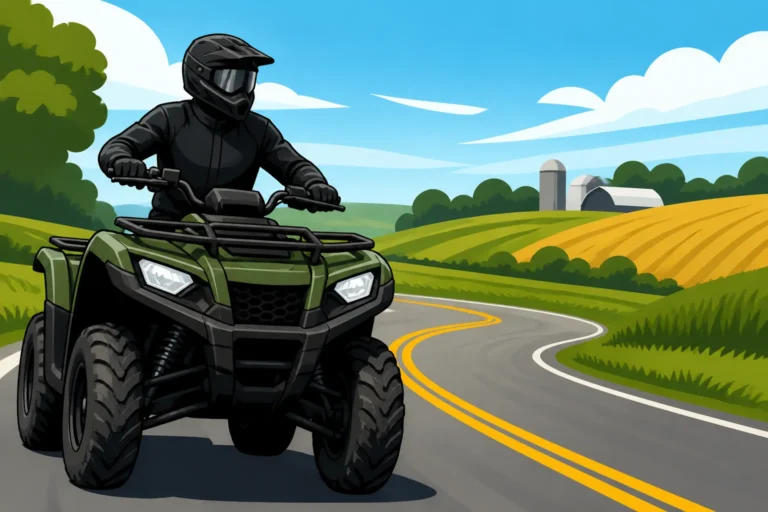
In Iowa, the vast majority of what we call "gravel roads" fall under the official classification of "unpaved secondary roads." This is a crucial distinction because the rules for these roads are different from paved roads. Generally speaking, Iowa law permits the operation of ATVs and UTVs on unpaved secondary roads. This means that, by default, unless a specific county or local ordinance states otherwise, you can ride your machine on these gravel routes.
Think about it this way: most of the time, the beautiful, winding gravel roads that crisscross our state are open for your riding pleasure. This makes sense for a rural state like Iowa, where these machines are often essential for farm work and local transportation, not just recreation. This general allowance is why you'll see so many residents using their machines to get around in rural areas. However, this isn't a blanket permission for every single unpaved path you might encounter. Always remember that even if it's gravel, if it's a private drive or a road specifically marked as closed, you still can't ride there. The principle is that these are public access roads, but not every path is public access.
The Importance of Local Ordinances
While the general rule in Iowa allows ATVs and UTVs on unpaved secondary roads, it's absolutely vital to understand that counties still hold a significant amount of power to regulate these machines. A county's board of supervisors can, by passing a local ordinance, either open up additional types of roads (like paved secondary roads, which are typically restricted) or, conversely, place specific restrictions on gravel roads within their jurisdiction.
This means that while one county might embrace ATV and UTV use on its gravel roads, the county next door might have specific times of day when riding is prohibited, or might even have designated certain gravel roads as off-limits. It's rare for counties to completely ban ATVs and UTVs from all gravel roads, but specific limitations are possible. The responsibility, unfortunately, falls on us, the riders, to check the local ordinances of the county we plan to ride in. Many county recorder offices or sheriff's departments will have this information readily available. Remember, just because you rode freely on gravel in Mahaska County last weekend doesn't mean the rules are identical in Webster County. The rules can also dictate things like [Unpaved County Secondary Roads in Iowa] versus [Paved Secondary Roads and County Authorization], highlighting the need to verify.
Another critical aspect of local ordinances relates to connecting routes. Iowa law generally allows you to use roads to travel by the "most direct route" to get to a designated riding area, or to your home, or to perform agricultural tasks. This specific wording is a lifesaver for many riders who need to use a short stretch of road to get from one section of private land to another, or to reach the nearest trail system. However, what constitutes the "most direct route" is open to interpretation, so always choose the shortest and most sensible path. Avoid taking lengthy detours just for fun on public roads if your stated purpose is "most direct."
Essential Requirements for Riding an ATV or UTV on Iowa Gravel Roads
Okay, so you've got the lay of the land regarding which roads you can ride. Now let's talk about what you need to actually do it legally. This isn't just about having a machine; it's about making sure your machine and you, the operator, meet specific state requirements. Skipping these steps is a surefire way to turn a fun day into a costly one, and trust me, nobody wants that.
Machine Registration and Decals
This is non-negotiable for riding on any public land in Iowa, and that absolutely includes gravel roads. Your ATV or UTV must be registered with the Iowa Department of Natural Resources (DNR) through your county recorder's office. When you complete the registration, you'll receive a registration certificate and a decal. The decal is your proof of registration and needs to be prominently displayed on your machine.
Specifically, the decal needs to be mounted on the rear of your ATV or UTV. It’s not just a sticker; it’s your machine's ID on public roads. If an officer can't clearly see your decal, or if it's expired, you could be facing a fine. Furthermore, you are required to carry the registration certificate with you whenever you're operating the machine on public lands. This isn't just a suggestion; it's law. Don't leave it in your truck or at home; have it on your person or securely on your machine. Think of it like your driver's license for your off-highway vehicle. For a full rundown, check out [Registering an ATV in Iowa] and [Where the Iowa Decal Mounts]. It's always a good idea to ensure your paperwork is in order before heading out.
Rider Qualifications and Age Limits
This is where many people get tripped up, especially those new to the sport or with younger riders in the family. For operation on Iowa's gravel roads, the rules are very clear:
- Age Requirement: The operator of an ATV or UTV on a public road, including gravel roads, must be 18 years of age or older. There are no exceptions for younger riders, even with adult supervision, when it comes to public roads. This rule is in place for safety, recognizing the unique challenges of operating these machines alongside other traffic, even on unpaved surfaces. This is a point of frequent misunderstanding, so be absolutely certain of this rule to avoid issues, as explored in [Iowa Minimum Age to Ride a Road].
- Driver's License: Along with being 18, you must possess a valid driver's license to operate an ATV or UTV on Iowa's public roads. This is because, for all intents and purposes, you're operating a vehicle on a public thoroughfare, even if it's gravel. This ensures that operators have demonstrated a basic level of road safety knowledge and driving proficiency. Find more details on [Iowa Driver's License Rules for ATVs].
- Safety Certificate: Interestingly, an adult (18 years or older) operating an ATV or UTV on Iowa public roads is not required to hold an ATV safety certificate. These certificates are primarily for younger riders (ages 12-17) operating on designated off-road trails and parks. However, taking a safety course is always a fantastic idea, regardless of the legal requirement, as it can drastically improve your skills and awareness.
Equipment and Safety Gear
Your machine needs to be properly equipped to be road-legal on Iowa's gravel. This isn't just for enforcement; it's genuinely about your safety and the safety of others sharing the road.
- Lighting: Your ATV or UTV must have at least one headlight (which must be on at all times, day or night), one taillight, and one brake light. These ensure you are visible to other vehicles, especially when kicking up dust on those gravel roads or in low-light conditions.
- Horn: A working horn is mandatory. It's essential for alerting other drivers, pedestrians, or even animals to your presence.
- Mirror: At least one rearview mirror is required. This allows you to monitor traffic behind you, which is crucial on two-way gravel roads where you might encounter other vehicles, farm equipment, or even bicycles. Consider upgrading to high-quality mirrors from brands like SuperATV for enhanced visibility and durability on rough terrain.
- Slow-Moving Vehicle (SMV) Triangle: Because ATVs and UTVs operate at lower speeds than typical road traffic, a reflective slow-moving vehicle triangle must be displayed on the rear of your machine. This alerts faster-moving vehicles to exercise caution when approaching you.
- Insurance: This is absolutely critical. You must carry liability insurance with minimum coverage amounts of $20,000 for bodily injury to one person, $40,000 for bodily injury to two or more people, and $15,000 for property damage. Always carry proof of insurance with you. Riding uninsured can lead to significant fines and legal trouble if you're involved in an accident. [Iowa ATV Insurance Requirement] outlines these minimums.
- Helmets: While highly recommended for safety in all riding scenarios, Iowa law does not require helmets for adults operating ATVs or UTVs on public roads. This is a personal choice, but wearing one offers invaluable protection in the event of an accident.
Make sure your machine is up to snuff before you hit the gravel. A quick pre-ride check of your lights, horn, and mirror, along with confirming your insurance card is on hand, can save you a lot of headache.
Navigating the Nuances: What to Watch Out For
Riding on gravel roads in Iowa isn't just about meeting the minimum legal requirements; it's also about understanding the spirit of the law and being a smart, defensive rider. There are several subtle points that can make a big difference in your experience and how you're perceived by local authorities and residents.
Speed Limits and Safe Operation
This is a big one. Even though you're on a "backroad," there's still a speed limit, and it's lower than you might think for ATVs and UTVs. On Iowa's unpaved secondary roads, the speed limit for ATVs and UTVs is capped at 35 mph. This is critical to remember. It's easy to get carried away on a long, straight stretch of gravel, but exceeding this limit can lead to a speeding ticket, just like in a car. More importantly, it dramatically increases your risk of losing control, especially if you hit loose gravel, a pothole, or encounter an unexpected obstacle.
Safe operation also means being aware of your surroundings. Gravel roads can be dusty, especially in dry conditions. If you're riding in a group, leave plenty of space between machines to account for reduced visibility. Always be prepared for farm equipment, which moves slowly and can take up the entire road. Watch for children, pets, and blind driveways. Your machine is a lot of fun, but it's not a toy on public roads. Maintaining a steady speed, using turn signals (if equipped, hand signals otherwise), and generally riding predictably will make your experience much safer.
Connecting Routes and The "Most Direct" Rule
We touched on this earlier, but it bears repeating because it's so important for recreational riders. Iowa law allows ATVs and UTVs to operate on public roads (within the limits we've discussed) to travel by the "most direct route" to specific destinations. These destinations include:
- Designated OHV Parks or Trails: If you're heading to a place like Gypsum City OHV Park or Bluff Creek OHV Park, you can use gravel roads to get there from your home or staging area.
- Private Land: You might need to cross a short section of public road to get from one piece of your private property to another.
- Service and Fuel: You can use roads to access services like gas stations or repair shops.
- Agricultural Operations: Farmers frequently use ATVs and UTVs to move between fields or perform tasks related to their livelihood.
The key phrase here is "most direct route." This means you should always choose the shortest, most practical path. This rule is not intended to allow for extended joyriding on public roads. It's about practical transportation. If you're pulled over and questioned, you should be able to articulate where you're coming from and where you're going, and that the road you're on is indeed the most direct way. This interpretation is crucial for avoiding citations and is detailed in information like [The Most Direct Route to an Iowa OHV Park] and [The Most Direct Route Home in Iowa]. Using tools like a GPS with mapping features from a brand like SuperATV could help demonstrate your chosen path is the most direct.
Crossing Paved Highways and City Limits
This is where you need to be extra cautious. While gravel roads are generally open, paved state and federal highways (like most primary highways) are almost universally off-limits for ATVs and UTVs, with very few exceptions.
- Crossing Primary Highways: You are generally allowed to cross an undivided two-lane primary highway at an intersection, provided you do so in the most direct and safest manner possible. However, you cannot ride along these highways for any significant distance. Four-lane highways and interstates are typically completely off-limits, even for crossing. Always look for overpasses or designated crossings when dealing with these major roads. The rules on [Crossing a Multi-Lane Highway at an Intersection] are specific and should be adhered to strictly.
- City Streets: This is perhaps the most variable and confusing aspect. While some Iowa counties have specific rules, individual cities and towns have the authority to decide if ATVs and UTVs can be operated on their city streets. Some smaller towns might open all their streets, or only specific ones, during certain hours. Larger cities are much more likely to prohibit them entirely. There is no statewide list of city ordinances, so if you plan to enter a town on your machine, you must check with that city's clerk or local police department beforehand. Assuming it's okay just because it's a small town is a gamble you don't want to take. Rules like [City Streets and Iowa Council Authorization] cover how these decisions are made.
When you transition from gravel to pavement, or when you enter a town, you need to be extra vigilant and prepared to change your riding behavior or even reroute if necessary.
Avoiding Penalties and Riding Responsibly
Nobody wants a ticket or, worse, an accident. Riding your ATV or UTV on Iowa's gravel roads should be an enjoyable experience, not a source of stress or legal trouble. By being informed and proactive, you can ensure a smooth and responsible ride every time.
Common Violations and Fines
Understanding the common mistakes riders make can help you steer clear of them. Law enforcement officers, whether from the Iowa DNR, the county sheriff's office, or local police, are well-versed in ATV and UTV regulations. They're not out to ruin your fun, but they are there to enforce the law and ensure safety.
Here are some of the most frequent reasons riders get ticketed on Iowa gravel roads:
- Unregistered Machine: This is probably the easiest and most common violation. If your machine isn't registered or your decal is expired, you're looking at a fine. It's a simple fix at the county recorder's office, so there's no excuse for riding without current registration. The penalties can be significant, as covered in [Iowa Fines for an Unregistered ATV].
- No Insurance: Riding without the required liability insurance is a serious offense. Beyond the fine, if you're involved in an accident, you could be personally liable for damages that could cost you a fortune.
- Underage Operator: As discussed, anyone under 18 operating an ATV or UTV on a public road will be ticketed.
- No Driver's License: If you're 18 or older but don't have a valid driver's license, you cannot operate your machine on public roads.
- Exceeding the Speed Limit: The 35 mph cap on gravel roads is often ignored, leading to tickets.
- Operating on Prohibited Roads: This includes riding on paved primary highways (except for direct crossings), entering city limits without specific authorization, or riding on county roads that have been specifically closed by ordinance.
- Missing Equipment: Lack of a headlight (on during operation), taillight, brake light, horn, or mirror can all result in a citation. Not displaying a slow-moving vehicle triangle is also a ticketable offense.
The financial penalties for these violations can quickly add up, easily eclipsing the cost of registration and proper equipment. A simple check before you leave can prevent a much bigger headache later.
Being a Good Steward of the Road
Beyond the legalities, there's the unspoken rule of being a good neighbor and a responsible member of the riding community. Our actions collectively influence how ATVs and UTVs are perceived by landowners, other road users, and local authorities.
- Minimize Dust: On dry gravel roads, ATVs and UTVs can kick up a significant amount of dust. If you're passing a home, a walker, or another vehicle, slow down to reduce the dust cloud. It's a small courtesy that goes a long way in building goodwill.
- Respect Private Property: Stay on designated public roads. Do not trespass onto private land, even if it looks like an inviting shortcut. Always obtain explicit permission from landowners if you want to ride on their property. This prevents conflicts and upholds the positive image of riders.
- Yield to Other Vehicles: Treat your ATV or UTV like any other vehicle on the road. Yield to oncoming traffic, especially larger farm equipment, and be courteous to bicyclists and pedestrians. You'll often encounter them on these quieter roads.
- Avoid Damaging Roads: Riding after heavy rains can lead to ruts and damage on gravel roads, especially those that aren't well-maintained. While it might be tempting to find mud, consider the impact on the road's integrity and how it affects other users. Local clubs and the DNR often ask riders to stay off trails when they're wet, and the same principle can apply to some gravel roads.
- Noise Awareness: While Iowa doesn't have strict sound limits for ATVs on roads, being mindful of excessive noise, especially near homes, is respectful. Aftermarket exhausts can be fun, but remember they amplify your presence.
- Carry Essential Gear: Even on gravel roads, things can happen. A flat tire, a breakdown, or getting stuck in a soft spot. Having a basic tool kit, a tire repair kit, a small air compressor, and perhaps a recovery strap or a winch (products from SuperATV can be very helpful here for both recovery and cargo solutions) can turn a potential disaster into a minor inconvenience. This also ties into being self-sufficient and not relying on others for help unnecessarily.
By adhering to both the letter and the spirit of the law, and by riding with common sense and courtesy, we ensure that Iowa's gravel roads remain a welcoming and accessible place for ATV and UTV enthusiasts for years to come.
| Requirement | Details | Legal Status (Iowa Gravel Roads) |
|---|---|---|
| Registration | Current DNR registration and decal displayed on the rear. Certificate carried with operator. | Mandatory |
| Operator Age | 18 years or older. | Mandatory |
| Driver's License | Valid driver's license required. | Mandatory |
| Headlight | At least one, must be on during operation. | Mandatory |
| Taillight | At least one, visible from rear. | Mandatory |
| Brake Light | At least one, illuminates when brakes are applied. | Mandatory |
| Horn | Functioning horn required. | Mandatory |
| Mirror | At least one rearview mirror. | Mandatory |
| SMV Triangle | Slow-Moving Vehicle triangle displayed on the rear. | Mandatory |
| Insurance | Minimum 20/40/15 liability coverage. Proof carried with operator. | Mandatory |
| Speed Limit | Max 35 mph on unpaved secondary roads. | Mandatory |
| Helmet | Not legally required for adults (18+) on roads, but highly recommended for safety. | Recommended |
| Safety Certificate | Not required for operators 18+ on public roads. Required for 12-17-year-olds on designated trails. | Not Required |
| Road Type | Generally permitted on unpaved secondary roads unless specifically prohibited by county ordinance. | Permitted (with conditions) |
| City Streets | Generally prohibited unless specifically authorized by city ordinance. | Check Local Ordinance |
Disclaimer
This article is for general informational purposes only and does not constitute professional advice. Laws, prices and regulations vary by location and change over time. Consult a qualified professional for guidance on your specific situation.