A Horn and a Mirror for Iowa Road Use
The dream of linking up your favorite Iowa trails with a quick spin on a gravel road often collides head-on with a maze of regulations. It's frustrating to just want to get from Point A to Point B, only to realize your trusty ATV or UTV needs a whole lot more than just fuel to be legal on public roads. One common sticking point for many riders is understanding the very specific requirements for essential safety equipment, like horns and mirrors. This guide will walk you through exactly what Iowa expects from your machine in terms of these critical components when you venture onto the asphalt or gravel.
Why Iowa Cares About Your Machine's Horn and Mirrors on Roads
It might seem excessive, especially if you're used to only riding off-road, but when your ATV or UTV leaves the trail and hits a public road, it enters a completely different legal and safety landscape. Iowa's rules for off-highway vehicles on roads are designed to ensure the safety of not just you, but also every other driver, pedestrian, and cyclist you might encounter. Your machine, while powerful and fun, isn't inherently designed for road traffic, which is why these modifications and requirements are put in place.
Enhancing Communication and Visibility
Think about the dynamics of road travel. You're sharing space with everything from bicycles to massive semi-trucks, and all these vehicles have different speeds, sizes, and blind spots. A functional horn and properly installed mirrors are crucial communication and visibility tools. Without them, you're essentially riding blind and mute in a busy environment. Imagine needing to alert a distracted driver to your presence, or trying to merge onto a secondary road without a clear view of approaching traffic. These aren't minor conveniences; they are fundamental to preventing accidents and ensuring smooth, safe interactions on public thoroughfares.
Many riders, especially those new to mixing road and trail riding, underestimate how quickly situations can change on a paved or gravel road. A car might suddenly brake, a child might run out, or another ATV might make an unexpected turn. A quick blast of the horn can be the difference between a near-miss and a collision. Similarly, being able to constantly monitor traffic behind and beside you through mirrors allows you to anticipate problems and react proactively, rather than being caught off guard. It's about providing you with the tools to navigate a much more complex environment than a dedicated off-road park.
Meeting State-Mandated Safety Standards
Iowa has codified these requirements into law to create a baseline for safety. It's not just a suggestion; it's a legal obligation. When a sheriff's deputy or conservation officer pulls you over on a public road, they're not just looking for your registration decal or your driver's license. They're also checking for adherence to these critical safety equipment standards. Failing to have a proper horn or mirror isn't just a safety oversight; it's a violation that can result in fines and even prevent you from continuing your journey until the issue is resolved. This is particularly true if you're planning on riding Iowa roads regularly as part of your route to trails like Gypsum City or Bluff Creek. You want to make sure you're compliant before you ever leave your driveway.
The state's interest is in regulating the public use of these machines. While you might have the freedom to modify your ATV or UTV extensively for pure off-road performance, once it touches public asphalt or gravel, it falls under the same general safety umbrella as other vehicles. These rules are designed to standardize the expectations for all road users, helping to reduce confusion and mitigate risks. Understanding these standards is the first step toward responsible and legal riding on Iowa's varied road network.
The Specifics of an Iowa Horn Requirement
When it comes to a horn on your ATV or UTV for Iowa road use, simply having any noise-making device isn't enough. The law specifies a type of horn that is designed for effective communication with other vehicles on the road. It needs to be audible and functional, serving the same purpose as a horn on a car or truck. This isn't about personal preference; it's about meeting a clear safety standard.
What Kind of Horn You Actually Need
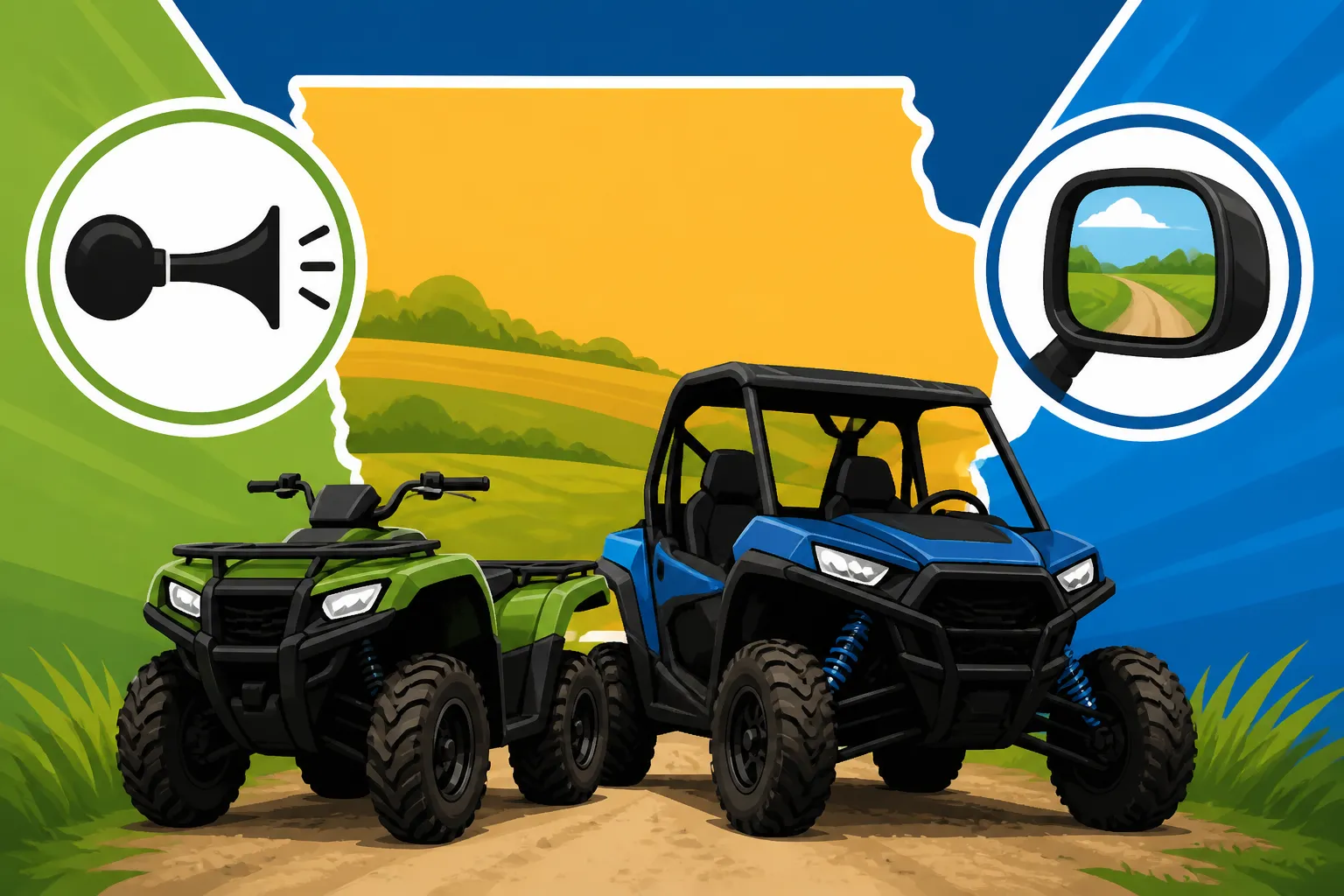
Iowa law mandates that an ATV or UTV operated on a public road must be equipped with a horn that is "in good working order and capable of emitting sound audible under normal conditions from a distance of not less than two hundred feet." This means it needs to be an actual horn, not just a whistle, a bell, or your own vocal cords. It should be a mechanically or electrically operated device designed specifically for signaling other vehicles. The key here is "audible under normal conditions," which implies it needs to cut through ambient road noise, wind, and the sound of other traffic. A small bicycle bell, while a noise-maker, simply won't meet this standard.
Many aftermarket parts manufacturers, like SuperATV, offer various horn kits specifically designed for ATVs and UTVs. These kits often include a button, wiring harness, and a horn unit that is loud enough to meet or exceed state requirements. When you're selecting a horn, consider its durability and weather resistance, especially if your machine sees a lot of mud or water. It needs to function reliably in all conditions you might encounter on Iowa roads. Don't forget that if your horn goes out on the trail or road, you are technically out of compliance for road use.
When and How to Use Your Horn Legally
Just as important as having a compliant horn is knowing when and how to use it legally. The horn is a warning device, not a tool for expressing frustration or simply getting attention. Iowa law, similar to many other states, generally permits horn use only when necessary to ensure safe operation. This means you should use your horn to warn pedestrians or other drivers of your presence, or when you perceive a hazardous situation developing. For instance, if a car is drifting into your lane, or a cyclist is unaware of your approach, a quick, sharp blast of the horn is appropriate.
Using your horn excessively or for non-safety related reasons can actually be a separate violation. It's not meant for signaling friends, celebrating, or expressing anger at another driver's mistake. A good rule of thumb is to ask yourself: "Is this use of the horn preventing an accident or warning someone of immediate danger?" If the answer is yes, then it's likely a legitimate use. This mindful approach to horn usage aligns with the overall goal of [What Iowa Requires of an ATV on a Public Road] – promoting safety and respectful sharing of public spaces.
Mirror, Mirror on the Machine: Visibility Standards
Mirrors are your eyes in the back of your head, and on a public road, that comprehensive view is non-negotiable. Iowa's requirements for mirrors ensure that you have a clear understanding of what's happening around and behind your machine, critical for safe lane changes, turns, and obstacle avoidance.
Single vs. Double Mirrors: What Iowa Prefers
Iowa law is quite specific regarding mirrors for road-legal ATVs and UTVs. It states that the machine must be equipped with "at least one rearview mirror so located as to reflect to the operator a view of the highway for a distance of at least two hundred feet to the rear of the machine." While the law technically only requires one mirror, most experienced riders and virtually all UTVs come equipped with, or benefit greatly from, having two mirrors. A single mirror, typically mounted on the left side, gives you a view of traffic directly behind you. However, it leaves a significant blind spot on the right side, which can be dangerous when making right turns or changing lanes.
For ATVs, adding a single left-side mirror is the minimum, but for optimal safety, many riders opt for a universal mirror kit that includes both left and right side mirrors. UTVs, with their cab-like structure, often integrate a center rearview mirror in addition to side mirrors, providing an even more comprehensive view. When choosing mirrors, whether for an ATV or a UTV, look for models that offer good visibility, resist vibration (to keep the image clear), and are durable enough for off-road excursions too. Products from brands like SuperATV often include robust mirror options designed to withstand the rigors of both trail and road use. The clearer and wider your field of vision, the safer you'll be on [Unpaved County Secondary Roads in Iowa] and beyond.
Proper Placement and Field of View
The placement of your mirror(s) is just as important as having them. The mirror needs to be "so located as to reflect to the operator a view of the highway for a distance of at least two hundred feet to the rear of the machine." This means it can't be obstructed by your gear, your passenger, or part of the machine itself. It needs to be positioned so that you, in your normal riding position, can easily and quickly glance at it to see what's behind you. For ATVs, this usually means mounting a mirror on the handlebar or a dedicated mirror mount. For UTVs, side mirrors are typically clamped to the roll cage or integrated into the door frames, while a center mirror is usually mounted to the top of the windshield frame or roll cage.
Regularly check and adjust your mirrors. Before every road ride, sit on your machine in your typical riding posture and ensure you have an unobstructed and comprehensive view. Pay attention to blind spots – areas around your machine that aren't visible in your mirrors or your direct line of sight. Even with well-placed mirrors, ATVs and UTVs often have larger blind spots than a typical car due to their size and design. Knowing your machine's blind spots and performing quick head checks before changing lanes or turning is a critical defensive riding technique. Over time, mirrors can loosen or shift from vibrations, bumps, or even branches on the trail, so make it a habit to check their alignment.
Beyond Horns and Mirrors: What Else You Need for Iowa Road Use
While a horn and mirrors are crucial, they are just two pieces of a larger puzzle when it comes to making your ATV or UTV street legal in Iowa. Ignoring other requirements could lead to significant fines and put your safety at risk. The state has a comprehensive list of equipment and operator requirements that must be met before you take your machine onto public roads.
Lighting and Signaling Requirements
When you think about road safety, visibility is paramount, especially during dawn, dusk, or nighttime hours. Iowa law demands specific lighting on your ATV or UTV when operating on public roads. This includes at least one headlight that emits a white light visible from at least 500 feet to the front. Many machines come with adequate headlights for off-road use, but it's wise to ensure yours are bright and properly aimed for road conditions. You'll also need at least one red taillight visible from 500 feet to the rear, and a red reflector visible from 300 feet. If you're riding after sunset or before sunrise, these lights are absolutely mandatory.
Beyond basic lights, proper turn signals are often overlooked by riders adapting their machines for road use. While not explicitly mandated for every ATV or UTV in the same way as a car, if your machine is not equipped with turn signals, you must use appropriate hand signals for turns and stops. However, for enhanced safety and clarity, especially on busier roads, installing an aftermarket turn signal kit is highly recommended. These kits, again available from suppliers like SuperATV, often integrate into your machine's existing wiring and provide clear, visible signaling to other drivers. This is especially useful on [Iowa's Unpaved Secondary Road Rule] where dust can often reduce visibility, making clear signals even more important.
Slow-Moving Vehicle Sign and Other Markers
Because ATVs and UTVs are typically slower than other road vehicles, Iowa requires them to display a slow-moving vehicle (SMV) sign when operating on public roads. This sign is a reflective orange triangle with a red border, and it must be mounted on the rear of your machine, visible from a specific distance. This bright, distinctive sign immediately alerts drivers behind you that you are traveling at a slower speed, giving them more time to react and pass safely. Without this sign, you significantly increase the risk of a rear-end collision, particularly on roads with higher speed limits or limited visibility.
In addition to the SMV sign, remember that your machine must also be registered and display a valid [A Decal on the Rear of an Iowa Machine]. For non-residents, a special permit is required. These aren't just bureaucratic hurdles; they are part of identifying your machine as a legitimate road user. Also, you must carry proof of insurance. [Iowa ATV Insurance Requirement] is not optional for road use; you must have minimum liability coverage. Failure to carry or provide proof of these items at a roadside stop will result in citations and potential impoundment of your machine.
| Requirement | Description | Legal Mandate |
|---|---|---|
| Horn | Audible from 200 feet, in good working order, for warning only. | Yes |
| Rearview Mirror(s) | At least one, reflecting view 200 feet to the rear. Two recommended for better safety. | Yes |
| Headlight | White light, visible 500 feet to front (required when riding after dark or low visibility). | Yes |
| Taillight | Red light, visible 500 feet to rear (required when riding after dark or low visibility). | Yes |
| Red Rear Reflector | Visible 300 feet to rear. | Yes |
| Slow-Moving Vehicle Sign | Reflective orange triangle with red border, mounted on rear. | Yes |
| Registration Decal | Current Iowa OHV registration decal. | Yes |
| Proof of Insurance | Minimum liability coverage (e.g., 20/40/15). | Yes |
| Driver's License | Operator must be 18+ with a valid driver's license. | Yes |
| Safety Certificate | Not required for adults 18+, but required for 12-17 year olds on public land (though not directly for roads). | Yes (for 12-17 on public land, not roads directly) |
Making Your ATV/UTV Road-Ready: Practical Steps and Considerations
Transforming your off-road machine into a road-legal vehicle involves more than just bolting on a few parts. It requires careful planning, smart choices, and a thorough understanding of the regulations. Taking the time to do it right will save you headaches, fines, and potentially, serious accidents.
Choosing and Installing Aftermarket Components
The market for ATV and UTV accessories is huge, and many companies specialize in road-legal kits. When selecting a horn, look for one that is robust and designed for outdoor use, capable of handling vibrations and exposure to elements without failing. For mirrors, consider not just visibility but also durability. Mirrors mounted on flexible stalks or breakaway designs can be beneficial for trail riding, as they are less likely to snap off if you bump into a branch. [A Horn and a Mirror for Iowa Road Use] emphasizes components that integrate well and withstand varied conditions.
Many riders opt for full "street legal kits" from manufacturers. These kits often include everything you need: a horn, turn signals, mirrors, and even license plate brackets with lights. While a kit might seem like a bigger upfront investment, it can save you time and ensure compatibility, often providing clearer installation instructions than piecing together individual components. When installing, pay close attention to wiring – ensure connections are secure, waterproof, and routed safely away from moving parts or hot exhaust. If you're not confident in your electrical skills, a reputable dealer or ATV/UTV repair shop can handle the installation for you.
Pre-Ride Checks and Ongoing Maintenance
Once your ATV or UTV is equipped for road use, your responsibility doesn't end. Before every single ride that involves public roads, you need to conduct a thorough pre-ride inspection. This goes beyond checking tire pressure and fuel levels; it needs to specifically include your road-legal equipment.
Your Pre-Ride Checklist should include:
- Horn Function: Give it a quick test to ensure it sounds clear and loud.
- Mirror Clarity and Adjustment: Wipe mirrors clean, adjust them for optimal rear view, and ensure they are tight and won't vibrate out of position.
- Headlights and Taillights: Turn them on and ensure they are all working. Check brake lights too.
- Turn Signals (if installed): Test both left and right signals, front and rear, to confirm they flash correctly.
- SMV Sign: Verify it's securely attached, clean, and clearly visible.
- Tire Pressure: Ensure tires are at the recommended pressure for road use (often higher than off-road pressure).
- Brakes: Test front and rear brakes for proper function and stopping power.
- Registration and Insurance: Double-check that you have your current registration certificate and proof of insurance on your person or securely stored on the machine.
Beyond pre-ride checks, regular maintenance of your road-legal components is essential. Exposed wiring can fray, connections can corrode, and lights can burn out. Incorporate these checks into your routine maintenance schedule. A small issue caught early can prevent a roadside citation or, more importantly, a safety hazard. Riders often experience fines for small compliance failures, such as [Iowa Fines for an Unregistered ATV] or minor equipment failures. Staying on top of these details is key to enjoying your ride without interruption.
Legal Operation and Rider Awareness on Iowa Roads
Having the right equipment is only half the battle. Knowing how to legally and safely operate your ATV or UTV on Iowa roads is the other, equally critical, half. This involves understanding traffic laws, practicing defensive riding, and maintaining a constant awareness of your surroundings. Iowa's rules, like [Iowa's Most Direct Route Rule], define where and how you can ride, not just what your machine needs.
Understanding Iowa's Road Rules for OHVs
It's vital to remember that when you're on a public road, your ATV or UTV is treated much like any other vehicle under traffic law. You must obey speed limits, traffic signs, traffic lights, and yield requirements. While Iowa does allow ATVs and UTVs on certain types of roads, primarily unpaved county secondary roads, there are strict conditions. For instance, the operator must be at least 18 years old and possess a valid driver's license. You cannot operate your machine on any paved secondary road unless specifically authorized by the county, nor on any state highway or interstate. City streets are generally off-limits unless a specific city ordinance opens them up, such as in towns like Waukon.
Always research the specific rules for the county or city you plan to ride in. A great starting point is to consult the Iowa DNR’s official guidelines or contact the local sheriff's department or county recorder's office for clarification. Riding legally means knowing where you're allowed to be, what speed you can maintain (often capped at 35 mph for OHVs on approved roads), and what other vehicles to expect. This also includes understanding [Iowa ATV Insurance Minimum Coverage] requirements. Ignorance of the law is not a defense, and a simple misstep can lead to serious consequences.
Defensive Riding and Situational Awareness
Due to their smaller size, open-air design, and often slower speeds, ATVs and UTVs are inherently less visible and less protective than cars or trucks. This makes defensive riding an absolute must. Always assume other drivers don't see you. Wear bright, reflective clothing, especially if you're riding near dawn or dusk. Maintain a safe following distance from other vehicles, giving yourself plenty of time to react to sudden stops or turns. Be extra cautious at intersections, even if you have the right-of-way, and always look twice before turning or changing lanes.
Situational awareness means constantly scanning your environment: checking your mirrors frequently, looking far ahead for potential hazards, and being aware of traffic approaching from all directions. Pay attention to road conditions as well; gravel roads can have loose surfaces, potholes, or washouts that are more challenging for an ATV or UTV than a car. When riding with a group, communicate clearly and maintain staggered formations where appropriate to enhance visibility and provide escape routes. Ultimately, your safety on Iowa roads depends not just on having a horn and a mirror, but on using them effectively within a comprehensive framework of legal compliance and responsible riding practices.
Disclaimer
This article is for general informational purposes only and does not constitute professional advice. Laws, prices and regulations vary by location and change over time. Consult a qualified professional for guidance on your specific situation.