35 mph and No More
Navigating the rules for riding your ATV or UTV on Iowa's public roads can feel like sifting through a stack of legal documents written in another language. You just want to enjoy your machine, maybe get to a trail, or use it for quick errands around your property, but the nagging question of "is this even allowed?" always pops up. It's frustrating to know your machine is capable, but the law feels like it's constantly holding you back. This guide is here to break down the ins and outs of Iowa's road riding regulations, making sense of the speed limits, equipment, and where you can actually take your machine.
The Core Rule: Why 35 mph is Your Limit on Iowa Roads
For many of us who own ATVs or UTVs, the thought of simply hopping on and cruising down the road for a short distance is incredibly appealing. It’s convenient, practical, and sometimes, it's the only way to get from point A to point B without loading up a trailer. However, Iowa law has some very specific boundaries about this, and the most prominent one is undoubtedly the speed limit. You might feel your powerful machine could easily handle higher speeds, but when it comes to public roads, Iowa puts a firm cap on how fast you can go.
Understanding the Speed Cap and Its Rationale
The 35 mph speed limit for ATVs and UTVs on approved public roads in Iowa isn't arbitrary. It's a reflection of several factors designed to ensure safety for both the off-highway vehicle (OHV) operator and other motorists. These machines, while incredibly capable off-road, aren't designed with the same safety features, stability, or braking capabilities as a car or truck at higher speeds. Their tires are often knobby, designed for traction in dirt and mud, not smooth pavement, which can affect handling at speed. The visibility of these machines, especially older models, can also be a concern for other drivers. The state's intent is to allow for the utility of OHVs on certain roads without creating undue risk for anyone sharing the road. This limit, alongside other requirements, helps integrate OHV use into the existing road network in a way that minimizes potential hazards. Iowa is deliberate in this requirement, stating clearly that [Iowa's 35 mph Cap] is a strict ceiling, not a suggestion.
Imagine you're taking your UTV down a county gravel road, maybe heading to a friend's farm or just to pick up a forgotten item from a nearby store. The road is clear, and the temptation to press the accelerator is strong. But remember, that 35 mph limit is not about your machine's capability; it's about its legal and safe integration with other traffic. Exceeding it not only puts you at risk but also opens you up to citations. It's about recognizing that a machine designed for carving trails needs to operate differently when it shares asphalt or gravel with larger, faster vehicles.
The "Most Direct Route" Rule and Its Impact on Speed
Beyond just the maximum speed, Iowa law also introduces the "most direct route" principle for using OHVs on public roads. This isn't just a suggestion; it's a legal guideline that dictates how you can use those roads. Essentially, if you're using a public road to access an OHV park, private land, or another designated riding area, you must take the shortest, most practical route. You can't just meander for fun. This rule, combined with the 35 mph limit, reinforces the idea that road use for ATVs and UTVs is primarily for access, not for joyriding or casual travel over long distances. [Iowa's Most Direct Route Rule] works in conjunction with the speed limit to ensure that these vehicles are not treated as everyday road vehicles.
This "most direct route" concept naturally impacts your average speed and overall road time. You're not encouraged to take the scenic bypass; you're expected to get to your destination efficiently and legally. This means planning your route carefully before you even leave your driveway. For instance, if you're trailering your machine to a park like Bluff Creek and then need to ride a short distance down a gravel road to access the trailhead, the "most direct route" ensures you stick to that specific path. It's not an invitation to explore every backroad in the county. This rule helps minimize the duration of time your ATV or UTV spends on public roads, further enhancing safety by limiting exposure to higher-speed traffic.
Consequences of Exceeding the Speed Limit
Getting caught going over the 35 mph limit on an Iowa road can lead to more than just a slap on the wrist. Law enforcement, whether it's a county sheriff's deputy or an Iowa State Patrol trooper, takes these rules seriously because they are directly tied to public safety. The consequences can range from a significant fine to points on your driver's license, and potentially even an impoundment of your machine in severe or repeat cases. It’s not simply a minor traffic infraction; it demonstrates a disregard for specific regulations designed to prevent accidents involving off-highway vehicles on public roadways.
Think about the financial burden alone. A fine for speeding, plus potential court costs, can quickly add up and put a serious dent in your riding budget. Furthermore, insurance companies may view such a citation negatively, potentially leading to higher premiums down the line. Beyond the monetary penalties, there's the inconvenience and stress of dealing with legal proceedings. It's a stark reminder that while the freedom of riding is exhilarating, it comes with the responsibility of adhering to the rules. Always err on the side of caution and keep that speedometer in check, recognizing that the legal ramifications extend far beyond just the moment you're pulled over.
Beyond Speed: Other Critical Requirements for Road Riding in Iowa
While the speed limit is certainly a primary concern for ATV and UTV operators looking to ride on Iowa roads, it's far from the only rule you need to know. Iowa has a comprehensive set of regulations that cover everything from who can operate the machine to what equipment it must have. Failing to meet any of these requirements can lead to just as many problems as speeding, so it’s crucial to understand the full picture before you venture out. These rules are in place not to make riding difficult, but to ensure that everyone on the road, including you, remains as safe as possible.
Who Can Drive: Age and Driver's License Mandates
One of the most common questions from aspiring road riders is about who can actually be behind the handlebars or wheel. In Iowa, to legally operate an ATV or UTV on any public road, you must be at least 18 years old and possess a valid driver's license. This isn't like off-road park riding where younger riders with safety certificates might be permitted. The moment you enter the public road system, the rules change significantly. This requirement ensures that anyone operating an OHV on shared roadways has demonstrated a basic understanding of traffic laws and possesses a certain level of maturity and driving experience. [Why Iowa Requires a Driver 18 or Older] is a key point in this discussion, emphasizing experience and responsibility.
This means that if you have a 16-year-old with a perfect safety record on the trails, they still cannot legally operate your UTV on a gravel road, even if it's just for a short distance. The state wants licensed, adult drivers operating these machines in traffic. This isn't meant to be unfair to younger riders, but rather a safeguard, acknowledging the unique challenges and potential hazards of mixing off-highway vehicles with cars and trucks. Always make sure that whoever is driving your machine on public roads meets these strict age and licensing criteria to avoid serious legal issues. [Iowa Minimum Age to Ride a Road] and [Iowa Driver's License Rules for ATVs] further clarify these important points.
Mandatory Insurance Coverage for Your Machine
Another non-negotiable requirement for road-legal ATV and UTV operation in Iowa is having the proper insurance coverage. Just like any other motor vehicle, if you're taking your OHV onto public roads, it needs to be insured. Iowa mandates specific minimum liability coverage to protect against financial responsibility in the event of an accident where you are at fault. This typically includes coverage for bodily injury to another person and property damage. Without this insurance, you're not just risking financial ruin; you're operating illegally. [Insurance Iowa Requires on a Road] outlines the specific types of coverage you must carry.
The minimums usually follow a pattern of $20,000 for one person's injury, $40,000 for two or more people injured in an accident, and $15,000 for property damage. It's crucial to confirm with your insurance provider that your policy specifically covers ATV or UTV use on public roads, as some off-road-only policies might not extend to street use. Carrying proof of insurance, whether it's a physical card or digital documentation, is also essential, as a deputy will almost certainly ask for it during any roadside stop. Failing to produce it can result in significant fines and even impoundment of your machine. Don't let an oversight here turn a fun ride into a costly headache. [Iowa ATV Insurance Requirement] further underscores this critical requirement.
Essential Equipment: Lights, Mirrors, and More
Beyond speed and personal qualifications, your ATV or UTV itself needs to be outfitted with certain equipment to be considered road-legal in Iowa. This isn't about customizing your rig with cool aftermarket parts, although companies like SuperATV offer excellent compliant options; it's about meeting basic safety and visibility standards. These requirements ensure that your machine is visible to other drivers and that you have the necessary tools to safely navigate traffic. From dusk till dawn, and even during daylight hours, proper lighting is paramount.
Here's a breakdown of the essential equipment:
- Headlights: Your machine must have at least one headlight that emits a white light visible for at least 500 feet to the front. Many ATVs and UTVs come standard with adequate headlights, but ensuring they are functional and properly aimed is key. Remember, headlights must be on at all times when operating on public roads, regardless of the time of day.
- Taillights and Brake Lights: A red taillight visible from at least 500 feet to the rear is required. A brake light, also red, must illuminate when the brakes are applied. These are critical for warning drivers behind you.
- Reflectors: Additional red reflectors are often required on the rear of the machine, even if you have taillights.
- Mirrors: You must have at least one rearview mirror mounted on the machine, allowing you to see at least 200 feet to the rear. This is vital for observing traffic approaching from behind. Aftermarket options from SuperATV often provide excellent visibility and durability.
- Horn: A working horn is necessary to alert other drivers or pedestrians to your presence.
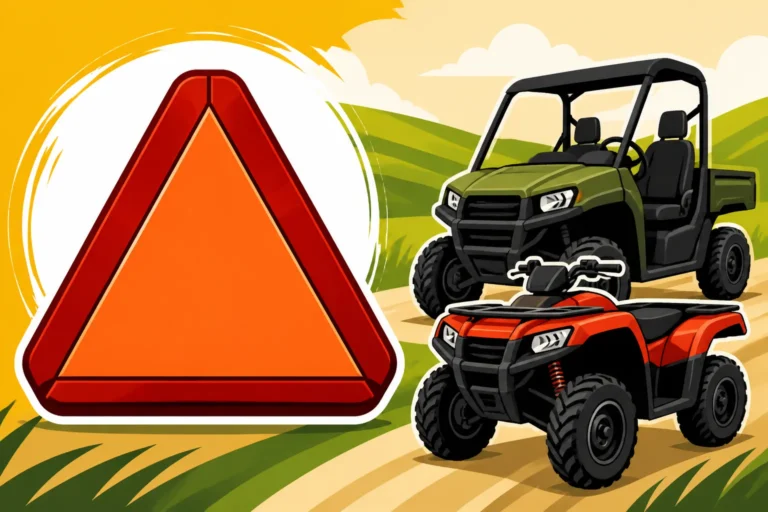
- Slow-Moving Vehicle (SMV) Triangle: This distinctive orange and red triangle must be securely mounted on the rear of your ATV or UTV. It signifies to other motorists that your vehicle is traveling at 25 mph or less, cautioning them to approach with care. [Iowa's Slow-Moving Vehicle Triangle] is specifically designed for this purpose.
- Muffler and Spark Arrester: While often associated with off-road noise regulations, a functioning muffler and an approved spark arrester are also typically required for any machine operating on public land, which includes public roads. This helps control noise levels and prevents wildfires.
Without all of these components functioning correctly and installed according to Iowa law, your machine is not considered street legal. A quick pre-ride check of all lights, mirrors, and the SMV triangle should become a habit for any road-bound adventure. [Iowa Lighting Requirements for ATVs], [Iowa Mirror Requirement for Road Use], and [Iowa Horn Requirement for Road Use] detail these equipment necessities.
| Equipment Type | Requirement | Purpose |
|---|---|---|
| Headlight | At least one, white, visible 500 ft forward; must be on at all times | Visibility to oncoming traffic |
| Taillight | At least one, red, visible 500 ft rearward | Visibility to following traffic |
| Brake Light | At least one, red, illuminates when brakes applied | Signals deceleration to following traffic |
| Rearview Mirror | At least one, allows view 200 ft to rear | Operator awareness of following traffic |
| Horn | Functioning, audible signal | Alerting others to presence |
| SMV Triangle | Mounted on rear, visible from 50-500 ft | Warns faster traffic of slow-moving vehicle |
| Muffler | Must be in good working order | Noise control |
| Spark Arrester | U.S. Forest Service approved | Fire prevention |
Navigating Iowa's Roads: Where You Can and Cannot Ride Your ATV/UTV
So, you've got your driver's license, your insurance is in order, and your machine is decked out with all the necessary lights and mirrors. That's a great start! But before you hit the open road, you need to understand which roads are actually open to you. Iowa's rules about where you can ride your ATV or UTV on public land are nuanced and depend heavily on the type of road and local regulations. It's not a free-for-all, and mistakenly riding on a prohibited road can quickly lead to a citation. The goal is to distinguish between acceptable routes for access and areas that are strictly off-limits to these machines.
Permitted Roads: Gravel, Paved Secondary, and City Streets
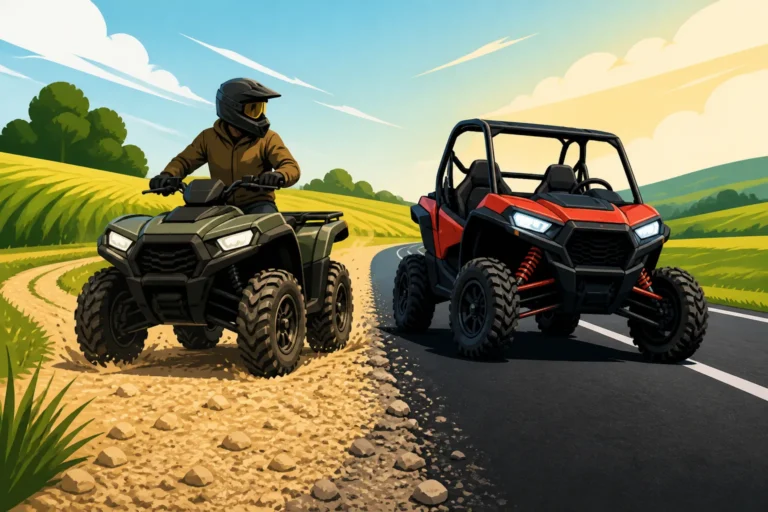
Generally, Iowa law permits ATVs and UTVs on unpaved county secondary roads. These are your typical gravel or dirt roads that crisscross the rural landscape. For many riders, these are the primary arteries they'll use to connect to trails, reach private property, or access hunting grounds. [Iowa's Unpaved Secondary Road Rule] is the foundation here.
However, things get a bit more complex with paved roads and city streets.
- Paved Secondary Roads: While county secondary roads can be paved, their legality for OHV use isn't automatic. A county Board of Supervisors must explicitly pass an ordinance authorizing ATV and UTV use on specific paved secondary roads within their jurisdiction. This means legality can vary greatly from one county to the next. You might be able to ride a paved secondary road in Mahaska County, but crossing into a neighboring county could put you on an illegal stretch if they haven't passed a similar ordinance. This local control gives counties the flexibility to manage traffic flow and safety based on their specific road networks and population density. [Iowa Counties That Allow ATVs on Paved Roads] highlights this localized decision-making.
- City Streets: Riding on city streets is even more restrictive. Just like with paved county roads, individual city councils must pass an ordinance specifically allowing ATVs and UTVs on their streets and alleys. Many cities, especially larger ones, choose not to do this due to concerns about traffic volume, pedestrian safety, and compatibility with other vehicles. If a city does permit it, they often come with their own set of specific rules, such as hours of operation, designated routes, or even bans in certain commercial districts. It's essential to check with the city clerk's office of any municipality you plan to ride through. You'll find that [Iowa Cities That Allow ATVs on Streets] are often smaller communities that rely on OHVs for local transport.
The key takeaway is that you cannot assume a road is open to OHVs just because it looks like a suitable place to ride. Always verify local ordinances before you venture onto paved county roads or city streets.
Roads That Are Off-Limits (and Why)
While some roads are open, many critical parts of Iowa's road network remain strictly off-limits to ATVs and UTVs. These prohibitions are in place for clear safety reasons, primarily due to higher speed limits, increased traffic volume, and the fundamental design of these road types.
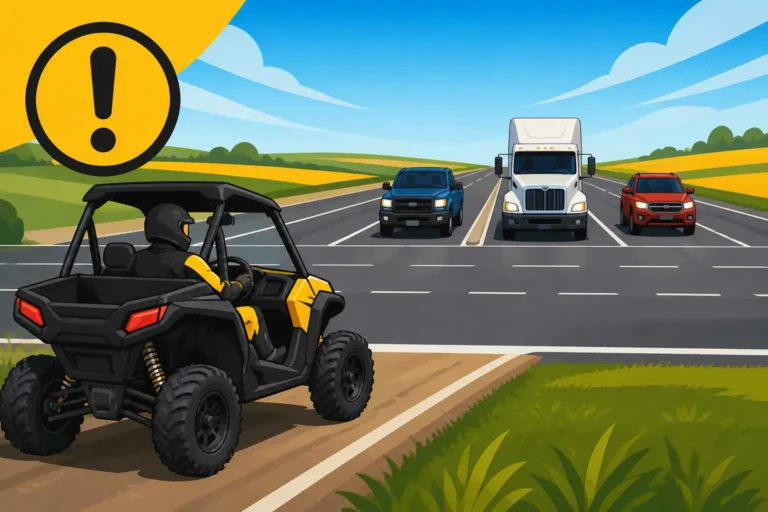
- Interstate Highways: Absolutely no ATVs or UTVs are allowed on Iowa's interstate highways. These are high-speed, limited-access roads designed for continuous flow of large volumes of vehicular traffic. An ATV or UTV traveling at 35 mph would create an extreme hazard on an interstate.
- Four-Lane Primary Highways: Similar to interstates, major four-lane primary highways (like US 30 or US 20 in many stretches) are generally prohibited for OHV use. The speed differentials and traffic volumes make them too dangerous for slower-moving off-highway vehicles. While you might be able to cross a multi-lane highway at an intersection, riding on them for any distance is not permitted.
- Most Paved State Highways (Undivided Two-Lane Primary Highways): Unless explicitly permitted by local ordinance as part of a "most direct route" to an OHV park, riding ATVs and UTVs on paved state highways (even undivided two-lane ones) is generally illegal. These roads often have speed limits well above the 35 mph cap for OHVs and carry substantial traffic. The exceptions are rare and usually tied to specific access points for trail systems, where the "most direct route" rule would apply for a very short distance.
- Ditches and Roadways: It’s worth noting that while some agricultural exemptions exist, generally, riding in the ditch of any prohibited road is also typically not allowed. The same rules that apply to the road surface often extend to the adjacent ditch and right-of-way.
These restrictions are designed to keep you and other road users safe. Attempting to ride your ATV or UTV on these prohibited roads is an extremely dangerous endeavor and will almost certainly result in a citation from law enforcement. Don't risk it; stick to the approved routes.
The Role of Local Ordinances and How to Check Them
As we've touched on, local ordinances play a huge role in determining where you can and cannot ride your ATV or UTV on paved county roads and city streets. The Iowa DNR doesn't publish a comprehensive, statewide list of every county and city ordinance that allows or prohibits OHVs. This means the responsibility falls squarely on the rider to do their homework. [Why Iowa Publishes No List of City Ordinances] underscores this challenge.
So, how do you check?
- County Recorders/Auditors: For county-level regulations regarding paved secondary roads, the county recorder's or auditor's office is often a good starting point. They can usually direct you to the county's ordinance library or tell you if such an ordinance exists. Many counties will also post these ordinances on their official websites.
- City Clerks: For city streets, your best bet is to call or visit the city clerk's office in the specific town you're interested in. They are the keepers of all local ordinances and can tell you definitively if ATVs or UTVs are permitted and under what conditions.
- Local Law Enforcement: Sometimes, calling the local Sheriff's office or city police department (on their non-emergency line, of course!) can also provide valuable information, as they are the ones enforcing these rules.
It's tempting to rely on word-of-mouth or assume that because a friend rides somewhere, it must be legal. However, ordinances can change, and what's legal in one part of the state might be illegal just a few miles down the road. Taking the time to verify these rules can save you from an expensive ticket or, more importantly, a dangerous situation. This due diligence is a critical part of being a responsible Iowa OHV rider.
Special Considerations for Iowa Road Use
Even once you've grasped the core rules regarding speed, equipment, and permissible roads, there are still a few special circumstances and practical tips to keep in mind when riding your ATV or UTV on Iowa roads. These considerations cover specific exemptions, out-of-state visitors, and what to do if you encounter law enforcement. Understanding these nuances can make your road riding experiences smoother and more compliant with state law.
Agricultural Exemptions: When the Rules Change
Iowa law recognizes the vital role ATVs and UTVs play in farming operations. Because of this, there are specific exemptions for machines used for agricultural purposes, often referred to as "implements of husbandry." These exemptions allow farmers and their employees to use their machines on public roads under certain conditions that differ from recreational use. For instance, a farmer might be able to cross a paved state highway directly from one field to another, or drive their UTV a couple of miles down a gravel road to check on livestock, without needing all the same strict registrations or licenses as a recreational rider. [Iowa's Farm License Exemption] is crucial for many rural residents.
However, it's critical to understand that these exemptions are not a blanket pass for all road use. The machine must genuinely be used for agricultural purposes, such as planting, tilling, harvesting, or directly supporting farming operations. If you're using your UTV to go fishing or visit a friend, it doesn't qualify for the agricultural exemption, even if you own a farm. The rules often state that the machine must be used during daylight hours (sunrise to sunset) and within a short distance of the farm property, typically within 2 miles. Furthermore, while some registration or titling requirements might be relaxed for farm use, basic safety equipment like lights and an SMV triangle are still often required for visibility. Always confirm the specifics with your county recorder or the Iowa DNR if you believe your use case falls under an agricultural exemption, as misinterpreting these rules can lead to fines.
Visiting Iowa: Non-Resident Road Use Permits
If you're visiting Iowa from another state and plan to ride your ATV or UTV, especially if you intend to use any public roads (even just for access to trails), you'll need to understand Iowa's non-resident permit system. While your home state's registration might be valid for off-road parks, it doesn't automatically extend to road use in Iowa. [Iowa's Nonresident User Permit] is a requirement for out-of-state machines operating on public land, which includes roads.
A non-resident permit acts as Iowa's equivalent to registration for visiting machines. This permit typically lasts for a calendar year and is specific to the machine, not the operator. It helps ensure that all OHVs using Iowa's public resources contribute to the maintenance and development of trails and enforcement efforts. You can purchase these permits online through the Iowa DNR's licensing system or in person at certain vendors, including county recorders. Make sure you display the permit decal clearly on your machine as required, usually on the rear. Without this permit, you could face fines if stopped while operating on an Iowa road, even if your home state registration is current. Always ensure you have your home state's registration documentation with you as well, as a deputy might ask for both.
Preparing for a Roadside Stop: What to Expect
No one wants to get pulled over, but if you're riding your ATV or UTV on Iowa roads, it's a possibility you should be prepared for. A quick, compliant interaction with law enforcement can save you a lot of hassle and stress. Officers are primarily looking for safety and adherence to the law, so a polite and cooperative attitude goes a long way. [What an Iowa Deputy Checks Roadside] can give you an idea of what to expect.
Here’s what to have ready and how to respond:
- Pull Over Safely: If a law enforcement officer signals you to stop, do so immediately and safely. Find a safe spot on the shoulder, turn off your engine, and keep your hands visible.
- Required Documents: Have your valid driver's license, proof of insurance, and your ATV/UTV registration certificate (or non-resident permit) readily accessible. Keep these documents in a waterproof bag or pouch on your person or securely on your machine, like in a SuperATV storage bag.
- Equipment Check: The officer will likely check your machine's equipment – headlights, taillights, brake lights, mirrors, horn, and the SMV triangle. Ensure everything is functional before you leave your driveway.
- Speed and Route: If you're on a road where OHV use is restricted to a "most direct route," the officer might inquire about your destination and why you're on that particular road. Be prepared to explain your route and purpose for being there.
- Stay Calm and Respectful: Answer questions truthfully and politely. Avoid arguing or becoming confrontational. If you believe you were unfairly cited, the roadside is not the place to debate; you can address it in court.
Being prepared for a roadside stop isn't about expecting trouble; it's about being a responsible and informed rider. Knowing the rules and having your documentation and equipment in order will make any interaction with law enforcement quick and stress-free, allowing you to get back to enjoying your ride.
Disclaimer
This article is for general informational purposes only and does not constitute professional advice. Laws, prices and regulations vary by location and change over time. Consult a qualified professional for guidance on your specific situation.