Why No Iowa Minor May Ride a Road
It's a scene many of us can picture: a young, enthusiastic rider, perhaps 14 or 15 years old, eager to take their ATV or UTV out for a spin, even just down the gravel road to a friend's house or to help out with chores on the back forty. The frustration is palpable when they're told "no," not just by a parent, but by the law itself. This guide is here to unravel the truth about why Iowa's roads are strictly off-limits to minors on ATVs and UTVs, shedding light on the legal, safety, and liability reasons behind this often-misunderstood rule.
The Rationale Behind Iowa's Age Restrictions for Road Use
When we talk about off-highway vehicles (OHVs) like ATVs and UTVs, it's easy to lump all riding scenarios together. But the truth is, the moment an OHV touches a public road, the rules change drastically. Iowa has very clear and strict regulations about who can operate these machines on its roads, and these rules are fundamentally driven by safety and public responsibility, especially concerning younger riders. It's not about stifling fun, but about protecting everyone.
Safety Concerns and Public Responsibility
Operating an ATV or UTV on a public road is a completely different ballgame than riding on a dedicated trail or private land. On roads, you're sharing space with cars, trucks, school buses, and massive farm equipment. The speeds are higher, the surfaces are harder, and the potential for severe accidents is dramatically increased. Iowa's laws reflect a deep understanding of these heightened risks.
Think about it: a 16-year-old might be an absolute whiz on a motocross track or navigating the challenging terrain of [Gypsum City OHV Park at Fort Dodge]. They might have incredible reflexes and an innate feel for their machine. However, road operation demands more than just machine control. It requires an advanced understanding of traffic laws, anticipating the actions of other drivers, maintaining situational awareness in a constantly changing environment, and making split-second decisions under pressure that can have life-or-death consequences. Minors, by virtue of their developing brains and limited real-world driving experience, typically lack the mature judgment and comprehensive risk assessment skills that are crucial for safely navigating public roads. The state, in its role of ensuring public safety, has a responsibility to set age limits that mitigate these inherent risks, even if it means some frustration for skilled young riders and their families.
The Distinction Between Off-Road and On-Road Operation
It's critical to understand that Iowa's approach to OHV regulation makes a very clear distinction between off-road recreational riding and on-road public travel. While Iowa embraces and supports off-road enthusiasts with a network of designated OHV parks and robust safety education programs, these environments are inherently different from public roads.
On an off-road trail, obstacles are expected, speeds are often lower, and other vehicles are generally of the same type, making interactions somewhat predictable within the OHV community. Furthermore, younger riders (typically aged 12-17) are required to hold an [Iowa ATV Safety Certificate Requirements] to ride on public land, and supervision rules apply for those under 12. These measures are designed to prepare them for controlled off-road environments. However, the open road is a much more diverse and less controlled arena. The vehicle mix is varied, from sedans to semi-trucks, and drivers of these vehicles may not anticipate or even see an ATV or UTV, especially one operated by a less experienced driver. The rules governing public roads are much more extensive and complex than those for private or designated off-road areas. The moment a wheel crosses onto a public right-of-way, even a quiet gravel lane, the state's motor vehicle laws kick in, and those laws, for very good reasons, are geared towards drivers who possess a full driver's license and have reached the age of majority.
Iowa's Specific Legal Age Requirements for Public Road Operation
The question of who can legally operate an ATV or UTV on Iowa roads isn't open to interpretation; it's a matter of clear statutory law. Iowa has established specific benchmarks, primarily concerning age and licensure, that must be met before anyone can legally take an off-highway vehicle onto a public thoroughfare. These aren't guidelines; they are strict requirements.
The Eighteen-Year-Old Rule
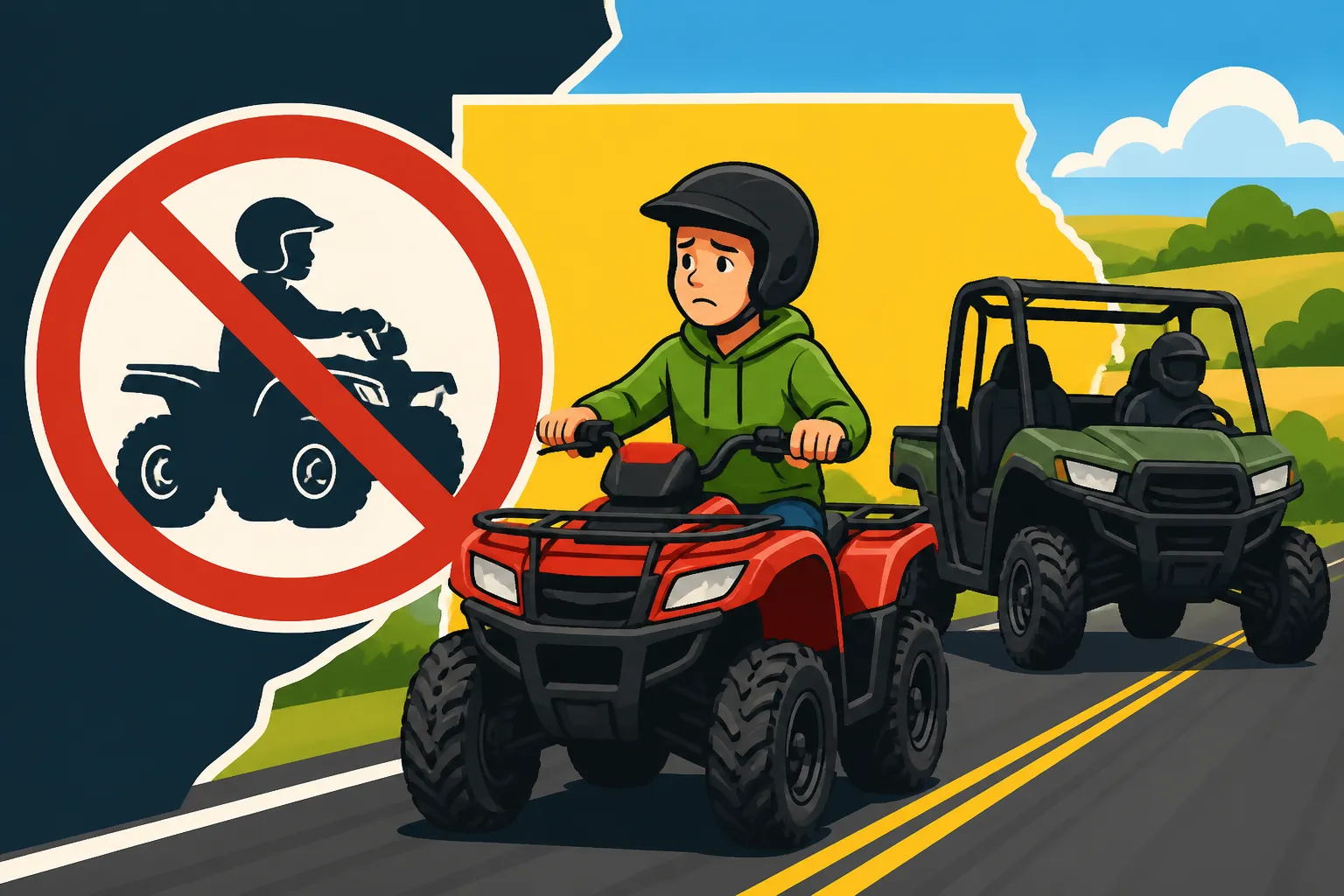
Let's cut right to the chase: In Iowa, to legally operate an ATV or UTV on any public road where such operation is permitted, the driver must be at least 18 years of age. This isn't an arbitrary number; it aligns with the age of majority, where individuals are legally recognized as adults and are presumed to have the maturity and judgment required for responsible road use. There's no exception for parental consent, no special permit for a 16-year-old with exceptional driving skills, and no "close enough" clause. If you're under 18, you simply cannot be behind the controls of an ATV or UTV on an Iowa public road.
This rule can certainly be a source of frustration for teenagers who are capable riders in other contexts. Many young people grow up riding ATVs on family farms or private properties, becoming highly skilled operators long before their 18th birthday. However, the state views the public road system as a shared space with inherent dangers that necessitate a higher standard of legal responsibility. Allowing minors, regardless of their perceived skill, to operate these machines on roads would introduce an unacceptable level of risk to themselves and other motorists. The consequences for violating this rule are significant, potentially including substantial fines for both the underage operator and the adult who permitted them to ride, as well as the impoundment of the machine.
Driver's License as a Prerequisite
Beyond simply being 18 years old, there's another crucial requirement: the operator must possess a valid driver's license. This isn't just a formality; it signifies that the individual has gone through the process of driver education, passed written and practical driving tests, and demonstrated a fundamental understanding of traffic laws, road signs, and safe driving practices. In essence, [Iowa Driver's License Rules for ATVs] treat the operation of an ATV or UTV on a public road as seriously as driving a car or truck.
This requirement further underscores the state's intent to ensure that anyone operating an OHV on a public road is fully equipped to handle complex traffic situations. A minor, even one approaching 18, might only hold a learner's permit or an intermediate license, which come with their own restrictions and do not confer the full privileges of an adult driver's license. The lack of a full, unrestricted driver's license means the operator hasn't met the state's comprehensive standards for road readiness. It’s a foundational requirement that distinguishes a recreational rider on a trail from a legal vehicle operator on a public roadway. This is a point of confusion for many, as the safety certificate required for off-road riding for younger riders is often mistakenly believed to apply to road use, which it does not. The two are distinct and serve different purposes.
Permissible Road Types and Other Requirements for Road Use
Even for an adult who is 18 or older and holds a valid driver's license, taking an ATV or UTV onto Iowa's roads isn't a free-for-all. The state has very specific rules about which roads can be used and what the machine and its operator must have to be considered street legal. These additional layers of regulation further highlight why minors are prohibited – the complexity alone would be a challenge, let alone the legal requirements.
Navigating Iowa's Unpaved Secondary Roads and Paved Routes
First and foremost, not all roads are created equal when it comes to OHV access. The most commonly accepted routes for ATVs and UTVs in Iowa are [Unpaved County Secondary Roads in Iowa]. These are your gravel roads, which make up a significant portion of the state's rural infrastructure. However, even these aren't automatically open. Each county's Board of Supervisors has the authority to approve or deny ATV and UTV use on its unpaved secondary roads. So, what's legal in one county might be illegal just across the county line.
When it comes to paved secondary roads, the rules become even stricter. A county must specifically pass an ordinance to open these paved routes to OHVs. This often involves careful consideration of traffic volume, road design, and safety concerns. As for primary highways (state and federal routes), these are generally off-limits to ATVs and UTVs, except for the purpose of crossing at an intersection. This labyrinth of rules around permissible road types adds a significant layer of complexity that would be incredibly difficult for a minor to understand and consistently adhere to, further justifying the age restriction. It's not simply a matter of "can I ride on the road?" but "which specific road, and has this county authorized it?"
Machine and Operator Requirements Beyond Age
Assuming an adult is operating on a legally designated road, the machine itself must meet several critical standards, and the operator has additional responsibilities. These aren't optional; they are essential for safety and legality.
- Insurance: One of the most vital requirements is adequate insurance. [Iowa ATV Insurance Requirement] mandates specific minimum coverages for liability: $20,000 for bodily injury to one person, $40,000 for bodily injury to two or more people, and $15,000 for property damage. This is often referred to as 20/40/15 coverage. Without this, an operator is not only breaking the law but also exposing themselves and their family to immense financial risk in the event of an accident.
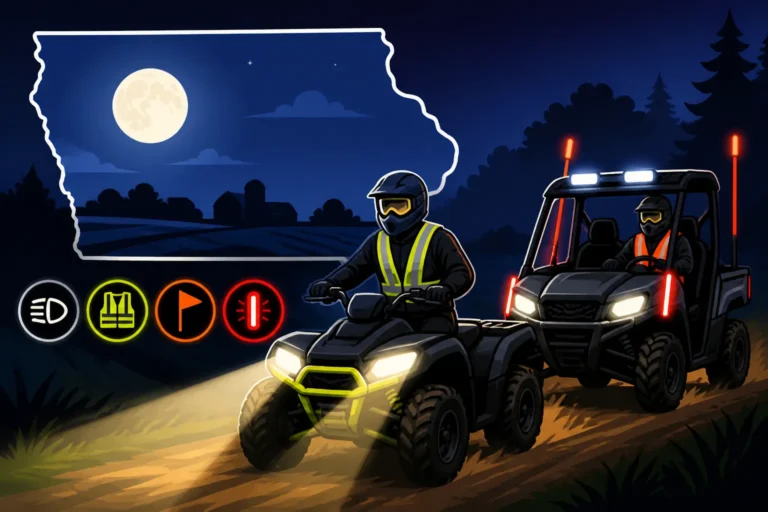
- Lighting and Visibility: For an ATV or UTV to be considered road-ready, it must be equipped with proper lighting. This includes a functioning headlight (which must be on at all times during road operation, even in daylight), at least one taillight, and brake lights. Turn signals are also typically required for safe maneuvering. These aren't just for night riding; they ensure the machine is visible to other motorists during the day.
- Horn and Mirror: A working horn is necessary to signal other drivers or pedestrians, and at least one mirror (mounted to provide a clear view to the rear) is mandatory for situational awareness.
- Slow-Moving Vehicle (SMV) Triangle: Because ATVs and UTVs often travel at speeds significantly lower than other road traffic, Iowa law requires them to display a slow-moving vehicle triangle on the rear of the machine. This bright orange triangle alerts following vehicles that they are approaching a slow-moving object, reducing the risk of rear-end collisions.
- Spark Arrester: While not strictly a "road use" item, for any OHV used on public lands (which can sometimes overlap with road access for ingress/egress to trails), a U.S. Forest Service-approved spark arrester is typically required to prevent wildfires.
Ensuring an ATV or UTV is compliant with all these requirements can be quite an undertaking. Many stock machines don't come equipped with all the necessary road-legal features. Riders often turn to aftermarket accessories from brands like SuperATV to add turn signal kits, mirrors, or enhanced lighting to meet these standards. For a minor, understanding and implementing all these technical and legal requirements would add an overwhelming layer of responsibility on top of simply operating the machine.
Consequences of Underage Operation on Iowa Roads
The legal framework in Iowa is not just about establishing rules; it's about enforcing them. Operating an ATV or UTV on a public road while underage carries serious consequences, impacting not only the minor operator but also the parents or guardians who may have allowed or enabled the infraction. These aren't trivial matters and can have lasting financial and legal repercussions.
Legal Penalties for Minors and Guardians
When a minor is caught operating an ATV or UTV on an Iowa public road, the immediate outcome is likely a citation, which comes with significant fines. These fines can quickly add up, easily reaching into the hundreds of dollars. But the penalties don't stop there. Depending on the specific circumstances and the discretion of the law enforcement officer, the machine itself could be impounded, meaning it's towed away and held until fines are paid and proper ownership is proven, often incurring additional storage and towing fees.
More severely, parents or legal guardians are often held responsible for the actions of their minor children. This means they could also face fines for allowing an underage person to operate a vehicle illegally. In situations involving accidents or reckless behavior, the charges could escalate to more serious offenses, such as contributing to the delinquency of a minor, reckless endangerment, or even criminal negligence. Imagine the stress and financial burden of having to retrieve an impounded machine, pay hefty fines, and potentially face court appearances. It's a sobering reminder that these rules are in place for a reason, and ignoring them comes with a high price. The statute is clear, and law enforcement officers are tasked with upholding it to protect everyone on Iowa's roads. [Iowa Fines for Illegal ATV Road Use] are not to be taken lightly.
Insurance Implications and Liability Risks
Beyond the immediate legal penalties, perhaps one of the most devastating consequences of underage road operation is the potential impact on insurance coverage and personal liability. Most standard ATV or UTV insurance policies are written with the assumption that the vehicle will be operated legally. If an accident occurs while a minor is illegally operating an OHV on a public road, the insurance company could very well deny coverage.
Think about what this means: if your 15-year-old child causes an accident while riding an ATV on a gravel road and collides with another vehicle, causing injury to the other driver or significant property damage, your insurance policy might refuse to pay. This would leave your family personally responsible for all damages, medical bills, lost wages, and potentially legal defense costs. These costs can quickly run into hundreds of thousands, or even millions, of dollars, leading to financial ruin. The [Iowa ATV Insurance Minimum Coverage] of 20/40/15 only applies if the operator is legal.
The idea of "we'll just use it quickly" or "it's only a short distance" is extremely risky. In the eyes of the law and insurance companies, an illegal act can void your coverage, transforming a minor incident into a life-altering financial catastrophe. It's a stark reminder that adherence to age restrictions and licensure requirements isn't just about avoiding a ticket; it's about safeguarding your family's financial future and protecting everyone involved.
Safe and Legal Riding Alternatives for Young Riders in Iowa
While the rules for minors on Iowa roads are strict, it absolutely does not mean young enthusiasts are out of luck when it comes to riding. Iowa is a fantastic state for OHV recreation, and there are numerous safe, legal, and incredibly fun alternatives for young riders to enjoy their ATVs and UTVs without breaking the law or risking serious consequences. The key is knowing where and how to ride responsibly.
Designated OHV Parks and Trails
Iowa boasts a wonderful network of designated Off-Highway Vehicle (OHV) parks, specifically designed for safe and enjoyable riding. These parks offer a variety of terrains, from open fields and wooded trails to challenging hill climbs and even motocross tracks. They are the ideal place for young riders to hone their skills, enjoy the thrill of off-roading, and do so completely legally and safely.
Consider places like [Bluff Creek OHV Park at Eddyville], which offers diverse trails and is a popular spot for families, or [Paul Huting Recreation Area at Waterloo] with its natural-terrain tracks. These parks understand the needs of different skill levels and machine types, and often have specific areas or trails designated for youth riders. For minors aged 12 to 17, obtaining an [Iowa ATV Safety Certificate Requirements] is mandatory for riding on public lands, including these parks. This certificate ensures they have a foundational understanding of safe operating practices. For those under 12, adult supervision is key. These parks are maintained by clubs and the DNR, often with funds generated from registrations, meaning they are purpose-built for the very activity young riders are passionate about. They provide a controlled environment where riders can push their limits without the dangers of public road traffic. Plus, many offer amenities like camping, making for a full weekend adventure! When considering upgrading accessories for park riding, many riders opt for robust protection like skid plates or heavy-duty A-arms from companies like SuperATV to handle the rugged trail conditions.
Private Land Riding with Permission
Another fantastic and widely utilized option for young riders in Iowa is riding on private land. This could be your own property, a friend's farm, or family acreage. The beauty of private land is that, with the landowner's express permission, the strict public road laws regarding age and licensure typically do not apply. This means a skilled 14-year-old can safely and legally enjoy their machine without the worry of traffic or legal repercussions.
However, "private land" isn't a blanket permission slip. It is absolutely crucial to obtain explicit permission from the landowner before riding. [Riding Private Ground in Iowa] emphasizes the importance of clear, written consent to avoid trespassing issues. Always respect the property, stay on designated trails or areas, and ensure you understand any specific rules the landowner might have. Riding on private land allows for invaluable learning experiences, letting young riders gain confidence and refine their skills in a familiar and controlled environment. It’s a great way for families to ride together, practicing safety and enjoying the outdoors without the complexities of public road regulations. Many parents teach their children the basics of vehicle maintenance, such as checking tire pressure or oil levels, in this setting.
Remember, while the lure of the open road might be strong, Iowa offers plenty of legitimate and exciting avenues for young ATV and UTV riders to fuel their passion safely and legally. By choosing designated parks or private land with permission, you ensure that the fun of riding remains just that—fun, without the looming threat of fines, accidents, or legal trouble.
| Feature | Public Roads (Minor Operator) | Designated OHV Parks (Minor Operator) |
|---|---|---|
| Minimum Age | Strictly 18 years old (with valid driver's license) | 12 years old (with Safety Certificate and adult supervision) |
| Driver's License | Required (for 18+) | Not required, but Safety Certificate is for ages 12-17 |
| Safety Certificate | Not applicable for road use (driver's license is the key) | Mandatory for ages 12-17 |
| Adult Supervision | Not permitted for minors | Mandatory for riders under 12, often recommended for 12-17 |
| Insurance | Mandatory 20/40/15 minimums | Recommended, but not legally required for park entry |
| Vehicle Equipment | Specific lighting, horn, mirror, SMV triangle required | Spark arrester, often sound limits. No road-specific equipment. |
| Legal Penalties | Significant fines, impoundment, guardian liability | Minor infractions usually result in warnings or park removal for rule breaches |
| Risk Exposure | High due to mixed traffic, high speeds, lack of experience | Managed risk with designated trails, speed limits, controlled environment |
Disclaimer
This article is for general informational purposes only and does not constitute professional advice. Laws, prices and regulations vary by location and change over time. Consult a qualified professional for guidance on your specific situation.