Iowa Cities That Opened Their Streets
The dream of being able to hop on your ATV or UTV and simply drive down city streets to grab a coffee or meet friends is one that many Iowa riders share. For years, it felt like an impossible fantasy, with off-highway vehicles (OHVs) largely confined to trails or private land. But the landscape is slowly changing, and some Iowa cities are indeed beginning to open their streets. This guide will help you understand the complex rules, how to find out where you can ride, and what you need to do to legally enjoy city access.
The Complex Web of Iowa ATV/UTV Road Rules
Riding an ATV or UTV on public roads in Iowa has always been a bit of a bureaucratic puzzle, filled with state statutes that often feel at odds with local desires. It's not a simple "yes" or "no" answer across the board, which can be incredibly frustrating when you just want to know if you can take your side-by-side to the local hardware store. The reality is a patchwork of regulations that requires careful navigation and local research.
State Law vs. Local Ordinances
Iowa state law provides a general framework for off-highway vehicle operation, outlining basic requirements for registration, safety certificates, and permissible uses, particularly concerning secondary roads. However, when it comes to city streets, the state often grants significant authority to local municipalities. This means that while the state might permit ATVs and UTVs on unpaved secondary roads under certain conditions, a city council can, and often does, impose its own, much stricter, rules within its corporate limits. So, what might be legal just outside city limits on a gravel road could be entirely illegal once you cross that "Welcome to [City Name]" sign. This local control is why you can't assume that if one town allows it, the next one will. It's a key reason why finding a definitive statewide list of street-legal cities is virtually impossible. You have to go digging at the local level.
Why Most Cities Say No
For a long time, the default answer from most Iowa cities regarding ATV and UTV access has been a resounding "no." There are several common, and often understandable, reasons behind this restrictive stance. Safety is usually at the top of the list; city officials worry about the combination of slower-moving, less-protected OHVs sharing asphalt with cars, trucks, and pedestrians. Concerns about noise pollution are also prevalent, especially in residential areas where the rumble of an aftermarket exhaust can quickly draw complaints. Traffic flow is another consideration, as ATVs and UTVs often have different acceleration and braking characteristics compared to conventional vehicles. Lastly, there are worries about infrastructure damage, particularly with heavier UTVs on older city streets, and the general perception that these machines are for recreation, not urban transit. These concerns, while valid, often overshadow the potential benefits and the responsible riding practices of many OHV owners.
The Desire for City Access
Despite the common pushback, the desire among ATV and UTV owners for city access isn't just about joyriding; it often stems from practical needs and a longing for greater freedom. Imagine being able to run a quick errand to the grocery store, visit a friend a few blocks away, or simply connect to a nearby trail system without having to load your machine onto a trailer every single time. For those who live on the outskirts of town, city access could mean a direct route to gas stations, repair shops, or even a local diner without navigating busy state highways. It's also about convenience for those who use their machines for property maintenance or small-scale farming within or near city limits, where a quick trip for supplies could save significant time. The dream is to integrate these versatile machines into daily life, making them more than just weekend warriors, but useful tools and enjoyable modes of local transport.
How Iowa Cities Get Authority to Open Streets
The decision to allow ATVs and UTVs on city streets in Iowa isn't made lightly. It's a formal process that reflects local governance and community priorities. Understanding this process can empower riders to advocate effectively for access in their own towns. It’s not about finding a loophole; it’s about engaging with the established legal and political structures.
The City Council's Role
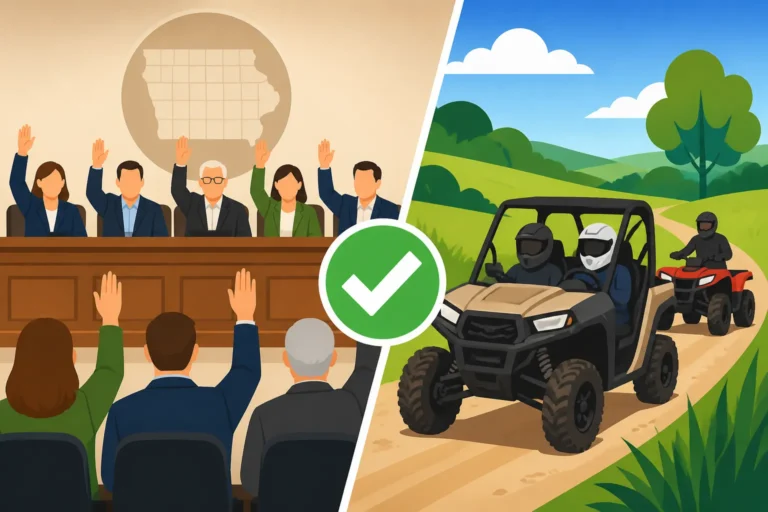
In Iowa, the power to authorize ATV and UTV use on city streets rests squarely with the local city council. This body, composed of elected officials, is responsible for creating and amending local ordinances that govern nearly every aspect of city life, including traffic and vehicle regulations. For an ATV or UTV ordinance to be established, it typically starts with a proposal from a council member, a concerned citizen, or a local riding group. This proposal is then debated, often over several meetings, where the council considers various factors such as public safety, economic impact, and community sentiment. The process usually involves multiple readings of the proposed ordinance, culminating in a formal vote. A majority vote is generally required to pass the ordinance, officially opening or restricting city streets to OHVs. This is the mechanism described in detail when we talk about [How an Iowa City Authorizes a Street]. Without this formal council action, riding on city streets remains prohibited by default.
Public Hearings and Community Input
A critical step in the ordinance creation process is the public hearing phase. This is where citizens have the opportunity to voice their opinions, concerns, and support directly to the city council. It's not just a formality; genuine public input can significantly influence the final decision. Riders and enthusiasts are encouraged to attend these hearings, present well-researched arguments about the benefits of access, address common fears, and demonstrate a commitment to responsible riding. Conversely, residents who oppose the measure will also present their arguments, often focusing on noise, safety, and potential misuse. This back-and-forth dialogue helps the city council gauge the overall sentiment of the community and make an informed decision that attempts to balance competing interests. Ignoring this phase is a missed opportunity for both sides to shape the future of ATV and UTV access in their towns.
Specific Ordinance Language
When a city council decides to open its streets, the resulting ordinance must be incredibly precise in its language. Vague or ambiguous wording can lead to confusion, disputes, and enforcement challenges. A well-crafted ordinance will clearly define which streets are open – often specifying certain routes, alleys, or secondary roads while excluding major thoroughfares or state highways passing through town. It will also typically outline specific operating hours, perhaps limiting riding to daylight hours or prohibiting it during late-night periods like [Waukon's Midnight to Five Ban]. Crucially, it must detail the equipment requirements for OHVs to be deemed street legal within that city, such as proper lighting, mirrors, and horns. It might also address insurance mandates and age restrictions for operators. These details are vital because they tell riders exactly what they need to do to comply, and they provide law enforcement with clear guidelines for enforcement. Any rider looking to utilize city streets must thoroughly understand these specifics before venturing out.
Finding Which Iowa Cities Have Opened Their Streets
The biggest hurdle for Iowa ATV and UTV enthusiasts wanting to ride in town is simply figuring out where it’s allowed. It’s not like there’s a big, flashing sign on the highway, nor a convenient state-run website listing every municipality’s stance. This lack of centralized information can be genuinely frustrating, leaving riders feeling lost and uncertain.
The Lack of a Centralized List
One of the most common frustrations for Iowa riders is the absence of a statewide, easily accessible list of cities that permit ATV and UTV use on their streets. Unlike some states where a department of motor vehicles or natural resources might maintain such a database, Iowa doesn't have a single source for this information. Each city and county operates independently, making its own decisions based on local needs and desires. This means that a rider in eastern Iowa might have completely different rules than someone in western Iowa, and even neighboring towns might have vastly different ordinances. This decentralized approach makes comprehensive research a necessary, albeit time-consuming, task. You cannot simply check a single website and be done with it; you must engage in active, local investigation for every place you intend to ride. This is why [Why Iowa Publishes No List of City Ordinances] is a crucial piece of information for any rider.
How to Research Your Local Area
Since there's no single list, proactive research is the name of the game. If you're wondering about your own town, the first and best step is to contact your city clerk's office. This is the administrative hub of your municipality, and the clerk is typically responsible for maintaining all official city records, including ordinances. When you call, clearly state your purpose: you're looking for any ordinances related to the operation of ATVs or UTVs on city streets. Be polite, patient, and persistent. You might need to ask specifically about "off-highway vehicles," "all-terrain vehicles," "side-by-sides," or "utility vehicles," as terminology can vary. If they have an ordinance, ask for a copy or a link to where it can be viewed online. Don't rely on hearsay or what a friend of a friend heard; get the official documentation. This diligent approach is essential for avoiding [Iowa Fines for Illegal ATV Road Use].
Checking Neighboring Communities
Your research shouldn't stop at your own city limits. Many riders want to explore opportunities in nearby towns, perhaps to connect to existing trail systems or simply to visit friends or businesses. The process for checking neighboring communities is the same as for your own: contact their respective city clerk's offices. While it might seem tedious to call multiple towns, it's the only reliable way to gather accurate information. Some smaller towns, especially those with strong agricultural ties, might be more open to OHV use. Additionally, some counties have overarching ordinances that allow ATVs and UTVs on certain paved secondary roads, which might influence individual city decisions. Always remember that even if a county allows access on its roads, a city within that county still retains the right to restrict or prohibit OHV use on its own city streets. So, checking both county and city regulations is key for a comprehensive understanding.
Common Restrictions and Requirements in Open Cities
When an Iowa city does decide to open its streets to ATVs and UTVs, it's almost never a free-for-all. These ordinances typically come with a host of specific restrictions and requirements designed to ensure safety, minimize disruption, and address common concerns. Riders who fail to comply with these rules can quickly find themselves facing fines or other legal consequences, negating the privilege of street access.
Permitted Streets and Hours
One of the most common ways cities manage ATV/UTV access is by limiting where and when these machines can be ridden. It's rare to find an ordinance that allows OHVs on every single street within city limits. Instead, many cities designate specific routes, often focusing on less-traveled streets, residential areas, or roads that connect to a trail system or to approved county roads. Major arterial roads, state highways that pass through town, or especially busy commercial districts are frequently excluded for safety and traffic flow reasons. Similarly, operating hours are almost always restricted. Many ordinances will only allow riding during daylight hours, perhaps from sunrise to sunset, or within a specific window, like 6 AM to 10 PM. This is often to mitigate noise complaints during late-night hours. For example, [Waukon's Midnight to Five Ban] clearly illustrates a city's approach to limiting night riding. Riders must have a detailed understanding of these geographical and temporal limitations to avoid unintended violations.
Equipment and Insurance Mandates
To ensure a minimum level of safety and visibility on city streets, most ordinances require ATVs and UTVs to be equipped with specific features. These typically align with general road-legal standards. For instance, your machine will almost certainly need functioning headlights, tail lights, and brake lights – and they must be on even during daylight hours as per [Iowa Lighting Requirements for ATVs]. Turn signals are often a requirement, allowing riders to signal their intentions clearly to other drivers. A horn for alerting pedestrians and other vehicles is also standard, as is at least one rearview mirror, usually mounted on the left side, following [Iowa Mirror Requirement for Road Use]. Many cities also require a slow-moving vehicle (SMV) triangle to be displayed on the rear of the machine, even if the state rules for secondary roads don't always mandate it for OHVs. Beyond equipment, proof of liability insurance is almost universally required. This is not just a city rule; Iowa state law mandates insurance for any ATV or UTV operating on public roads, with minimum coverage amounts like those mentioned in [Iowa ATV Insurance Minimum Coverage]. You'll need to carry proof of this insurance with you, as well as your valid registration certificate, whenever you ride on public streets.
Age and Licensing Requirements
Operating an ATV or UTV on city streets in Iowa also comes with strict requirements regarding the rider's age and licensing status. State law dictates that to operate an OHV on a public road (including city streets if authorized), the operator must be at least 18 years old and possess a valid driver's license. This is a crucial point, and it's covered in more detail in [Iowa Minimum Age to Ride a Road] and [Iowa Driver's License Rules for ATVs]. This means that while a 16-year-old might be able to ride an ATV on private land with a safety certificate, they are explicitly prohibited from operating it on any public street, even in a city that permits OHV access. There are no exceptions for youth operators, even if they are supervised. Furthermore, some cities might have additional local stipulations, though they generally defer to state law on age and licensing. It's imperative that riders understand these rules, as violations can lead to serious legal consequences, including fines and the potential impoundment of the machine.
Exploring Cities Known to Have ATV/UTV Access
While a comprehensive statewide list might not exist, a few areas in Iowa have taken the progressive step of opening some of their streets to ATVs and UTVs. These examples serve as important case studies, illustrating how local communities can successfully integrate OHVs into their urban fabric, and they offer a blueprint for other towns considering similar measures.
Waukon: A Case Study in Openness
Waukon, a city in Allamakee County, stands out as one of the more prominent examples of an Iowa community that has embraced ATV and UTV access on its streets. The city council there has enacted specific ordinances that allow the operation of these machines on most city streets and alleys, with a few notable exceptions like state highways passing through town. Their approach acknowledges the practical uses of OHVs for residents, especially in a more rural-leaning community. However, this openness isn't without its rules. Riders in Waukon, as detailed in [Waukon's Open Streets and Alleys], must adhere to strict operating hours, generally from 5:00 AM to midnight. Machines must also be properly equipped with lights, mirrors, and a horn, and operators must be licensed and at least 18 years old. This balance of access with responsible regulation has made Waukon a known spot for riders looking for a taste of street-legal convenience. Their progressive stance provides a real-world example of what's possible when a city council is willing to listen to its residents and craft sensible regulations.
Des Moines County: Broader Access
Beyond individual cities, some Iowa counties have also taken steps to open up roads, which can sometimes extend access to smaller, unincorporated towns or connect directly to city street ordinances. Des Moines County is one such example, with its Ordinance Fifty-Six specifically addressing the use of ATVs and UTVs on designated county roads. While county ordinances primarily cover roads outside of incorporated city limits, they can be a critical piece of the puzzle for riders, providing pathways to and from towns that might then have their own city-specific allowances. For instance, a rider might use an authorized county road to reach the edge of a town, and then transition onto designated city streets if that particular municipality has passed its own ordinance. The existence of such county-level rules, like [Des Moines County Ordinance Fifty-Six], indicates a broader regional acceptance that can sometimes foster similar decisions at the city level. It’s always important to understand both the county and city rules in any area you plan to ride, as they can sometimes complement each other, but city rules will always supersede county rules within city limits.
Other Potential Cities and How to Verify
While Waukon and Des Moines County offer concrete examples, they are by no means the only places where you might find street-legal opportunities. Many other smaller towns across Iowa, particularly those in areas with a strong agricultural presence or those looking to boost local tourism, may have quietly passed their own ordinances. The challenge, as always, is finding them. This requires active research, as mentioned previously. Your best course of action is to contact the city clerk's office directly for any town you're considering. When you make that call or visit, be specific. Ask about "ordinances pertaining to the operation of ATVs or UTVs on city streets." They might direct you to a website, offer to email you a copy, or even have a printed version available. Remember, these ordinances can change, so always verify the most current regulations. This proactive approach is the only way to build your own personal list of street-legal riding spots across Iowa. When equipping your machine, consider looking at a brand like SuperATV for any accessories you might need to meet local requirements, such as a turn signal kit or a street-legal horn.
Navigating the Rules: What to Do (and Not Do)
Successfully enjoying the privilege of riding your ATV or UTV on city streets in Iowa isn't just about finding an open town; it's about continuously navigating and respecting the rules in place. Ignoring these guidelines, even inadvertently, can quickly lead to citations, fines, and potentially even the revocation of street access for everyone.
Always Verify Current Ordinances
The most crucial piece of advice for any rider seeking to operate an ATV or UTV on city streets in Iowa is to always verify the current ordinances. Local laws are not static; they can and do change. A city council might amend an existing ordinance, add new restrictions, or even revoke access altogether if there are too many complaints or safety incidents. What was permissible last year might not be this year. Relying on outdated information, social media rumors, or what someone else told you can lead to serious trouble. Before every ride on city streets, especially in a town you haven't visited in a while, take the time to reconfirm the rules with the city clerk's office. This due diligence protects you from legal repercussions, like those detailed in [Iowa Fines for Illegal ATV Road Use], and ensures you're a responsible participant in the riding community. This constant vigilance is a small price to pay for the freedom of street access.
Respecting Local Laws and Residents
Being a good ambassador for the ATV and UTV community is paramount when riding on city streets. This means more than just adhering to the letter of the law; it means respecting the spirit of the law and the residents who share the roads and neighborhoods with you. Operate your machine responsibly, drive defensively, and be mindful of noise levels. Avoid excessive speed, "hotdogging," or riding in a manner that might alarm or disturb others. Remember that many residents might still be wary of OHVs on their streets, and every interaction you have contributes to the overall perception of our sport. If you encounter a situation where you're unsure about a rule, err on the side of caution. Pull over, dismount if necessary, and try to clarify before proceeding. This respectful approach not only keeps you out of trouble but also helps foster positive relationships between riders and local communities, potentially paving the way for more access in the future.
Advocating for More Access
For those passionate about expanding ATV and UTV access to more city streets, there's a vital role to play in advocacy. This isn't just about complaining when rules are too strict; it's about proactive engagement. Get involved in local government by attending city council meetings, even if there isn't an OHV-specific item on the agenda. Write letters to your council members, clearly articulating the benefits of responsible access for recreation, transportation, or economic development. Gather data, perhaps even documenting how many riders use local businesses when they can easily access them. Consider forming or joining a local riding club that can present a united front and speak with a credible, organized voice. When you do approach officials, come prepared with solutions to common concerns, such as promoting proper equipment (like those robust, street-legal accessories from SuperATV) and emphasizing rider education. Demonstrating a commitment to safety and community integration can go a long way in convincing cities that opening their streets is a beneficial step.
Equipping Your Machine for City Street Riding
If you're lucky enough to find an Iowa city that has opened its streets to ATVs or UTVs, your machine needs to be properly equipped to meet those specific demands. Simply having an ATV isn't enough; you'll need to transform it into a street-legal vehicle, which often means adding a range of accessories that might not be standard on an off-road model. This isn't just about compliance; it's about safety and visibility in a more structured traffic environment.
Essential Street-Legal Accessories
Making your ATV or UTV street legal for city riding typically involves adding several key accessories. First and foremost, you'll need a robust lighting system. This means not just headlights and taillights, but often turn signals for both the front and rear, and a working brake light. These are critical for communicating your intentions to other drivers, as outlined in [Iowa Lighting Requirements for ATVs]. A loud, functional horn is another non-negotiable item, essential for alerting pedestrians or other vehicles to your presence, as specified in [Iowa Horn Requirement for Road Use]. You'll also need at least one rearview mirror, usually mounted on the left side, to give you a clear view of traffic behind you, aligning with [Iowa Mirror Requirement for Road Use]. Many cities also require a slow-moving vehicle (SMV) triangle on the rear, even if state rules primarily focus on secondary roads. Furthermore, a windshield, even a half-windshield, can make riding on paved roads more comfortable by deflecting wind and debris, and it's something brands like SuperATV offer. These modifications are not optional; they are usually mandated by local ordinances and state law for any public road use.
Safety Gear for Urban Environments
While Iowa state law for OHVs on roads does not mandate helmets for operators over 18, wearing one is always a wise decision, especially in a city environment. The increased presence of other vehicles, pedestrians, and fixed objects like curbs and lampposts means that even a low-speed incident can have severe consequences. A good quality, DOT-approved helmet offers critical head protection. Beyond a helmet, sturdy riding gear, including gloves, long pants, and a durable jacket, can provide crucial protection against abrasions in the event of a fall or collision. Eye protection, whether through a helmet visor or riding goggles, is also essential to shield your eyes from wind, dust, and debris. While perhaps not strictly required by ordinance, embracing this safety gear demonstrates responsible riding and significantly reduces your risk of injury. Remember, the goal is not just to be legal, but to be safe.
Maintenance for Pavement Use
Riding your ATV or UTV predominantly on pavement, even city streets, can put different kinds of stress on your machine compared to off-road use. Tires, for example, will wear differently and faster on asphalt. Aggressive off-road tread patterns designed for mud and dirt will quickly degrade on pavement, and they may not offer optimal traction for cornering or braking on hard surfaces. Consider tires with a more street-friendly tread pattern if you plan on frequent city riding. Brakes will also see more wear from stop-and-go city traffic, so regular inspection and maintenance of your brake pads and fluid are crucial. Suspension components, while designed for rough terrain, will still appreciate regular checks for wear and tear, especially if you encounter potholes or curbs. Keeping your machine well-maintained, with properly inflated tires and functioning components, not only ensures compliance but also enhances safety and extends the life of your vehicle. A well-maintained machine is a reliable machine, whether you're cruising through town or tackling the toughest trails.
| Requirement/Feature | Typically Required for City Streets in Iowa | State Law Baseline | Notes |
|---|---|---|---|
| Registration Decal | Yes (DNR Registration) | Yes | Must be current and properly displayed, typically on the rear. |
| Valid Driver's License | Yes (Age 18+) | Yes (Age 18+) | No minor may operate an OHV on public roads, regardless of city ordinance. [Iowa Driver's License Rules for ATVs] |
| Proof of Insurance | Yes (20/40/15 minimums) | Yes | Must meet state minimum liability requirements. [Iowa ATV Insurance Requirement] |
| Headlights | Yes (On at all times) | Yes | Must be illuminated even during daylight hours. [Iowa Lighting Requirements for ATVs] |
| Tail Lights | Yes | Yes | Must be visible from the rear. |
| Brake Lights | Yes | Yes | Must activate when brakes are applied. |
| Turn Signals | Yes (Often required by local ordinance) | No (State for OHV) | While state law might not explicitly demand them for OHVs, cities almost always do. Aftermarket kits are common, like those from SuperATV. |
| Horn | Yes | Yes | Must be audible from at least 200 feet. [Iowa Horn Requirement for Road Use] |
| Rearview Mirror | Yes (At least one on left) | Yes | Provides critical rear visibility. [Iowa Mirror Requirement for Road Use] |
| Slow-Moving Vehicle (SMV) Triangle | Often by local ordinance | Yes (Specific conditions) | State law mandates for certain slow-moving vehicles; cities often include for all OHVs on roads. [Iowa Slow-Moving Vehicle Sign Rules] |
| Spark Arrester | Yes | Yes | Required for all OHVs operating on public land or roads to prevent fires. |
| Muffler | Yes | Yes | Must be in good working order and not exceed sound limits. |
| Helmet | No (For 18+) | No (For 18+) | Iowa state law does not require helmets for operators 18 and older on roads, but highly recommended for safety. |
| Designated Streets Only | Yes (Varies by city) | N/A | City ordinances will specify which roads are open and which are closed. Be sure to check [Iowa Cities That Allow ATVs on Streets]. |
| Operating Hours | Yes (Varies by city) | N/A | Many cities restrict riding to daylight or specific hours, e.g., [Waukon's Midnight to Five Ban]. |
| Weight/Width Restrictions | Potentially by local ordinance | No (State for OHV) | While not common state law for OHVs, some cities might have local restrictions on vehicle dimensions to fit smaller streets or for safety. Check specific ordinances. Products from SuperATV often clarify vehicle width for compliance. |
Disclaimer
This article is for general informational purposes only and does not constitute professional advice. Laws, prices and regulations vary by location and change over time. Consult a qualified professional for guidance on your specific situation.