Buying a Quad at a Farm Sale
The thrill of finding what seems like the perfect quad or side-by-side at a local farm sale in Iowa can quickly turn into a headache if you’re not prepared for the unique challenges these transactions present. Unlike a dealership where everything is usually handled for you, a farm sale purchase often means you're stepping into the unknown regarding ownership, condition, and the necessary paperwork for legal use. This guide is here to walk you through the essential steps and pitfalls to avoid when buying an ATV or UTV at an Iowa farm sale, ensuring you don't end up with a machine you can't title or ride.
The Allure and Risks of a Farm Sale ATV Purchase in Iowa
There’s a certain appeal to a farm sale. You might envision finding a sturdy, well-maintained machine that’s only seen light farm duty, offered at a bargain price by a neighbor. The idea of cutting out the dealer fees and getting a direct deal can be very tempting. However, this informal setting often comes with a distinct lack of the consumer protections and administrative assistance you'd get from a licensed dealer.
Why Farm Sales are so Appealing and Deceiving
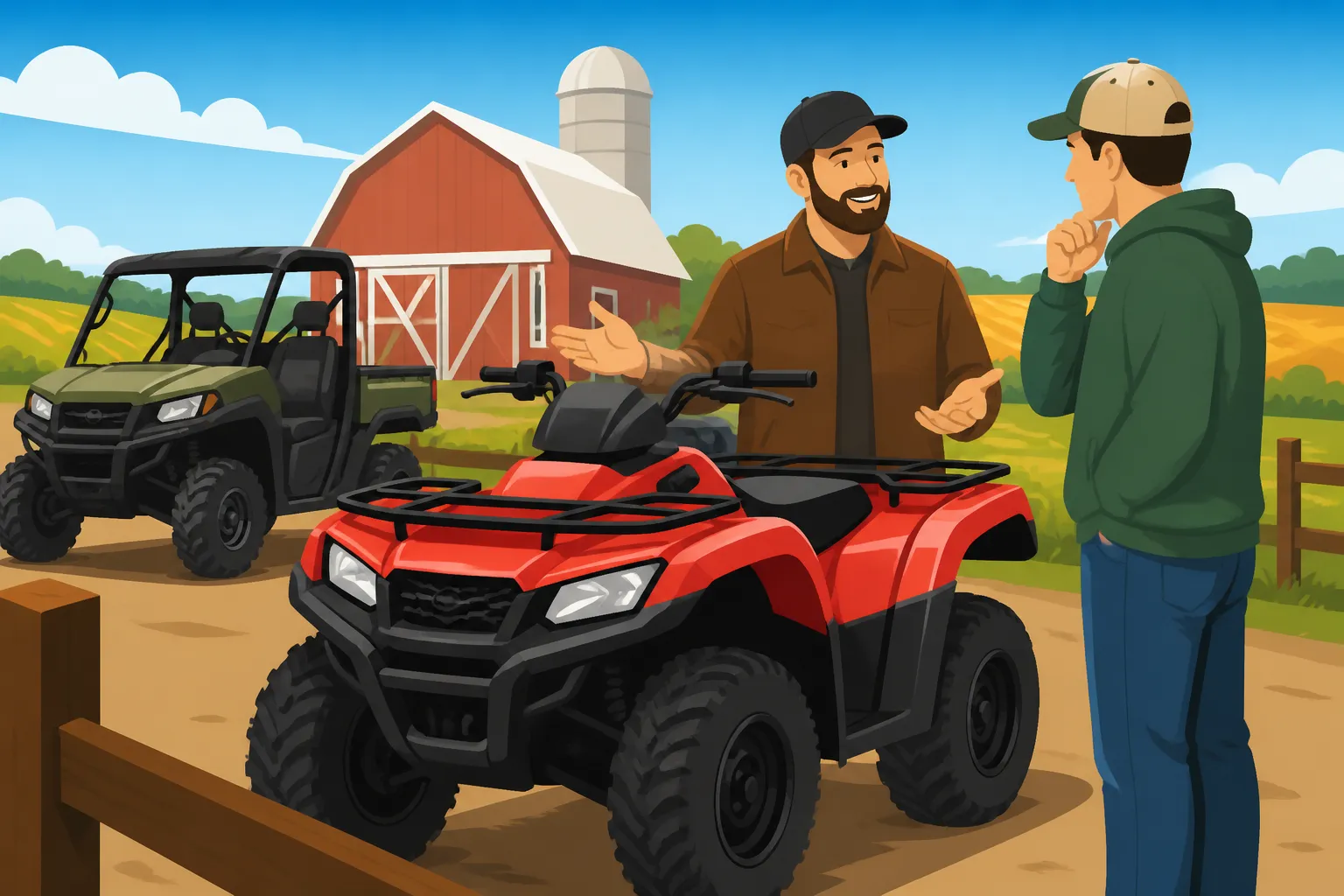
Many Iowans grew up attending farm sales, where everything from tractors to household goods finds a new home. For ATVs and UTVs, these sales often feel like a treasure hunt. You might spot a machine that looks robust, perhaps a little dusty from being stored in a barn, and the price seems right. There's a perceived authenticity to buying directly from a farmer, a sense that the machine has been "worked" but also "cared for." The seller might be known in the community, adding a layer of trust. This perceived bargain and local connection can, however, sometimes overshadow the critical due diligence needed for such a significant purchase.
What can be deceiving is the lack of formal process. Without a dealer intermediary, there's no guaranteed paperwork trail, no service history printout, and no one to ensure the title is free and clear. The quad might look good on the surface, but its history could be murky, leading to serious issues when you try to make it legally yours. You might save a few dollars upfront, only to spend much more later trying to fix administrative errors or mechanical surprises.
The "As-Is" Reality and What It Means for You
The overwhelming majority of farm sale transactions, especially for used equipment, operate on an "as-is, where-is" basis. This isn't just a casual phrase; it's a legal disclaimer that shifts almost all risk onto the buyer. When you buy an ATV "as-is," you're accepting it with all its current defects, whether visible or hidden, known or unknown. The seller typically makes no guarantees about the machine's condition, its fitness for any particular purpose, or even its future performance.
This "as-is" clause means that if you drive the quad home and it breaks down the next day, or you discover a cracked frame that wasn't immediately obvious, you generally have no recourse against the seller. You can’t go back and demand a refund or compensation for repairs. This is why thorough inspection and diligent questioning before the sale are absolutely paramount. Your best and often only protection is your own careful examination of the machine and all its accompanying documentation.
Crucial Pre-Purchase Checks for Farm Sale Quads
Before you even think about handing over cash or signing anything at an Iowa farm sale, you need to become a detective. These pre-purchase checks are your shield against potential legal and mechanical headaches down the road. Skipping these steps is like buying a lottery ticket where the only prize is regret.
Verifying Ownership and the Chain of Title
This is arguably the most critical step. In Iowa, off-highway vehicles (OHVs), including ATVs and UTVs, require a title. If the machine you're looking at doesn't have a clear, properly assigned title in the seller's name, you're buying a huge problem. You absolutely need to see the physical title certificate. Don't settle for a photocopy or a promise that "it's in the mail." A legitimate seller will have the title on hand, ready to transfer.
Check the title carefully. Does the seller's name exactly match the name on the title? Are there any lienholders listed on the title? If so, those liens must be satisfied and released before the sale can be completed and the title legally transferred to you. A lienholder is typically a bank or financial institution that holds a security interest in the machine until it's paid off. You do not want to buy a machine with an outstanding lien, as the lienholder could legally repossess it. You can even call your local Iowa County Recorder's Office during business hours with the Vehicle Identification Number (VIN) to verify ownership and check for any recorded liens. This simple phone call can save you immense trouble and heartbreak. [Titling an ATV in Iowa] is a fundamental requirement, and skipping this verification step is a recipe for disaster.
The Iowa Bill of Sale: Your Essential Document
Even with a perfectly clear title, a detailed bill of sale is your next line of defense. This document formally records the transaction and proves you legally purchased the machine. Don't rely on a simple receipt or a handshake. A comprehensive Iowa bill of sale should include:
- Seller's Full Legal Name and Address: This confirms who you bought it from.
- Buyer's Full Legal Name and Address: Your information for the record.
- Date of Sale: Crucial for establishing ownership timelines.
- Purchase Price: Clearly state the amount paid.
- Vehicle Information: This includes the make, model, year, and most importantly, the full 17-digit Vehicle Identification Number (VIN). Double-check that the VIN on the bill of sale matches the VIN stamped on the machine and on the title.
- "As-Is" Clause: While this protects the seller, having it explicitly stated confirms the terms of the sale.
- Signatures: Both buyer and seller must sign the document. It’s also wise to have a witness sign, if possible, especially for high-value purchases.
If the seller doesn't have a formal bill of sale, you can create one yourself. Resources like LawDepot offer customizable templates that are easy to fill out and can provide that extra layer of legal protection. A robust bill of sale will be invaluable when you go to [Registering at an Iowa County Recorder] and for calculating [Iowa ATV Sales Tax Rate]. This document legally binds the exchange and can protect you from future disputes.
Serial Numbers, Damage, and Mechanical Condition
Once the paperwork looks good, it's time to get your hands dirty. Start by locating the VIN on the machine itself. It’s usually stamped on the frame or a permanent part of the chassis. Compare this VIN exactly to the one on the title and the bill of sale. If there’s any discrepancy, walk away. A mismatched VIN can indicate a stolen machine or one that has been illegally altered.
Next, perform a thorough visual inspection. Look for signs of major damage:
- Frame: Check for bends, cracks, or crude weld repairs. These often indicate a hard crash.
- Suspension: Look for leaks from shocks, bent A-arms, or cracked control arms.
- Tires: Uneven wear can indicate alignment issues or suspension problems.
- Engine: Check for oil leaks, unusual noises, or excessive smoke if you can start it. Are there signs of previous repairs, like fresh gaskets or non-factory bolts?
- Fluids: Check oil and coolant levels and condition. Dirty or low fluids can signal neglect.
- Electrical: Test lights, horn, and the starter.
- Controls: Ensure brakes work, throttle returns smoothly, and steering is tight.
If the seller allows, take the ATV for a short test ride, even if it's just around the farmyard. Listen for strange noises, feel for vibrations, and test the brakes and acceleration. Don’t be shy about asking questions about its history, maintenance, and any known issues. Remember, "as-is" means your inspection is your only real warranty.
Navigating the Iowa Registration and Titling Process Post-Purchase
Congratulations, you've found your farm sale gem and completed the purchase! Now comes the crucial step of making it legally yours and ready for Iowa's trails. This involves a trip to your local county recorder, and being prepared can make all the difference.
What to Expect at the County Recorder's Office
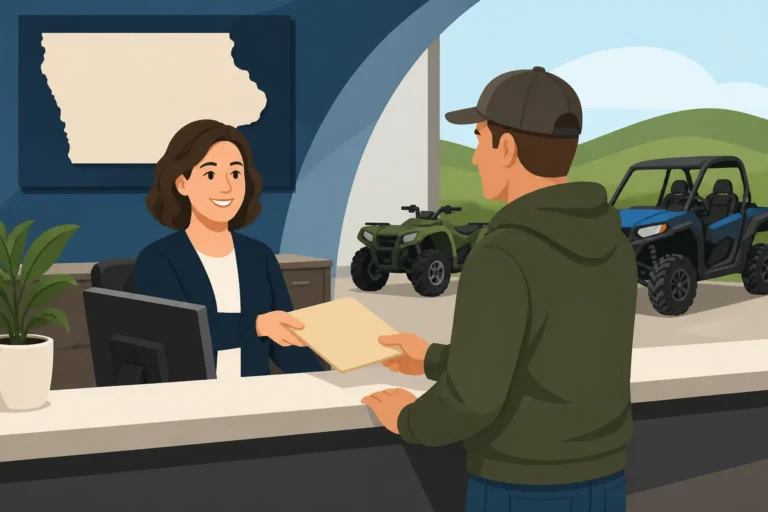
After securing your ATV at the farm sale, your next stop is the County Recorder's Office in the county where you reside. This is where all the official magic happens for OHV titling and registration in Iowa. When you arrive, you’ll need to bring a few critical documents:
- The Original, Properly Assigned Title: This is the most important document. The seller should have signed it over to you on the back in the designated "Assignment of Title" section. Make sure all necessary blanks are filled out, including the odometer reading (if applicable) and the date of sale.
- A Detailed Bill of Sale: As discussed, this document proves your purchase and will be used to calculate sales tax. If you used a template from a service like LawDepot, ensure all fields are accurately completed.
- Proof of Identity: A valid driver's license or state ID will be required.
At the recorder's office, they will process the title transfer, which involves a [Iowa's $13.50 ATV Title Fee]. They will also collect Iowa sales tax on the purchase price, even for private sales. Expect to pay the state's 6% sales tax, plus any local option sales tax applicable in your county, which often brings the total to 7%. After the title is transferred, you'll need to register the machine, which involves various fees including the annual [The $15 Base Fee Inside an Iowa Registration] and others. Once registered, you'll be issued a registration certificate and a decal to place on your machine. [Iowa ATV Title Requirements] are strict, so having everything in order before you go is a must.
Potential Hurdles: No Title, Missing Paperwork, or Liens
This is where many farm sale bargains turn into nightmares.
- No Title: If the seller genuinely doesn't have a title and claims it was never titled or was lost, this is a significant red flag in Iowa. In most cases, if a machine should have a title and doesn't, you'll face immense difficulty, if not impossibility, in titling it in your name. You generally cannot register an ATV in Iowa without first titling it. The county recorder's office cannot issue a title if one was never properly issued to the seller. Unless the machine falls under a very specific exemption (which is rare for modern ATVs), a missing title often means you simply can't legally own or operate the machine on public lands or trails in Iowa.
- Missing Paperwork: Perhaps the title is just incomplete, or the bill of sale is too vague. The recorder's office will reject incomplete paperwork. You might have to go back to the seller to get signatures, dates, or missing information. This can be awkward and frustrating, especially if the sale was informal.
- Undisclosed Liens: While you should check for liens beforehand, sometimes they can surface unexpectedly. If a lien appears on the record that wasn't disclosed, the recorder's office cannot transfer the title until that lien is satisfied and released. This puts you in a difficult position, as you've paid for a machine you can't title, and the original owner still owes money on it.
Your best defense against these hurdles is diligent pre-purchase verification. If any of these issues arise after the sale, your options may be limited and could involve legal advice to rectify the situation, especially if the seller was dishonest.
Iowa Sales Tax and Your Farm Sale Purchase
A common misconception among private buyers is that sales tax doesn't apply to purchases made from individuals at farm sales. This is incorrect in Iowa. [Iowa ATV Sales Tax Rate] applies to all transfers of ownership, whether from a dealer or a private party. The county recorder's office is legally mandated to collect this "use tax" when you apply for a title and registration.
The tax will be calculated based on the purchase price listed on your bill of sale. If the recorded price seems unusually low, the county recorder may, at their discretion, assess the tax based on the machine's estimated fair market value. So, don't try to "save" on taxes by significantly underreporting the sale price; it might not work, and could even raise red flags. Be prepared to pay the 6% state sales tax plus any applicable local option sales tax (usually an additional 1%) on the full amount of your purchase. This is a non-negotiable part of the legal transfer process in Iowa.
Protecting Yourself After the Farm Sale
Even after the sale is complete and the machine is titled and registered, there are ongoing steps you can take to protect your investment and ensure a smooth ownership experience. The journey doesn't end when the papers are signed; it's an ongoing process of smart stewardship.
Documenting Everything: Your Best Defense
Once you've secured the ATV and completed the title and registration process, keep every single piece of paperwork in a safe, accessible place. This includes:
- The original bill of sale, especially if you used a robust template from a service like LawDepot.
- The signed-over title from the seller.
- Your new title certificate issued by the county recorder.
- Your current registration certificate and the receipt from the recorder's office detailing all fees paid (title, registration, sales tax).
- Any communication with the seller, even informal notes or emails.
- Records of maintenance or repairs you perform.
This complete paper trail serves multiple purposes. It's your proof of ownership, essential for insurance claims, future sales, or any legal disputes. It's also required to be carried on your machine when you ride on public lands or trails, as per [Carrying the Certificate on an Iowa Ride]. Losing these documents can create significant administrative hurdles down the line, requiring you to apply for duplicates and potentially pay additional fees.
The Importance of Due Diligence
Ultimately, buying a quad at an Iowa farm sale puts the onus heavily on you, the buyer. There's no dealership standing behind the sale, no manufacturer warranty on a used machine, and minimal recourse if things go south. This is why due diligence isn't just a recommendation; it's an absolute necessity.
Before you even bid or agree to a price, dedicate the time and effort to:
- Verify ownership: Always see the physical title and confirm it's in the seller's name and free of liens.
- Inspect thoroughly: Get down and dirty, look at the VIN, check for damage, and test everything you can. Don't be rushed.
- Demand a comprehensive bill of sale: Use a template from a reliable source or ensure all critical information is included.
- Understand the "as-is" nature: Be realistic about the risks involved with buying used equipment from a private seller.
- Be prepared for registration and titling costs: Factor in sales tax, title fees, and registration fees when budgeting your purchase.
By taking these proactive steps, you significantly increase your chances of a successful and satisfying farm sale ATV purchase, allowing you to enjoy Iowa's trails worry-free.
| Document/Action | Purpose | Where to Check/Obtain | Importance |
|---|---|---|---|
| Original Title | Proves seller's ownership, facilitates transfer | Seller | Crucial. Cannot title without it. |
| Lien Check | Ensures machine is free of outstanding debts | County Recorder's Office (with VIN) | Crucial. Avoid buying someone else's debt. |
| Bill of Sale | Legal record of transaction, establishes purchase price for tax | Seller (or create using templates like LawDepot) | Essential. Protects both buyer and seller. |
| VIN Verification | Confirms identity of machine, checks for theft/alteration | Machine's frame, title, bill of sale | Critical. Mismatched VIN is a major red flag. |
| Mechanical Inspection | Assesses physical condition, identifies potential repairs | On-site at farm sale (yourself or a mechanic) | High. Protects from "as-is" surprises. |
| County Recorder Visit | Formalizes title transfer, collects sales tax, registers machine | Your local Iowa County Recorder's Office | Required. Makes machine legal to ride. |
| Keep All Documents | Proof of ownership, legal compliance, future reference | Secure location (e.g., home safe, digital copy) | Ongoing. Essential for all aspects of ownership. |
Disclaimer
This article is for general informational purposes only and does not constitute professional advice. Laws, prices and regulations vary by location and change over time. Consult a qualified professional for guidance on your specific situation.