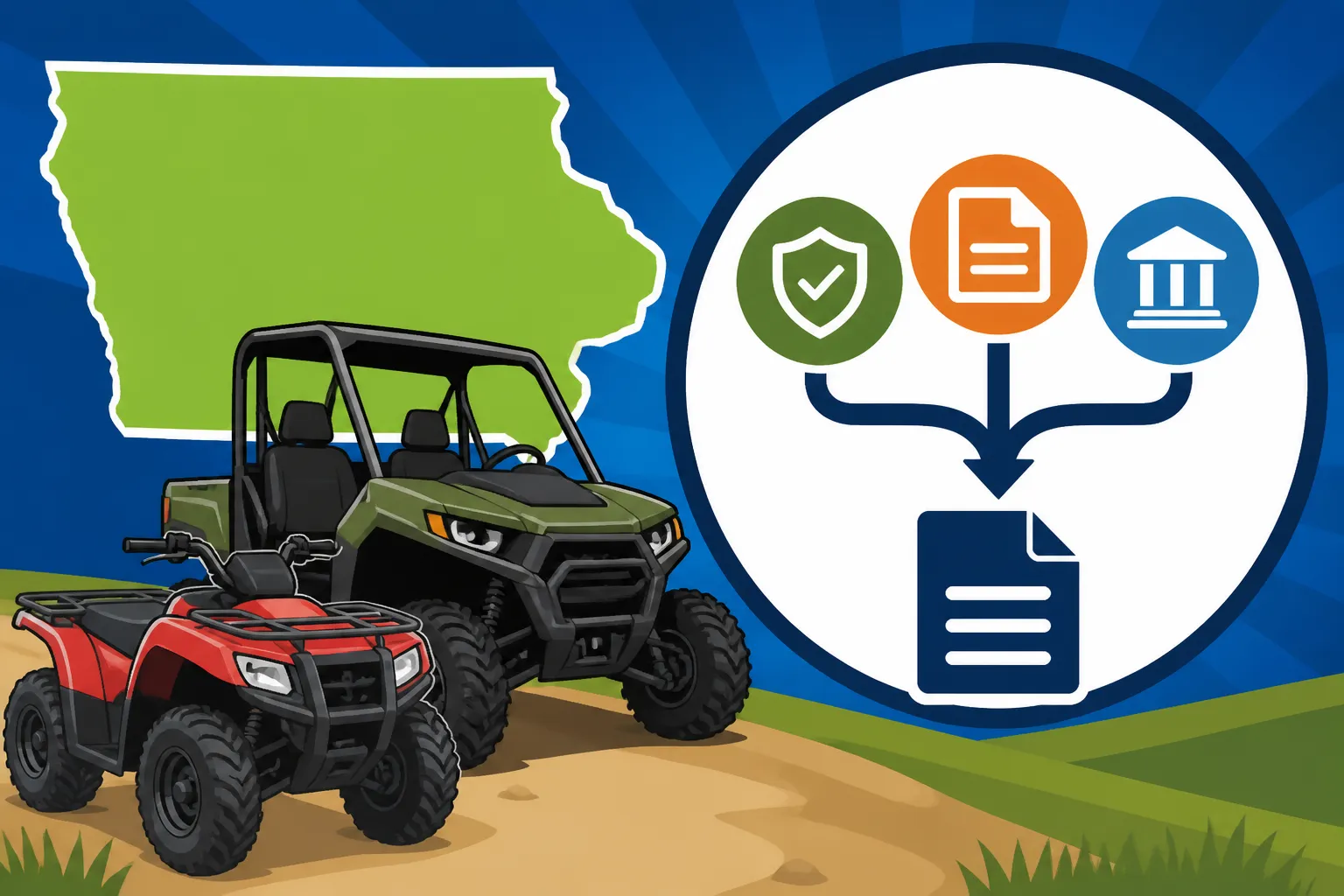
Three Fees Rolled Into One County Recorder Bill
When you're eager to hit the trails or get your new-to-you ATV or UTV registered in Iowa, heading to your local County Recorder's office feels like the final hurdle. You walk in, fill out the paperwork, and then comes the moment of truth: the bill. For many riders, that single total can feel a bit opaque, especially when you see several distinct charges bundled together. This guide will shine a light on the specific fees you'll typically find rolled into one convenient bill when you [Registering an ATV in Iowa] at the County Recorder, helping you understand exactly what you're paying for.
Deconstructing Your Iowa ATV/UTV Registration Bill
It’s easy to look at a bill and just see the total, especially when you’re excited about a new machine or just getting your existing one up to snuff. But understanding the individual components of your [Iowa ATV Registration Cost] can be really empowering. It helps you see where your money goes and why each part is necessary for the smooth operation of off-highway vehicle (OHV) programs in our state.
The Core: Your Annual Iowa ATV/UTV Registration Fee
At the heart of your County Recorder bill is the actual annual registration fee for your ATV or UTV. This is the big one, the charge that grants you the privilege of riding legally on designated public lands and trails across Iowa. Think of it like the admission ticket to our state's fantastic riding opportunities. This fee is essential, and it's what ensures that funds are available to maintain and expand the trails we all love.
This fee isn't just a random number; it's a critical investment in the infrastructure that supports our passion. When you pay this fee, you're contributing directly to the upkeep of places like Gypsum City OHV Park or Bluff Creek, ensuring that trails are groomed, signs are maintained, and new projects can get off the ground. Without these funds, our beloved riding areas simply wouldn't be sustainable. It's truly the backbone of Iowa's OHV system. The exact amount is set, but it’s the largest portion of what you'll typically pay for annual registration. This is the fee that ultimately puts that recognizable state decal on the back of your machine, signifying that you're good to go for the year. [The $15 Base Fee Inside an Iowa Registration] contributes significantly to this core registration fee.
The Unsung Hero: The County Recorder's Writing Fee
Nestled among the charges, you'll find a smaller, but no less important, item: the writing fee. This isn't a fee for "writing things down" in the literal sense, but rather a small administrative charge levied by the County Recorder's office for the actual processing of your registration paperwork. Every piece of paper handled, every form checked, every entry made into the system incurs an administrative cost.
The County Recorder's office is the frontline for OHV registration in Iowa. They're the ones who handle your forms, input your vehicle's details, issue your decal, and answer your questions. This writing fee helps to cover the operational costs associated with these vital services. It ensures that your local County Recorder's office has the resources to efficiently process registrations for all sorts of vehicles, including our ATVs and UTVs. It’s a small amount, typically a couple of dollars, but it’s a necessary component that keeps the local government services running smoothly. Without it, the burden of administrative tasks would fall elsewhere, potentially leading to less efficient service. This fee is consistent across all registrations, regardless of the machine type or price. [The $2 Writing Fee on Every Registration] is a prime example of this administrative cost.
The System's Cost: The License Agent Fee
Finally, completing the trio of common registration fees is the license agent fee. This charge, often just a dollar or so, is typically associated with the use of the state's electronic licensing and registration system. In our modern world, convenience often comes with a small processing fee, and this is exactly what the license agent fee represents.
When you register your ATV or UTV, the County Recorder isn't just scribbling on a paper form; they're almost certainly using a sophisticated statewide computer system to process your information, generate your decal, and update the state's records. This system requires maintenance, software updates, and secure data handling, and the license agent fee contributes to those costs. It ensures that the digital infrastructure supporting OHV registration remains robust and reliable, making the process quicker and more accurate for everyone involved. While it might seem like a tiny detail, it’s a standard charge for using these electronic services. Knowing what it's for helps demystify your bill. [Why a $1 License Agent Fee Is Added] explains this in more detail.
Why These Fees Appear on One Bill
It might seem simpler to have just one single fee for registration, but there's a good reason why these three distinct charges are bundled together on your County Recorder bill. It's all about efficiency and ensuring that the right funds go to the right places while keeping the process as straightforward as possible for you, the rider.
Streamlining the Process at the County Recorder
Imagine if you had to pay three separate times for each of these fees, perhaps even at different counters or in different transactions. That would be a bureaucratic nightmare for both you and the County Recorder's office. By rolling these distinct fees into one bill, the process becomes significantly more streamlined. You walk in, fill out [What Iowa's Registration Form Asks For], they process everything, and you make one payment. It saves time for the staff and, more importantly, it saves you time standing in line.
This single-bill approach is designed for convenience. The County Recorder's office acts as a central hub where all the necessary financial transactions for your OHV registration can be completed simultaneously. They are equipped to collect these various fees and then disburse them to the appropriate state and local accounts. It's an administrative shortcut that benefits everyone, ensuring that your journey from "unregistered" to "trail-ready" is as smooth as possible. You can even use services like LawDepot to ensure you have all your forms filled out correctly before you go, further streamlining your visit.
The Iowa DNR's Role in Fee Structure
The Iowa Department of Natural Resources (DNR) plays a pivotal role in regulating off-highway vehicles and setting the fee structures. While the County Recorder's office handles the collection, the DNR often dictates what fees are necessary and for what purposes. These fees are not arbitrary; they are carefully considered components of a larger funding strategy for Iowa's OHV program. [The Iowa DNR and Off-Highway Vehicles] work closely with riders and clubs to determine needs.
The DNR understands that different aspects of OHV management require specific funding. The annual registration fee is largely dedicated to direct trail and program support. The writing fee covers local administrative overhead, and the license agent fee supports the technological backbone. By defining these distinct charges, the DNR ensures transparency and accountability in how rider funds are allocated. It also allows for clear reporting on how much revenue is generated for each specific purpose, which is crucial for budgeting and planning future improvements for riders across the state.
Understanding the Breakdown and What You're Paying For
Understanding these fees isn't just about knowing how much money leaves your wallet; it's about appreciating the ecosystem of OHV riding in Iowa. Each dollar, whether it's for the core registration, a writing fee, or a system charge, contributes to a larger goal: making Iowa a fantastic place to ride.
Where Your Registration Dollars Go
So, once you've handed over your payment at the County Recorder's office, where exactly does all that money go? It's a question many riders ask, and it's a good one. The funds collected from your ATV and UTV registrations are absolutely vital for maintaining and developing the trails and riding areas across Iowa. This isn't just a fee; it's an investment in your passion.
A significant portion of the money goes into the Off-Highway Vehicle Fund. This fund is specifically earmarked for things like trail acquisition, maintenance, signage, and safety programs. It helps pay for the heavy equipment that grooms trails after a rough season, the materials for bridges over creeks, and the staff who oversee the parks. The fees also support educational initiatives, ensuring that riders are safe and responsible. Essentially, when you pay these fees, you're directly contributing to the quality and availability of public riding lands in our state. It's a classic example of user fees supporting user amenities. Knowing that your money is reinvested into the trails you love makes that bill a lot easier to swallow. For more details, check out [Where Iowa Registration Fees Go].
Preparing for Your County Recorder Visit
Before you head out to [Where to Register an ATV in Iowa], taking a few moments to gather everything you'll need can save you a lot of hassle. While the County Recorder's office rolls those three fees into one, they still need specific documentation from you to process your registration.
Here’s a quick checklist to help you be prepared:
- Proof of Ownership: This is typically a signed-over title (if you bought it used) or a Manufacturer's Statement of Origin (MSO) (if it's new). Without proper proof of ownership, they can't register the machine in your name.
- Bill of Sale: While not always strictly required for registration, a detailed bill of sale is crucial for documenting your purchase, especially for private sales. You can find reliable templates for a bill of sale through services like LawDepot to make sure you have all the necessary information. This also helps establish the sale price for [Iowa ATV Registration and Sales Tax] purposes.
- Identification: Bring your driver's license or other valid photo ID.
- Payment: Be ready to pay the combined fees. Most County Recorder offices accept cash, checks, and often debit or credit cards (though card payments might incur an additional small processing fee, so it's always good to ask beforehand).
- Current Registration (for renewals): If you're renewing, having your old registration handy can speed up the process.
Having everything in order makes the process quick and painless. The staff at the County Recorder's office are there to help, but having your documents organized ensures a smooth transaction for everyone.
Beyond the Fees: Other Potential Costs and Considerations
While this article focuses on the three fees commonly rolled into one registration bill, it's important to remember that these aren't the only potential costs you might encounter when dealing with your ATV or UTV in Iowa. Being aware of other charges can help you budget properly and avoid surprises.
For instance, if you're acquiring a new machine or transferring ownership, you'll also likely pay [Iowa ATV Title Cost]. This is a separate fee for the title itself, which is proof of legal ownership. There’s also the issue of sales tax. Even if you buy your ATV or UTV in a private sale, Iowa law requires you to pay sales tax on the purchase price, and the County Recorder's office typically collects this at the time of registration. This often catches private buyers off guard, so be prepared for it.
Then there are potential penalties. If you let your registration lapse, you might face [Iowa's Late Registration Penalty] when you eventually get around to renewing it. These aren't usually rolled into the initial registration bill but are important to keep in mind. Other potential costs include lien notation fees if you're financing your machine, or duplicate title fees if you lose yours. The County Recorder's office is often the one-stop shop for these related transactions too, so while you might have three fees on one bill for registration, don't be surprised if other separate charges crop up for titling or other services on the same day. It's all part of the process of legally owning and operating an OHV in Iowa.
When buying a used ATV, especially from a private seller, having a robust bill of sale from a reputable source like LawDepot can not only help with sales tax calculation but also protect you if there are any disputes about the condition of the machine or what was included in the sale. Always make sure to ask about all potential costs when you call your County Recorder or visit their website to ensure you’re fully prepared.
| Fee Type | Purpose | Appearance on Bill | Example (Qualitative) |
|---|---|---|---|
| Annual Registration Fee | Funds trail maintenance, development, and OHV programs | Main line item for "Registration" | Largest Fee |
| County Recorder Writing Fee | Covers administrative costs for processing paperwork by local office | Separate line item "Writing Fee" | Small Fixed Fee |
| License Agent Fee | Supports the state's electronic licensing and registration system | Separate line item "Agent Fee" | Very Small Fixed Fee |
Disclaimer
This article is for general informational purposes only and does not constitute professional advice. Laws, prices and regulations vary by location and change over time. Consult a qualified professional for guidance on your specific situation.