Trail Damage From Riding Too Wet
When Iowa trails are saturated, an ATV or UTV can leave deep ruts, widen muddy corners, and damage the surface long after the ride ends. It is tempting to push through because the machine has traction and the trail is technically open. This guide explains how to recognize risky conditions, reduce your impact, and decide when turning around is the better ride.
Why wet Iowa trails are easy to damage
Saturated soil loses its support
A trail can look rideable from the parking area while the soil underneath is already soft. Rainwater fills the spaces between soil particles, reducing the ground’s ability to support a heavy machine. Tires then press into the surface instead of rolling across it cleanly.
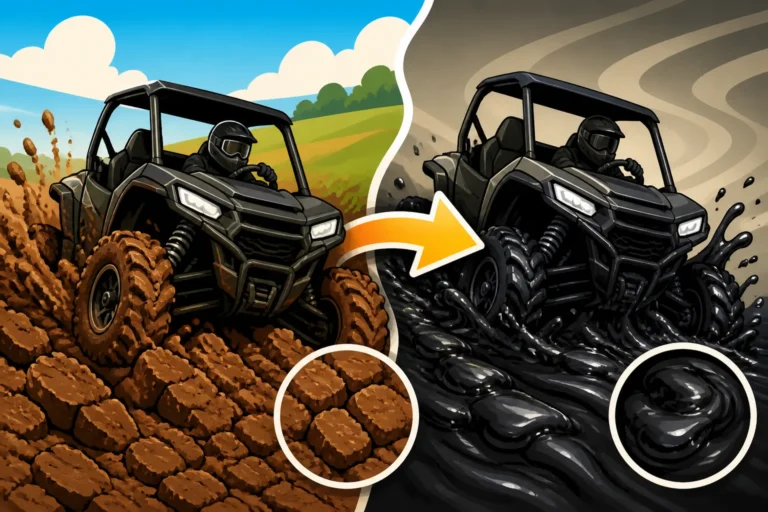
Iowa’s clay soils can make this especially noticeable. When damp, clay may hold together; when thoroughly wet, it can become slick and deform easily. A tire that spins in place can break the surface into loose material, while a rut can direct water along the trail and make erosion worse. The result may be more than a muddy patch: repeated traffic can change how the trail drains and wears.
Different locations respond differently, even after the same rainfall. A shaded low spot may remain wet while a nearby exposed stretch dries out. A trail on a slope may shed water, but a dip or poorly drained corner may stay soft. That is why a general weather forecast is useful background, not a reliable verdict on a specific trail.
Ruts are more than cosmetic
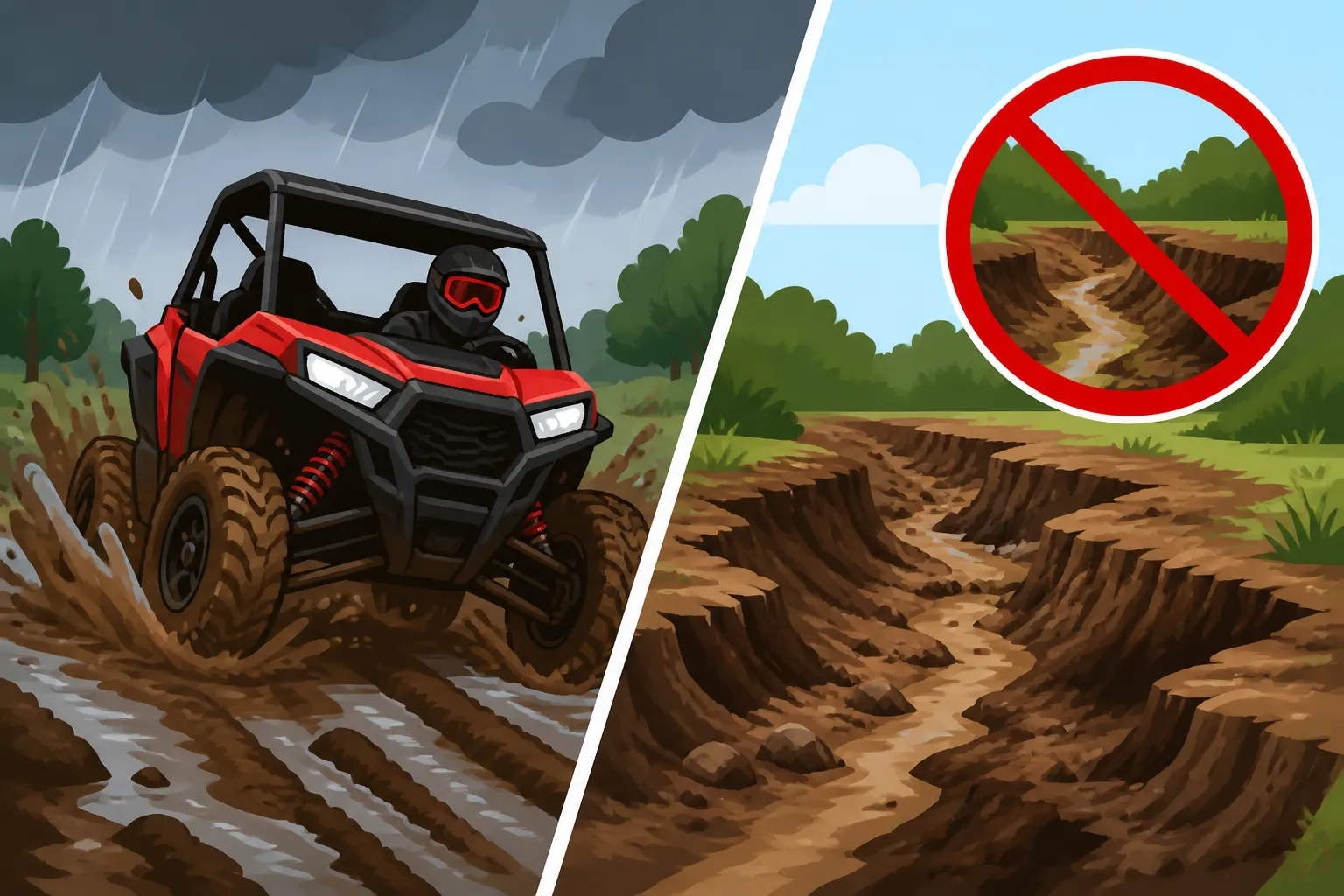
A shallow tire mark may seem harmless, but repeated passes can deepen it. Once a rut forms, tires tend to follow it, and riders may widen the trail to avoid the deepest section. That creates a broader damaged area and can push traffic into vegetation or onto ground that was never meant to be part of the route.
Ruts can also affect drainage. Water may collect in them, flow along them, or cut into the trail when it rains again. On slopes, that concentrated flow can carry soil downhill. At corners, spinning tires can loosen the surface and leave a soft, uneven berm that catches the next rider by surprise.
Damage also affects other users. A trail that was manageable for a beginner or smaller machine can become a series of deep grooves and slick edges. Repairing that surface takes time and often depends on park staff, volunteers, or local clubs. A short ride in poor conditions can create work that lasts much longer than the weekend.
Mud is not a reliable measure of whether a trail is open for riding
Not every muddy section means a trail is damaged, and not every firm-looking section is safe to cross. A thin wet layer over a hard base may be less vulnerable than a trail that looks dry but gives way under a tire. The important questions are whether the trail surface is holding up, whether the route is officially open, and whether riding is permitted there.
A park’s posted rules and closure notices take priority over a rider’s judgment at the gate. A trail can be closed even when some sections look firm, because staff or volunteers may be protecting a vulnerable area or trying to prevent damage across the system. For a broader explanation of that decision, see Why Iowa Closes Parks for Wet Trails and Iowa Trails Closed After Rain.
| What you notice | What it may indicate | A sensible response |
|---|---|---|
| Tires leave deep, defined tracks | The surface may be too soft to support repeated traffic | Stop before making another pass and turn back if safe |
| Tires spin without moving the machine forward | Traction is being lost and the trail may be breaking apart | Ease off the throttle; do not dig deeper trying to power through |
| Muddy water or loose soil is flowing down the trail | Water may be carrying material and worsening erosion | Avoid the section and notify the park operator if appropriate |
| A marked closure or barrier is present | The route is not open for riding | Do not go around, move, or cross the barrier |
| The trail is firm but isolated wet spots remain | Conditions may vary by location | Follow posted guidance and avoid widening the route |
How to judge conditions before unloading
Check the park’s own updates first
Before driving to a riding area, check its official notices, posted conditions, and closure information. A park operator, county, or club may share details that a regional forecast cannot: which loops are open, whether a low section is holding water, or whether the whole site is closed. Start with Iowa Trail Conditions Before You Ride and Trail Closures to Check First, then confirm any uncertainty with the park directly.
This check matters because travel can make it hard to change plans. You may have already loaded the machine, packed gear, and driven a long distance. Finding a closed gate is frustrating, but riding around a closure can damage the trail and put you at odds with the people responsible for maintaining it. A quick call before departure can save both the drive and the temptation to improvise.
Mapping tools can help you understand where a trail is and how it fits into your trip, but a mapped route does not necessarily show current ground conditions or permission to ride. You can use onX Offroad to review route context and plan a backup, then check the park’s own notice for current access. If information conflicts, treat the official park or land manager’s direction as controlling.
Look beyond the rain total
Rainfall matters, but the amount alone does not tell you whether a trail has dried. Consider when the rain fell, whether there were several wet days in a row, and what the ground is like at the park. Shade, drainage, soil type, slope, and recent traffic all affect how quickly a route recovers.
A sunny morning after overnight rain does not guarantee that a low trail or shaded corner is ready. Conversely, a brief shower may not make every route unsuitable. Use local updates and the operator’s guidance rather than assuming all trails across Iowa respond the same way. For practical advice on timing a trip after a storm, see Iowa Riding After Heavy Rain and Iowa Clay That Turns to Grease.
If you are checking conditions through onX Offroad or another mapping tool, use that information to plan where you might ride, not as proof that a trail is open or dry. Check the route against the park’s official updates before leaving. If you cannot confirm access, choose a different riding area or postpone the trip rather than gambling on the drive.
Read closure notices as instructions, not suggestions
A closure may apply to one loop, a particular section, or an entire riding area. Read the notice carefully and follow the signs at the site. Do not assume a closed route is open just because you see another rider on it, or because the closure seems inconvenient for your planned loop.
Barriers, ropes, signs, and cones are there to protect the trail or direct visitors. Do not move them, ride around them, or enter a closed section to “just have a look.” If a club or operator asks riders to stay off, respect the request; When a Club Asks Riders to Stay Off explains why that cooperation matters. You can also check Reading the Iowa DNR Alert Feed when relevant to your destination, while still confirming park-specific information with the operator.
What to do when a trail is wet
Stop before a small rut becomes a bigger one
If the trail begins to deform under your tires, stop as soon as you can do so safely. Avoid repeated attempts to power through a soft patch. Spinning tires dig into the surface, and steering around the rut can widen the trail into vegetation or fragile ground.
If you are riding with a group, let the riders behind you know that the section is not holding up. Keep machines in the established route when turning around is safe and permitted. Do not create a new bypass to avoid a muddy section; that can turn one vulnerable spot into a much larger damaged area.
A useful personal rule is to pay attention to what the tires leave behind. If each pass leaves a deeper mark, pushes soil aside, or creates a new line around the obstacle, conditions are no longer supporting the ride well. Do not wait until the machine is stuck or the trail is visibly torn up to change plans.
Avoid aggressive throttle and repeated passes
When a tire loses traction, more throttle can make the damage worse. The tread may dig down, throw loose soil, and leave a deeper hole without moving the machine forward. If you cannot proceed without spinning, back out carefully if possible and choose a permitted route back rather than making repeated attempts.
Do not use a wet trail as a place to test a machine’s power or tires. Fast acceleration, tight turns, hard braking, and repeated laps can quickly churn up soft soil. Even a capable UTV can cause substantial pressure on a vulnerable surface because of its weight and tire contact. A machine that can physically cross a muddy patch is not automatically doing so without harm.
If you are already stuck, focus on recovery that avoids further digging. Ask your group for help, use appropriate recovery equipment safely, and avoid dragging a machine across the trail in a way that gouges the surface. If recovery would mean damaging the route further, contact the park operator for guidance when possible.
Turn the ride into a different plan
A closed or saturated trail does not have to mean a wasted day. If another nearby park is officially open and its conditions are suitable, you may be able to switch destinations. Check directly before making the drive; a map can help compare locations, but it cannot replace a current closure update. onX Offroad can help you keep a backup area in mind, while the park’s own information confirms whether that option is actually available.
If no suitable place is open, consider rescheduling rather than searching for an unauthorized route. Riding on private land requires permission, and an unmarked track is not automatically an approved riding area. A postponed trip may feel disappointing, especially after arranging a group outing, but it avoids leaving damage that other riders, volunteers, or land managers must deal with later.
You can also use a wet-weather day to prepare for the next ride: check the machine, clean and inspect tires, review your route, and confirm the park’s access details before loading again. If you want a repeatable pre-departure routine, Checking Two Iowa Parks Before You Drive and Calling a Park Before You Load are useful related reads.
How to leave a trail in good shape
Stay on the marked route
When riding is permitted, keep to the established trail and follow signs and directional markers. Cutting a corner or making a new line around a puddle can damage the edge of a route, trample vegetation, and encourage other riders to do the same. A detour that seems minor from one machine can become a new trail after repeated use.
Do not assume that a wide muddy area is an invitation to spread out. Staying in the designated route makes it easier for the park or club to monitor and maintain it. If a marked section appears unsafe or badly damaged, avoid it when possible and report the issue through the park’s normal contact method instead of creating a bypass.
Respect barriers and temporary repairs. If a section has been blocked off or marked for restoration, avoid it even if you think your machine can cross without trouble. The people maintaining the trail may be trying to protect new work or give the ground time to recover.
Clean up and report serious problems
Mud carried from one area to another can make a mess at the staging area and may spread unwanted material. Clean your machine where the park permits, and avoid washing mud into waterways, drainage areas, or places where it can cause further erosion. Follow the facility’s posted instructions for washing and waste disposal.
If you see a deep rut, a washed-out section, a damaged sign, or a closure barrier that appears to have been moved, let the park operator know. Share the location as clearly as you can, using a marked trail name or nearby landmark. A map app such as onX Offroad may help you describe where you were, but use the park’s preferred reporting channel and do not post sensitive access details publicly if the operator asks riders not to.
The most helpful reports are specific and neutral: what you saw, where it was, and whether the issue appears to block safe passage. Avoid trying to repair a trail yourself unless the operator has asked you to help. Trail work may require permission, tools, or a particular method to avoid making drainage problems worse.
Make the go-or-no-go decision before the group is committed
Groups often feel pressure to ride because everyone has travelled, taken time off, or brought machines along. Agree in advance that an official closure means no riding and that trail damage is a reason to turn back. This makes the decision easier when the group is standing at a soft section and one person is eager to continue.
A simple plan can prevent conflict: check conditions before departure, identify a backup location, and decide who will verify closures. If the site is open but the surface is visibly failing, pause and reassess rather than letting the group’s momentum make the choice for you.
Good trail stewardship is not about avoiding every puddle. It is about recognizing when the ground cannot withstand more traffic, following the park’s rules, and resisting the urge to force a route that is not ready. When riders make that choice consistently, trails are more likely to remain usable for everyone.
Disclaimer
This article is for general informational purposes only and does not constitute professional advice. Laws, prices and regulations vary by location and change over time. Consult a qualified professional for guidance on your specific situation.