Riding Nicholson-Ford Gate to Gate
A ride at Nicholson-Ford can feel straightforward until you reach a junction, find a muddy stretch, or realize the trail you expected to take back is closed. This guide explains how to plan a gate-to-gate ride at the Marshalltown-area OHV park, prepare your machine and group, and make sensible decisions when conditions or trail access change.
What a gate-to-gate ride means at Nicholson-Ford
Start with the park’s actual layout
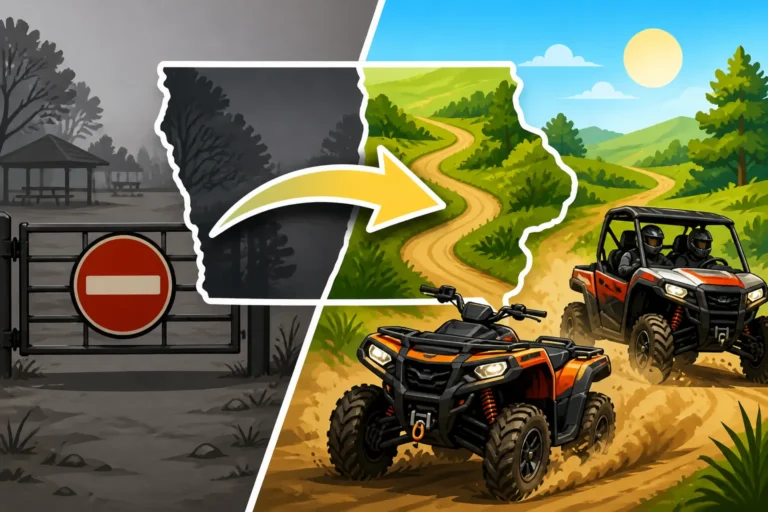
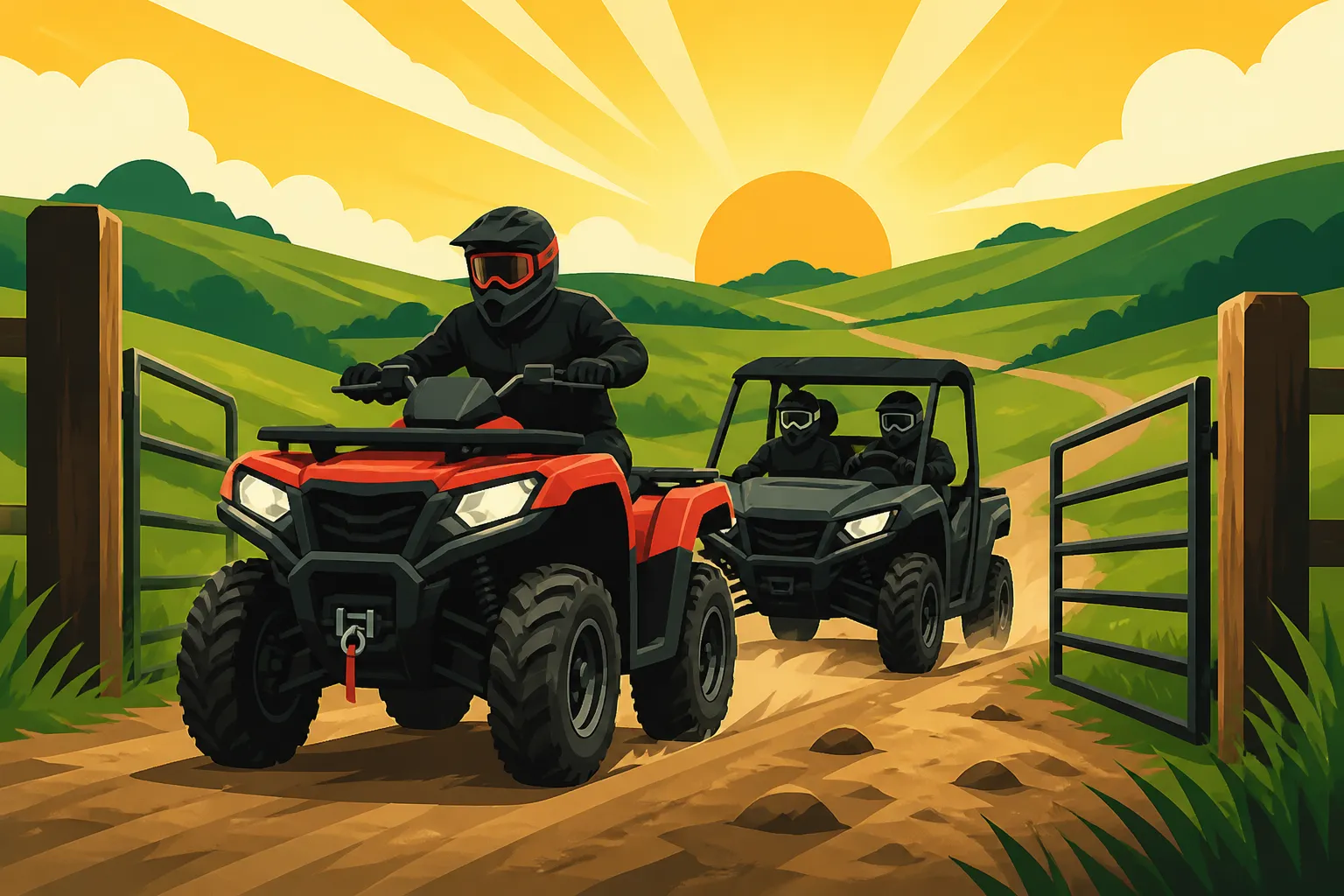
“Gate to gate” is a useful way to describe a ride that travels from the park entrance or staging area toward another end of the riding area, but it should not be treated as a promise that there is one continuous route between two gates. Trail access, permitted machine types, open areas, and temporary closures can affect what you can ride on a given visit.
Before planning a point-to-point trip, find the current park map and identify the entrance, staging or parking area, marked trails, and any signed limits. The Iowa Trail Maps From the DNR can help you get oriented, but signs at the park and current instructions from the people managing it should guide your decisions on site. If the map doesn’t clearly show a through-route, plan to ride an open loop or retrace your route rather than improvising a shortcut.
At a smaller or unfamiliar riding area, it’s easy to assume that a trail visible on a map connects to the next one. In practice, a line may end at a boundary, be restricted to a particular vehicle type, or be closed because of weather or maintenance. Treat map markings as a planning aid, not permission to leave a marked route.
Plan the return before you ride out
A gate-to-gate ride needs a return plan just as much as an outbound plan. Ask whether the route is a loop, whether you’ll need to turn around, and whether the same trail is suitable for your machine in both directions. A section that feels manageable while heading downhill or riding with a dry trail can be more difficult when you’re coming back tired, facing a climb, or dealing with fresh ruts.
If you’re using a navigation app such as onX Offroad to review your route, use it alongside the park’s own map and posted information. A GPS track can help you understand where you are, but it cannot confirm that a trail is currently open or approved for your particular vehicle. Save or download useful route information before leaving home if you expect weak cell service, and keep a paper or saved copy of the official map as a backup.
Agree on a simple turnaround rule before starting. For example, your group might turn back when a route becomes unclear, when the remaining fuel or daylight gets low, or when the trail surface exceeds the least experienced rider’s comfort level. A clear rule prevents the familiar group-ride debate of “just a little farther” after everyone is already tired.
Check access and conditions before loading
A long drive to the park is frustrating when you arrive to find an area closed or unsuitable for riding. Check current notices before you hitch up, then check again near your travel time if the weather has changed. The Iowa Trail Conditions Before You Ride and Iowa Trail Closures to Check First are useful planning topics, but a direct check with the park can help clarify a specific question about Nicholson-Ford.
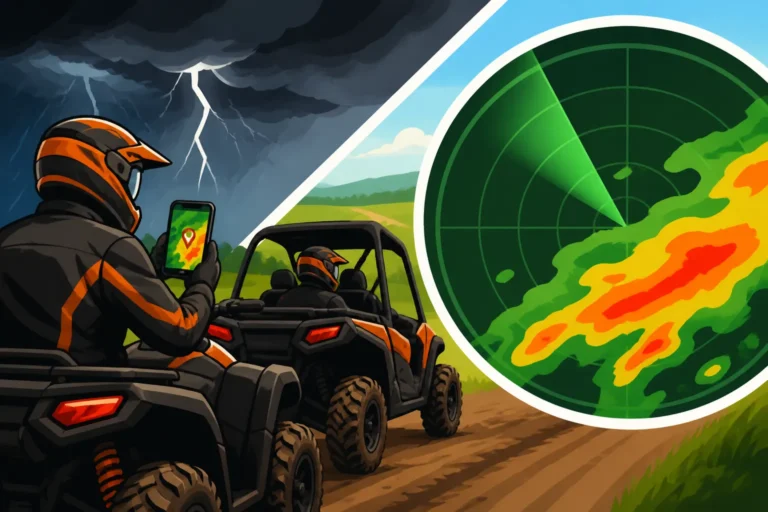
Rain deserves particular attention. Iowa soil can become slick and rutted, and a trail that was easy to follow in dry weather may turn into a difficult, damaging ride after a wet spell. If conditions are uncertain, ask whether the riding area is open and whether recent rain has affected access. The Calling a Park Before You Load guide is a good reminder that a brief check can save a wasted trip and help riders avoid making trail damage worse.
| Before you leave | What to confirm | Why it matters |
|---|---|---|
| Park access | Whether the riding area is open and how to enter | Avoids arriving during a closure or at the wrong access point |
| Route | Which marked routes connect and where they end | Helps prevent an unplanned turn-around or boundary crossing |
| Machine | Vehicle types and any size or width limits | Not every route necessarily suits every ATV or UTV |
| Conditions | Recent rain, mud, maintenance, or other restrictions | Surface conditions can change the difficulty substantially |
| Group plan | Fuel, turnaround point, meeting place, and ride pace | Keeps the group together and gives everyone a practical exit plan |
Prepare your machine and group for the full ride
Match the route to the machine
An ATV and a side-by-side may not fit comfortably on the same route. Width, turning room, ground clearance, tires, and the rider’s experience all affect how a trail feels. A route that looks wide enough on a map may narrow between trees or become awkward at a tight turn. Before choosing a route, verify that your machine is allowed and that the marked trail is suitable for its size.
If you’re riding a full-size UTV, check the park’s current rules rather than relying on what another rider says they used last season. The Iowa Trails for a Wide Machine and Iowa Rules for a Full-Size Rig on a Trail can help you think through fit and access questions. Never widen a trail, push around a barrier, or create a bypass to make a large machine fit. If a section looks too narrow or is signed for a different type of vehicle, turn around and choose an approved route.
Mechanical preparation is just as important as route choice. Check tires, brakes, steering, fluids, battery condition, and any loose cargo before leaving. For a UTV, make sure doors or nets are secured and that the driver can see clearly from the seat. For an ATV, check that luggage does not interfere with your balance or controls. A small issue noticed in the driveway is easier to fix there than at a distant junction.
Set a realistic pace for the least experienced rider
A gate-to-gate outing does not have to mean riding fast or covering every available stretch. Pace your group around the least experienced rider, the most cautious driver, or the machine that needs the most frequent breaks. That may feel slow to someone eager to explore, but it often keeps the group together and avoids the pressure that leads to rushed decisions.
Before starting, agree that riders will stop at major junctions and wait until everyone is accounted for. Decide who leads and who rides at the back. If someone gets separated, the group should know where to regroup rather than continuing in different directions. A short conversation at the staging area can prevent a lot of confusion once helmets are on and engines are running.
For families, be especially thoughtful about fatigue. Children and newer riders may become overwhelmed before they say so, particularly when the trail is noisy, bumpy, or muddy. Take breaks before someone is exhausted, and make it easy for a rider to ask for a turnaround without feeling they are spoiling the day. A shorter ride that ends on a good note is usually better than pushing through a route simply because it was the original plan.
Bring practical essentials without overloading the machine
Carry the items that help you manage a delay or minor problem: water, basic first-aid supplies, a charged phone, any necessary medications, and tools suited to your machine. Bring enough fuel for the intended route plus a reserve for an unexpected detour or slow return. Do not assume that fuel or repair help will be available inside or immediately beside the park.
Keep equipment secured and avoid packing so much that it affects handling or blocks visibility. A phone can be useful for navigation and communication, but it should not be your only plan. If reception is poor, an app such as onX Offroad may still be useful for saved map information, but confirm that you have the correct area available offline before arriving. Do not let screen navigation distract the driver; stop in a safe place to check a map.
Dress for a ride that may take longer than expected. Gloves, eye protection, suitable footwear, and layers can make a real difference when wind, dust, or changing weather affects comfort. For a family group, pack a spare layer and water where they can be reached without unloading the whole machine. These small preparations help the ride stay enjoyable when the day doesn’t go exactly to plan.
Navigate responsibly from the entrance to your turnaround point
Use signs and marked routes as your authority
Once you arrive, take a moment to read the entry information and posted signs before riding away from the staging area. Look for trail direction, vehicle restrictions, closed sections, speed guidance, and any instructions about where to park or unload. If a sign conflicts with something you saw online or in an older map, follow the current sign and ask park staff or the listed contact for clarification.
Stay on marked routes. A visible track through grass or woods is not automatically an authorized trail, and a shortcut can lead into private property, a closed section, or sensitive ground. Avoid riding around a barrier even if the route beyond it looks passable. Closures may protect a trail that is soft, damaged, or being worked on, and riding around them can create more damage or put riders in an unsafe area.
If a junction is unclear, stop somewhere safe and check the map as a group. Apps such as onX Offroad can provide another reference point, but use that information to orient yourself, not to justify leaving the marked trail. When there is still doubt, return to the last clear sign or retrace the route you know is open.
Read the trail rather than trusting the map alone
Trail difficulty can shift over a short distance. A dry, firm section may lead to mud, loose soil, a steep grade, or a tight turn. Watch the surface ahead and leave enough space to react without crowding the rider in front. If the lead rider encounters an obstacle, stop the group where everyone can wait safely instead of bunching up in a blind spot.
The Iowa Trail Difficulty Ratings can help riders think about how experience and terrain interact, but no rating makes every obstacle predictable. Weather, recent use, machine setup, and rider confidence matter. A cautious rider should never feel obligated to attempt a climb or muddy section because someone else in the group says it is easy.
When the trail becomes questionable, pause before committing. Look for a marked route around the difficulty only if the park provides one. Otherwise, turn back rather than cutting a new line. If a machine gets stuck, avoid spinning the tires repeatedly; that can deepen ruts and make recovery harder. Use a safe recovery method suited to the situation and keep bystanders clear of winch lines and moving machines.
Know when to turn around
Your turnaround point does not need to be a gate at the far end of the property. It can be the last signed junction, a point where the trail narrows, or a location where the group agrees conditions are becoming too difficult. A planned turnaround is a sound riding decision, not a failed trip.
Use practical signs to decide: falling daylight, low fuel, a worsening trail surface, mechanical concerns, a tired rider, or uncertainty about the route. The return leg can take longer than the ride out, especially when the group moves carefully or needs to stop. Leave enough time to reach the staging area before conditions become uncomfortable or visibility declines.
If the group splits, stop and regroup rather than sending riders off to search in different directions. Make sure everyone knows the planned return route and where to meet if separated. If someone is injured or a machine cannot move, prioritize people’s safety and contact the appropriate help rather than taking a risky shortcut to get back to the entrance.
Make the visit smoother from parking to the ride home
Stage and unload with care
At the parking or staging area, leave room for other riders to maneuver and keep your loading routine organized. Secure tie-downs before moving the trailer, and make sure loose gear is not left where it can blow away or create a hazard. The Parking a Trailer at an Iowa Park Lot guide can help you think ahead about staging etiquette and trailer space.
Before starting the ride, check that helmets and protective gear are fitted, cargo is secured, and every rider understands the plan. Confirm the machine count and agree on a meeting point back at the staging area. If you are riding with people who have not visited Nicholson-Ford before, show them the entrance area and explain how to recognize the route markers you will follow.
Keep the staging area clear when you are not actively loading or unloading. If you need to make adjustments, move to a place where you are not blocking the access lane. A calm departure is especially helpful when several machines are starting together or children are part of the group.
Finish the day with a condition and equipment check
After returning, account for every rider before loading. Look over the machines for damage, mud packed around moving or cooling components, loose fasteners, and anything that may need attention before the next ride. If you have driven through heavy mud, clean the machine in an appropriate place and avoid washing debris into a storm drain or sensitive area.
Think back over the route while it is fresh. Note which junctions were easy to follow, where the group turned around, and whether any section felt too difficult or unsuitable for your machine. If you used onX Offroad or another navigation tool, save useful notes for your own planning, but do not treat a personal track as an official route for other riders. Conditions and access can change.
If you encountered a damaged sign, blocked route, or unsafe condition, report it through the park’s appropriate contact rather than trying to fix or bypass it yourself. That small follow-up can help the next group have a clearer, safer visit. For your next trip, check Riding Nicholson-Ford at Marshalltown alongside current park information and plan the route around the conditions you actually expect to find.
Disclaimer
This article is for general informational purposes only and does not constitute professional advice. Laws, prices and regulations vary by location and change over time. Consult a qualified professional for guidance on your specific situation.