Iowa Riding Areas With Full-Size Trails
A full-size UTV can turn an Iowa trail outing into a frustrating trip if the routes are too narrow, a park is closed after rain, or the machine is not allowed on the trails you planned to ride. This guide explains how to find Iowa riding areas that may suit wider machines, what to verify before loading up, and how to choose a practical backup plan.
What full-size trails mean in Iowa
Start with the machine’s width and the park’s rules
“Full-size trail” is a useful search phrase, but it is not a universal trail classification. A trail that feels roomy on a youth ATV may be tight for a side-by-side, and a park that permits UTVs may still restrict certain routes, machine dimensions, or riding areas. Check the rules for the specific park and machine rather than assuming that a general UTV-friendly label covers every trail.
Before planning, find your machine’s width in its owner’s manual or manufacturer specifications. Measure any added accessories that could make it wider, such as wheel spacers, mirrors, or a plow. Then ask the park operator whether the trails you want to ride accommodate that width. This is especially important if you have a wider utility UTV, a longer wheelbase, or a machine with aftermarket modifications.
Also confirm what the park means by “full-size.” The term may refer to trail width, vehicle class, or simply the fact that larger machines are permitted. If the answer is unclear, ask whether your exact make, model, and width are allowed on the intended routes.
Check the riding area, not just the destination name
An Iowa OHV park can contain different trail conditions within the same property. A main route may be broad enough for a UTV while a side loop narrows between trees, banks, or other obstacles. A staging area or campground may also have different access rules from the riding trails.
Look for maps and current notices from the park or its operating organization. A map helps you see how trails connect, where the trailhead sits, and whether there are separate areas for different vehicle types. onX Offroad can help you review a route and orient yourself before arriving, but treat any mapping app as a planning aid rather than a substitute for posted park rules. For a broader overview of destinations, see Where to Ride an ATV in Iowa.
Know the distinction between full-size access and road use
A trail park and a public road are different riding environments with different rules. Being allowed to ride a UTV on a designated trail does not automatically make it legal to drive that machine on a nearby gravel road, paved road, or city street. Road access depends on Iowa law and, in some cases, local authorization and equipment requirements.
If your plan includes traveling between a lodging spot and a trailhead, check each segment separately. A legal route inside a park does not authorize an unapproved trip along a county road. For the road-use questions, review Iowa Rules for Riding a Gravel Road and Are ATVs Street Legal in Iowa?.
Iowa riding areas to investigate for wider machines
Gypsum City OHV Park near Fort Dodge
Gypsum City is a major riding destination in the Fort Dodge area, and its mix of trails and riding features makes it a natural place to investigate when planning a trip with a larger machine. Do not assume that every route on the property suits every UTV, though. Ask about machine eligibility, trail width, and any route-specific restrictions before you haul your rig to Webster County.
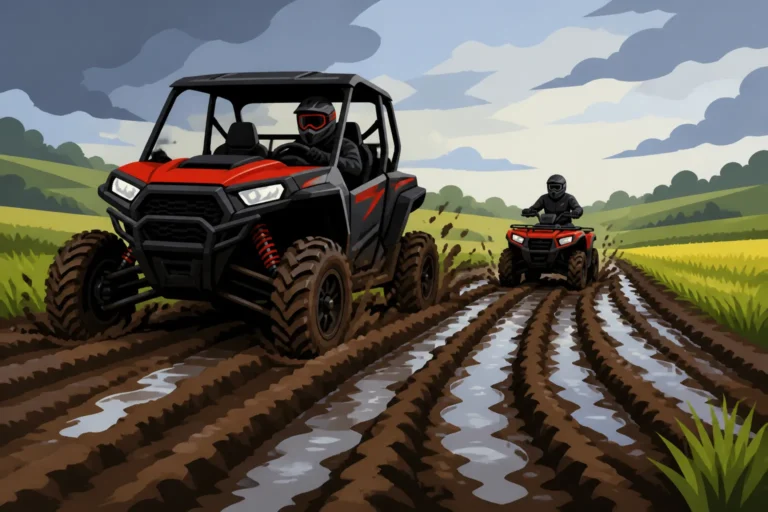
If you are traveling from a distance, confirm that the park is open and that conditions are suitable for your machine on the day you intend to ride. Iowa clay can become slick and deeply rutted after wet weather, and a route that is manageable in dry conditions may feel very different after rain. Check Gypsum City OHV Park at Fort Dodge for a closer look at the destination, and use Iowa Trail Conditions Before You Ride as a reminder to verify conditions before departure.
Bluff Creek OHV Park near Eddyville
Bluff Creek, near Eddyville, is another well-known Iowa riding area worth checking when you are comparing destinations. Before choosing it for a full-size UTV, confirm whether your particular vehicle is allowed and which routes are appropriate. Terrain, turning space, and trail width can matter just as much as a park’s general vehicle policy.
When you contact the park or its operator, be specific: give them the machine’s width and ask whether the trails you plan to use accommodate it. If your trip includes camping, verify those arrangements separately rather than assuming that riding access and overnight access follow the same rules. The dedicated overview Bluff Creek OHV Park at Eddyville can help you get oriented before you plan the drive.
Other parks to compare before committing
Iowa has several designated OHV areas, but their layout, operators, and rules are not interchangeable. Lakeview OHV Park near Solon, Nicholson-Ford OHV Park in Marshalltown, Rathbun OHV Area near Plano, Paul Huting Recreation Area in Waterloo, and Tama OHV Park are all destinations a rider may encounter while comparing options. For each one, verify whether the specific UTV you own is allowed and whether there are routes suitable for its dimensions.
Do not choose a park based only on its name, a social media photo, or a map that shows a trail line. A narrow woodland route and an open staging area can appear equally simple on a screen. Park-specific details matter: permitted machine types, maximum dimensions if applicable, trail closures, operating hours, and whether riding is restricted after rain. You can compare the broader destination list in Iowa's Eight Designated OHV Parks, then check the individual park’s current guidance.
| Riding area to investigate | What to verify for a full-size UTV | Useful planning question |
|---|---|---|
| Gypsum City near Fort Dodge | Machine eligibility, route width, closures, and conditions | Which trails are suitable for my machine’s measured width? |
| Bluff Creek near Eddyville | Vehicle rules, trail access, and any route restrictions | Are full-size side-by-sides allowed on the trails I plan to ride? |
| Lakeview near Solon | Current access rules and trail layout | Are there routes that fit my machine and experience level? |
| Nicholson-Ford in Marshalltown | Machine eligibility and posted trail rules | Are any routes restricted by vehicle type or size? |
| Rathbun near Plano | Conditions, route suitability, and seasonal notices | Is the ground rideable after recent rain? |
| Paul Huting in Waterloo | Park requirements, trail character, and access rules | What equipment or rider requirements apply? |
| Tama OHV Park | Current operating status and allowed machines | Which routes are open and appropriate for my UTV? |
This is a comparison checklist, not a guarantee that each park has trails for every full-size machine. Confirm directly before you travel.
How to plan a full-size Iowa trail ride
Verify access before you load the trailer
The most useful planning step is also the least glamorous: make a quick check before the machine is tied down. Review the park’s own rules and contact the operator if any detail is uncertain. Ask whether your exact machine type is allowed, whether there are width restrictions, and whether the routes you want are open. If you are traveling with a group, check each machine rather than assuming the rules are the same for a compact ATV and a wide UTV.
Check the park’s operating status shortly before leaving. Weather can change trail conditions quickly, and some parks close trails to prevent damage when the ground is wet. A route that was open during a previous visit may not be open today. The practical guide Iowa Trail Closures to Check First covers why a last-minute check can save a long, unnecessary tow.
Use onX Offroad or another mapping tool to plan your approach, identify nearby roads, and keep a sense of your position. Then compare the map with the park’s official information and posted signs. If you download or save route information ahead of time, remember that a saved map does not confirm that a trail remains open or that your vehicle is permitted there.
Match the route to your machine and your group
A wide, heavy UTV handles differently from a smaller ATV. Tight turns, uneven banks, deep ruts, and narrow tree gaps can make a route tiring even when the machine technically fits. If you are new to a park, start with a conservative route and learn how the terrain changes before heading into more challenging sections.
Group planning matters too. A long UTV may need more room to turn around than a short ATV, and a mixed group may move at different speeds. Agree on a meeting point, keep riders together at confusing junctions, and avoid assuming that everyone will be able to use every trail. A route that works for one machine could create a bottleneck for a larger group.
For a first visit, it can help to ask the operator which routes are most suitable for your machine and experience level. A local recommendation may save you from discovering a narrow or difficult section after you have already committed to it. If the operator cannot confirm that the route suits your machine, choose a different trail or destination.
Bring a backup plan for weather and closures
Iowa trails can change with rain, thawing ground, and heavy use. Wet soil is more than an inconvenience: spinning tires can deepen ruts and damage the trail, and a heavy machine may struggle to turn around without making the situation worse. If the park asks riders to stay off a wet route, respect the closure rather than trying to find a way around it.
Pick a second destination within a reasonable driving distance before leaving home. Check that backup park’s rules and status too; it may be closed for the same weather system or have different machine restrictions. Mapping tools such as onX Offroad can help you compare locations and plan the drive, but confirm access with the park itself before diverting.
Build flexibility into the day. If the first park is closed, you might ride another approved location, adjust the trip, or save the ride for better conditions. For more practical ideas on handling a closure, see [Where Iowa Riders Go When Parks Close] and [Picking a Backup Park an Hour Down the Road].
A practical checklist for choosing full-size trails
Before you leave home
Write down the machine’s width and any changes that affect its dimensions. Check the destination’s machine rules, confirm which trails are appropriate, and look for current closure or weather notices. If the answer to any essential question is vague, call the operator rather than trying to infer permission from an online map or an old trip report.
Also review the basic requirements for riding in Iowa. Registration, permits, safety requirements, and land-access rules can depend on the machine and where you plan to ride. Start with [Iowa ORV Permits Explained] and verify what applies to your situation. If children are riding with the group, check the relevant age and supervision rules before the trip.
At the park
Read posted signs at the entrance and trail junctions, even if you have visited before. Follow closures and vehicle restrictions, and stay on designated routes. If a trail becomes too narrow, damaged, or difficult to navigate safely, do not force the UTV through it. Turning back is usually less costly than damaging the trail or the machine.
Keep a map accessible and make sure everyone knows the meeting point and what to do if the group separates. A navigation app can help with orientation, but signs and operator instructions take priority. Keep your phone or other navigation device charged, and do not rely on a signal being available throughout the ride.
After the ride
Take a few minutes to check the machine for packed mud, debris, loose gear, and damage before loading it. Clean off trail mud where appropriate, and secure the machine carefully for the drive home. If a route was especially narrow or difficult for your UTV, make a note of that so the next outing can be planned around better-suited trails.
Most of all, treat “full-size” as a question to verify, not a promise printed on a search result. Iowa has several riding areas worth investigating, but the right fit depends on the individual machine, the specific route, park rules, and trail conditions that day. A quick confirmation before you tow can make the difference between a relaxed ride and a long trip spent at the gate.
Disclaimer
This article is for general informational purposes only and does not constitute professional advice. Laws, prices and regulations vary by location and change over time. Consult a qualified professional for guidance on your specific situation.