Iowa Riding in Hunting Season
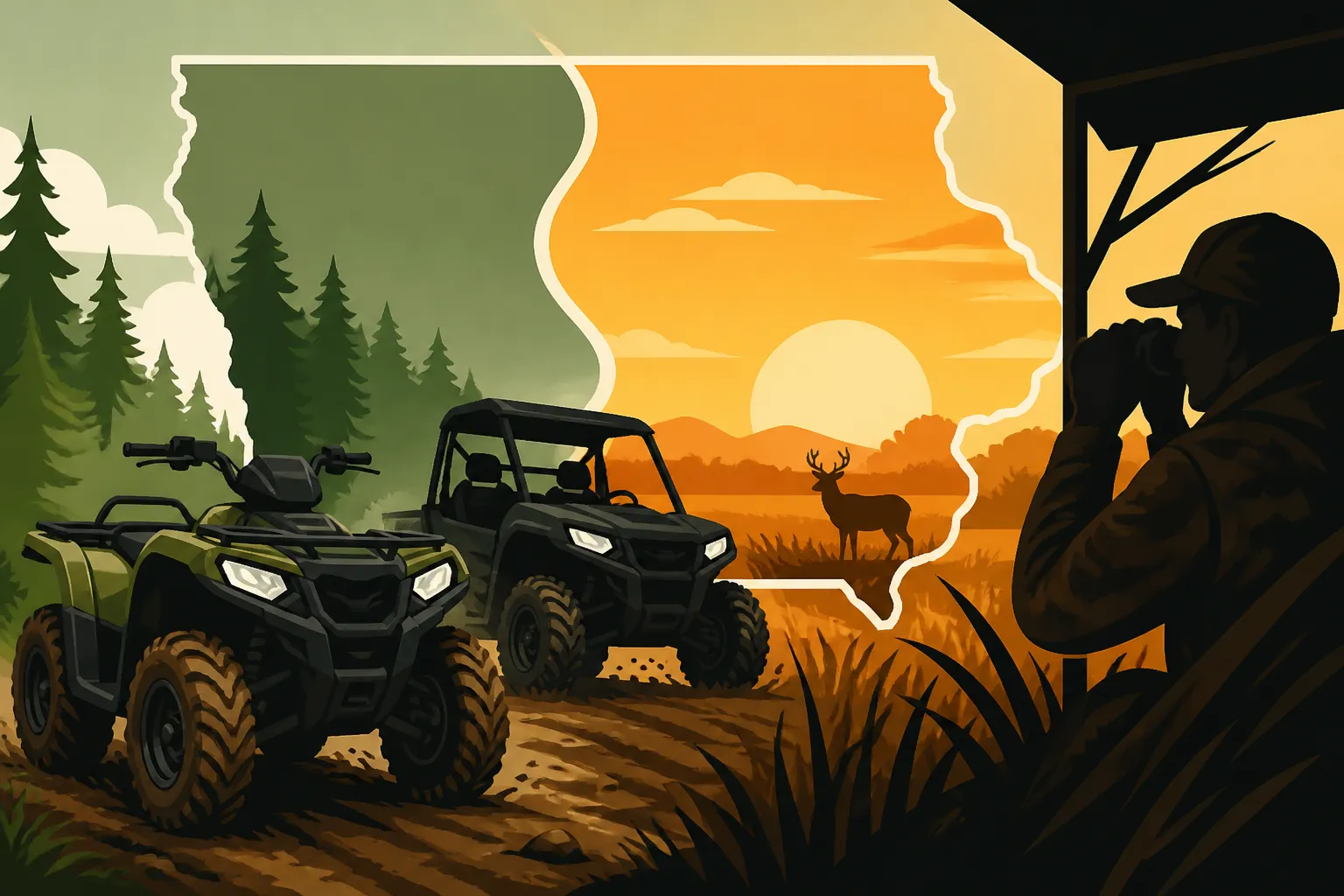
Fall in Iowa can mean crisp trail weather, muddy leaves, shorter daylight, and hunters using the same broad landscape. That overlap does not automatically make every ride unsafe or prohibited, but it does call for better planning. This guide explains how to check access, choose a riding area, make your machine and group visible, and adjust plans when hunting activity changes.
Check Where You Can Ride Before You Load
Confirm the riding area is open to ATVs
A place that looks like a trail on a map is not necessarily open to motorized riding. Public land can have different rules for different areas, routes, dates, and activities. A wildlife area, county conservation property, private timber, and designated OHV park are not interchangeable—and a hunting season does not create permission to ride where motorized use is normally prohibited.
Start with the specific property or park you plan to visit. Check its posted rules, official notices, and any seasonal restrictions. If the information is unclear, call the managing agency or park contact before hauling your machine. The guidance in [Iowa Rules for Riding a Wildlife Area] and [Iowa Rules for Riding a County Conservation Area] can help you understand why the land category matters, but the rules posted for the particular property should guide your decision.
Also confirm that the riding route itself is open. A property may permit riding on designated trails while restricting travel elsewhere. Do not assume that a hunting access lane, farm track, levee, or route shown on a general-purpose map is an authorized ATV trail. When in doubt, stay on a clearly marked route or choose a designated OHV park.
Check closures and trail conditions close to departure
A route can be open when you plan your weekend and still be unsuitable by the time you leave. Fall rain can soften Iowa’s clay, cover ruts with leaves, and make a trail harder to read. Some parks close trails when conditions are too wet to prevent damage. Before loading, check [Iowa Trail Closures to Check First] and [Iowa Trail Conditions Before You Ride], then look for any fresh notice from the place you intend to visit.
It helps to check twice: once while planning and again on the day of your ride. If a site’s notice is unclear or seems out of date, call rather than guessing. A quick confirmation can spare you a long drive to a closed gate, and it helps protect trails from deep ruts that may take time and volunteer work to repair. For muddy-season considerations, [Iowa Trails Closed After Rain] offers useful context.
Mapping tools can help you understand the area around a route, but they should not be treated as permission to ride. Riders may use onX Offroad to review mapped routes and orient themselves, then confirm access and closures with the land manager. Boundaries, private parcels, and seasonal rules still need to be checked before riding.
| Before the ride | What to confirm | Why it matters |
|---|---|---|
| Riding location | The property allows ATV or UTV use | Public access does not always include motorized access |
| Route | The route is designated and currently open | A mapped line is not proof of legal access |
| Hunting activity | Whether the property or nearby area is being used by hunters | Helps you choose a safer time or another location |
| Trail conditions | Recent rain, standing water, and closure notices | Wet trails can be damaged and may be closed |
| Daylight | Sunset time and the time needed to return | Fall daylight fades quickly, especially under trees |
| Equipment | Lights, required registration, and basic recovery gear | Small problems are harder to manage in cold, fading light |
Plan Around Hunters and Other Trail Users
Choose a time and route that reduce conflict
During hunting seasons, assume you may encounter people on foot, parked vehicles, dogs, or equipment near an access point. That does not mean you must cancel every autumn ride. It does mean that a quieter, designated riding area is often a better choice than a mixed-use property where the permitted routes and activities are difficult to distinguish.
If a public area appears busy with hunters, consider changing locations or returning another day. Avoid riding through groups, near occupied blinds, or close to people who are actively hunting. If you come across a hunter on a trail, slow down, give them room, and wait for a clear opportunity to pass safely. Do not use your machine to approach wildlife or to interfere with another person’s lawful activity.
A map can help with orientation, not with judging what is happening on the ground. onX Offroad may be useful for reviewing the general layout before leaving, but a map cannot tell you whether a hunter is set up just beyond a bend or whether a local manager has posted a temporary restriction. Treat live conditions and signs as more important than a line on a screen.
Talk with your group before starting
A group ride is easier to manage when everyone knows the plan. Before moving, agree on the route, meeting point, pace, and what the group will do if someone spots hunters or a trail becomes blocked. Make sure newer riders understand that the lead rider may stop without warning and that nobody should pass another machine in a way that reduces visibility or control.
Keep the group together without crowding. On a narrow trail, leave enough room to stop if the rider ahead slows for a person, animal, or obstacle. If someone needs to pull over, choose a safe place where the whole group can get off the travel path. Avoid stopping in blind corners or at trail intersections where another rider may not expect a machine to be stationary.
If the group encounters active hunting nearby, do not argue about who has priority on a route. Pause at a safe distance, follow signs and property rules, and contact the land manager if access is uncertain. [Iowa Landowner Permission Rules] is also relevant if your route involves private ground: a road, trail, or open-looking gate does not replace permission from the owner.
Make Your Ride Easier to See and Safer to Finish
Wear visible clothing and use lights responsibly
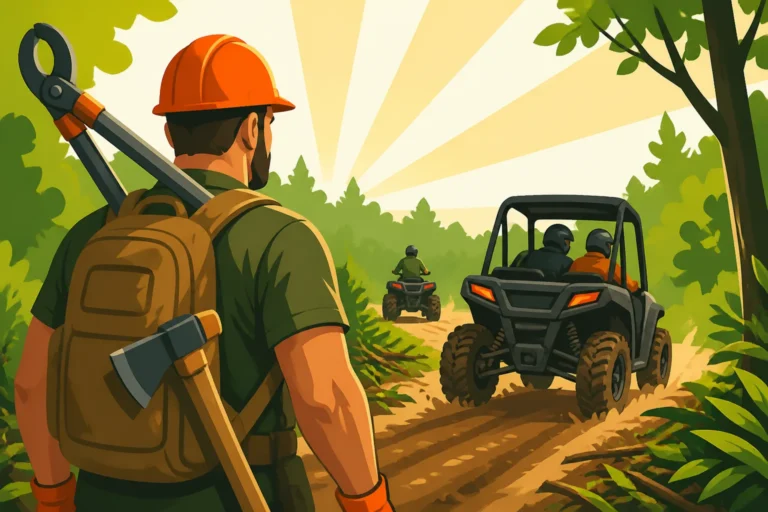
Blaze orange can make riders easier to spot in wooded or brushy surroundings, particularly during the fall months. It is a sensible visibility choice even when a specific property does not require it. A jacket, vest, or outer layer is more useful when it is visible from several directions; a small orange patch hidden under a backpack may not stand out when you are seated on a machine. For seasonal visibility guidance, see [Blaze Orange on an Iowa November Ride].
Check your ATV or UTV lights before leaving home. Headlights are valuable in shade, on overcast days, and when the group returns later than planned. Keep them clean enough to be seen and use them in a way that helps others notice your machine. If your route enters a designated riding area, follow its posted equipment rules as well as general road-use requirements that may apply to your machine and location.
Visibility is not just clothing and lights. Ride at a speed that lets you stop within the distance you can see. Leaf cover can hide holes, branches, rocks, and washed-out spots. Slow down before bends, trail crossings, and areas where another user could appear. If dust, fog, or low light makes it hard to see, reduce speed or end the ride rather than trying to keep the original schedule.
Prepare for colder weather and an early return
Fall rides can start comfortably and end cold. Pack an extra layer, water, a charged phone, and a basic first-aid kit. If the group rides in a remote area, tell someone who is not going along where you plan to ride and when you expect to be back. Agree on what that person should do if the group does not check in.
Plan your turnaround time before you start. Trees and uneven terrain can make a trail feel darker well before sunset, and a mechanical issue can turn a short return into a long delay. Set a firm time to head back, especially if the route is unfamiliar. Do not rely on a phone battery or map app as your only navigation method; carry a backup plan, such as a downloaded map or written directions.
A simple pre-ride check can prevent common problems:
- Confirm the property and route permit your machine.
- Check for current closures, weather impacts, and hunting-related notices.
- Inspect tires, brakes, throttle, fuel, lights, and visible fluid leaks.
- Pack warm layers, water, a first-aid kit, and recovery basics.
- Tell someone your route and expected return time.
- Set a turnaround time that leaves a comfortable daylight margin.
onX Offroad can be one part of that preparation if you use it to review your planned route in advance. Save or download the information you need where available, and still carry a backup. A phone can lose power, signal, or screen visibility in cold weather, and no navigation app replaces posted signs or permission from the land manager.
Decide When to Reroute or Call It a Day
Treat uncertainty as a reason to pause
If you reach a gate, trail junction, or posted notice that does not match what you expected, stop and reassess. Do not ride around a closed gate or assume a sign applies to somebody else. A brief pause is far less frustrating than receiving a citation, damaging a wet trail, or entering an area where another person is hunting.
If you see a hunter nearby, give them space and avoid revving or lingering close to their position. If you are unsure whether the route remains open, turn around and contact the property manager from a safe place. [Calling a Park Before You Load] is a useful reminder that a quick call can clarify operating details before you commit to the drive.
Sometimes the best adjustment is a different destination. Keep a backup riding area in mind, but check that location’s access and conditions too. A second option is only helpful if it is open to your machine and suitable for the day’s weather. Using onX Offroad to compare general route layouts may help with planning, but confirm each location’s rules independently rather than assuming one property’s access applies to another.
Leave the trail in good shape for the next ride
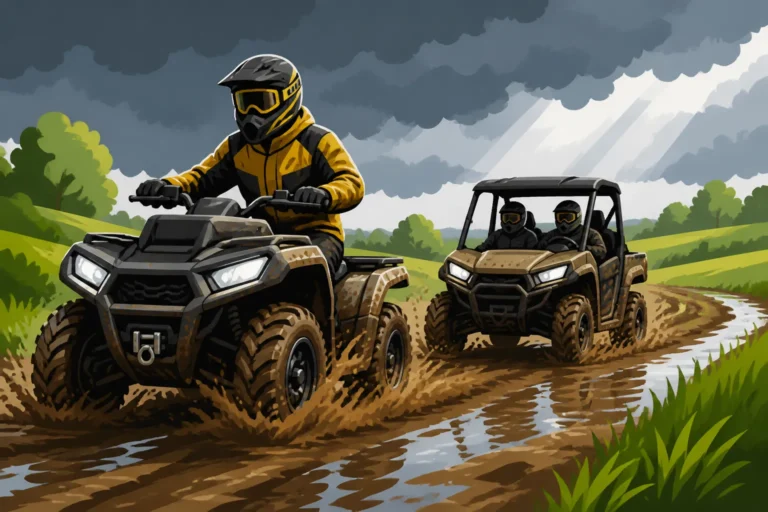
If a trail is muddy enough that tires are cutting deep ruts, turn around. Spinning through wet ground can widen damage, make the route harder for other riders, and contribute to a closure. This is especially frustrating when a ride has been planned for weeks, but choosing to stop protects the trail and makes it more likely to be usable when conditions improve.
Stay on marked routes, keep noise and speed under control near other users, and pack out anything you bring in. If you notice a blocked trail, unsafe damage, or a confusing sign, report it to the managing agency rather than creating a new route around the problem. Thoughtful behavior matters even more during hunting season, when several groups may be sharing a landscape for different reasons.
A good hunting-season ride is not simply one where the machines run well. It is one where you verified access, respected other users, stayed visible, watched the weather, and returned before conditions became difficult. When any of those pieces are uncertain, changing plans is part of responsible riding—not a failed outing.
Disclaimer
This article is for general informational purposes only and does not constitute professional advice. Laws, prices and regulations vary by location and change over time. Consult a qualified professional for guidance on your specific situation.