Iowa Trails Open in Winter
Winter riding in Iowa can be frustrating: a trail that looks open on a map may be closed for the season, too wet to use, or restricted by a park’s local rules. This guide explains how to find Iowa riding areas that may be available in winter, check conditions before hauling your machine, and avoid confusing public roads, private land, and designated trails.
Where to look for winter riding in Iowa
Start with designated OHV parks, but check each park separately
Iowa has designated off-highway vehicle parks, but their winter availability is not uniform. Some parks have defined operating seasons, while others may close temporarily because of weather, trail damage, maintenance, or local operating decisions. Even within a park’s usual season, a particular trail or facility may not be open.
That means a general list of Iowa parks is only a starting point—not confirmation that you can ride today. Check the park’s own notices and the Iowa DNR’s alerts before you load your ATV or UTV. The guide to [Iowa's Eight Designated OHV Parks] can help you identify areas to investigate, but verify the rules and status of the specific park you plan to visit.
Gypsum City OHV Park near Fort Dodge is a useful example of why checking dates matters. Its published riding season runs from April 15 to October 15, so it is not a winter option under that seasonal schedule. If you are planning a late-fall trip, don’t assume a mild forecast means the gate is still open. [When the Gypsum City Gate Shuts on October 15] explains why a familiar destination may not be available once its season ends.
Look for an actual open riding area, not just a rideable-looking map
A patch of woods, field edge, or gravel lane can look inviting after a snowfall, but appearance does not establish that riding is allowed. Winter riding should happen only on a designated trail or other area where the owner or managing authority permits it. A private parcel does not become open to riders because the ground is frozen, and a line on a third-party map is not permission to cross it.
A mapping app such as onX Offroad can help you plan around mapped routes and get oriented while you research an area. Treat it as a planning aid, not as the final authority on access, closures, trail conditions, or landowner permission. Confirm access with the park or land manager before you go, particularly when a route appears to pass close to private property or a boundary.
If a regular park is closed, use a backup plan rather than trying to find an informal route on the way. [Where Iowa Riders Go When Parks Close] offers a useful starting point for thinking through alternatives, but every alternative still needs direct confirmation that riding is allowed and that the area is open.
How to confirm a trail is open before you leave
Check both official alerts and park-specific updates
A reliable pre-trip check has more than one step. First, look for statewide or agency notices, including [Reading the Iowa DNR Alert Feed]. Then check the individual park’s website, social channels, posted notices, or other communication channel used by its managing club or county. If the status is unclear, call the park or manager. A quick call can save a long drive with a trailer in winter weather.
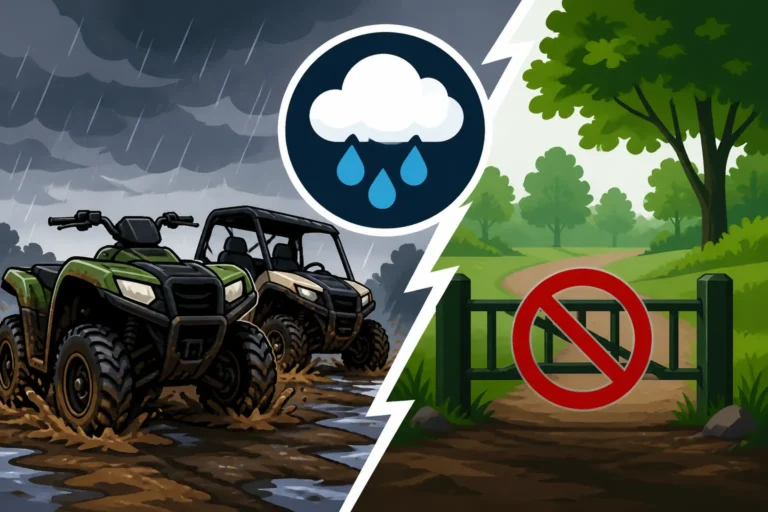
Pay attention to the wording of an update. “Open” might refer to a campground or facility rather than every trail. A park could also have a temporary closure in place after rain, thaw, or maintenance even if it normally operates at that time of year. [Iowa Trail Closures to Check First] and [Iowa's Weather-Driven Trail Closures] are useful reminders that access can change with conditions, not just with the calendar.
Before leaving, confirm the specific riding area, the date of the notice, and any limits on machine type or trail use. If you are riding a UTV, don’t assume a route suitable for a narrow ATV will accommodate your machine. Width restrictions, trail design, and local rules can differ, so ask about your vehicle rather than relying on a broad “trails open” message.
Use maps to plan, then verify on the ground
A map can help you estimate the drive, identify nearby roads, and keep your group oriented. onX Offroad may be useful for this planning, especially when you are comparing potential routes or trying to understand where a mapped trail sits in relation to roads and property boundaries. Still, map data can lag behind temporary closures or changes in access. Confirm current conditions with the managing authority.
Once you arrive, read signs at the entrance and trailhead. Follow the posted route markers and stay off closed or unmarked trails. If the gate is shut, the posted notice says the trails are closed, or the marked route has been blocked, do not try to get around the restriction. A winter ride is not worth damaging a trail or creating a conflict with the land manager.
| What to verify | Why it matters | Where to check |
|---|---|---|
| Park or trail is open on your planned date | Seasonal schedules and temporary closures can prevent access | Park or land manager, plus official alerts |
| Winter riding is allowed | A location that is open for another activity may not allow OHVs | Posted rules and the managing authority |
| Your machine is permitted | ATV and UTV access may differ by route or park | Park rules; ask about your machine’s width |
| Trail conditions are suitable | Frozen ground can still hide ice, water, or unstable sections | Recent notices and direct confirmation |
| Route access is authorized | A mapped line does not guarantee permission to ride | Landowner or managing authority |
| Road use is legal | Public-road rules are separate from trail access | Local road rules and posted restrictions |
Winter trail conditions and riding safely
Frozen ground is not automatically safe ground
A trail can be frozen at the surface while holding soft mud or water underneath. That is especially important during a thaw, when tires can break through the crust and leave deep ruts. The trail may look firm at the entrance but soften in shaded areas, low spots, or places where snowmelt collects. If conditions are deteriorating, turn around rather than pushing through and leaving damage behind.
Iowa’s freeze-thaw swings can make a route change quickly. A trail that was hard-packed in the morning may become slick or soft later in the day, particularly if temperatures rise or the sun reaches exposed sections. Read [Iowa Trail Conditions Before You Ride] and [Iowa Trails Closed After Rain] as reminders to assess the actual surface, not just the forecast or the view from the parking lot. Riding after a wet spell can damage trails even when the weather has turned cold.
Snow also hides hazards: ruts, rocks, branches, drainage channels, and the edge of a trail. Reduce speed when visibility or traction is limited, leave extra room between machines, and avoid sudden steering or braking. If a route is unfamiliar, ride conservatively and be ready to turn back. A group should agree on a turnaround point before starting, rather than letting the fastest rider decide how far everyone continues.
Prepare the machine and group for cold-weather problems
Cold temperatures can affect starting, battery performance, tire pressure, traction, and how quickly a rider becomes tired. Check the machine before the trip, bring the owner’s manual or know the basic recovery points, and carry equipment suitable for the route and group. A tow strap, basic tools, a charged phone, and warm layers can matter more when a machine stops in a remote, cold area than they do on a short summer ride.
Dress for wind as well as the air temperature. Riding creates a wind chill effect, and a rider who feels comfortable while standing beside a truck can become cold quickly on an exposed trail. Use protective riding gear, gloves that allow safe control operation, eye protection, and layers that can be adjusted. Keep spare dry clothing in the tow vehicle, and don’t let a child or inexperienced rider feel pressured to continue when they are cold or uncomfortable.
Plan for reduced daylight and winter travel delays. Tell someone where you are going, when you expect to return, and what you will do if the park is closed. Keep fuel and recovery plans realistic, and avoid splitting a group in unfamiliar conditions. If there is no cell service, agree on a meeting point and a simple plan before riding.
Rules, access, and backup plans for winter rides
Keep trail access separate from road and ice rules
Permission to ride a trail does not mean you can ride the road leading to it. Iowa road rules vary by road type and local authorization, so don’t use a public road as a shortcut unless you have confirmed that your machine may legally travel there. A route shown in a mapping app is not proof that road use is allowed. For road-specific questions, review [Iowa Rules for Riding a Snow-Covered Road] and [Iowa Rules for Riding Public Ice] separately from park rules.
Frozen ponds, lakes, and other public ice also require their own careful evaluation. Ice conditions can vary across a single body of water, and snow may hide thin spots or open water. Never assume that a frozen surface is safe or that riding is permitted simply because other tracks are visible. Check applicable access rules and local conditions, and stay off ice if you cannot establish that the route is both allowed and safe.
For private land, get clear permission from the landowner and follow any limits they set. Permission to ride one field or trail does not automatically extend to neighboring property, access lanes, or a route across the farm. If you are unsure where a boundary runs, stop and confirm it rather than guessing. Respecting a landowner’s conditions is especially important in winter, when a rut or damaged entrance can affect later farm work.
Make a backup plan before loading the trailer
Winter is a poor time to rely on a single destination. Choose a primary riding area and a backup, then confirm both are open before departure. If the first park is closed or conditions are unsuitable, don’t automatically drive to the next place without checking its rules and current status. The same snow or thaw that affects one trail system may affect another.
A practical decision process looks like this:
- Choose a designated riding area that could fit your machine and group.
- Check the official alert and the park or land manager’s latest notice.
- Call if the status, winter schedule, or vehicle access is unclear.
- Check the weather and recent precipitation, paying attention to thaw conditions.
- Confirm the route to the site does not depend on unauthorized road or private-land access.
- Set a clear go-or-no-go rule before leaving home.
- Recheck posted signs when you arrive and turn back if access has changed.
If a park is closed, don’t ride around a gate or treat a nearby public road, farm lane, or frozen area as an automatic substitute. Rescheduling is often the safest and least frustrating choice. Keep notes about which parks you contacted, what they said, and when you checked; that makes it easier to plan the next cold-weather weekend without repeating the same calls.
The best Iowa winter ride is the one with confirmed access, suitable ground, and a realistic way to get everyone home safely. Check the park directly, use maps such as onX Offroad only as planning support, and be willing to change plans when conditions or closures say it is time to stay off the trail.
Disclaimer
This article is for general informational purposes only and does not constitute professional advice. Laws, prices and regulations vary by location and change over time. Consult a qualified professional for guidance on your specific situation.