Three Iowa Parks Closed on One Weekend
A weekend ride can unravel quickly when rain turns Iowa clay into slick mud and several parks close before you reach the trailhead. If you see alerts for three Iowa parks at once, the safest move is to pause, confirm each closure, and rethink the trip—not assume a different park nearby is open. This guide explains why closures overlap and how to plan a sensible backup.
Why several Iowa OHV parks can close together
Weather can affect parks across a wide area
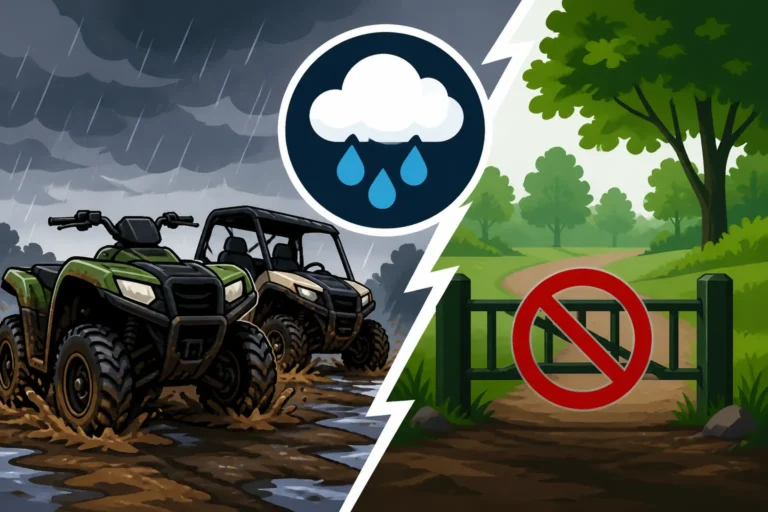
Iowa’s off-highway vehicle parks are spread across the state, but one weather system can bring rain to more than one riding area. Even when rainfall totals differ, the ground may be wet enough at several parks to create similar problems: slick clay, standing water, soft trail edges, and deep ruts.
A trail can look passable from the parking lot and still be vulnerable farther in. Tires churn wet soil, especially on climbs, in shaded sections, and around tight corners. A few machines passing through can deepen ruts that remain after the surface dries, making the trail rougher and more difficult for the next riders.
That is why three closure notices appearing on one weekend do not necessarily mean three unrelated incidents. The parks may be responding to the same broad stretch of unsettled weather, or to similar trail conditions that developed at different times. For more on how rain affects riding conditions, see [Iowa Riding After Heavy Rain] and [Iowa Trails Closed After Rain].
A closure protects the trail, not just the rider
A closed trail can be frustrating when you have already packed the machine, arranged time off, or driven several hours. But a closure is often meant to prevent damage that would take far longer to repair than the weather event lasts. Wet soil can be displaced quickly, and ruts can redirect water into places where it erodes the trail.
Closures can also reduce safety risks. Mud can hide holes, loose rocks, or washed-out edges. A rider who loses traction on a slope may slide into another trail or become stuck somewhere that is difficult for a recovery vehicle to reach. A wet trail can be especially challenging for newer riders or for a group with mixed experience and machine types.
When a park closes, do not interpret an empty lot or an unlocked-looking entrance as permission to ride. Follow the posted notice and any instructions from the park operator. Riding a closed trail can damage the route, create hazards for others, and lead to enforcement consequences. Related guidance is covered in [Iowa Rules for Riding a Closed Trail].
Parks can make separate decisions on separate timelines
Iowa riding areas do not all have identical soil, drainage, terrain, staffing, or operating arrangements. A park on a sandy or well-drained section may recover differently from one with heavy, moisture-sensitive clay. A trail system with shaded low spots may stay wet after nearby open ground has dried.
The people responsible for a park may also assess conditions at different times. One operator may close a trail before a forecasted storm, while another checks the routes after rainfall has already occurred. A closure might apply to the whole park, only selected trails, or a particular activity, depending on the operator’s notice. Never assume the details are the same just because multiple parks are closed.
This variation is one reason a list of Iowa riding areas is not enough for trip planning. Before leaving, check the specific park’s current alert and confirm what it covers. The broader context is explained in [Why Iowa Parks Are Run by Clubs and Counties] and [Iowa's Weather-Driven Trail Closures].
What to do when three parks show closure alerts
Confirm the status with the park or official alert
Start with the most direct source available: the park’s own notice, the operator’s official page, or an official Iowa DNR alert where applicable. A map app, older social post, or third-party trail listing can help you understand where a park is, but it may not reflect a closure announced later.
Read the full notice rather than relying on a headline. Check whether the closure is for the whole park, a specific trail segment, a campground, or a scheduled event. Look for a stated reopening condition, such as a later assessment, and note whether the operator asks riders to call before traveling.
If you use onX Offroad to review routes and nearby riding options, treat it as a planning aid rather than proof that a trail is open. Confirm the actual status with the park before loading up. For a practical checklist, see [Reading the Iowa DNR Alert Feed] and [Calling a Park Before You Load].
Compare alternatives without assuming they are open
When several familiar parks are closed, it is tempting to choose the next closest pin on the map. That can lead to another long drive and the same disappointment if the alternate site has also closed, has restricted access, or does not allow the kind of riding you planned.
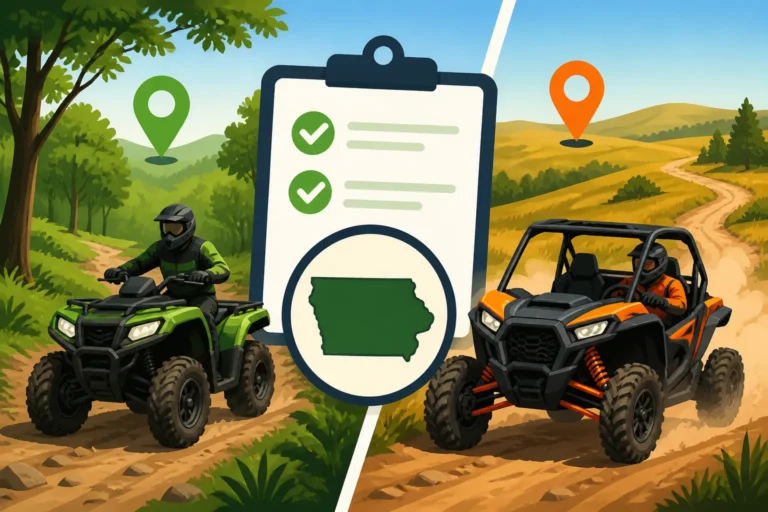
Use this quick comparison before choosing a backup:
| What to check | Why it matters | What to confirm |
|---|---|---|
| Official closure status | A nearby park may be closed for the same weather | Check the park’s own notice or operator |
| Trail type and machine access | A route may not suit your ATV or UTV | Confirm width, allowed machines, and trail rules |
| Operating conditions | Hours, seasonal access, and weather may affect entry | Check access details before departure |
| Travel time | A distant backup can turn a short ride into a costly drive | Compare the full round trip, not just map distance |
| Reopening information | A closure may remain in place after rain stops | Look for a new inspection or reopening notice |
onX Offroad can help you compare locations and plan a route between areas, but it cannot replace a current closure check. If a listed site has no reliable update, call the operator or choose a plan that does not depend on riding there. See [Checking Two Iowa Parks Before You Drive] for a useful way to avoid treating a backup as a guarantee.
Make a decision before the trailer is on the highway
A simple go-or-no-go routine can spare you from making a rushed decision in a parking lot. Check the forecast, check the park notices, and then confirm the status again before departure if rain has been moving through the area. If the park has not posted a clear update, contact the operator rather than guessing from the sky at home.
It also helps to agree on a cutoff time with your group. For example, decide that if your planned park and one backup are both closed by a certain point, you will postpone the ride or switch to a non-riding plan. That avoids a tense series of last-minute calls while everyone is already packed and waiting.
If a trip involves several people, share the closure information in one group message. Include the official notice, the time you checked it, and the agreed backup plan. That way, nobody sets out based on an outdated screenshot or hears only that “the park should be open.” For more planning ideas, see [Picking a Backup Park an Hour Down the Road].
How to choose a responsible backup plan
Match the alternative to your machine and group
A backup is useful only if it fits the riders who are coming. A narrow trail may not suit a wide UTV, while a technical route may be a poor choice for a family outing with newer riders. Check machine restrictions, trail difficulty, age-related rules, and any equipment requirements before swapping locations.
Think about the whole group, not only the most experienced rider. A steep or muddy trail that one person is eager to try may leave a beginner uncomfortable or increase the chance of a recovery situation. If children are riding, make sure the destination and planned routes suit their experience and the applicable rules. [Iowa Trails for Beginners] and [Riding With Children at an Iowa Park] offer useful planning context.
Also consider support and logistics. A park that looks close on a map may have limited services, poor cell coverage, or a long drive to fuel. Bring appropriate recovery equipment, water, and basic supplies, but do not treat gear as a reason to enter a closed area. A winch can help with an unexpected recovery; it does not make a wet, restricted trail safe to ride.
Do not substitute an unofficial route for a closed park
When public riding areas shut, riders sometimes look for nearby timber, farm ground, drainage corridors, or unmarked tracks. Those are not automatically open to recreation. A visible tire path does not establish public access, and landowner permission should be clear before you ride private property.
Likewise, avoid using ditches, levees, wildlife areas, or conservation ground as an improvised trail unless the relevant rules explicitly allow the activity. The fact that a surface is physically rideable does not mean it is legally available. Iowa’s land-access rules and local restrictions can differ, so verify permission and applicable requirements before unloading.
If a friend offers access to private ground, ask exactly where you may ride, which machines are allowed, and whether the permission applies to the whole group. Be considerate about gates, livestock, crops, noise, and any posted boundaries. Start with [Iowa Landowner Permission Rules] and [Iowa Rules for Riding Private Property] rather than relying on assumptions.
Use maps as planning tools, not permission slips
A map is helpful for seeing where parks are, estimating travel time, and identifying nearby services. It may also help you compare routes when one destination closes. But a trail line shown on a map does not establish that it is open, legal for your machine, or suitable under current conditions.
onX Offroad can be useful for reviewing mapped routes and organizing a backup plan, especially when a group is unfamiliar with the area. Still, check with the park operator for access status and follow signs at the site. If the map and the posted notice appear to disagree, treat the official park instruction as the one to follow and contact the operator for clarification.
Keep a second plan that does not depend on riding. If multiple parks are closed, that may mean postponing the ride, visiting a nearby town, or using the time to maintain equipment and reschedule. That is less exciting than a trail day, but it is better than driving to a closed gate or contributing to damage that prolongs closures. For broader trip-planning guidance, see [Iowa Trail Conditions Before You Ride].
Getting ready for the next riding weekend
Check conditions more than once
Conditions can change between the time you plan a trip and the time you arrive. Check park information when you begin planning, then again before loading. If rain is forecast or has recently passed through, check once more before departure and make sure your backup is independently confirmed.
Do not rely only on the amount of rain reported for your home town. A park may have received more precipitation, or its trails may remain wet because of soil type, shade, or drainage. Conversely, a nearby area may be usable while another remains closed. The operator’s assessment matters more than a broad regional guess.
A useful routine is to save the park’s official contact information before travel, note the alert page you checked, and keep a second destination in mind. If the closure notice gives no reopening time, do not assume the park will reopen as soon as the rain stops. A new inspection may be needed to determine whether trails can handle traffic. See [Iowa Trail Closures to Check First].
Keep the group informed and flexible
Group trips often involve more coordination than a solo ride. Someone may be towing a trailer, another person may be bringing a youth machine, and a third rider may have booked a campsite. When a closure changes the plan, communicate early so nobody travels based on a different assumption.
Name one person to check official notices and share the update. Ask the group to acknowledge the message, especially if the plan changes from riding to postponing. If you split into separate vehicles, agree on a meeting place and avoid sending a rider ahead to “see if the gate is open” when an official closure is already posted.
Flexibility is part of responsible riding. A closed weekend does not mean the whole season is lost, and protecting trails during poor conditions helps preserve them for later rides. If you want to check nearby choices before the next trip, [Where to Ride an ATV in Iowa] can help you start a broader search, but confirm each site’s access and conditions directly.
Disclaimer
This article is for general informational purposes only and does not constitute professional advice. Laws, prices and regulations vary by location and change over time. Consult a qualified professional for guidance on your specific situation.