Tama OHV Park in Tama County
A ride to Tama OHV Park can turn frustrating fast if you arrive to a closed trail, muddy conditions, or a machine that is not ready for the terrain. This guide explains how to plan a visit in Tama County, check access and trail conditions, prepare your ATV or UTV, and ride responsibly once you get there.
Planning a Visit to Tama OHV Park
Confirm access before loading up
A park name on a map does not guarantee that every trail is open on the day you plan to ride. Wet weather, maintenance, events, seasonal schedules, or land-management decisions can affect access. Before loading your ATV or UTV, check the park’s current notices and any relevant Iowa DNR alerts. If information is unclear, contact the park or managing organization directly.
This is especially worthwhile when you are driving from outside Tama County. A long trailer trip can be a letdown if you reach the entrance and find a closure notice or a temporary restriction. Check again on the morning of your ride if the weather has changed overnight. Iowa soil can become slick and vulnerable to damage after rain, even when the sky has cleared.
For a broader overview of how Iowa riding areas differ, see [Iowa's Eight Designated OHV Parks]. If you are considering Tama as part of a multi-park trip, compare your options with [Where Iowa Riders Go When Parks Close] and keep a backup destination in mind.
Check rules, hours, and machine requirements
Before setting out, confirm the park’s operating hours, current entry procedures, and any machine-specific restrictions. Do not assume a rule at another Iowa OHV park also applies at Tama. Policies can differ, and requirements may cover items such as permitted vehicle types, passengers, sound, safety gear, trail direction, or riding areas reserved for particular machines.
Also check what documents you may need. Iowa registration rules and nonresident requirements depend on your circumstances and the machine you are bringing. Residents and visitors should review the relevant information before the trip rather than trying to sort it out at the gate. [Your Registration Decal Is the Park Admission] explains why registration matters when planning to ride an Iowa OHV area, while [Iowa's Permit for a Visiting Machine] is a useful starting point for out-of-state riders.
If you are visiting from a neighboring state, bring your home-state registration or other required paperwork, but do not assume it automatically replaces every Iowa requirement. Review [Does Iowa Honor Out-of-State Registration?] before traveling. When rules are unclear, ask the responsible office instead of relying on a guess from a social media post or an old forum discussion.
Preparing Your ATV or UTV
Give the machine a practical pre-ride check
A short inspection before you leave home can prevent a long, inconvenient walk back to the staging area. Check tire condition and pressure, brakes, throttle response, steering, lights, battery connections, and the visible condition of belts, hoses, and suspension components. Look underneath for fresh fluid leaks and inspect the machine for loose fasteners or damaged guards.
For a UTV, also make sure doors, nets, seat belts, and other occupant restraints are in working order. For an ATV, check that the controls are familiar and easy to reach while wearing gloves. If you have recently bought a used machine, a trail ride is not the best time to discover that it has an unreliable starter or a soft brake lever. A basic inspection is particularly important before a first trip to an unfamiliar park.
Pack a small tool kit suited to your machine, a tire repair option, water, and any essential medication. Keep those items secured so they cannot shift during a ride. If you are traveling with a group, agree on who is carrying the tools and what you will do if one vehicle becomes disabled. For more general preparation, [Iowa Trail Conditions Before You Ride] covers the kind of checks worth making before heading out.
Match your plan to the rider and machine
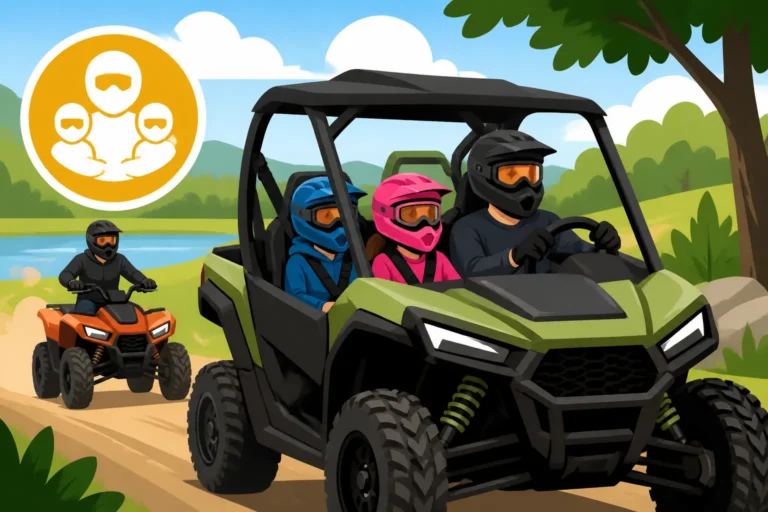
A park visit is more enjoyable when the riding plan fits the least experienced person in the group. New riders may need time to get comfortable with throttle control, braking, turns, and uneven ground before tackling more demanding sections. If you are bringing children, check age and supervision rules and choose a route that leaves room for frequent stops.
Do not treat every machine as equally suited to every trail. A wide UTV may need more clearance than a smaller ATV, and a low-clearance machine can struggle with ruts or rocks. Check the park’s posted rules and trail markings for vehicle-width or machine-type limits. Avoid trying to squeeze a large rig onto a route just because the entrance looks passable.
It can help to look at a map before arriving so the group has a shared idea of where it intends to ride. onX Offroad can help you review mapped routes and terrain in advance, but an app map is not permission to use a closed or restricted trail. Treat signs and instructions from park staff as authoritative. [Iowa Trails for Beginners] can also help you think through whether a route is a good fit for less-experienced riders.
Understanding Trail Conditions and Navigation
Plan for changing Iowa ground conditions
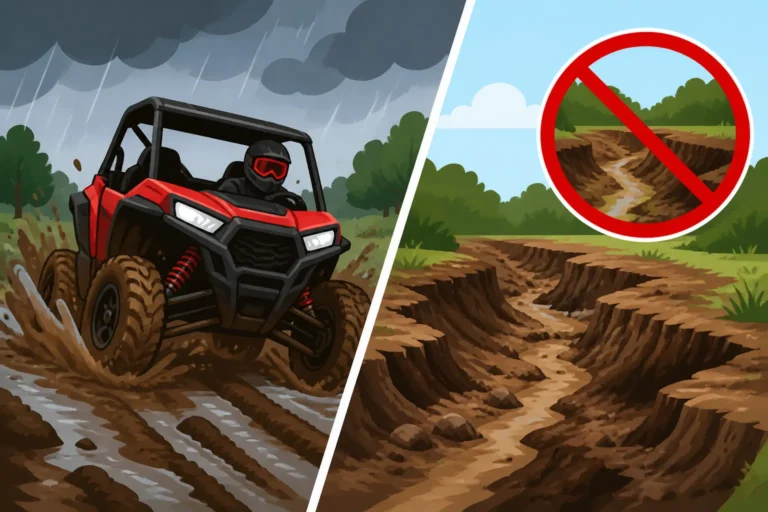
Trail conditions can shift quickly. A route that felt manageable during a dry spell may become slick after rain, while deep ruts can be difficult to see under mud or standing water. Wet ground is not simply a comfort issue: riding on vulnerable trails can deepen ruts and damage surfaces, potentially contributing to closures that affect everyone.
If the ground is soft, slow down and avoid spinning the tires to force your way through. Do not ride around a puddle or muddy section by cutting across vegetation or an unmarked area. That can widen the trail and damage land outside the intended route. If a section seems unsafe or impassable, turn around where it is safe to do so and follow posted guidance.
Check the forecast for the park area, not only the town where you live. Conditions can differ across Iowa, and rain earlier in the day may still affect trails after sunshine returns. For practical planning, read [Iowa Trails Closed After Rain] and [Why Iowa Closes Parks for Wet Trails]. The right decision may be to delay the trip rather than arrive with a machine that is likely to cause damage or get stuck.
Use maps as a planning aid, not a substitute for signs
Before the ride, look for a current trail map from the park or the appropriate public agency. Identify the entrance, staging area, marked routes, and any posted restrictions. Make sure each rider knows what trail markers mean and agrees to stay on designated routes. If cell service is unreliable, download or save useful map information before leaving home.
onX Offroad may be useful for reviewing terrain and orienting yourself, especially when you are comparing possible routes before the trip. Still, app information may not reflect a temporary closure, a changed trail boundary, or a local instruction posted at the entrance. Check signs as you ride and turn around if the map and on-site directions do not match.
Do not assume a line shown on a digital map is a legal route for motorized riding. Property boundaries, private access, and designated riding areas can be difficult to interpret from a screen alone. Use official maps and posted information as your guide, and stay within the area open to your machine. [Iowa Trail Maps From the DNR] offers a useful starting point for understanding how to look for official mapping information.
Riding Responsibly at Tama OHV Park
Stay on marked routes and respect closures
Trail markers and closure signs are there for a reason. A closed section may be unsafe, under repair, too wet to support traffic, or unavailable because of a land-management decision. Do not ride around a barrier, follow another vehicle through a closure, or assume a short detour is harmless. If the posted route is blocked, follow the designated alternate route or leave the area.
Staying on marked trails also helps protect nearby land and reduces conflict with other users. Cutting a new path around a muddy spot can damage vegetation and make the original problem worse. If several riders repeat that choice, a small wet area can turn into a much wider scar. Responsible riding includes accepting that some sections are not suitable on a given day.
If you encounter a hazard, a damaged marker, or an unexpected closure, report it to the park contact when practical. Do not move signs or barriers yourself. For more on why it matters, see [Iowa Rules for Riding a Closed Trail]. You can also follow [Riding the Trails at Tama] for a Tama-focused companion topic.
Share the area thoughtfully
At an OHV park, you may share space with riders on different types of machines and with people who have different levels of experience. Keep a controlled speed, leave room when passing, and avoid crowding another rider who is learning or navigating a difficult section. If the park has designated routes or areas for particular machine types, follow those directions rather than treating the whole site as one open riding zone.
Dust, noise, and congestion can affect the experience for other visitors. Give people ahead of you room, avoid unnecessary revving, and secure loose gear before moving. If you stop, pull off only where it is safe and permitted, and make sure your group is not blocking a trail junction or access route.
A simple group plan helps prevent riders from becoming separated. Decide where to regroup, establish a pace everyone can manage, and agree that nobody rides alone if the group has chosen a buddy system. Keep children and inexperienced riders within sight and follow any park-specific supervision requirements. A relaxed pace is usually more enjoyable than trying to cover every route in one visit.
What to Bring and How to Make the Day Easier
Build a simple ride-day checklist
A checklist can spare you the familiar annoyance of reaching the staging area and realizing the tie-downs, paperwork, or basic supplies are still in the garage. Before departure, confirm the machine is secured to the trailer, the trailer lights work, and the hitch and safety chains are connected correctly. Check that ramps and tie-downs are rated and positioned for the load.
Bring the documents and items that apply to your trip, such as registration paperwork, identification, and any required permit or certificate. Pack water, snacks, weather-appropriate clothing, gloves, and eye protection. A spare layer is useful because riding can feel very different once you are moving through wind and dust than it did while standing in the driveway.
A practical checklist might include:
- Confirm the park is open and the routes you plan to use are available.
- Review vehicle, rider, and entry requirements.
- Inspect the machine and trailer.
- Save or download useful maps and contact information.
- Pack water, protective gear, basic tools, and first-aid supplies.
- Tell someone where you are going and when you expect to return.
Think through food, fuel, and overnight plans
Do not assume fuel, food, repairs, or overnight facilities will be available at the park itself. Check what services are nearby and plan to arrive with enough fuel for the ride and the return journey. If you are unfamiliar with Tama County, identify fuel stops and a place to eat before you leave home rather than searching while the group is waiting.
For overnight stays, verify the actual location, access rules, and facilities with the campground or lodging provider. A nearby place to camp is not necessarily part of the OHV park, and a listing may not answer practical questions about trailer parking, electricity, or late arrival. If you are making a weekend of it, [Camping Near an Iowa OHV Park] can help you plan what to check.
onX Offroad can help you orient yourself while planning routes and nearby waypoints, but use a dependable source for campground reservations, services, and current access information. Keep a backup plan for lodging and for riding in case weather or a closure changes the day. That small amount of planning can make a trip feel flexible instead of derailed.
A Tama OHV Park Day That Runs More Smoothly
Set expectations before the first lap
For a first visit, treat the early part of the day as familiarization time. Read the entrance information, check the map, confirm any restrictions, and let the least experienced rider get comfortable before the group moves farther from the staging area. A slow first loop can reveal trail surfaces, visibility, intersections, and the pace that works for everyone.
Agree on a regrouping point and what to do if someone takes a wrong turn or has a mechanical issue. Make sure every rider knows how to stop safely and who to contact if the group is separated. If you have more than one vehicle, avoid assuming that the fastest rider can simply wait at the next junction; clear meeting points are easier to follow.
Keep your plan flexible. You might discover that conditions are rougher than expected or that the group is having more fun on a shorter route. There is no need to force a full-day itinerary when riders are tired, the weather changes, or the trails are busy. Leaving with energy for another visit is better than turning a good day into a risky one.
Know when to turn around
A responsible rider is willing to change plans. Turn back if a machine is overheating, a rider is uncomfortable, visibility is poor, or a route has become too slick to navigate safely. If someone is tired, cold, dehydrated, or struggling to keep up, pause and reassess rather than treating the schedule as more important than the people riding.
The same goes for unclear access. If a trail appears closed or a boundary is uncertain, stop and check before proceeding. A digital map, another rider’s assumption, or the fact that tracks lead past a sign does not make a route open. Use the official information available on site, and contact the managing organization later if you need clarification.
Before leaving, check that everyone is accounted for and that the machines and trailer are secure. Take any rubbish with you and avoid leaving damaged equipment or supplies behind. A clean departure and considerate trail behavior help preserve the area for the next group of riders.
Disclaimer
This article is for general informational purposes only and does not constitute professional advice. Laws, prices and regulations vary by location and change over time. Consult a qualified professional for guidance on your specific situation.