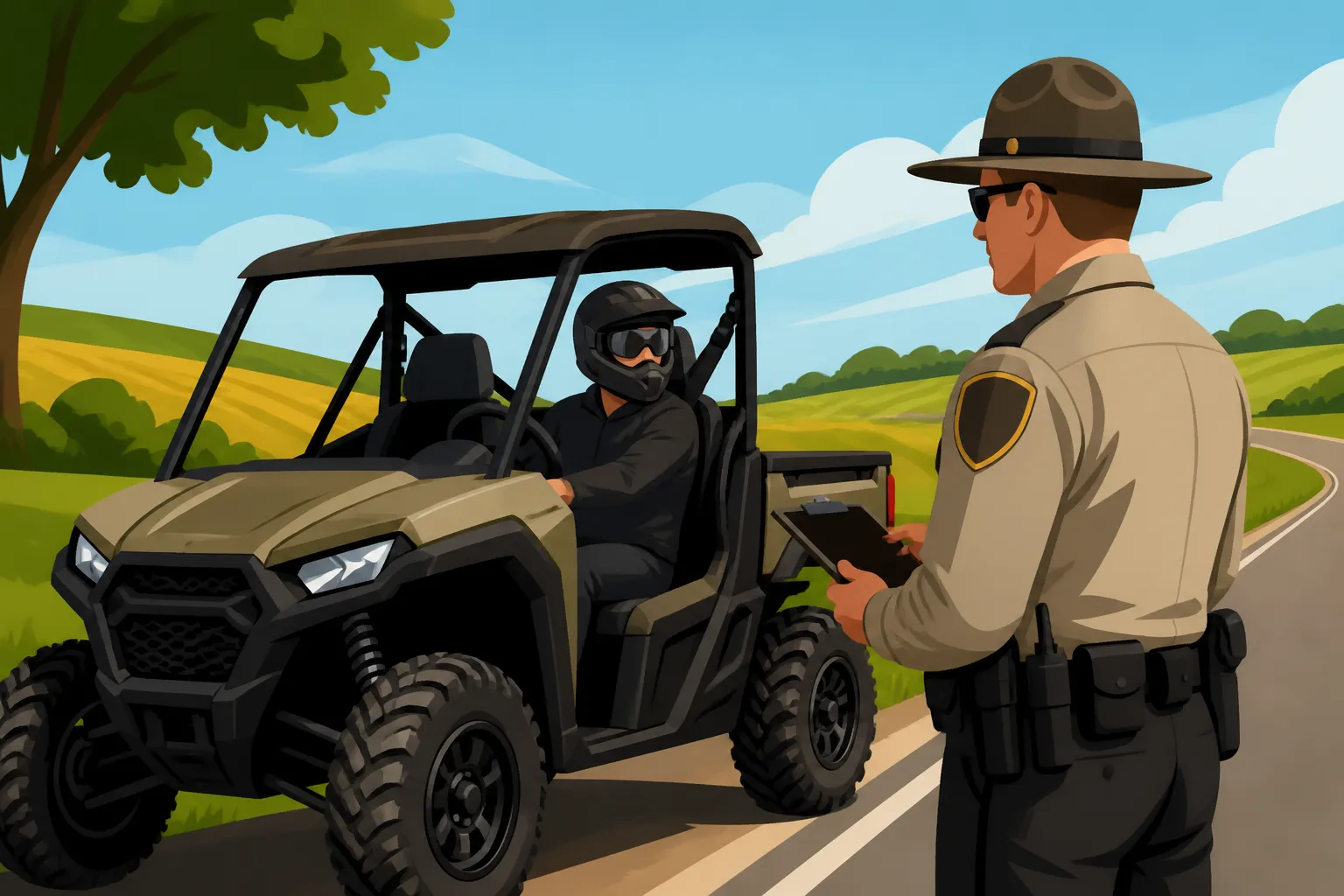
A Deputy at an Iowa Roadside Stop
Picture this: you're enjoying a beautiful day, cruising your ATV or UTV down a gravel road in rural Iowa, perhaps heading to a favorite fishing spot or just exploring the scenic backroads. Suddenly, you see flashing lights in your rearview mirror. Your heart sinks a little, right? A roadside stop can be unnerving, even when you know you're trying to do everything by the book. This guide is here to demystify what happens when a deputy pulls you over on an Iowa road, what they're looking for, and exactly how you can ensure you're as prepared as possible to make that interaction smooth and stress-free.
Understanding Iowa's Road Rules for ATVs and UTVs
Before we even get to the roadside stop, it's crucial to understand the foundation: when and where you're actually allowed to operate your off-highway vehicle (OHV) on Iowa's public roads. Iowa's rules aren't always straightforward, and many riders find themselves scratching their heads trying to figure out the nuances. It's not like simply taking your car out for a spin; there are very specific conditions that must be met.
The "Where" and "When" of Iowa Road Use
Iowa is pretty particular about where ATVs and UTVs can legally operate on public roadways. Generally, you're looking at specific types of roads, and even then, there are limitations. The state law primarily permits OHVs on unpaved county secondary roads. This is a critical distinction that often trips up riders. Paved roads, state highways, and interstates are largely off-limits, with very few exceptions. For instance, you can't just hop on a four-lane highway, even to cross it, unless it's at a designated intersection. Many riders dream of simply riding from their property to the nearest gas station, but that dream often bumps up against the reality of Iowa's road laws.
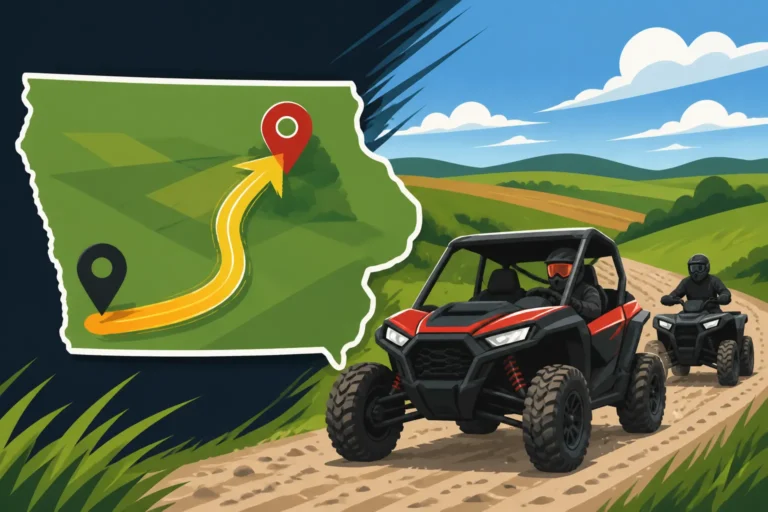
Even on those permissible unpaved secondary roads, there's a "most direct route" rule. This means you can't just joyride for hours. The intent of the law is to allow riders to use these roads to reach an authorized OHV park or trail, or to return home, taking the shortest possible path. It's not an open invitation for extended recreational riding on public roads. Understanding this intention behind the law can help you anticipate how a deputy might view your presence on a particular road. When in doubt, always consider if you're truly taking the [Most Direct Route to an Iowa OHV Park] or home.
Age, Licensing, and Speed Limits
Beyond the specific roads, Iowa has clear stipulations regarding who can operate an OHV on these public ways. First and foremost, the operator must be at least 18 years old. This isn't a suggestion; it's a hard and fast rule. A 16-year-old with a valid driver's license for a car cannot legally operate an ATV or UTV on a public road in Iowa. This rule can be a real point of frustration for families where younger, experienced riders want to participate in road travel.
In addition to the age requirement, the operator must possess a valid driver's license. This isn't just an ATV safety certificate; it's the same kind of driver's license you'd need to operate a car or truck. Think of it as Iowa treating road-legal OHV operation similarly to other motor vehicles in this regard. Without that plastic card in your wallet, you're not legally permitted to be on a public road, even on a gravel path. Lastly, there's a strict speed limit: 35 mph. No matter how powerful your machine is, or how wide open that gravel road seems, exceeding 35 mph on an Iowa public road on an ATV or UTV is a violation. Keeping it under the limit is not just about safety, but about staying compliant.
What a Deputy Looks For at a Roadside Stop
When a deputy flags you down, they're not just making conversation. They have a specific set of criteria they're checking against Iowa law to ensure you and your machine are compliant. Knowing what's on their checklist can greatly reduce your anxiety and help you be prepared. It’s all about demonstrating that you’ve done your homework and are operating responsibly.
Registration, Decals, and Documentation
The first thing almost any Iowa deputy will look for is proper registration. Your ATV or UTV needs to be registered with the county recorder's office, and you should have a current decal affixed to the machine. This decal, which typically mounts on the rear, is your visible proof of registration. Without a current decal, your machine is considered unregistered, which can lead to a [Iowa Fines for an Unregistered ATV]. Don't assume that because you mostly ride private land, you don't need it for a quick hop on the road; any public road use requires registration.
Beyond the decal, you need to be carrying your physical registration certificate. This small piece of paper is just as important as the decal itself. It proves you're the registered owner (or have permission to operate it if you're not). I've heard countless stories of riders who've had the decal but forgot the certificate at home, leading to unnecessary delays and sometimes even citations. It’s a simple piece of paper, but its absence can cause a lot of hassle. Furthermore, if your machine has a title, especially if there's a lien against it, you should be aware of those details, although the deputy will primarily be concerned with the current registration. The process for [Registering an ATV in Iowa] also includes specific forms, so ensure all details match your current documentation.
Required Equipment and Machine Readiness
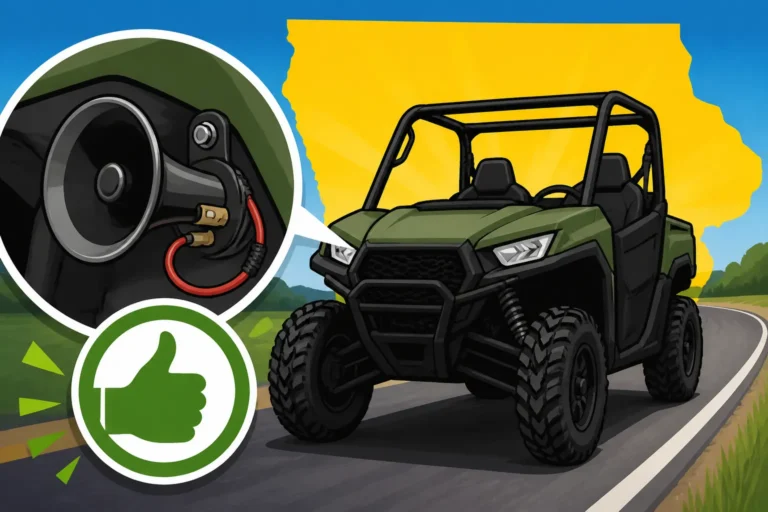
Iowa law is quite explicit about the equipment your ATV or UTV must have to be considered road-legal. This isn't optional; these are mandates designed for safety and visibility on shared roadways. First, your machine needs to have a working headlight, which must be on even during daylight hours. This increases your visibility to other motorists, especially on dusty gravel roads. You'll also need a taillight that is clearly visible from the rear, often integrated with a brake light. A properly functioning horn is essential for signaling intentions or alerting others to your presence. Many aftermarket companies, like SuperATV, offer road-legal kits that include these essential items, making it easier for riders to get compliant.
A crucial item often overlooked is a mirror. Iowa law requires at least one rearview mirror, typically mounted on the left side, allowing you to see traffic approaching from behind. Without it, you're essentially driving blind to what's coming up, which is unsafe and non-compliant. Lastly, you must display a slow-moving vehicle (SMV) triangle on the rear of your machine. This bright orange and red triangle signals to other drivers that you're traveling at speeds less than 25 mph (even though your limit is 35 mph, the SMV triangle covers the range of speeds where others need to be extra cautious around you). Deputies are trained to look for all of these items. If you're missing even one, it could be a reason for a stop or a citation. You can check the detailed [Iowa Lighting Requirements for ATVs] and [Iowa Mirror Requirement for Road Use] for specifics.
Being Prepared: Your Checklist for an Iowa Road Ride
Preparation is key to a smooth ride and a stress-free interaction with law enforcement. Think of it like packing for a trip: you want to have everything you need, not just for the fun parts, but for any unexpected detours. Having your ducks in a row for an Iowa roadside stop means having your paperwork, your machine, and yourself ready.
Paperwork and Personal Readiness
The most basic, yet often forgotten, item is your valid Iowa driver's license. As mentioned, you must be 18 years or older and hold a driver's license. Keep it in a secure, waterproof place on your person, not just tucked into a storage compartment on the machine where it might get damaged or lost. Next, carry your ATV or UTV's current registration certificate. This is the official document from the county recorder. Some riders keep a laminated copy or a clear, waterproof pouch for protection.
Perhaps the most critical piece of paper you’ll need for road use in Iowa is proof of insurance. Iowa mandates that any ATV or UTV operating on a public road must have liability insurance with specific minimum coverage limits: $20,000 for bodily injury to one person, $40,000 for bodily injury to two or more people, and $15,000 for property damage. This is often referred to as 20/40/15 coverage. If you can't produce proof of insurance, you're looking at a significant fine. Many insurance companies offer specific policies for OHVs, so make sure yours covers road use and meets Iowa's minimums. Understanding your [Iowa ATV Insurance Requirement] is paramount.
Machine Maintenance and Safety Gear
Beyond the legal equipment requirements, ensuring your machine is in good working order demonstrates responsibility. Deputies appreciate a well-maintained vehicle. Check your tires, brakes, and steering regularly. Are your lights bright? Is your horn loud enough to be heard? These aren't just legal requirements; they're safety essentials. While Iowa doesn't mandate helmets for adults on ATVs/UTVs on public roads, it's always a wise choice for your safety. However, if you are at an OHV park, helmets are often mandatory.
For those planning to add accessories to meet road-legal requirements, consider reputable brands. For instance, SuperATV offers a range of durable and compliant mirrors, horns, and lighting kits. When installing these, ensure they are securely mounted and function correctly. It’s also a good practice to ensure your exhaust system has a spark arrester, which is required for riding in most public areas and helps prevent wildfires. While a deputy might not always check for a spark arrester on a roadside stop for road use, it's a good habit for overall compliance.
Here's a quick checklist to help you prepare:
| Item | Requirement | Notes |
|---|---|---|
| Operator Age | 18 years or older | No exceptions for younger riders on public roads |
| Driver's License | Valid Iowa driver's license | Not just an ATV safety certificate |
| ATV/UTV Registration | Current registration with county recorder | Decal must be affixed to the rear of the machine |
| Registration Cert. | Physical certificate on person or in machine | Essential proof of ownership/registration |
| Proof of Insurance | Meets 20/40/15 minimums | Mandatory for all public road use |
| Headlight | Functional, on during daylight | Required for visibility |
| Taillight/Brake Light | Functional, visible from rear | Required for visibility |
| Horn | Functional | For signaling and alerting others |
| Rearview Mirror | At least one, typically on the left side | Essential for seeing traffic from behind |
| SMV Triangle | Displayed on the rear | Indicates slow-moving vehicle |
| Speed Limit | Adhere to 35 mph maximum | Strict enforcement on all public roads |
| Road Type | Unpaved county secondary roads only | Avoid paved roads, state highways, interstates |
| Route Intent | Most direct route to/from OHV area or home | Not for extended recreational joyriding |
Common Violations and How to Avoid Them
Even with the best intentions, it's easy to inadvertently violate a rule if you're not fully informed. Deputies frequently encounter a few common infractions when stopping ATV and UTV riders on Iowa roads. Understanding these pitfalls is your best defense against receiving a citation and ensures your ride remains enjoyable.
Unregistered Machines and Missing Documentation
One of the most frequent reasons for a stop and subsequent citation is an unregistered machine or the lack of proper documentation. Many riders, especially those who primarily use their machines on private property or farms, might not realize that the moment they pull onto a public road, even briefly, the registration requirements kick in. Iowa's rules on [Registering an ATV in Iowa] are clear: if it's on a public way, it needs to be registered. Forgetting your registration certificate at home, even if you have a valid decal, can also lead to issues. Deputies need to confirm ownership and current registration status, and without the physical document, it makes their job harder and your stop longer.
Another critical piece often missing is the proof of insurance. As we've discussed, Iowa requires liability insurance for road use. Many riders simply don't have it, or they assume their auto insurance covers their ATV/UTV, which is rarely the case for road operation. Always verify with your insurance provider that your policy covers road use in Iowa and meets the minimum financial responsibility requirements. A citation for riding without insurance can be costly, far outweighing the annual cost of a proper policy.
Equipment Failures and Operating Violations
Beyond paperwork, deputies are trained to spot equipment deficiencies. Riding without a headlight, taillight, horn, or the required mirror is a clear violation. Sometimes these items break down during a ride, and while a deputy might be understanding about a recent failure, they ultimately have to enforce the law. It's your responsibility to ensure all required equipment is in good working order before you head out. This includes having your slow-moving vehicle triangle securely mounted and visible.
Operating violations are another common issue. Exceeding the 35 mph speed limit is an easy one for deputies to detect, especially with modern radar equipment. Allowing a rider under 18 years old to operate on a public road, even if they're experienced, is also a direct violation of the law. And remember the "most direct route" rule? Deviating significantly from this, or simply riding recreationally on county roads for extended periods, can draw attention and potentially lead to questions about your intent. Staying on designated unpaved roads and avoiding any shortcut across paved roads or state highways will keep you in compliance. Knowing the [Iowa Rules for Riding a Gravel Road] comprehensively can save you a lot of trouble.
Disclaimer
This article is for general informational purposes only and does not constitute professional advice. Laws, prices and regulations vary by location and change over time. Consult a qualified professional for guidance on your specific situation.