When a Tinted Windshield Fails a Roadside Check
It can be incredibly frustrating to think you've got your ATV or UTV all set for a legal spin on Iowa's secondary roads, only to have a simple accessory like a tinted windshield land you in hot water during a roadside check. Many riders don't realize that while Iowa does allow off-highway vehicles on certain public roads, these machines become subject to many of the same rules as cars and trucks, including specific regulations for windshield tint. This guide is here to walk you through Iowa's often-confusing rules regarding tinted windshields on your UTV or ATV, what happens if your tint isn't up to snuff, and how to avoid that unwelcome roadside conversation.
Iowa's Stance on Off-Highway Vehicle Road Use
Iowa offers a unique blend of open country and accessible trails, but navigating the rules for taking your ATV or UTV onto public roads can feel like a maze. It’s not a free-for-all, and understanding the foundation of road legality is key before we even get to windshields. Essentially, Iowa recognizes that OHVs can serve legitimate purposes beyond dedicated trails, especially in rural areas, but this privilege comes with responsibilities that mirror those of other motor vehicles.
The Conditional Nature of Road Access
Generally, an ATV or UTV in Iowa isn't inherently street legal in the same way a car or truck is. Instead, specific statutes allow them on certain types of roads under defined conditions. We're talking about unpaved secondary roads, for instance, or specific paved roads if a county or city has passed an ordinance to open them up. The moment your wheels touch these public surfaces, your machine, and you as the operator, are expected to meet a host of safety and equipment standards. This includes everything from proper lighting and mirrors to, yes, windshield visibility. It’s a transition from off-road freedom to on-road regulation, and many riders are caught off guard by the depth of these requirements. For a broader look, you might want to check out [Are ATVs Street Legal in Iowa?].
This conditional access isn't just about where you can ride; it's about how you can ride. There are age restrictions, driver's license requirements, and rules about speed and insurance. The state's intent is to integrate these vehicles safely into the existing road network, minimizing hazards for everyone. When you see an ATV on a gravel road, for example, it's not simply because it's a gravel road; it's because the rider is following a specific set of rules, including often being on the [Most Direct Route to an Iowa OHV Park] or a farm-related errand. These rules are designed to prevent conflicts and ensure that everyone sharing the road can do so without undue risk.
Equipment Requirements for On-Road Use
Once your ATV or UTV ventures onto a public road in Iowa, it's no longer just an off-road toy; it's a vehicle sharing space with cars, trucks, and even farm equipment. This means it has to be equipped as such. Think headlights, tail lights, brake lights, and a horn. You'll need at least one mirror, and most importantly for this discussion, your windshield (if you have one) must meet certain clarity and visibility standards. These aren't suggestions; they are mandates found in Iowa Code. Failure to comply with any of these equipment requirements can quickly turn a casual ride into a costly citation.
It’s easy to get caught up in the excitement of taking your machine out on the road, but a quick check of your setup against Iowa's rules can save a lot of headaches. Many riders invest in aftermarket accessories for comfort and style, but not all of these are designed with street legality in mind. A heavy tint might look cool or offer perceived sun protection on the trail, but if it significantly reduces visibility, especially at night or in adverse weather, it becomes a safety hazard and a legal liability on public roads. Understanding these basic equipment rules is the first step in ensuring your machine is truly ready for Iowa's roads. You'll find more details on what's expected in our article, [Iowa Rules for Riding a Gravel Road].
Understanding Iowa's Windshield Regulations for Road-Legal Vehicles
The tint on your ATV or UTV windshield might seem like a minor detail, but when you're operating on public roads, Iowa's laws treat it with seriousness. While ATVs and UTVs aren't cars, the general principles of driver visibility and safety that apply to all motor vehicles on public roads absolutely extend to them. The key is to understand what constitutes a legal tint and why these regulations are in place.
What the Law Says About Tinted Glass
Iowa Code specifies regulations for "motor vehicle windows" which, when an ATV or UTV is operated on a public road, apply to its windshield. The core of the law revolves around light transmission. Essentially, the percentage of light that can pass through the tinted material is what matters. For the windshield, Iowa typically requires a very high percentage of light transmission, often 70% or more, meaning the tint must be incredibly light, almost imperceptible. This isn't just a suggestion; it's a safety standard. The goal is to ensure that the driver has an unobstructed, clear view of the road, traffic, pedestrians, and any potential hazards, regardless of external lighting conditions.
It's crucial to note that these rules often vary for different windows on a standard car (e.g., side windows vs. rear window), but for the windshield – the primary window through which the operator sees – the rules are consistently strict across most jurisdictions, including Iowa. This high visibility requirement helps officers identify drivers and ensures that nothing impedes critical visual information from reaching the operator. Trying to navigate rural Iowa roads with a windshield that’s too dark can significantly impair your ability to react to sudden deer, slow-moving farm machinery, or uneven road surfaces. You can find out more about the specifics in [How Dark a Windshield May Legally Be].
Why Tint Laws Exist: Safety First
The reason behind stringent windshield tint laws is straightforward: safety. Reduced visibility through a heavily tinted windshield creates a significant hazard, not just for the ATV/UTV operator, but for everyone else on the road. Imagine trying to spot a child on a bicycle, a sudden pothole, or an approaching vehicle on a winding gravel road through a darkly tinted screen, especially at dawn, dusk, or in inclement weather. The risk of an accident skyrockets.
Beyond the obvious safety implications, these laws also serve a law enforcement purpose. Officers need to be able to clearly see into a vehicle during a stop, both for their own safety and to assess the situation. A heavily tinted windshield obstructs this view, raising concerns for officers and often leading to increased scrutiny during a roadside check. While a factory-installed clear windshield like those offered by reputable accessory manufacturers such as SuperATV might seem basic, it ensures compliance and maximizes your field of vision, making your rides safer and stress-free from a legal standpoint. Prioritizing safety by adhering to these tint laws is not just about avoiding a ticket; it's about protecting yourself and others.
The Roadside Check: What Happens When Your Tint Fails
Encountering a law enforcement officer during an ATV or UTV ride on public roads is always a possibility, and if your tinted windshield doesn't meet Iowa's legal requirements, that interaction can quickly take a turn for the worse. Officers are trained to spot violations, and illegal tint is often a clear indicator of non-compliance with road-use laws.
How an Officer Assesses Your Windshield
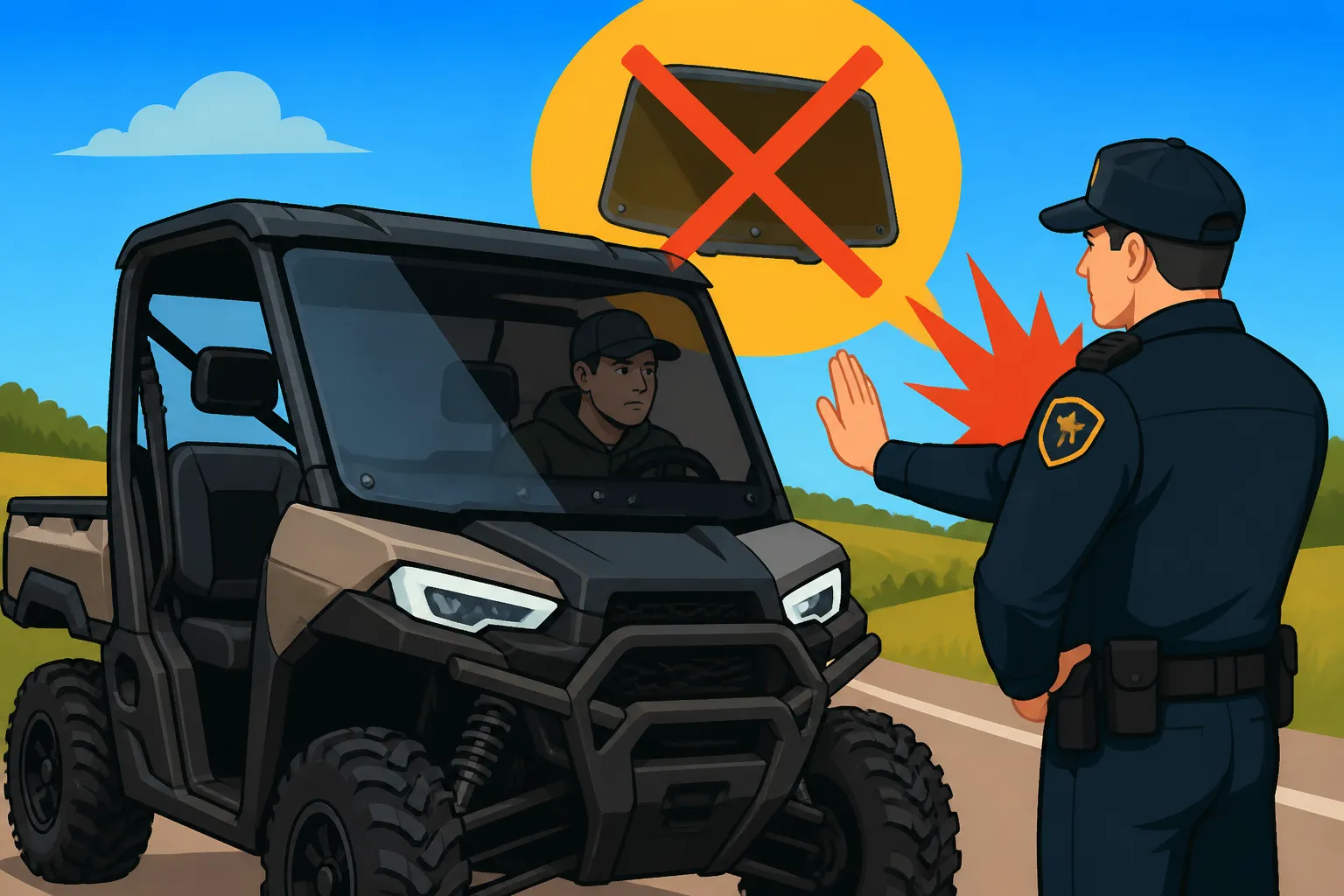
When an officer pulls you over, one of the first things they'll likely assess is your machine's overall compliance with road-use regulations. This includes checking for proper registration, lights, mirrors, and, of course, the visibility through your windshield. They don't need a fancy device to determine if your tint is too dark; often, it's visually obvious. If they can't clearly see you, the operator, or the interior of your machine from a reasonable distance, that's usually enough to warrant further inspection. They might use a small, handheld tint meter, though in many cases, their professional judgment, based on their training and experience with Iowa's vehicle codes, is sufficient to establish a violation.
They'll likely ask you to roll down your window or demonstrate the clarity of the windshield. If they suspect a violation, they might even point out the relevant section of the Iowa Code. This isn't an arbitrary decision; it's part of their duty to enforce vehicle safety standards. The intent is not to ruin your day, but to ensure that everyone on the road is operating a safe and legally compliant vehicle. Understanding what an officer is looking for can help you proactively ensure your machine is always up to code before you even hit the public road. For details on general roadside interactions, consider reading [A Deputy at an Iowa Roadside Stop].
Consequences of a Non-Compliant Tint
If your tinted windshield fails an Iowa roadside check, the immediate consequence is typically a citation. This isn't just a friendly warning; it's a legal document that carries a fine. The cost of such a fine can vary, but it's an unwelcome expense for something that could have been easily avoided. Beyond the financial penalty, you might also be ordered to correct the violation, which means removing the tint or replacing the windshield entirely. This could involve an additional expense for a compliant clear or lightly tinted windshield, such as those available from aftermarket suppliers like SuperATV, known for producing a wide array of UTV and ATV accessories.
The headache doesn't stop there. If you don't comply with the order to fix the tint, you could face further penalties or issues if stopped again. Repeated violations can lead to more significant fines or even other legal actions. It's a situation that can quickly escalate from a simple traffic stop to a prolonged and expensive ordeal. Many riders choose to address tint issues immediately after a citation or even proactively, understanding that the cost of compliance is far less than the cost of repeated penalties and the inherent safety risks. [Iowa Fines for Illegal ATV Road Use] will give you a better idea of the monetary penalties involved.
| Legal Windshield | Non-Compliant Tinted Windshield | |
|---|---|---|
| Light Transmission | Typically 70% or more (very clear) | Less than 70% (visibly dark or obscuring) |
| Officer Visibility | Clear view into the machine and of the operator | Obscured view, difficult to see operator/interior clearly |
| Safety Impact | Maximum visibility for operator, minimal risk | Reduced visibility, especially in low light or adverse weather, increasing accident risk |
| Legal Status | Compliant with Iowa Code for road use | Violation of Iowa Code for road-legal vehicles |
| Potential Outcome | Smooth roadside stop, no issues regarding tint | Citation, fine, order to remove tint or replace windshield |
| Operator Experience | Confidence in legal compliance, clear view of surroundings | Anxiety about potential stops, impaired vision leading to fatigue |
Ensuring Your ATV/UTV Windshield Meets Iowa Standards
Avoiding the headache and expense of a non-compliant tinted windshield on Iowa roads is simpler than you might think. It primarily comes down to knowing the rules and making informed choices when it comes to your machine's accessories. Proactive measures can save you a lot of trouble down the line and ensure your rides are both enjoyable and legal.
Choosing Compliant Aftermarket Windshields
When you're looking to add a windshield to your ATV or UTV, or if you're replacing an existing one, always prioritize compliance with Iowa's road-use laws, especially if you plan on operating on public roads. Many aftermarket manufacturers, including trusted brands like SuperATV, offer a variety of windshield options, from full to half to flip-up designs. The critical factor for road use is the clarity and light transmission. Look for windshields that are specifically advertised as "DOT compliant" or "street legal," as these are generally designed to meet the rigorous visibility standards required for on-road vehicles.
These compliant windshields typically have a very high light transmission percentage, meaning they appear virtually clear. While a slight tint might be permissible on side or rear windows of a car, it is almost never legal for the primary windshield. If you desire some sun protection, consider options like a tinted roof or protective eyewear, rather than a darkly tinted windshield that could jeopardize your legal standing and safety. Investing in a quality, compliant windshield from the outset is a smart move that prevents future problems and ensures you're ready for any [Iowa Rules for Riding After Dark].
Self-Assessment and Professional Checks
Before you head out onto any public road in Iowa, take a moment to assess your windshield. Can you clearly see through it without any distortion or significant darkening? Can someone standing outside your machine clearly see you, the operator, through the windshield? If there's any doubt, it's worth investigating further. You can often find tint meters online or at automotive supply stores if you want to perform a basic check yourself. However, for a definitive answer, especially if you have an aftermarket tint film applied, consider visiting a reputable automotive glass shop. They often have professional equipment to accurately measure light transmission and can advise you on whether your current setup meets Iowa standards.
Remember, the goal isn't just to scrape by the minimum legal requirement; it's to ensure maximum visibility for your own safety and the safety of others. A clear windshield is a fundamental safety feature for any road-going vehicle. By performing these simple checks and making informed choices about your equipment, you can enjoy Iowa's accessible roads with confidence, knowing your ATV or UTV is fully compliant and ready for the adventure.
Disclaimer
This article is for general informational purposes only and does not constitute professional advice. Laws, prices and regulations vary by location and change over time. Consult a qualified professional for guidance on your specific situation.