One Mirror on the Left
It can be incredibly frustrating trying to figure out the exact rules for riding your ATV or UTV on public roads here in Iowa. You've heard whispers, maybe seen folks on gravel roads, but what's really allowed? And what about all the specific equipment? One detail that often trips people up is the mirror requirement – you need to have one, but where should it go, and what kind is necessary to stay on the right side of the law? This guide is here to clear up that confusion, specifically diving into the mirror rule and other essentials for making your machine road-ready in Iowa.
The Specific Mirror Requirement for Iowa Roads
Iowa's rules for riding ATVs and UTVs on public roads aren't just about where you can ride, but also about how your machine is equipped. This is where the single mirror requirement comes into play, and it's a detail that often surprises new riders or those transitioning from purely off-road use. It's not just any mirror; Iowa law specifically looks for a certain type and placement.
Understanding the "One Mirror on the Left" Rule
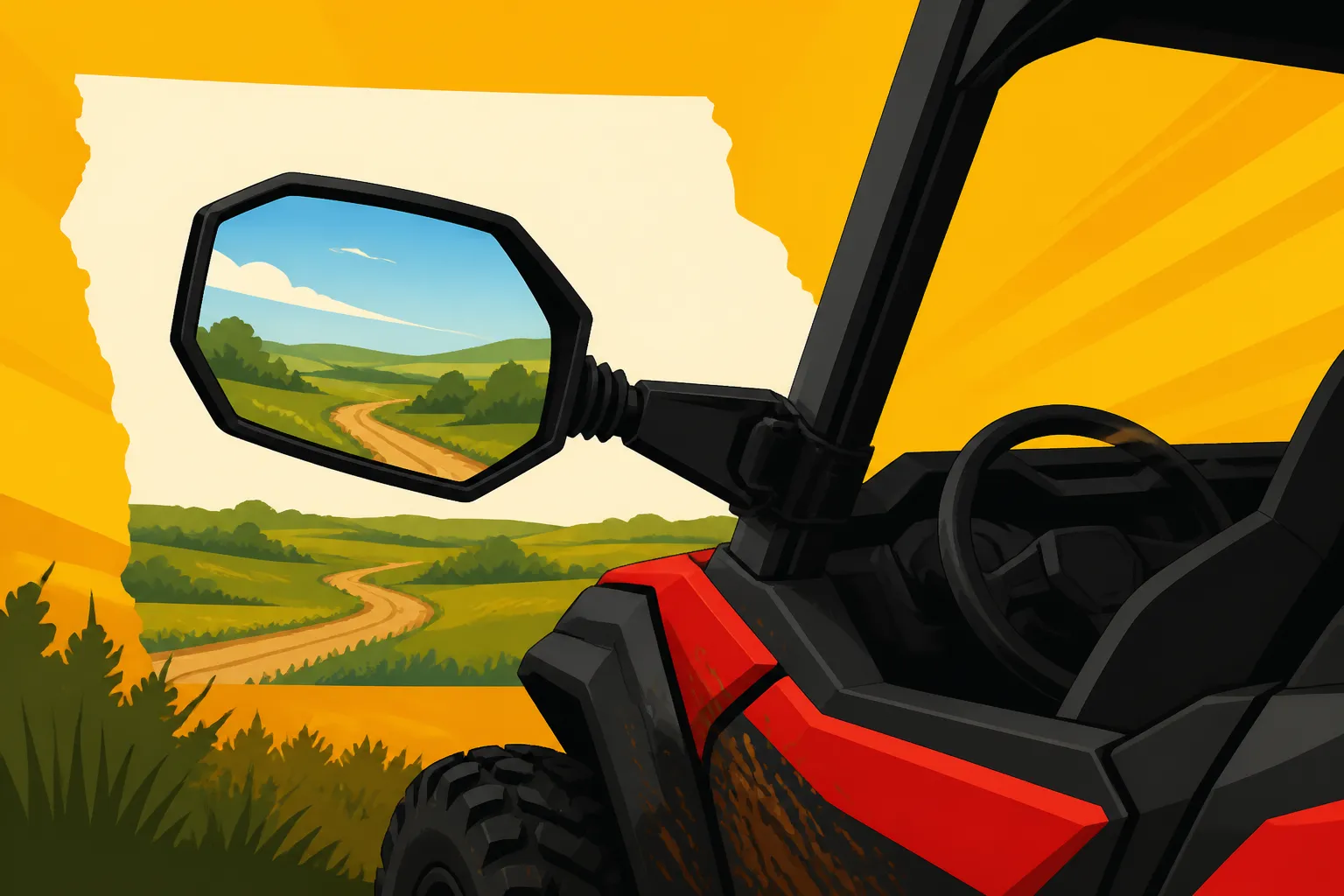
When you're preparing your ATV or UTV for legal road use in Iowa, one crucial piece of equipment you'll need is a rearview mirror. And it's not simply "a mirror." The Iowa Code states that an off-highway vehicle (OHV) must be equipped with at least one rearview mirror mounted to provide the operator a clear, unobstructed view to the rear of the machine. While the law often broadly states "a rearview mirror," common practice and interpretation, often influenced by enforcement, strongly lean towards placement on the left side of the machine. This ensures the operator, sitting in the usual driving position, has a direct line of sight to what's behind them, without having to crane their neck excessively. Think about the driver's side mirror in your car—that's the concept. This isn't just about complying with the letter of the law; it's about practical safety, allowing you to monitor traffic approaching from behind, which is critical when sharing roads with cars and trucks. Many riders opt for universal handlebar mirrors for ATVs or side mirrors for UTVs, ensuring they meet this visibility standard.
Why This Specific Placement Matters
You might wonder why such a specific detail like "one mirror on the left" is emphasized, especially when some vehicles have multiple mirrors. For ATVs and UTVs, the design often means the operator is positioned centrally or slightly to the left, much like a car driver. Having the mirror on the left maximizes the operator's ability to see directly behind them and to the left-rear, which is the most common approach angle for vehicles overtaking from behind, especially on Iowa's [Unpaved County Secondary Roads in Iowa]. A mirror positioned too far to the right, or one that's too small or vibrates excessively, won't provide the clear, consistent rearward view required. Imagine you're on a gravel road, perhaps moving a little slower than a car behind you. That mirror on the left becomes your lifeline to understanding their intentions, whether they're going to pass, or if they're slowing down. Choosing a robust mirror, perhaps from a brand like SuperATV that specializes in aftermarket UTV accessories, can make a real difference here, offering better stability and a clearer view even over rough terrain. It’s all about giving you the best chance to be aware of your surroundings and make safe decisions while operating on public roadways.
Essential Equipment Beyond the Mirror for Iowa Road Use
While the "one mirror on the left" rule is important, it's just one piece of the puzzle when it comes to legally riding your ATV or UTV on Iowa's public roads. There's a whole host of other equipment that your machine needs to have, and it's all designed to ensure your safety and the safety of others you're sharing the road with. Neglecting these can lead to fines and a ruined ride, so it's worth getting them right.
Lighting Requirements: Headlights, Taillights, and Brake Lights
When you're out on an Iowa public road, day or night, your ATV or UTV needs to be highly visible. This starts with proper lighting. First and foremost, you absolutely must have a headlight that is on whenever you're operating on a public road, regardless of the time of day. This isn't just for seeing where you're going in the dark; it makes you visible to oncoming traffic, even in bright daylight. Think about cars – their headlights are often on automatically for safety. Your ATV or UTV needs to mimic that. In addition to a functioning headlight, you'll need at least one taillight that illuminates when your machine's headlight is on, making you visible from the rear. And, crucially, you must have a brake light that clearly illuminates when you apply the brakes, signaling to anyone behind you that you're slowing down or stopping. Without these essential lights, you're not just risking a citation; you're significantly increasing your risk of an accident. [Iowa Lighting Requirements for ATVs] are in place to prevent these kinds of incidents, ensuring everyone on the road can see and react to you appropriately.
Audible Warnings and Visibility: Horn and Slow-Moving Vehicle Sign
Beyond lights, your machine needs ways to communicate with other road users and clearly identify itself as a slower-moving vehicle. That means a working horn and a slow-moving vehicle (SMV) triangle. The horn is your audible warning system, allowing you to alert others to your presence or to potential hazards. It doesn't need to be a blaring train horn, but it does need to be loud enough to be heard over your engine and typical road noise.
The slow-moving vehicle triangle, a bright orange fluorescent triangle with a dark red reflective border, is mandatory for any vehicle traveling 25 mph or less on a public road. Since ATVs and UTVs on Iowa roads have a [Iowa ATV Speed Limit on Roads] of 35 mph, this sign is almost always a requirement. It must be mounted on the rear of your machine, pointing upwards, and be clearly visible to any vehicle approaching from behind. This sign immediately tells other drivers, especially those coming up quickly on a rural road, that you are a slow-moving vehicle and they should adjust their speed and prepare to pass cautiously. You can find robust SMV signs that stand up to the elements through various accessory providers, including companies like SuperATV, ensuring your machine is not only visible but also properly identified to other drivers.
Iowa ATV Insurance Requirement and What it Means
Another non-negotiable for riding your ATV or UTV on any public road in Iowa is proper insurance. Just like with a car or truck, you need to carry liability insurance that meets Iowa's minimum coverage requirements. These requirements are typically structured as three numbers: one for bodily injury per person, one for total bodily injury per accident, and one for property damage. For example, Iowa requires minimums often stated as twenty thousand for bodily injury to one person, forty thousand for bodily injury to two or more people, and fifteen thousand for property damage. This coverage is there to protect you financially in case you're at fault in an accident and cause injury or damage to another person or their property. If a deputy pulls you over on a gravel road, they won't just be checking your mirrors and lights; they'll also ask for proof of insurance. Being caught without it can lead to significant fines and penalties. It's a critical safety net that ensures you're a responsible road user. Always carry your proof of insurance with you when you ride.
Here's a quick overview of essential equipment for Iowa road legality:
| Equipment Category | Specific Requirement | Purpose |
|---|---|---|
| Mirror | At least one rearview mirror, typically mounted on the left for optimal visibility. | Provides a clear, unobstructed view to the rear for operator awareness. |
| Headlight | At least one, illuminated during all road operation (day or night). | Ensures visibility to oncoming traffic and illuminates the path ahead. |
| Taillight | At least one, illuminated when headlight is on. | Ensures visibility to traffic approaching from the rear. |
| Brake Light | At least one, illuminates when brakes are applied. | Signals braking action to following vehicles, preventing rear-end collisions. |
| Horn | Must be capable of emitting an audible warning. | Alerts other road users to your presence or potential hazards. |
| SMV Triangle | Mounted on the rear, visible, for vehicles traveling 25 mph or less (most ATVs/UTVs). | Clearly identifies your machine as a slow-moving vehicle to other drivers. |
| Insurance | Minimum liability coverage (20/40/15 or similar). | Provides financial protection in case of an at-fault accident. |
General Rules for Riding an ATV or UTV on Iowa Roads
Having your machine properly equipped is a huge step, but knowing how and where you can legally ride it on Iowa roads is just as important. Iowa has specific laws governing the types of roads you can use, the age and licensing requirements for operators, and even speed limits. It’s not a free-for-all, and understanding these rules will keep you safe and avoid unexpected citations.
Age and Licensing: Who Can Legally Ride an Iowa Road?
One of the most frequently asked questions revolves around who can actually operate an ATV or UTV on a public road in Iowa. The rule is pretty straightforward: you must be at least 18 years old to operate an ATV or UTV on a public street or highway in Iowa. This isn't just a suggestion; it's a hard and fast rule. There are no exceptions for younger riders, even if they have an ATV safety certificate or are supervised by an adult. Furthermore, the operator must possess a valid driver's license. This means that if you're 18 or older but don't have a valid driver's license (even if it's suspended or revoked for a car), you cannot legally operate an ATV or UTV on an Iowa public road. This requirement ensures that anyone operating these machines on public roadways has demonstrated a baseline level of driving competence and responsibility. A casual ride home from the timber with your 17-year-old on the quad could quickly turn into a costly interaction with law enforcement if they're caught on a public road. [Iowa Driver's License Rules for ATVs] are designed to keep everyone safe.
Permitted Roads and the 35 mph Cap
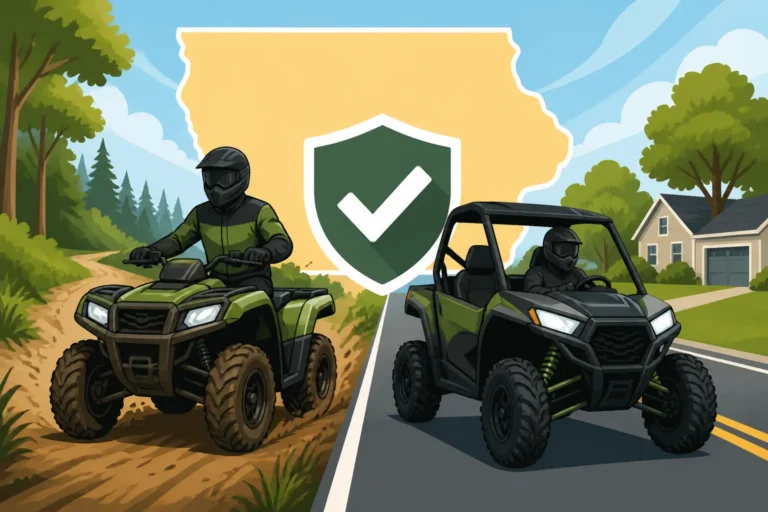
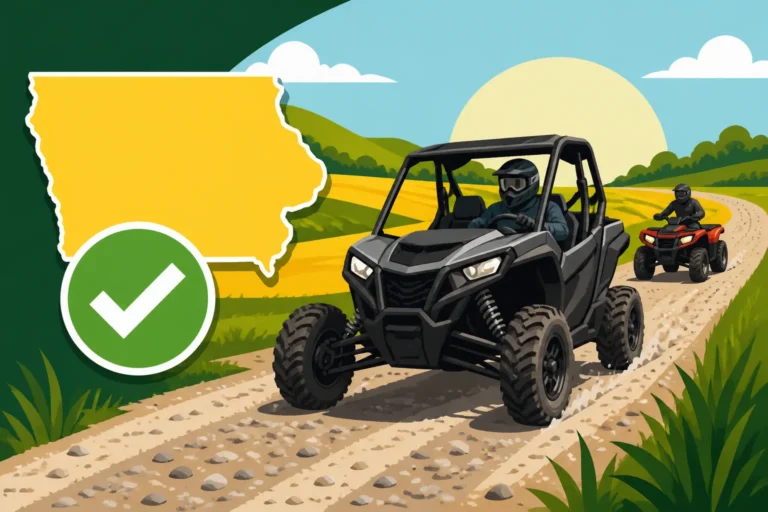
Iowa isn't like some states where you can pretty much ride an ATV or UTV anywhere. There are very specific restrictions on the types of roads you can use. Generally, ATVs and UTVs are permitted on unpaved county secondary roads, often referred to as gravel roads, unless otherwise prohibited by local ordinance. However, riding on paved county secondary roads is a different story. These require explicit authorization from the county Board of Supervisors. This means just because it's a county road, if it's paved, you can't assume you can ride it. You need to verify if that specific county has passed an ordinance allowing OHVs on its paved secondary roads. Primary highways (state roads, typically with route numbers) and interstate highways are almost universally off-limits, with very limited exceptions for direct crossings at intersections. City streets also require specific authorization by the city council.
Crucially, when you are allowed to ride on these roads, there's a strict speed limit: you cannot exceed 35 miles per hour. This applies regardless of the posted speed limit for cars. Even if a gravel road has a 55 mph limit, your ATV or UTV is capped at 35 mph. This speed restriction is in place because ATVs and UTVs handle differently than cars, especially at higher speeds, and are generally less visible and stable. Exceeding this limit is a sure way to attract attention from law enforcement. Remember, the law specifies a direct route if you are heading to an OHV park or home from one, meaning no joyriding on public roads. [Iowa Rules for Riding a Gravel Road] are a good place to start your research on specific road types.
Penalties and Enforcement: What Happens When Rules Are Broken
Nobody wants a fun day of riding to turn into a legal headache, but ignoring Iowa's ATV and UTV road use rules can lead to just that. The state and local law enforcement take these regulations seriously, and penalties can range from significant fines to having your machine impounded. It pays to understand the potential consequences so you can avoid them entirely.
Fines for Non-Compliance and Lack of Insurance
If you're caught operating your ATV or UTV on an Iowa public road without the required equipment, such as the mandated mirror, proper lighting, a horn, or an SMV triangle, you're looking at a citation. These equipment violations typically fall under scheduled fines, meaning there's a set monetary penalty. While specific amounts can vary and change, they are often substantial enough to make you wish you'd invested in that One Mirror on the Left or a proper set of brake lights.
Even more serious are offenses related to licensing and insurance. Operating without a valid driver's license when required (i.e., being under 18, or having a suspended license) or without the mandatory liability insurance can result in much heavier fines. The fine for riding without insurance, for instance, can be quite steep, and it's something deputies check during any roadside stop. This isn't just about a piece of paper; it's about financial responsibility. If you're involved in an accident and don't have insurance, you could be personally liable for tens of thousands of dollars in damages and medical bills. The [Iowa Fines for No Proof of Insurance] can be an immediate hit to your wallet, but the long-term financial risk is far greater.
Enforcement and Roadside Stops
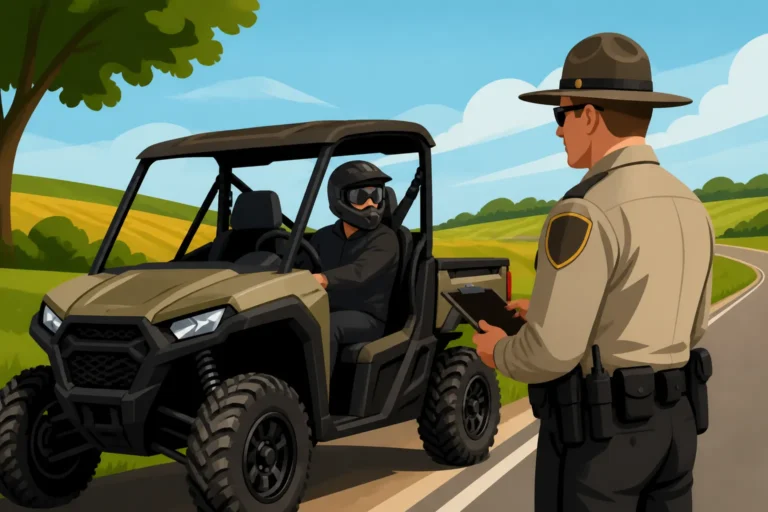
Law enforcement officers, whether they are county sheriffs' deputies, state troopers, or DNR conservation officers, are authorized to enforce these ATV and UTV road use laws. It’s a common misconception that these rules are only enforced in OHV parks; roadside stops on gravel roads or county blacktops are definitely a reality. An officer might pull you over for a visible equipment violation, like missing a mirror or an SMV triangle, or for riding on a prohibited road. During such a stop, they will likely check for your driver's license, proof of insurance, and ensure your machine is properly registered and displaying a current Iowa decal. They’ll also verify that your machine has the required equipment like the mirror and working lights.
If you're operating illegally, the officer has the discretion to issue a warning, a citation, or even, in more severe or repeated cases, impound your machine. Imagine the hassle and expense of retrieving an impounded ATV – it’s a situation no rider wants to face. It's far easier and cheaper to simply comply with the rules. Investing in quality, compliant accessories, perhaps from a trusted brand like SuperATV, and taking the time to understand Iowa's specific regulations, is the best way to ensure your rides are fun and hassle-free, rather than ending with a citation.
Disclaimer
This article is for general informational purposes only and does not constitute professional advice. Laws, prices and regulations vary by location and change over time. Consult a qualified professional for guidance on your specific situation.