Ordering a Replacement Decal From the Recorder
There are few things more frustrating than going to load up your ATV or UTV for a fantastic day of riding, only to realize that the essential registration decal has faded beyond recognition, peeled off somewhere on the trail, or simply gone missing. It's a real headache, leaving you wondering if you'll get stopped, or worse, denied entry to your favorite riding spot. This guide is here to soothe those worries by walking you through the straightforward process of ordering a replacement decal for your Iowa off-highway vehicle right from your friendly county recorder.
The Frustration of a Faded or Lost Decal
Let's be honest, we've all been there. You spend good money on your machine, you register it properly, you think you're all set. Then, one day, you glance down at that little sticker on the rear fender, and it's just… gone. Or maybe it's still there, but the once-vibrant colors and numbers have succumbed to the relentless Iowa sun, making it utterly unreadable. It's not just an aesthetic issue; it's a genuine problem that can throw a wrench in your riding plans and even lead to an uncomfortable conversation with law enforcement.
Why Your Decal Matters So Much
That small, unassuming decal isn't just a sticker; it's tangible proof that your ATV or UTV is legally registered to operate in Iowa's designated riding areas and on permissible public lands. Without a visible, unexpired decal, you’re essentially riding unregistered, even if you’ve paid all your dues. Imagine pulling up to the gate at Gypsum City OHV Park, excited for a day on the trails, only for the park attendant to point to your missing decal. Suddenly, your plans are derailed, and you might not be allowed in.
Even more seriously, getting stopped by a county sheriff's deputy or an Iowa DNR conservation officer on a gravel road or in an OHV park without a visible, valid decal can lead to fines. They need to see that sticker to confirm your compliance with Iowa law. It’s an easy thing for them to check, and it’s a non-negotiable requirement. While you might have your registration certificate handy, the decal is the quick, visual confirmation that every official looks for, proving you're legally good to go for the current year. [Getting Cited for Riding Without a Recorder Decal]
Common Causes for Decal Trouble
Our ATVs and UTVs live a tough life out on the trails. They're exposed to all sorts of elements that are brutal on a small sticker. Sunlight, with its powerful UV rays, is a notorious culprit, slowly but surely fading the colors and numbers until they're illegible. Then there's the mud, grit, water, and debris that get kicked up every time you ride, constantly abrading the decal's surface. A stray branch might scrape it right off, or aggressive cleaning with a power washer could accidentally peel it away.
Sometimes, the decal might have been improperly applied in the first place, leading to premature peeling. Or, in unfortunate cases, a machine might be involved in a minor fender-bender or accident, and the decal area sustains damage. Even simple wear and tear from leaning against the machine or transporting it can cause issues. Whatever the reason, once that decal is compromised, it needs to be replaced to avoid any potential issues on your next adventure. [When a Decal Number Fades on the Fender]
Your County Recorder: The Go-To for Replacements
When you realize your ATV or UTV decal is no longer up to snuff, your first thought might be to call the Iowa DNR or head to the local DMV. But for off-highway vehicle registration and decals, your primary point of contact is actually your county recorder's office. They are the local experts and the administrative hub for all things related to your machine's legal status in Iowa.
Why the County Recorder Handles Decals
In Iowa, the county recorder's office plays a pivotal role in the registration and titling of off-highway vehicles, boats, and snowmobiles. While the Iowa DNR sets the rules and manages the state's OHV program, it's the county recorders who handle the day-to-day processing of registrations, renewals, and, yes, replacement decals. They are the folks who have your machine's records on file, right there in your local community. This local system is designed to make it more convenient for Iowans to manage their vehicle registrations, ensuring you don't have to drive across the state just to get a new sticker. It's a system built on local accessibility, which is pretty handy when you need something as simple as a replacement decal. [Why a County Recorder and Not the DMV]
The Simple Steps to Request a Replacement
Getting a replacement decal from your county recorder is usually a pretty straightforward process. You're not applying for a new registration from scratch; you're simply requesting a duplicate of what you already have.
First, you'll want to contact your specific county recorder's office. You can usually find their number online or in your local directory. A quick phone call can confirm their hours and any specific procedures they might have. Some counties might prefer you handle it in person, while others may allow you to mail in a request. When you contact them, be ready to provide them with the details of your machine, including the VIN (Vehicle Identification Number) or serial number, and your personal information as the registered owner. Having your current, even if faded, registration certificate handy can speed things up, but they can typically look up your records based on your name and the machine's identifying numbers.
There will be a nominal fee for a replacement decal. This fee covers the administrative cost of issuing and mailing the new sticker. It’s a small price to pay for peace of mind and legal compliance. Make sure you confirm the exact fee with your county recorder's office when you call, as it can occasionally vary slightly, or they may have specific payment methods they prefer. Once you've provided the necessary information and paid the fee, the recorder's office will process your request. This is the official procedure for Ordering a Replacement Decal From the Recorder.
What to Expect After You Order Your New Decal
Once you've made the request and settled the fee, the waiting game begins. It's natural to be eager to get that new decal on your machine, especially if you have a ride planned soon. Understanding the timeline and what to do in the interim can save you some anxiety.
Processing and Arrival Times
The exact time it takes for your new decal to arrive can vary a bit depending on how you've ordered it and your specific county recorder's office. If you're able to visit the office in person, some counties might be able to provide you with a replacement decal right then and there. This is often the quickest way to get your hands on the sticker. However, if you've submitted your request by mail, or if your county office processes all decals for mail delivery, you'll need to factor in postal service times.
Generally, you can expect the new decal to arrive within two weeks of your request being processed. Sometimes it might be a bit faster, sometimes a bit slower, especially around peak registration renewal periods like September through December. It's always a good idea to confirm an estimated arrival time when you make your request. Knowing the typical timeframe helps manage expectations and allows you to plan your next ride accordingly. [Two Weeks of Post Before a Decal Lands]
Proper Placement of Your New Decal
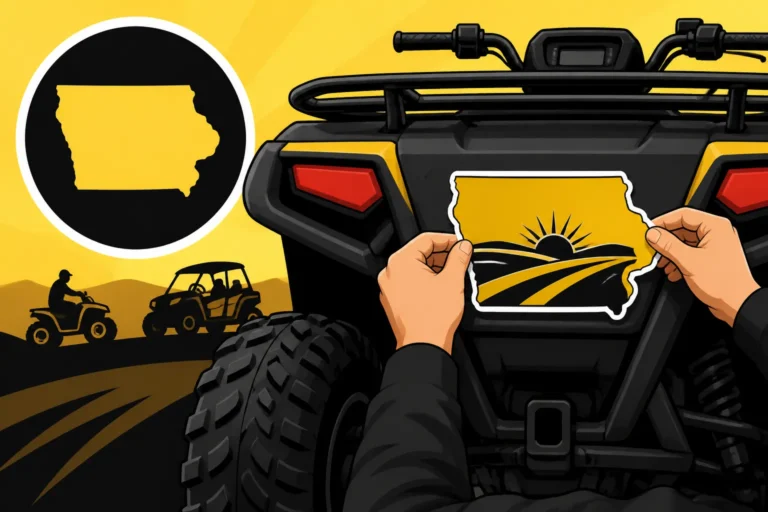
When that shiny new decal finally arrives, the next crucial step is to apply it correctly. Its effectiveness relies entirely on its visibility and permanence on your machine. Iowa law is quite specific about where the decal should be placed on your off-highway vehicle. It must be prominently displayed on the rear of the machine, specifically on the left side. This ensures it's easily seen by law enforcement and park personnel.
Before you stick it on, make sure the surface of your ATV or UTV is clean, dry, and free of any dirt, grease, or old adhesive residue. A clean surface ensures the best possible adhesion, preventing premature peeling. Iowa Admin Code 571-46.7 clearly outlines the decal placement rules, stating it "shall be affixed to the rear of the machine, on the left side, so that it is clearly visible." Taking your time to apply it straight and firmly will help it last longer. Don't cover any existing vehicle information, lights, or reflectors. [Mounting the Decal on the Rear of a Quad]
Riding While You Wait
This is where things can get a little tricky. You've ordered your replacement decal, but it hasn't arrived yet. Can you still ride? Technically, your machine's registration is still valid, but without the visible decal, you're missing the immediate proof of that validity. It's akin to having car insurance but not having your insurance card handy; you are covered, but you can't prove it on the spot.
The safest bet is always to wait for your new decal to arrive before venturing onto public land or into designated OHV parks. However, if you absolutely must ride, and especially if you're sticking to private land where registration isn't strictly required, it's wise to carry proof that you've ordered a replacement decal. This could be a receipt from the county recorder or a confirmation email if they provide one. If your old decal is still partially visible, even if faded, leave it on until the new one arrives. For public areas, be prepared for potential questions from authorities and understand that they ultimately have the discretion to issue a warning or a citation if the decal isn't visible. It's always best to err on the side of caution.
Preventing Future Decal Headaches
Dealing with a faded or lost decal is a hassle none of us want to repeat. Thankfully, there are some proactive steps you can take to protect your new decal and keep all your ATV and UTV paperwork in order, making future incidents less likely or at least easier to resolve.
Best Practices for Decal Longevity
The moment your new decal arrives, you have an opportunity to give it the best possible chance at a long, legible life. First and foremost, apply it to a spotlessly clean and dry surface. Any residual dirt or moisture will compromise the adhesive, leading to bubbling or peeling. Once applied, pressing firmly over the entire decal, especially the edges, helps create a strong bond.
Consider purchasing a clear protective film or a decal guard specifically designed for off-road vehicles. These transparent overlays act as a shield against UV rays, scratches, and abrasion from mud and debris. They're an inexpensive way to add a layer of defense. When washing your machine, be mindful of where you direct high-pressure sprayers; aiming directly at the decal can lift its edges. Finally, when your machine is parked, especially for extended periods, try to keep it out of direct sunlight if possible. A garage, shed, or even a simple cover can significantly reduce UV exposure and extend your decal's life.
Keeping Your Records Handy
Beyond the physical decal, your actual registration certificate is your ultimate proof of ownership and legal operation. It's incredibly important to keep this document safe and accessible. While you're out riding, the law requires you to carry the registration certificate with you on the machine. This doesn't mean it has to be on your person, but it must be readily available if requested by an official. A waterproof document holder secured to the machine (perhaps in a small storage compartment or under the seat) is an excellent way to do this. [Carrying the Certificate on an Iowa Ride]
Furthermore, consider keeping digital copies of your registration, title, and even a photo of your decal on your phone. This way, if the paper copy somehow gets lost or damaged on a ride, you have an immediate backup. For more organized record-keeping, especially if you buy or sell machines frequently, you might even use templates from resources like LawDepot to create a structured record of your machine's details, registration dates, and any sales or purchase agreements. Having a clear record, perhaps even a printed copy stored at home, means you're never scrambling for information when you need to order a replacement or deal with any administrative task. [An Iowa Bill of Sale for an ATV]
Here's a quick comparison of what's involved in obtaining a new registration versus a replacement decal:
| Feature | New Registration | Replacement Decal |
|---|---|---|
| Purpose | First-time registration or annual renewal | Restore proof of existing, valid registration |
| Required Documents | Title, bill of sale, owner ID, proof of sales tax paid | Owner ID, machine details (VIN), potentially old cert. |
| Cost | Base registration fee, writing fee, NRC fee | Nominal replacement fee |
| Process Complexity | More involved, verifying ownership and taxes | Simpler, focused on duplicating existing record |
| Wait Time (Mail) | Typically 2 weeks for decal and certificate | Typically 2 weeks for decal |
| Urgency to Obtain | Essential before riding on public land | Essential to avoid fines or entry denials |
| Associated Paperwork | New certificate issued | No new certificate, just a new decal |
| Where to Get It | County Recorder's Office | County Recorder's Office |
Taking these steps ensures that you spend more time enjoying Iowa's trails and less time worrying about administrative hiccups. Your county recorder is your ally in keeping your machine legally ready for adventure.
Disclaimer
This article is for general informational purposes only and does not constitute professional advice. Laws, prices and regulations vary by location and change over time. Consult a qualified professional for guidance on your specific situation.