Why Renewal Opens in September, Not January
It’s a common point of confusion for many Iowa ATV and UTV owners: your registration decal clearly states it expires on December 31st, yet the state starts letting you renew months earlier, in September. This can feel counter-intuitive, especially when you’re used to other renewals that only open right before or on the expiration date. This guide will clarify why Iowa employs this specific timeline for off-highway vehicle registration renewals, explaining the reasoning behind the September to December window and how it actually benefits you as a rider.
Understanding Iowa's OHV Registration Cycle
The Iowa Department of Natural Resources (DNR), in conjunction with your local county recorder, manages the registration of all off-highway vehicles (OHVs) in the state. While the system might seem a bit disjointed at first glance, there’s a logical and rider-friendly reason why the renewal process kicks off so far in advance of the actual expiration date. It's not just a random quirk; it's a deliberate choice designed to streamline the process for both you and the administrative offices.
The December 31st Expiration: Why it Seems Counter-Intuitive
Every single ATV and UTV registration in Iowa officially expires on December 31st of the current year. This hard deadline is set in stone, and it applies to every registered machine, regardless of when you originally purchased or registered it during the year. This can be a source of frustration because, unlike some other vehicle registrations that might be valid for a full year from the date of purchase, OHV registrations in Iowa run on a fixed calendar year. You might have just registered a new machine in August, only to realize its decal is "expiring" in a few months. This fixed date helps standardize the system across all 99 counties and simplifies enforcement, but it also creates that feeling of a looming deadline right around the holidays. Many riders feel a pinch in their wallet if they bought a machine late in the year, as they have to pay for a new decal so soon. To understand more about this, you can check out [Why Iowa Registrations Expire December 31].
For some, seeing that December 31st date can lead to a false sense of security, assuming they won't need to think about renewal until January. However, waiting until the last minute, or even after the expiration, can lead to unnecessary complications, including late fees and potential interruption of your riding season. Imagine planning a New Year's Day ride, only to realize your decal is expired and you can't hit the trails legally!
The September 1st Renewal Window: Explaining the Early Bird Approach
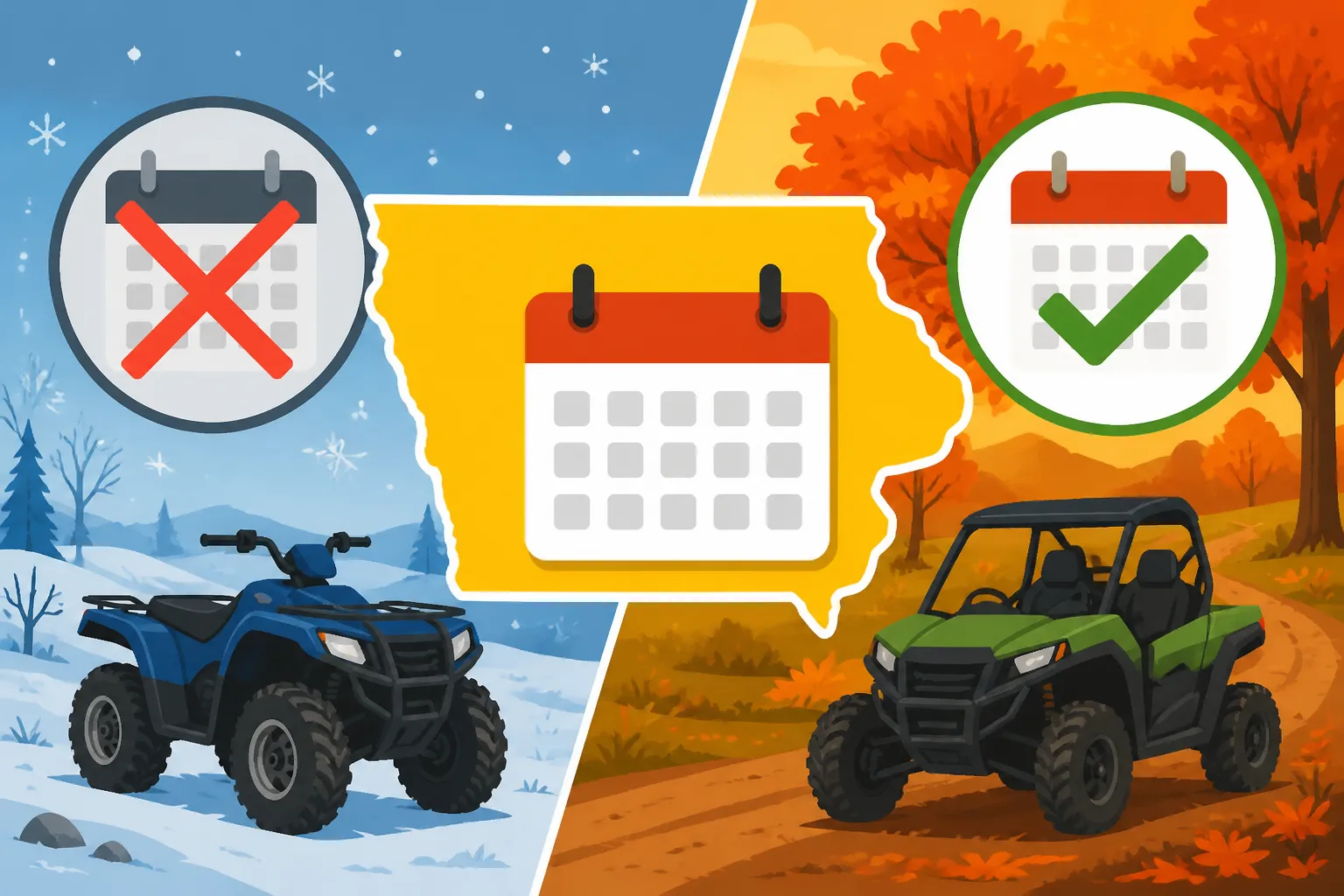
Instead of waiting for the new year, Iowa opens its OHV registration renewal window on September 1st. This means that from the very first day of September, you can initiate the process to renew your ATV or UTV registration for the upcoming year. This three-month head start—September, October, November, and December—is specifically designed to give riders ample time to complete their renewal without feeling rushed or having to deal with the inevitable holiday season chaos. This early opening is a deliberate effort to spread out the volume of renewals for the county recorder offices and to provide a convenience for riders who want to get things squared away well before the December 31st deadline.
Think about it: who wants to be scrambling to renew their ATV registration between Christmas shopping, family gatherings, and New Year's Eve plans? The state recognized this logistical challenge and built in this generous window. It's essentially an "early access" period that allows you to ensure your machine is legally ready for the next year's riding season before the current one even ends. For a deeper dive into this specific timeframe, see [Iowa's September to December Renewal Window].
The Importance of Early Renewal: Avoiding Late Fees and Interruptions
Taking advantage of the September 1st renewal opening is more than just a convenience; it's a smart strategy for any Iowa OHV owner. Renewing early means you don't have to worry about forgetting the deadline amidst other year-end responsibilities. It ensures that your new decal arrives in plenty of time before January 1st, so you can continue riding without any interruption. There’s nothing quite as frustrating as having a perfect riding day lined up, only to realize your registration is expired, and you’re stuck at home.
Beyond avoiding the headache of an expired decal, early renewal also safeguards you against potential late penalties. While some state systems might offer a grace period, Iowa has specific penalties for late renewals. By getting your renewal done in September, October, or November, you completely bypass the risk of incurring additional fees that could have been easily avoided. It also gives you peace of mind, knowing that your paperwork is in order for the next year, allowing you to focus on planning your next adventure on the trails.
The Mechanics of the Iowa Renewal Process
Understanding why the renewal window is structured this way is only part of the equation; knowing how to navigate the process is equally important. Iowa provides several convenient methods for renewing your OHV registration, aiming to make it as simple as possible for all riders. Whether you prefer the efficiency of online transactions or the personal touch of an in-person visit, there's an option for you.
How to Renew Your ATV or UTV Registration
You have a few straightforward options when it comes to renewing your Iowa ATV or UTV registration. The most popular methods include renewing online, through the mail, or in person at your local county recorder's office. Each method has its own advantages, allowing you to choose the one that best fits your schedule and preferences. Renewing online, for example, is often the quickest way to get the process started. You can typically use the Iowa DNR's licensing and registration system to submit your renewal from the comfort of your home. This digital approach is perfect for busy individuals who prefer to handle administrative tasks outside of traditional business hours.
If you prefer a more traditional route, renewing by mail is also an option. You'll typically receive a renewal notice in the mail that includes instructions and a form to send back with your payment. This can be a good choice if you like having a physical record of your transaction before you send it off. For those who appreciate direct interaction or have specific questions, visiting your county recorder's office in person is ideal. The staff there can often process your renewal on the spot and answer any queries you might have about the process. For more details on these options, consider reading [Renewing an Iowa Registration Online] and [Renewing at a County Recorder Counter].
What You Need for Renewal
Regardless of how you choose to renew, you'll need a few key pieces of information and documentation. Generally, you'll need your current registration certificate or the renewal notice you received in the mail. This document typically contains your ATV or UTV's registration number, which is essential for looking up your record. You'll also need to be prepared with the appropriate payment for the renewal fees. While the exact figures can vary over time, Iowa typically collects a base registration fee, a writing fee, and an administrative fee, all of which contribute to the overall cost of keeping your machine legal on public lands.
Sometimes, if there are any discrepancies or changes to your information, like an address change, you might need to provide additional verification. It’s always a good idea to keep accurate records of your OHV, including the original bill of sale. Services like LawDepot can be helpful if you ever need to create or secure official documentation for transactions, though for a standard renewal, your existing registration details are usually sufficient. Having all your information handy before you start the renewal process will help ensure a smooth transaction, no matter which method you choose. Knowing [What Iowa's Registration Form Asks For] can also help you prepare.
Receiving Your New Decal: The Timeline and Placement
Once your renewal is processed and your payment is confirmed, the county recorder's office will issue your new registration decal and an updated certificate. If you renew online or by mail, these items will typically be sent to you through postal service. The time it takes for your new decal to arrive can vary, but generally, you should allow a couple of weeks for delivery. This is another reason why renewing early, like in September or October, is so beneficial – it gives you a comfortable buffer for mail delivery without any last-minute stress. After all, you don't want to be waiting for your decal to arrive in the mail come January 1st if you plan to ride. Find out more at [Two Weeks of Post Before a Decal Lands].
Once you receive your new decal, it's crucial to affix it correctly to your ATV or UTV. Iowa law specifies that the decal must be mounted on the rear of the machine, typically on the left side, where it is clearly visible. This allows law enforcement and park rangers to easily verify that your machine is properly registered. It's not enough to just have the decal; it needs to be displayed according to the rules. Along with the decal, you’ll also receive a new registration certificate, which you must carry with you whenever you operate your OHV. This can be tucked into a waterproof bag on your machine or carried on your person, but it must be accessible if requested by an officer. Learn more about this at [A Decal on the Rear of an Iowa Machine] and [Carrying the Certificate on an Iowa Ride].
Why This System Benefits Riders
While the early renewal window might initially seem unusual, it's actually structured to offer significant advantages to Iowa OHV enthusiasts. This proactive approach by the state helps both the administrative process run smoother and ensures a better, uninterrupted experience for riders throughout the year. It's a system designed with foresight, aiming to prevent bottlenecks and promote continuous access to Iowa's beautiful trails and riding areas.
Spreading Out the Administrative Load: Easing the Burden on County Recorders
Imagine if every single ATV and UTV owner in Iowa waited until the last week of December, or even the first week of January, to renew their registrations. The sheer volume of transactions would overwhelm county recorder offices across the state. Staff would be swamped, wait times would skyrocket, and the potential for errors or delays would increase dramatically. By opening the renewal period in September, the Iowa DNR and county recorders effectively spread out this massive administrative workload over four months.
This staggered approach means that the dedicated staff at your local county recorder, whether in Mahaska County or Webster County, can process renewals at a more manageable pace. It allows them to provide better service, answer questions more thoroughly, and minimize processing errors. This ultimately benefits you, the rider, by ensuring a more efficient and less stressful renewal experience, especially if you have questions or need personalized assistance.
Avoiding the Holiday Rush: A Smoother Process for Everyone
The end of the year is already a busy time for most people. Between holiday preparations, family commitments, and winding down personal and professional affairs, adding "renew ATV registration" to a long to-do list is rarely welcome. The September 1st opening deliberately steers clear of this December crunch. It allows you to get your renewal handled long before the holiday season truly kicks in.
This foresight means you can enjoy your holidays without the nagging worry of an impending registration deadline. It prevents the frustration of trying to get paperwork done when offices might have reduced hours, or when you simply don't have the mental bandwidth for it. By providing this extended window, Iowa aims to take one administrative task off your plate during what is already a hectic time of year, making the overall experience much smoother for everyone involved.
Ensuring Continuous Riding Access: No Lapse in Registration
Perhaps the most significant benefit of the early renewal period for riders is the guarantee of continuous, uninterrupted riding access. If you renew in September, October, or November, your new decal will arrive well before December 31st. This means that when January 1st rolls around, your machine is already legally registered for the new year, and you can hit the trails without a second thought. There's no period of limbo where your decal has expired, and you're waiting for the new one to arrive in the mail.
This is especially crucial for riders who enjoy winter riding or those who plan early season trips. Imagine heading to Gypsum City OHV Park on January 2nd, only to find out your decal from the previous year is expired, and you can't ride. The early renewal process eliminates this possibility, ensuring that your OHV remains legal and trail-ready from day one of the new calendar year. This seamless transition is a testament to the system's design, prioritizing continuous enjoyment for Iowa's OHV community.
Common Pitfalls and How to Avoid Them
Even with the convenience of an early renewal window, it's still possible to run into issues if you're not careful. Many riders, despite the best intentions, find themselves facing problems due to misunderstanding the deadlines or simply forgetting amidst their busy lives. Knowing these common pitfalls can help you proactively avoid them and ensure your ATV or UTV remains legal to operate on Iowa's public lands.
The Dreaded Late Penalty: What Happens If You Miss the Window
While the renewal window opens in September, the actual deadline for avoiding a lapse is December 31st. If you allow your registration to expire on December 31st and don't renew before then, you might face a late penalty. Iowa has specific regulations regarding late renewals, which typically involve an additional fee on top of your standard registration costs. This penalty isn't just a minor inconvenience; it's an extra expense that could have been completely avoided by renewing within the designated September-December window. This penalty is in place to encourage timely renewals and help fund the state's OHV programs.
Falling into the late penalty trap is a common frustration, especially for those who genuinely forgot or were caught up in holiday travel. It's a costly reminder that even with a generous head start, ignoring the deadline can have financial consequences. To understand the specifics, you can refer to [Iowa's Late Registration Penalty]. It is always better to act proactively, perhaps marking your calendar for September 1st each year, to ensure you don't incur these avoidable charges.
Riding on an Expired Decal: The Legal Consequences
Perhaps even more serious than a late penalty is the legal ramification of riding your ATV or UTV with an expired registration decal. Operating an unregistered or improperly registered OHV on any public land, including designated OHV parks, public trails, or even on roads where OHV use is permitted, can lead to a citation. A conservation officer, county sheriff's deputy, or local police officer can pull you over and issue a fine for riding without current registration. The fines for such an offense can be substantial, making it a much more expensive oversight than simply paying a late renewal fee.
Beyond the monetary fine, having an expired decal can also complicate matters in the event of an accident. While your primary concern should always be safety and following the rules, an expired registration can add another layer of legal trouble. It's a basic requirement for legal operation, so ensuring your decal is current is paramount. It's just not worth the risk of a citation or worse, so always double-check your decal before you head out, especially after the new year.
Planning Ahead: Setting Reminders and Gathering Documents
The best way to avoid all the pitfalls associated with OHV registration renewal is to plan ahead. Mark your calendar for September 1st as a yearly reminder to check your ATV and UTV registrations. Many people set a reminder on their phone or add it to a digital calendar to pop up automatically. This simple step can save you a lot of headache and money down the line.
Additionally, keep all your OHV documents, including your current registration certificate, in a safe and easily accessible place. If you ever needed to replace a title or acquire a bill of sale, services like LawDepot can assist in drafting formal documents. While less common for simple renewals, having well-organized records can be a lifesaver if you ever need to clarify ownership or registration history. When your renewal notice arrives in the mail, don't set it aside and forget about it; take action promptly. By being proactive and organized, you can enjoy Iowa's fantastic OHV opportunities without any unnecessary stress or legal issues. It simply allows you to focus on the joy of riding, knowing all your paperwork is in perfect order, perhaps even after having used the [Renewing Through the DNR License System] for extra convenience.
| Aspect of Renewal | Description | Benefit for Riders |
|---|---|---|
| Renewal Window | September 1 – December 31 | Ample time, avoids holiday rush, spread workload |
| Expiration Date | December 31 | Standardized, but requires awareness of early renewal |
| Renewal Methods | Online, Mail, In-person | Flexibility and convenience for all preferences |
| Required Items | Current registration/notice, payment | Simple process, easy to prepare for |
| Decal Arrival | Typically 1-2 weeks by mail | Allows for early application, ensures readiness by Jan 1 |
| Late Penalties | Additional fees applied | Encourages timely renewal, funds OHV programs |
| Riding with Expired Decal | Risk of citation and fines | Emphasizes importance of compliance and planning |
Disclaimer
This article is for general informational purposes only and does not constitute professional advice. Laws, prices and regulations vary by location and change over time. Consult a qualified professional for guidance on your specific situation.