Where to Register an ATV in Iowa
Navigating the world of ATV and UTV registration in Iowa can feel like a bit of a maze, especially if you're new to the off-road scene or just bought your first machine. You might wonder if you're headed to the local Department of Motor Vehicles, the Department of Natural Resources, or some other office entirely, and what exactly you'll need to bring with you. This comprehensive guide will clear up all that confusion, walking you through exactly where to go and what steps to take to get your quad or side-by-side legally registered and ready for the Iowa trails.
The Essential Hub: Your County Recorder's Office
When it comes to registering and titling your ATV, UTV, or dirt bike in Iowa, forget about the DMV or the DNR directly. The vast majority of off-highway vehicle (OHV) transactions in the state happen right in your local county. Your first and most important stop will be the County Recorder's Office. This often comes as a surprise to many, who naturally assume vehicles of any kind would go through the same channels as their cars and trucks.
The Iowa Department of Natural Resources (DNR) oversees the statewide OHV program, sets the rules, and manages the trail system, but they delegate the actual boots-on-the-ground processing of registrations and titles to each of Iowa's 99 county recorder offices. This decentralized system means that no matter where you live in Iowa – be it a bustling city like Des Moines or a smaller town in Mahaska County – your county recorder is the one-stop shop for all your OHV paperwork. This setup streamlines the process for residents, allowing you to handle these tasks close to home, rather than traveling to a distant state office.
These offices are set up to handle all initial registrations, renewals, title transfers, and even issue duplicate decals or certificates if yours gets lost or damaged. So, when you're ready to get that new-to-you quad officially recognized, or if you've just moved to the state with an out-of-state machine, head straight for your county recorder. They're the experts on [Registering an ATV in Iowa] and ensuring you meet all the state's requirements.
Why Not the DMV or DNR?
It’s a common and completely understandable assumption that anything with an engine would be registered at the Department of Motor Vehicles, just like your car or truck. However, ATVs and UTVs are classified differently under Iowa law. They are not considered "motor vehicles" in the same way your daily driver is, especially since they're primarily designed for off-road use, even if there are specific rules for [Riding an ATV on Iowa Roads]. The DMV handles highway-legal vehicles, while off-highway vehicles fall under a different regulatory umbrella managed by the DNR, but executed by the county recorders.
Similarly, while the DNR is the overarching authority for [The Iowa DNR and Off-Highway Vehicles], they don't have public-facing counters for processing individual registrations. Their role is more about establishing the guidelines, managing the grant funds derived from registration fees to maintain trails, and enforcing regulations. Think of it this way: the DNR writes the playbook, but the County Recorder's Office helps you get your player's permit to get on the field. This division of labor has been standard practice in Iowa for many years and is consistent across all counties, meaning you won't find different rules or locations for registration depending on where you reside.
What to Bring for ATV/UTV Registration and Titling
Preparing for your visit to the County Recorder's Office can save you a ton of time and hassle. Nothing is more frustrating than making a trip only to realize you've forgotten a crucial document or don't have the correct payment. To make sure your registration and titling process goes smoothly, gather these items before you head out the door. The requirements can vary slightly depending on whether you're titling a brand-new machine, buying a used one, or just renewing an existing registration.
Essential Documents for Initial Registration
For a brand-new ATV or UTV purchased from an Iowa dealer, the dealer will often handle much of the initial paperwork for you, sometimes even submitting it to the county recorder directly. However, if you're handling it yourself, or buying a used machine, you'll absolutely need:
- Manufacturer's Statement of Origin (MSO) or previous title: If your machine is brand new, you'll get an MSO from the dealer. This document certifies the vehicle's origins and serves as the initial "title." For a used machine, you'll need the current Iowa title, properly signed over by the seller. If the machine is from out-of-state and has a title, bring that. If it's a very old machine without a title (which is rare for ATVs but can happen with some older vehicles), be prepared to discuss options with the recorder, as [Do You Need a Title for an ATV in Iowa?] is a common question.
- Bill of Sale: This is crucial, especially for private sales. A bill of sale should clearly identify the machine (make, model, year, VIN/serial number), the buyer and seller's information, the purchase price, and the date of sale. You can find generic templates online, and even resources like LawDepot offer customizable bill of sale forms, which can be immensely helpful in ensuring all necessary information is captured legally. This document is not just for your records; it's often used by the recorder to verify the purchase price for sales tax purposes.
- Application for Registration and Title: The county recorder will have these forms on hand, but you can sometimes download and pre-fill them from the Iowa DNR website. This form, often referred to as [What Iowa's Registration Form Asks For], will require details about you (the owner) and the machine itself.
- Proof of Identity: A valid driver's license or state-issued ID is usually sufficient.
For machines bought privately, ensure the seller has properly signed off on the title, and that any liens have been satisfied and released. This can be a sticky point, so always scrutinize the title before handing over payment.
Understanding the Fees
Iowa's registration and titling fees are pretty standardized, but they involve several components that get rolled into one payment at the county recorder. It's not just one lump sum; it's a combination of different charges. You'll want to be prepared for the total cost.
Here's a breakdown of the typical fees you'll encounter for a new registration and title:
- Registration Fee: This is the core yearly fee for the right to operate your OHV. Part of this is [The $15 Base Fee Inside an Iowa Registration] which goes directly to the OHV fund.
- Writing Fee: A small administrative charge, often [The $2 Writing Fee on Every Registration], helps cover the county recorder's costs for processing the paperwork.
- License Agent Fee: Another small fee, typically [Why a $1 License Agent Fee Is Added], which also contributes to the administrative costs of the county office.
- NRC Administration Fee: This is another small charge, often called [The Iowa NRC Administration Fee], which helps fund the DNR's Natural Resource Commission.
- Title Fee: For a new title, expect to pay [Iowa's $13.50 ATV Title Fee]. This is a one-time fee unless the title is transferred to a new owner.
- Lien Notation Fee: If you're financing your ATV or UTV, the lender will typically have a lien placed on the title. There will be a fee for [Iowa's $13.50 Lien Notation Fee] to record this lien on your title.
- Sales Tax: This is often the largest component. Iowa charges state sales tax on the purchase price of your ATV or UTV, even if it's a private sale. The county recorder collects this tax when you register the machine. [Iowa ATV Sales Tax Rate] is typically 6%, plus any local option sales tax, bringing it to 7% in most areas. This can sometimes catch buyers off guard, so factor it into your budget.
Payment is usually accepted in the form of cash, check, or sometimes debit/credit card (though cards may incur an additional processing fee). Always check with your specific county recorder's office about their accepted payment methods before you go.
What Happens After You Register Your ATV/UTV
Once you've submitted all your paperwork and paid the necessary fees at the County Recorder's Office, you're not quite ready to hit the trails just yet. There's a short waiting period for your official registration materials to arrive. Understanding what to expect next can help manage your excitement and ensure you're fully compliant with Iowa's regulations.
Receiving Your Decal and Certificate
After your registration is processed, the county recorder's office will typically issue you a temporary registration or receipt. This allows you to legally operate your machine while you wait for your official decal and registration certificate to arrive in the mail. The official documents are generally mailed from a central printing facility, not directly from the county office.
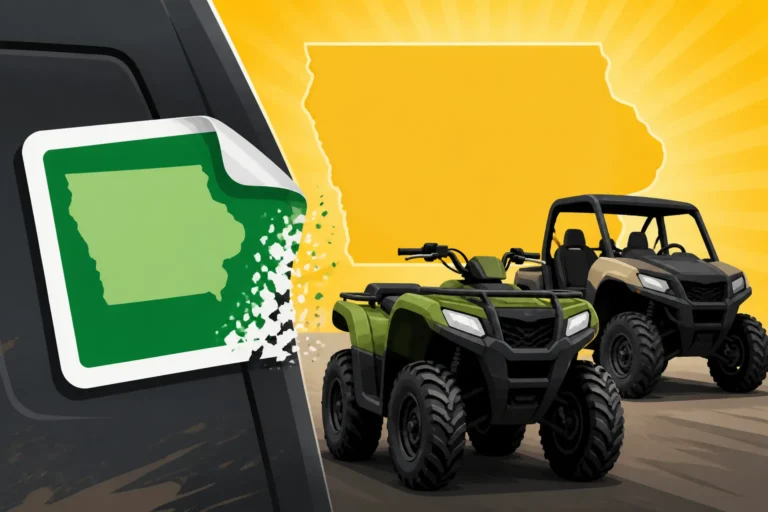
You can usually expect your decal and certificate within [Two Weeks Before an Iowa Decal Arrives]. This decal is a critically important piece of identification for your ATV or UTV. It contains your unique registration number and the expiration date. Iowa law is quite specific about [Where the Iowa Decal Mounts]: it must be affixed to the rear of your machine, clearly visible. This allows law enforcement and park rangers to easily verify your registration without having to stop you. Your registration certificate, a small paper document, should always be carried with you whenever you're operating the machine. While many riders carry it in a waterproof pouch on the machine itself, others prefer to keep it in their pocket or wallet. The key is that it must be immediately accessible if requested by an official.
Understanding the Registration Cycle
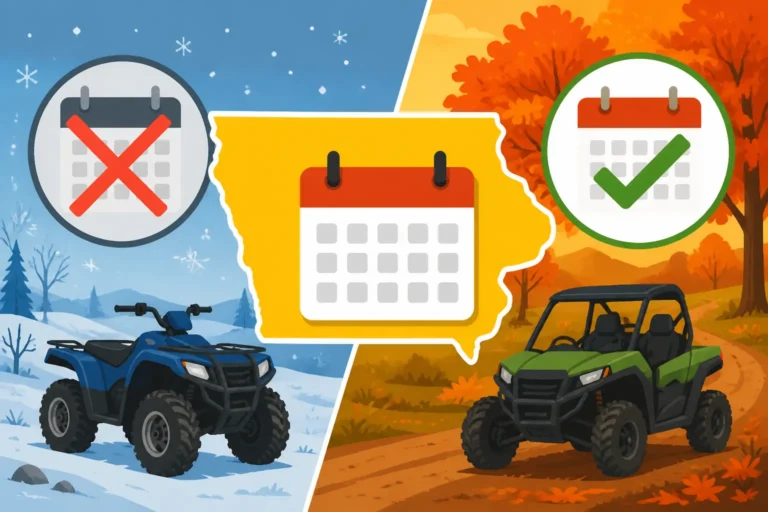
Iowa ATV and UTV registrations operate on a calendar year cycle. Regardless of when you register your machine, all registrations expire on December 31st of the current year. This is a crucial point that often surprises new owners. So, if you register your machine in October, that registration is only valid until December 31st of that same year. However, the system is designed to allow for early renewals. [Iowa's September to December Renewal Window] opens on September 1st, giving you ample time to renew for the upcoming year without having to rush in January. This way, you can get your new decal and be ready to ride as soon as the new year begins.
Renewing your registration is a simpler process than initial registration. You can often [Renewing an Iowa Registration Online] through the DNR's license system, or you can go back to your [Renewing at a County Recorder Counter] in person. For online renewals, you'll usually need your current registration number.
What If You Can't Go to the Recorder in Person?
Life gets busy, and sometimes a trip to the County Recorder's Office during business hours isn't feasible. While initial registration and titling almost always require an in-person visit (or at least someone submitting the original documents on your behalf, like a dealer), there are some options for other situations.
Renewing by Mail or Online
For existing registrations, you have more flexibility. Many county recorder offices will allow you to renew your ATV or UTV registration by mail. This typically involves sending in your renewal notice (which you should receive in the mail before the renewal window opens), along with a check or money order for the applicable fees. This is a convenient option if you live far from your county seat or have a packed schedule.
As mentioned, online renewal is also an option for current registrations. The Iowa DNR's licensing system allows you to pay your renewal fees electronically and have your new decal and certificate mailed to you. This is by far the most convenient method for many riders, saving a trip and fitting into almost any schedule. Just remember, this online option is generally for renewals only, not for initial registration or title transfers. If you're buying a used machine or bringing one into the state, an in-person visit (or dealer assistance) is still the standard.
Addressing Unique Situations
Occasionally, you might encounter situations that aren't straightforward, like [Registering an Inherited Machine in Iowa] or dealing with a machine that has never been titled. In these cases, it's always best to call your specific county recorder's office beforehand. They can provide precise guidance on what documents you'll need, if any additional affidavits are required (which resources like LawDepot can sometimes help draft), and what the process will entail. They deal with all sorts of unique scenarios and are your best resource for navigating any specific hurdles you might face. They want to help you get your machine legally registered so you can enjoy Iowa's fantastic trail system and designated riding areas.
| Registration Type | Primary Location to Register | Required Documents (Common) | Typical Fees Involved (Shape of Cost) | Online Option? |
|---|---|---|---|---|
| Initial Registration | County Recorder's Office | MSO/Previous Title, Bill of Sale, Application, ID | Registration Fee, Title Fee, Writing Fee, Agent Fee, NRC Fee, Sales Tax, (Lien Fee if applicable) | No (must be in person/dealer) |
| Renewal | County Recorder's Office | Renewal Notice/Current Registration Number, Application | Registration Fee, Writing Fee, Agent Fee, NRC Fee | Yes (Iowa DNR online system) |
| Title Transfer | County Recorder's Office | Signed-over Title, Bill of Sale, Application, ID | Title Fee, Registration Fee, Writing Fee, Agent Fee, NRC Fee, Sales Tax, (Lien Fee if applicable) | No (must be in person) |
| Duplicate Decal/Cert | County Recorder's Office | Application for Duplicate, ID | Small administrative fee (e.g., [Iowa ATV Duplicate Registration Cost]) | Some counties may allow by mail |
Remember, your County Recorder's Office is there to help make this process as smooth as possible. Don't hesitate to reach out to them directly with any questions you have about your specific situation.
Disclaimer
This article is for general informational purposes only and does not constitute professional advice. Laws, prices and regulations vary by location and change over time. Consult a qualified professional for guidance on your specific situation.