Carrying the Certificate on an Iowa Ride
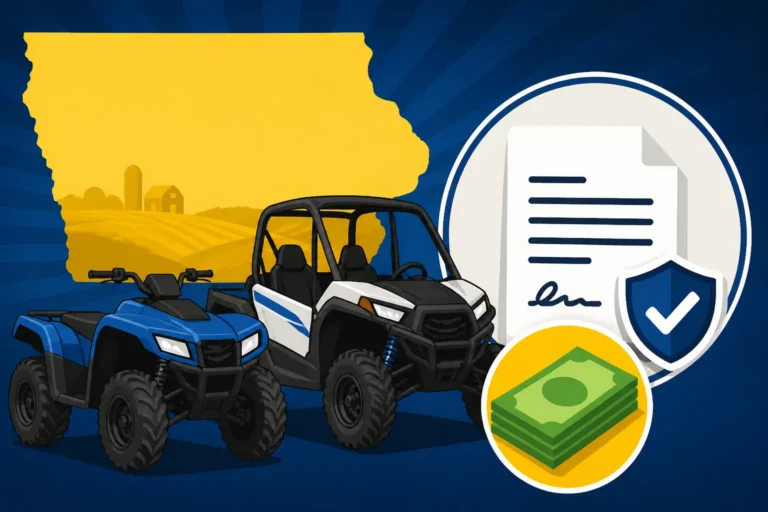
There's nothing quite like the freedom of exploring Iowa's diverse landscapes on your ATV or UTV, whether it's tackling the trails at Gypsum City or cruising down a quiet gravel road. But before you hit the throttle, many riders find themselves wondering about the necessary paperwork: specifically, "Do I really need to carry my ATV registration certificate with me?" This guide will clear up that confusion, explaining why having your certificate on hand is crucial, where to keep it safe, and what to do if it goes missing, ensuring your next ride is worry-free and legal.
The Mandate: Why Your Certificate Needs to Be With You
Picture this: you're out enjoying a beautiful Saturday ride, perhaps just off Highway 20 near Fort Dodge, and you encounter a DNR officer or a county sheriff's deputy. Their job is to ensure everyone is riding safely and legally. One of the first things they'll likely ask for, right after checking your decal, is your registration certificate. It's not just a suggestion; it's a requirement rooted in Iowa law.
The Legal Requirement for Iowa Riders
Iowa Code is pretty clear on this: when you operate an ATV or UTV on any public land or designated trail in the state, your registration certificate must be available for inspection. This isn't just about proving you've paid your dues; it's about establishing ownership and the machine's legal status. For riders in Iowa, this means that dusty piece of paper from the county recorder's office isn't just a receipt; it's your permission slip to be out there. Failing to produce it upon request can lead to a citation, which can quickly turn a fun day into a frustrating one, potentially involving a fine or even a temporary impoundment of your machine until proper documentation can be verified. It's a hassle no one wants, especially when it could be easily avoided by simply having the document handy.
Think about it like your driver's license in your car. You wouldn't drive around without that, right? The principle is much the same for your off-highway vehicle. The authorities need a quick way to verify that the machine you're operating is properly registered and that you're authorized to operate it. It helps prevent theft, ensures that all riders are contributing to trail maintenance through their registration fees, and generally keeps order on our public riding areas.
What the Certificate Actually Proves
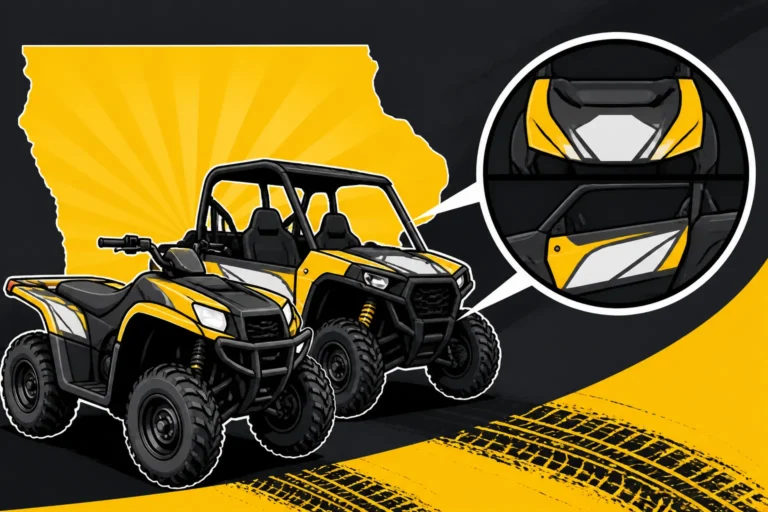
Your registration certificate is much more than just a slip of paper. It’s the official document that ties you, the owner, to your specific ATV or UTV. It contains vital information such as the machine's unique identification number (VIN), make, model, and year. Crucially, it also states the current registration period and confirms that the annual fees have been paid. This certificate is the proof that corresponds to the physical decal mounted on the rear of your machine. [A Decal on the Rear of an Iowa Machine]
When an officer asks to see your certificate, they're cross-referencing this information. They're making sure the VIN on your paperwork matches the VIN on your machine and that the current registration year is valid. This verification process is a critical step in maintaining safety and legality across Iowa's OHV trails and public lands. It also serves as a quick reference for law enforcement if a machine is reported stolen, helping them quickly identify legitimate owners from those who might be operating a machine illegally. So, while it might feel like just another piece of paper, it's actually the cornerstone of your legal right to ride. You can imagine the frustration and delays if you can't prove that the machine you're on, especially if you bought it used, is legally yours and current on its registration.
Where to Safely Stash Your Paperwork on the Trail
So, you know you need to carry it. The next big question is, where? Iowa's trails aren't known for being pristine, dust-free environments. They're often muddy, wet, and bumpy, meaning any paperwork needs serious protection if it's going to survive a season, let alone a single intense ride.
The 'On the Machine' Rule Versus Your Pocket
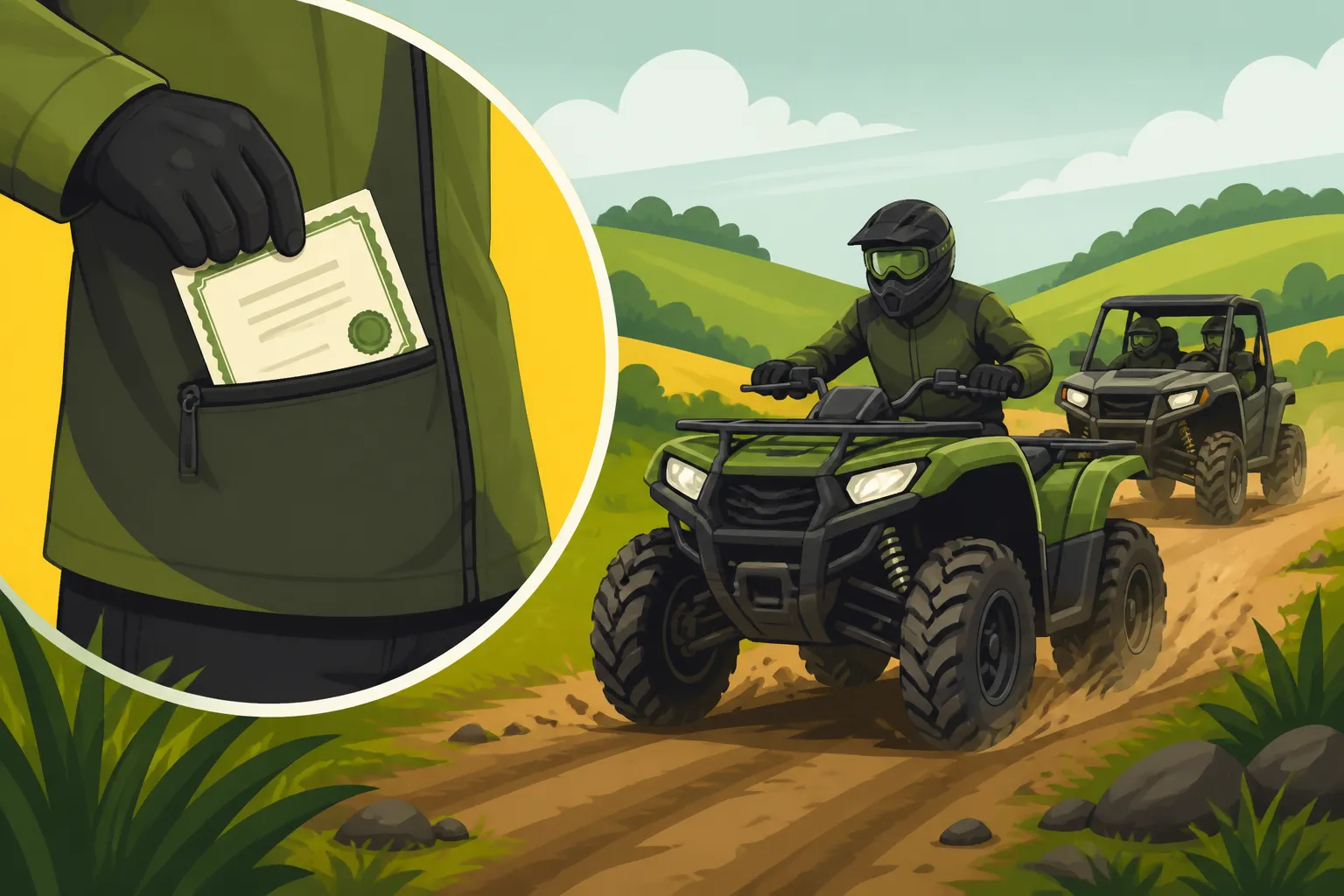
Many riders instinctively reach for their wallet or jacket pocket for important documents. While convenient for your driver's license, the registration certificate for your ATV or UTV has a slightly different, though unwritten, best practice. While the law simply states it must be "available for inspection," the spirit of the rule often implies it should be with the machine itself. This means tucking it into a secured storage compartment on your ATV or UTV is generally preferred over carrying it in your personal riding gear, especially if you might hop off for a moment and leave your machine briefly unattended.
Imagine you're riding with a group near Rathbun and you decide to swap machines for a few minutes with a buddy. If the certificate is in your pocket, it's now separated from the machine it belongs to, which could cause a headache if your friend gets stopped. By keeping it securely on the machine – perhaps in a waterproof case in a storage box, or under the seat if your model allows – you ensure that the documentation always stays with the registered vehicle, regardless of who is operating it at that moment. This approach is highly recommended for clarity and convenience, both for you and for any officer conducting a check.
Protecting Your Documents from the Elements and Trail Grime
Iowa weather can be unpredictable. One minute it's sunny, the next you're riding through a downpour that turns the trail into a mud bog. Your paper registration certificate, already feeling a bit flimsy after a few trips, needs serious protection. Simply stuffing it into a glove compartment or under the seat without a barrier is a recipe for a soggy, illegible mess.
A truly effective solution involves a waterproof container. A small, robust dry bag, a hard-sided Pelican-style case, or even a heavy-duty zip-top freezer bag can work wonders. Many riders opt to laminate their registration certificate. While this makes it waterproof and durable, remember that you might need access to the original if you ever have to renew or transfer ownership, so a copy might be more appropriate for lamination, while the original is kept safe elsewhere or is also carried but in original form. Another popular method is to place the original certificate inside a clear plastic sleeve and then tuck that into a dedicated, watertight compartment on your machine, such as a sturdy cargo box or a specific storage area designed for documents. This ensures that come rain, mud, or dust, your certificate remains readable and intact, ready for inspection at any moment, like on a dusty day out at Bluff Creek. Making sure your document can survive the rigors of the trail is just as important as remembering to bring it along.
What to Do If You Forget or Lose Your Certificate
Life happens. Maybe you forgot to move the certificate from your old jacket to your new one, or perhaps it slipped out of a less-than-secure spot on a bumpy ride. It's frustrating, but it's not the end of the world. Knowing the steps to take can alleviate a lot of stress.
Facing a Roadside Stop Without Your Paperwork
If you find yourself pulled over and realize you don't have your registration certificate, don't panic. The first step, as always, is to be polite and cooperative with the officer. Explain the situation honestly. They might be understanding, especially if your decal is clearly displayed and current. However, they are within their rights to issue you a citation for not having the document available. This could result in a fine, and depending on the officer and the circumstances, they might even require you to produce the certificate at the county recorder's office within a certain timeframe to prove it was valid at the time of the stop.
In some cases, especially if there are other questionable aspects to the stop (like riding in an unauthorized area or unsafe operation), the lack of a certificate could lead to further scrutiny. It's a headache you want to avoid. The best-case scenario is a warning and a reminder. The worst-case could be a more significant penalty. Remember that ignorance of the law is generally not considered a valid excuse. Having your registration proof with you is a responsibility that comes with the privilege of riding these machines. Even if you've recently completed your [Registering an ATV in Iowa] process, you're not fully compliant until that physical certificate is on hand.
Getting a Duplicate Registration Certificate
If your registration certificate is lost, stolen, or damaged beyond recognition, you'll need to obtain a duplicate. This isn't a complex process, thankfully. You'll need to head to your local Iowa county recorder's office, which is where you initially registered your machine. They are the keepers of these records. When you go, be prepared to provide proof of your identity (like a driver's license) and information about your ATV or UTV, such as its VIN.
There will be a small fee for a duplicate certificate, but it’s a necessary expense to ensure you’re riding legally and avoid potential fines down the road. For specifics on the cost, it's always best to check with your county recorder's office or the Iowa DNR website, as these figures can shift. Many riders use services like LawDepot for various legal documents, and while they don't handle state registration certificates, they highlight the general importance of having official paperwork in order for things like bills of sale or permission to ride on private land. The process at the recorder's office is usually quick, and you'll typically leave with your new duplicate certificate in hand. Don't delay in getting a replacement; riding without one is technically riding in violation of state law, even if your original registration is active.
Common Misconceptions and Best Practices
When you're dealing with multiple documents related to your ATV or UTV, it's easy to get them mixed up. Registration certificates, titles, and safety certificates all serve distinct purposes. Understanding these differences is key to staying compliant and riding smart.
Don't Confuse Registration with Title or Safety Certificates
It’s a common pitfall: assuming all your ATV-related documents are interchangeable. They are absolutely not! Your registration certificate is your annual proof that you've paid the necessary fees to operate your machine on public lands and designated trails for the current year. Think of it like your vehicle's annual plate sticker. Your title, on the other hand, is the legal document proving ownership of the ATV or UTV. It's like the deed to your house or the title to your car. You only get a new title when you buy or sell a machine, and it's not something you typically carry with you on every ride. You'll need it when you go through [Iowa ATV Title Requirements] during a sale or purchase.
Then there's the safety certificate. In Iowa, this is a document typically required for riders aged 12 to 17 who operate an ATV or UTV on public lands. It proves they've completed an approved OHV safety course. [Iowa ATV Safety Certificate Requirements] While incredibly important for young riders, it is not a substitute for the machine's registration certificate. Each document serves a unique purpose, and confusing them could lead to issues. Always ensure you have the correct document for the situation at hand. For instance, an adult rider might not need a safety certificate, but they absolutely need the machine's registration certificate.
Preparing for a Ride: A Pre-Trip Checklist for Documents
The best defense against a forgotten certificate or a roadside hassle is a solid pre-ride routine. Just like you'd check your tire pressure and fuel level, a quick document check should be part of your ritual before you head out, especially for a big trip to a popular spot like Gypsum City OHV Park.
Here’s a quick checklist to help you stay on top of things:
- Registration Certificate: Is the original (or a legally acceptable copy, if permitted by your county recorder) secured in a waterproof holder on your ATV/UTV? Is it current? Remember, [Why Iowa Registration Expires December 31].
- Driver's License/ID: Do you have your valid driver's license or state ID on your person? This is crucial if you're riding on public roads where it might be required.
- Safety Certificate (if applicable): If you're a rider aged 12-17, is your OHV safety certificate with you?
- Insurance Card (if applicable): If you plan to ride on public roads, you’ll need proof of insurance. Is it readily accessible?
- Permission Slip: If riding on private land that isn't yours, do you have written permission from the landowner? This is a great place where a simple template from a site like LawDepot can come in handy for documenting agreements.
Making this a habit ensures you're always prepared. It takes just a minute but can save you hours of trouble and potential fines.
| Document Type | Purpose | Must Carry on Ride? | Where to Keep It | Notes |
|---|---|---|---|---|
| Registration Cert. | Proof of current annual registration for machine | Yes | Waterproof holder on machine | Original preferred; confirms current fees and machine details |
| Driver's License/ID | Proof of identity and driving privilege | Yes (on person) | Wallet/pocket | Required for road use, helpful for any identification |
| Safety Certificate | Proof of OHV safety course completion | Yes (if applicable) | Wallet/pocket or on machine | For riders 12-17; proves competence |
| Insurance Card | Proof of liability coverage (for road use) | Yes (if applicable) | Wallet/pocket or waterproof holder on machine | Crucial for road-legal operation |
| Title | Proof of ownership of the machine | No | Secure at home | For buying/selling; do NOT carry on every ride |
| Permission Slip | Written permission to ride on private property | Yes (if applicable) | Waterproof holder on machine | Essential to avoid trespassing charges on non-public land |
Non-Resident Considerations and Borrowed Machines
The rules aren't just for Iowa residents and their own machines. If you're visiting from out of state or borrowing an ATV or UTV from a friend, there are still important considerations regarding carrying the correct documentation. It all comes back to ensuring every machine on public land is accounted for and legally authorized to be there.
Visiting Iowa: What Out-of-State Riders Need
Iowa welcomes out-of-state riders to explore its trails, but just like residents, visitors have responsibilities regarding paperwork. If your ATV or UTV is registered in another state, Iowa generally honors that registration. However, you absolutely must carry your home state's valid registration certificate with you while riding in Iowa. This proves that your machine is legally registered in your state of residence.
Additionally, non-residents planning to ride on Iowa's public lands or designated trails will need to purchase an Iowa Nonresident User Permit. This is an annual permit that acts as Iowa's equivalent to a sticker or pass for your out-of-state machine. It signals that you've contributed to Iowa's trail system funds, similar to how Iowa residents pay their registration fees. You can typically purchase this permit online through [The Iowa DNR and Off-Highway Vehicles] or at various vendor locations across the state. Once you have it, display it properly on your machine and, crucially, carry your home-state registration certificate alongside it. An officer will expect to see both if you're visiting from a neighboring state like Minnesota or Missouri. For details on how to get it, check out [Iowa's Nonresident User Permit].
Riding a Borrowed Machine: Special Considerations
Let's say your buddy offers to let you take their UTV for a spin at Nicholson-Ford OHV Park. It's a generous offer, but you need to be mindful of the documentation. When you're riding a machine that isn't registered in your name, you still need to have that machine's current registration certificate with you. It doesn't matter who is operating it; the machine itself must be legally registered and have its certificate accessible.
Beyond just the registration, it's highly advisable to carry written permission from the owner if you're operating their ATV or UTV. This can be a simple note stating they've given you permission to use the machine, including their contact information and the machine's details (VIN, make, model). While not strictly mandated by law in all situations, it can save you a lot of grief if you're stopped and questioned by law enforcement. It provides immediate proof that you're not operating a stolen machine and that the owner is aware of its use. A quick, easy-to-create document from a service like LawDepot can be a perfect solution here, formalizing the permission and giving you peace of mind. Without it, you might find yourself in an awkward situation, having to call the owner to verify, potentially delaying your ride significantly.
Disclaimer
This article is for general informational purposes only and does not constitute professional advice. Laws, prices and regulations vary by location and change over time. Consult a qualified professional for guidance on your specific situation.