Iowa Rules for Filming at a Park
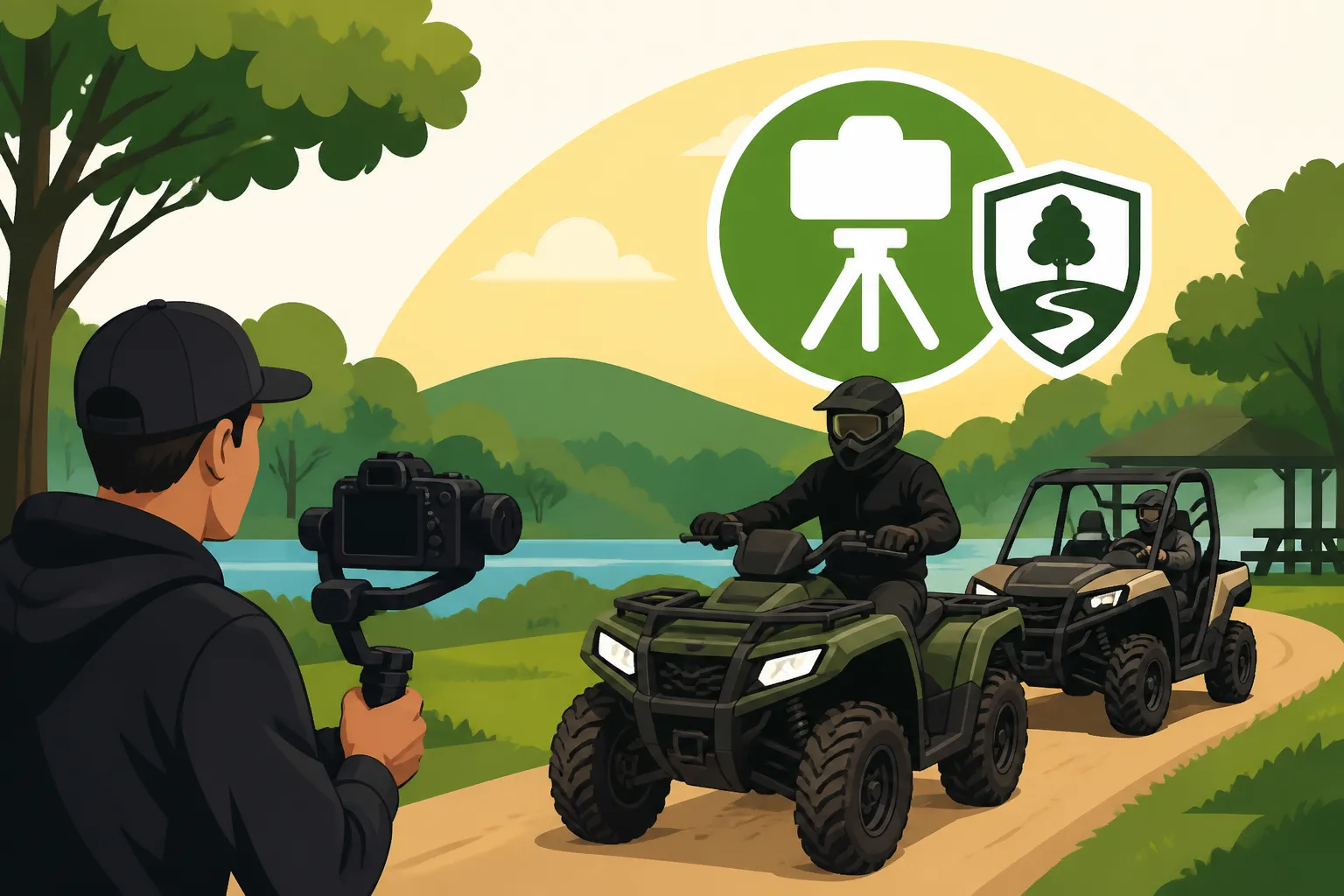
Filming an ATV or UTV ride in an Iowa park can seem simple until a camera, crew, drone, or commercial purpose changes what the site allows. Rules can depend on who manages the property and whether filming affects other riders. Check with the park manager before you load up, and plan the shoot so it does not interfere with trail access or safety.
Start by identifying who manages the park
There is no single filming rule that automatically covers every Iowa off-highway vehicle park. A site may be managed by a county, city, club, or another organization, and its operating rules and permission process can differ. Even if a park is open to riders, that does not necessarily mean every kind of filming is allowed without coordination.
First, identify the exact property and its manager. Then ask whether your proposed filming is covered by ordinary visitor use or needs advance approval. Describe the shoot plainly: whether it is personal or commercial, how many people will attend, what equipment you will bring, and whether you plan to interview riders or feature the park itself.
This distinction matters because a rider recording a few clips for personal use creates a different footprint from a production that brings a crew, sets up equipment, blocks a trail, or promotes a paid product. A manager may also want to know whether filming will take place during normal operating hours and whether it could interfere with other visitors.
| Type of filming | What to clarify with the manager |
|---|---|
| Personal riding clips | Whether ordinary handheld or mounted cameras are allowed and where they can be used safely |
| Group video | Whether the group needs to coordinate its arrival, staging area, or filming schedule |
| Promotional or commercial production | Whether written permission, insurance information, or other arrangements are needed |
| Interviews or identifiable footage | How to avoid recording people who have not agreed to be included |
| Drone footage | Whether aircraft are allowed at that location and what separate rules apply |
| Filming during an event | Whether event approval covers filming or the camera activity needs separate review |
Do not assume that a park’s general admission rules also answer questions about commercial production, filming in restricted areas, or using a drone. Ask the manager directly, preferably before the planned filming date. If the site has a posted policy or application process, follow that process rather than relying on a casual conversation with another visitor.
If the shoot is connected to a group ride, race, or organized gathering, clarify both the filming and event requirements. Permission to film does not automatically authorize an organized activity, and event approval may not cover every production detail. See Iowa Rules for an Organized Ride and Applying to the County for a Special Event Permit for related considerations. For activities that need advance planning, Lead Time on an Iowa Event Permit can help explain why it is wise not to leave the request until the last minute.
What to ask before bringing cameras and crew
A short, specific request helps the manager assess the shoot. Include the date or date range, expected arrival time, number of participants, equipment, and intended filming locations. Explain whether the footage is for personal use, a club, a business, or paid advertising. If you expect to publish or sell the footage, say so; the purpose can affect what the manager needs to review.
Ask whether permission must be written and whether there are conditions. Possible conditions might involve where you can set up, how many people can participate, which areas must remain clear, or whether filming is limited to certain times. Do not assume these conditions apply at every Iowa park; the point is to get the rules for the location you will actually use.
It is also worth asking what the park expects if conditions change. A trail may close because it is wet or otherwise unsuitable, or a manager may need to limit access for maintenance. Check the site’s current status before departing, and be prepared to cancel or move the shoot if filming would put riders, staff, or property at risk. Reading the Iowa DNR Alert Feed and Calling a Park Before You Load offer practical ways to check park conditions and avoid an unnecessary trip.
If you are filming on a marked trail, stay within the permitted riding area. A camera operator, tripod, lighting stand, or parked vehicle can create an obstruction even when the riders are following the trail. Ask where equipment can be placed without narrowing a route or blocking access for other visitors. Never treat an unmarked shoulder or closed section as an acceptable filming location simply because it provides a better camera angle. See [Iowa Rules for Riding Off the Trail] and [Iowa Fines for Riding a Closed Trail] for the riding rules that remain relevant while a camera is rolling.
Commercial filming and insurance
A commercial project may need more coordination than casual footage. A park manager may ask about the production’s purpose, crew size, equipment, vehicle access, or insurance. The specific requirements depend on the site and the project, so ask what documentation is needed rather than assuming that a standard permit or policy covers every situation.
Be clear about what the production will do. A small camera mounted on a rider’s machine is not the same operational setup as a crew carrying bulky equipment into a trail area. If you intend to interview participants, stage repeated passes, reserve a location, or film a product demonstration, explain those details before receiving approval. The manager can then tell you whether the proposal fits ordinary use or needs additional arrangements.
If your project is tied to an event or guided activity, ask which approval covers which part of the plan. A permit for an organized ride may not automatically authorize a commercial shoot, and filming permission may not replace the approval required to host a group event. For guidance about event insurance considerations, see Insurance an Iowa Organizer Carries. Confirm the answer with the park manager for your specific production.
Keep filming safe and respectful
Filming should never make a trail less safe for riders or visitors. Plan the camera position before anyone starts riding, and keep operators, tripods, bags, and vehicles out of the travel path. Do not ask a rider to make a risky pass, ride faster than conditions allow, or repeat a maneuver in a way that conflicts with the park’s rules. A shot is not worth creating a collision hazard.
If you are filming from a machine, secure the camera and mount so they do not interfere with steering, visibility, protective equipment, or safe operation. Check that loose straps and accessories cannot snag. A helmet camera or handlebar camera does not give the operator permission to ride beyond their ability or to disregard posted rules. If equipment shifts or distracts the rider, stop and correct it before continuing.
When filming other visitors, ask before making them a clear subject of the footage. Someone in the background of a broad trail scene is different from an interview, close-up, or scene that identifies a person. Children deserve particular care: do not assume a parent or guardian has agreed simply because a child is riding in the park. If someone declines, change the framing or wait until the person is out of view.
Respect the park’s ordinary access rules while you work. Keep paths open, follow staff directions, and do not enter closed areas to capture footage. Avoid staging equipment where it could block emergency access or make a narrow section difficult to pass. If staff ask you to pause, move, or stop filming, comply and clarify any next steps with the manager.
Trail conditions matter as much as camera placement. Iowa riding areas can be affected by wet conditions, and a production schedule should not pressure riders to use a trail that is closed or unsuitable. Check for updates before the trip and again on arrival when practical. If the park closes or restricts an area, change the plan instead of trying to find a way around the restriction. Iowa Trails Closed After Rain explains why a wet-weather closure is more than a scheduling inconvenience.
Drones need a separate check
Do not assume that permission to film on the ground also allows drone use. Aircraft can raise separate safety, property, privacy, and airspace questions. Ask the park manager whether drones are allowed at the site and whether the proposed operation needs any additional approval. Then confirm the applicable aviation rules through the proper official channels before flying.
A drone can affect people who are not part of the production, including riders who may be startled or distracted by it. Avoid flying over active riding areas unless the relevant rules and the park manager’s requirements clearly allow the plan. If permission is uncertain, leave the drone at home and use a ground-based camera.
A practical permission checklist
Use this sequence before filming so that a simple ride does not turn into a preventable conflict with the park or other visitors.
- Name the location. Confirm the exact park and identify its current manager. Do not rely on a rule from another park, even if the two sites have similar trails.
- Describe the project. Explain whether the footage is personal, club-related, promotional, or commercial. Include the expected date, group size, equipment, and intended locations.
- Ask about approval. Find out whether permission is needed, whether it must be written, and whether the manager has an application or other process.
- Clarify limits. Ask about trail access, staging, filming hours, interviews, drones, equipment placement, insurance, and any restrictions on publishing or commercial use.
- Check conditions. Review current closures and contact the park if the status is unclear. If the site is closed or the proposed area is restricted, reschedule or revise the plan.
- Brief everyone. Tell riders and crew where they may go, where equipment will be placed, and what to do if another visitor or park employee needs access.
- Keep proof of permission. If the manager approves the project, save the written response or other instructions and make sure the person leading the shoot can refer to them.
- Follow directions on site. Conditions can change. Pause filming if staff request it or if equipment, weather, or traffic makes the planned setup unsafe.
For ordinary visitor access, remember that an Iowa registration decal is not the same as permission to conduct a production or reserve space. The decal’s role is explained in Your Registration Decal Is the Park Admission, but it does not resolve every filming question. Confirm the filming plan separately with the property manager.
If your video includes riders, machines, or a specific park, make sure the final edit does not give viewers the wrong impression about access. Do not present a closed trail as open, imply that a location permits conduct it prohibits, or remove context that would make a risky maneuver appear routine. Responsible filming starts with permission, but it also includes showing the park and its rules accurately.
Frequently Asked Questions
Can I record a personal ride without asking?
Possibly, but it depends on the park’s rules and how you film. Ask the manager if the policy is unclear, especially if you will use mounted equipment, set up gear, film other visitors, or enter areas that are not open to riders.
Does commercial filming always require a permit?
Not necessarily under one universal rule for every Iowa park. The property manager determines what approval is required at that location. Describe the project and ask whether written permission, insurance information, or other arrangements are needed.
Can I fly a drone to film a park?
Do not assume so. Check with the park manager and confirm any applicable aviation requirements before flying. Ground-filming permission does not automatically authorize drone use.
Does event approval include filming?
It may not. Ask whether the event approval covers the production activity, equipment, and intended use of the footage. Get clarification before advertising or staging a shoot.
Disclaimer
This article is for general informational purposes only and does not constitute professional advice. Laws, prices and regulations vary by location and change over time. Consult a qualified professional for guidance on your specific situation.