800 Acres Outside Fort Dodge
Gypsum City OHV Park gives Iowa riders a place to spend a full day on trails just outside Fort Dodge, but planning matters: trail conditions can change, the site has different riding areas, and a long drive is frustrating if the park is closed or your machine is not ready. This guide covers what to expect, how to plan your visit, and what to check before unloading.
What to expect at Gypsum City OHV Park
An expansive riding area near Fort Dodge
Gypsum City OHV Park is a large off-highway vehicle riding area in Webster County, near Fort Dodge. Its roughly 800 acres offer room to explore beyond a single short loop, making it an appealing destination for riders who want to spend several hours on the machine. The scale is part of the draw, but it also means a little planning helps: think about your group’s experience, the kind of riding you enjoy, and how much time you want to spend navigating the park.
The setting is different from a groomed road route. Expect a trail experience shaped by natural terrain and changing conditions, rather than a predictable ride from one paved surface to the next. A route that feels manageable in dry weather may be more demanding after rain, and riders in a group may have different comfort levels with hills, turns, or rough patches. Before you head out, agree on a pace and a plan for regrouping if someone falls behind.
If you are comparing destinations, [Best Places to Ride an ATV in Iowa] can help put Gypsum City in the wider picture. For a closer look at the area’s size and location, see [Gypsum City OHV Park at Fort Dodge] and [65 Miles in Webster County]. Treat mileage and acreage as an indication of the park’s scale, not a promise that every route will suit every rider on every visit.
More than one kind of riding
Gypsum City is known for its extensive trail system, and the riding options include more than simply following a single trail loop. The park also has a motocross track and a kids’ track, giving families and riders with different interests a reason to plan their day around more than one area. These facilities serve different purposes, so check current rules and access details before assuming a particular track is open or suitable for your machine.
A motocross track is not the same as a casual trail. It can involve a different pace, terrain, and skill demand, so riders should be honest about their experience and avoid treating it as an easy shortcut. Families bringing younger riders can look into [Gypsum City's Kids' Track for Young Riders] and [Putting a Child on the Gypsum City Kids' Track]. A child’s comfort, machine size, protective gear, and supervision all matter; a dedicated youth area does not remove the need to make a sensible riding plan.
A useful way to think about the park is as a collection of riding experiences within one destination. You might spend most of your visit on the trails, take a break, and then explore another area if it fits your group and the day’s conditions. For track-specific planning, [Gypsum City's Motocross Track and Who Rides It] offers a more focused overview.
| Park feature | What it may mean for your visit | What to check before you go |
|---|---|---|
| Large trail area | Plenty of room for a longer outing, with routes that may vary in difficulty | Current trail status, map, and conditions |
| Motocross track | A distinct riding experience from the trail loops | Track access, rules, and suitability for your skill level |
| Kids’ track | A separate area to consider for younger riders | Age or machine guidance, supervision, and current access |
| Campground | Potentially useful for making a ride into a longer stay | Availability, site details, and campground rules |
Plan the ride before you leave Fort Dodge
Check conditions and closures
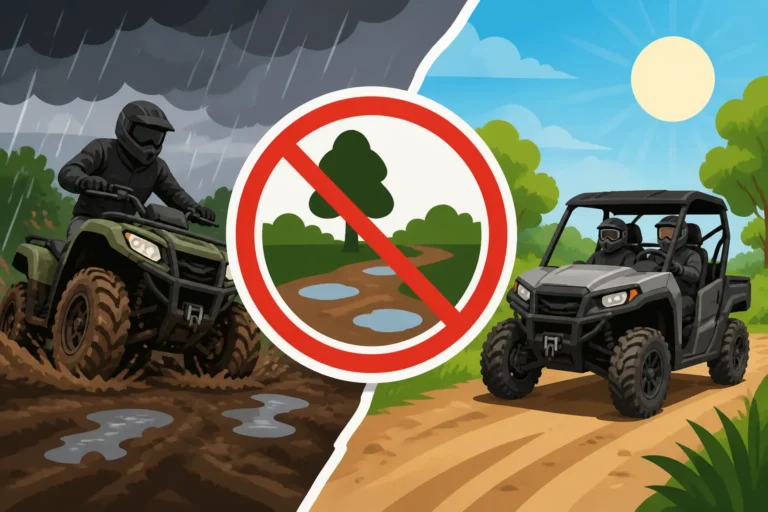
Trail conditions can shift quickly in Iowa. Rain can turn clay into slick, difficult ground, and riding while trails are too wet can cause damage that lasts long after one muddy weekend. A route that was enjoyable on a dry afternoon may be uncomfortable or unsafe after a storm. If the weather has been unsettled, check for park updates before packing the trailer rather than relying on an old social post or someone’s memory of a previous visit.
Build a second option into your day. If Gypsum City is closed or conditions are not suitable, you may prefer to postpone rather than drive to a different park without checking it first. [Iowa's Weather-Driven Trail Closures] explains why closures happen, while [Iowa Trail Conditions Before You Ride] and [Iowa Trail Closures to Check First] are useful reminders to check more than just the forecast.
onX Offroad can help you orient yourself and plan a general route, but use it as one planning aid rather than as the final word on park access or today’s conditions. Check park information for current closures, local rules, and any changes that may not appear on a third-party map. Before leaving, confirm the destination, parking approach, and whether your group has a reliable way to regroup if riders become separated.
Bring what the ride actually needs
A good day starts before the machine reaches the trailhead. Check the basics at home: tires, brakes, fuel, lights, and any equipment needed for your particular machine. Bring water, suitable clothing, and a way to handle a minor problem, such as a loose strap or a small mechanical issue. If you are riding with children or inexperienced guests, allow extra time for gear checks and explain how the group will communicate and stop.
Trail rides can take longer than expected, especially when a group pauses to regroup, navigates unfamiliar turns, or encounters a slow section. Plan your fuel and daylight with room to spare rather than assuming you will finish at a particular time. If you are towing from outside Fort Dodge, think through the whole trip: where you will park, where tie-downs and gear will go after unloading, and what you will do if the weather changes while you are riding.
A navigation app such as onX Offroad may be helpful for reviewing the broader area and keeping your ride organized. Still, do not let a phone replace a clear meeting plan. Make sure everyone knows where to stop if separated, and carry a charged device or another practical communication option. For broader preparation advice, [Iowa Trail Maps From the DNR] and [Trailering an ATV Across Iowa] are useful related reads.
Make the park work for your group
Choose routes that match your riders
A mixed-experience group is common: one person may ride often, another may be returning after a long break, and a younger rider may be learning. The best plan is not necessarily the longest route. Start with terrain and pace that the least experienced rider can manage, and keep the more challenging options for later if everyone feels comfortable. Agree ahead of time that anyone can ask to slow down or take a break without holding up the group.
Families should pay particular attention to machine fit and supervision. A machine that feels small in a driveway can behave very differently on uneven ground, while a young rider may tire sooner than an adult expects. Discuss basic riding expectations before starting, including spacing, stopping at turns, and what to do if someone has a problem. If your group includes children, review [Riding With Children at an Iowa Park] and [Iowa Trails Good for Kids] as part of your planning.
onX Offroad can help a group discuss possible routes in advance, but the ride itself should remain flexible. If a trail feels beyond someone’s ability or conditions are deteriorating, choose a more comfortable option or head back. A satisfying day is one where the whole group finishes safely, not one where everyone has to prove they can complete the most demanding route.
Consider camping for a longer visit
If you are travelling a meaningful distance, camping can turn a single-day ride into a more relaxed trip. Gypsum City has a campground, but the details that matter to your group—availability, facilities, site arrangements, and rules—should be confirmed before you set off. Do not assume there will be space simply because the park is open, especially if you are planning around a busy weekend or a particular event.
Camping also changes what you need to pack. Keep riding equipment separate from food, bedding, and clothing so that unloading does not become a search through the trailer. Think about where wet gear will go, how you will keep essentials secure, and whether your group needs a backup plan if the weather turns. If you are bringing a trailer or several machines, check the campground and parking arrangements ahead of time rather than expecting every setup to fit every site.
For more detailed preparation, see [Gypsum City's Thirty-Three Site Campground] and [Camping at an Iowa OHV Park]. These can help you think through the camping side of the trip, but confirm current details directly before making plans. If you only have one day, a simple ride plan and a clear return time may be a better fit than trying to squeeze in camping and every riding area.
Practical checks before you ride
Confirm access, rules, and machine requirements
Before loading, confirm that the park is open and that the area you intend to use is accessible. Review the rules that apply to your machine and your group, including registration or permit requirements, safety requirements, and any restrictions on where you may ride. Rules can depend on the machine, the rider, and where the ride takes place, so do not assume that requirements for one type of vehicle automatically apply to another.
If you are visiting from outside Iowa, check what documentation or permit applies to your situation before you travel. The useful details may differ for a resident and a nonresident, and riding at a designated park is not a reason to skip checking the requirements. See [Iowa ORV Permits Explained] and [Iowa's Permit for a Visiting Machine] for background, then confirm the applicable requirements for your specific machine and visit.
Also make sure the group understands where riding is permitted. Stay on designated routes and respect signs and closures. A closed section or an unofficial shortcut may look harmless, but using it can damage trails and create problems for other riders. If you are unsure about a rule, ask the park or check its posted guidance before riding rather than trying to resolve the question after you are on the trail.
Have a realistic day-of plan
A simple plan can prevent the little problems that turn into a frustrating afternoon. Decide when you want to arrive, where the group will meet, which areas you hope to ride, and when you will check in with one another. Leave room for unloading, safety checks, breaks, and a slower return. If someone is towing separately or arriving later, agree on a meeting point rather than relying on a phone call at the last minute.
Keep the plan adaptable. If the trail is wet, a track is unavailable, or one rider is tiring, change the day rather than pushing through. Watch for updates before driving and again when you arrive, and follow the posted instructions at the site. A route-planning tool such as onX Offroad can support preparation, but local signs and park updates should guide decisions on the ground.
Most of all, leave time to load out carefully. Check that everyone has their gear and personal items, inspect the machines for damage or loose equipment, and secure everything before leaving the parking area. That final pause is especially helpful after a muddy ride, when straps, gloves, and small tools can disappear into the mess. A little organization at the end of the day makes the drive home safer and the next trip easier to plan.
Disclaimer
This article is for general informational purposes only and does not constitute professional advice. Laws, prices and regulations vary by location and change over time. Consult a qualified professional for guidance on your specific situation.