Riding With Children at an Iowa Park
Taking children to an Iowa OHV park can turn stressful fast when a trail is muddier, busier, or more challenging than it looked at home. A little planning helps you choose a suitable riding area, match the route to your child’s experience, and avoid common safety and rule surprises. This guide covers practical ways to make a family ride safer and more enjoyable.
Choose an Iowa riding area that fits your family
Look for a suitable place to start
Not every park or trail is equally comfortable for a young or inexperienced rider. Before loading up, check the riding area’s current conditions, access rules, and any information about trails or tracks intended for younger riders. Gypsum City OHV Park near Fort Dodge is known for having a kids’ track, which may offer a more manageable introduction than sending a child onto unfamiliar trails. Even so, check the park’s current rules and conditions before you go.
Other destinations, such as Bluff Creek OHV Park near Eddyville and Lakeview OHV Park near Solon, may suit families with different experience levels. The best choice is not necessarily the park with the most miles or the biggest features. It is the place where you can find riding that matches your child’s ability, take breaks without hassle, and turn around easily if the day is not going well. For an overview of places to consider, see Iowa Trails Good for Kids and Iowa Trail Difficulty Ratings.
A child who is comfortable riding on a familiar flat path may still find a new park intimidating. Noise, dust, slopes, traffic, and other machines can make a trail feel very different from a quiet ride at home. If your child is new to off-road riding, choose a small, low-pressure first outing rather than planning a full day of ambitious trails.
Check conditions and park information before leaving
A trail that was easy on a dry afternoon may be slippery or deeply rutted after rain. Iowa clay can become slick, and soft ground can hide uneven spots. Check the park’s condition information before loading the trailer, and look for closure notices. A closed or saturated trail is not a good place to test a child’s confidence—or your own machine’s limits. These related guides can help you plan: Iowa Trail Conditions Before You Ride and Iowa Trail Closures to Check First.
Think through the drive as well as the ride. Confirm where you will park and unload, whether the park has facilities your family needs, and how much riding time you can reasonably manage. A long drive followed by an all-day ride can leave younger children overtired before the difficult parts of the day even begin. If you are choosing between parks, Iowa OHV Parks Near Des Moines or another location guide can help you compare options by region.
Mapping tools can be useful for reviewing a route and keeping track of where you are, but do not let a screen replace posted signs, park maps, or good judgment on the trail. Some riders use onX Offroad to help plan a route before heading out; it can be one part of preparation, alongside checking park information and carrying a dependable way to communicate. Keep a child close enough to receive clear directions, and do not assume every mapped line is open or appropriate for their skill level.
Prepare your child, machine, and gear
Match the machine to the rider
A child needs a machine that fits their size, experience, and ability to operate its controls safely. Have them demonstrate that they can reach and use the controls, maintain a steady grip, and understand how to stop. If they struggle to control the machine while stationary or at low speed, a busy park trail is not the place to find out whether they can manage it.
Never treat an adult-sized machine as a shortcut to avoid outgrowing a youth model. A larger or more powerful ATV can be harder to steer and stop, particularly on loose ground or a slope. Make the machine choice based on the rider, not just the length of the planned ride. For more guidance, see Choosing a First Machine for Iowa Parks and Youth Machine Sizes and Iowa Rules.
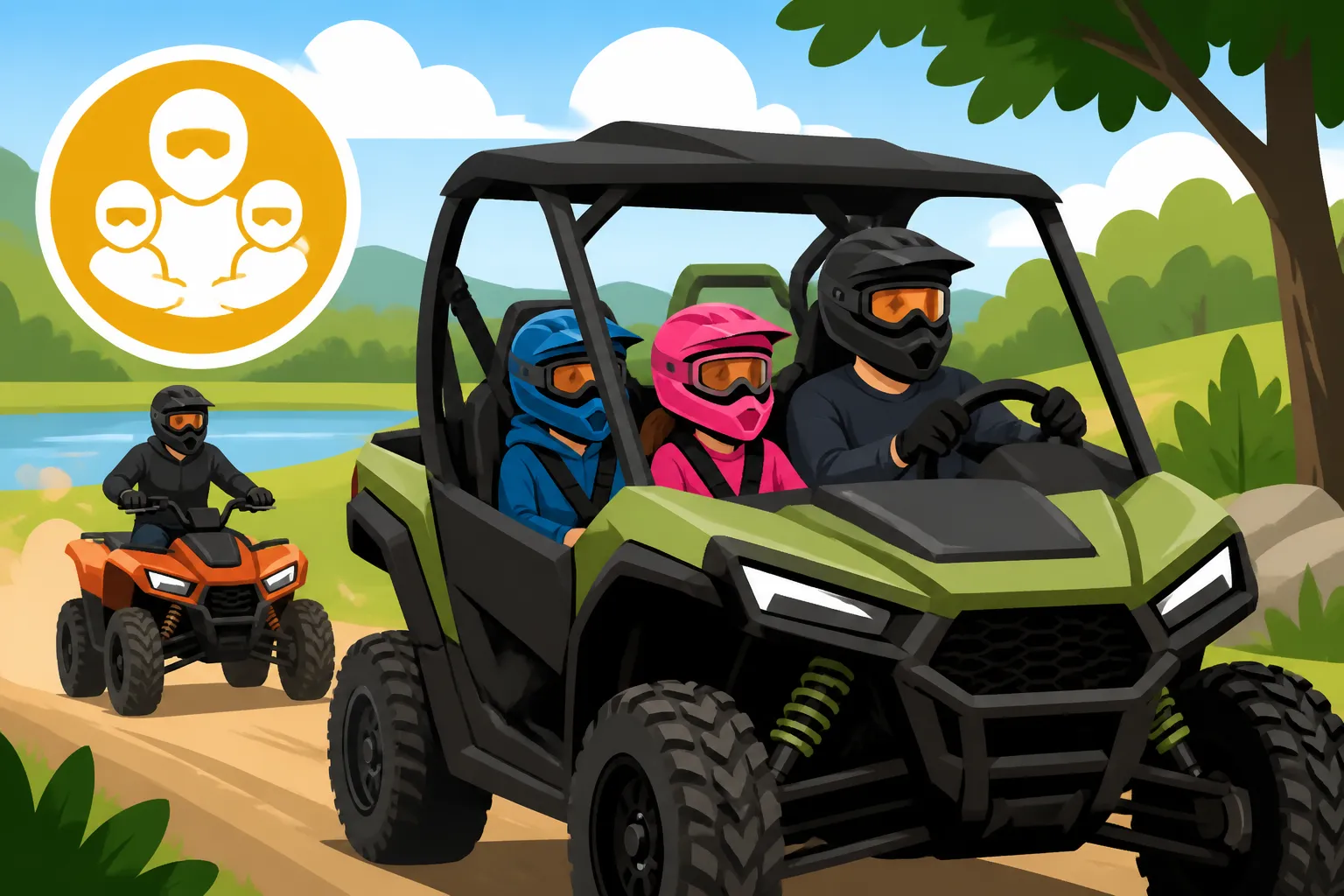
An ATV and a side-by-side are not interchangeable when it comes to carrying children. Follow the machine manufacturer’s passenger and seating instructions. A child should not ride as a passenger on an ATV that is designed for one rider. In a UTV, use an appropriate seat and restraint system, and make sure the child can sit securely with the belt properly fitted. Do not assume that holding on is an adequate substitute for a passenger seat and restraint.
Make protective gear part of the plan
A properly fitted helmet is essential for an off-road ride with a child. Add eye protection, gloves, long sleeves, long pants, and sturdy footwear that covers the feet and ankles. Gear should fit well enough to stay in place without restricting movement. A helmet that slides around or blocks a child’s vision can create its own problem, so check the fit before you leave home.
Park rules can add requirements, and they may differ by location. Paul Huting Recreation Area at Waterloo, for example, has a helmet requirement. Confirm the rules for your intended park rather than assuming that one park’s policy applies everywhere. Keep the child’s gear on for the whole riding session, including slow practice laps and the ride back to the staging area.
Pack for the conditions, not just the forecast. Bring water, snacks, a basic first-aid kit, spare layers, and any necessary medication. Dust, wind, heat, and cold can wear children down quicker than expected. A child who is thirsty, chilled, or upset may have a harder time listening and responding safely. You can also use Riding With a Group Across Two Iowa Parks as a reminder to plan for communication and regrouping when family members are riding together.
Set clear rules before the wheels turn
Cover the rules and responsibilities that apply
Iowa rules can depend on where the machine is being operated, the type of machine, and the rider’s age. For example, Iowa has a safety-certificate requirement for certain young ATV and off-road vehicle operators on designated riding areas. The rules differ by machine type, and a side-by-side operator is treated differently from an ATV operator. Check the requirements for your child and machine before the trip; Iowa ATV Safety Certificate Requirements and Iowa Supervision Rules for Riders Under 12 are useful starting points.
Also confirm that the machine has the required registration or permit for the ride. Do not assume that a child riding with a parent is exempt from rules that apply to the machine or riding area. If you are visiting from outside Iowa, check whether your home-state registration is recognized and whether a nonresident permit is needed. Do Visitors Need an Iowa ATV Permit? explains the visitor question in more detail.
A quick pre-ride talk can cover the most important expectations: follow posted signs, stay on designated trails, keep a safe distance, and stop when the adult calls. Agree on what to do if the child cannot see the lead rider, gets separated, or feels uncomfortable. Keep the instructions simple and repeat them before each new section of trail.
Agree on a pace and a stopping plan
Ride at the pace of the least experienced person, not the fastest machine in the group. Leave enough space between riders to avoid dust and sudden stops, but keep the child within sight and hearing. If visibility drops or the trail gets noisy, stop in a safe place and regroup rather than trying to communicate over engine noise.
Before a ride, tell your child where you will stop and what signal means “stop now.” A simple hand signal or agreed-upon verbal cue is easier to remember than a long list of instructions. Explain that stopping is always allowed: if a hill, rut, or busy stretch feels too difficult, the child should wait for an adult rather than attempting it to keep up.
Use a route you can shorten. A loop that sounds manageable on a map may feel long after a few rough sections, especially for a child operating a machine for the first time. A route-planning tool such as onX Offroad may help you discuss possible paths ahead of time, but confirm your route against official park information and signs once you arrive. For a broader overview of designated riding locations, see Where to Ride an ATV in Iowa.
| Family planning question | What to check before the ride |
|---|---|
| Is the park a good fit? | Look for suitable riding areas, current conditions, closures, and age-related rules. |
| Is the machine appropriate? | Check the rider’s fit and control, the manufacturer’s passenger guidance, and the machine type. |
| Is the child prepared? | Confirm helmet and gear fit, explain stop signals, and review trail expectations. |
| Can the ride be shortened? | Choose a route with practical stopping points and an easy way to return to the staging area. |
| What if conditions change? | Have a backup plan, and be willing to pause or end the ride early. |
Keep the day manageable and respond to problems early
Build in breaks and watch for fatigue
Children may not notice—or may not want to admit—when they are tired. Watch for slower reactions, trouble following directions, frustration, or a sudden drop in enthusiasm. These are good reasons to stop, drink water, and reassess. It is safer to end a ride early than to encourage a child to push through fatigue on uneven ground.
Plan breaks before anyone is worn out. Use a safe stopping area away from moving machines and trail traffic. Give the child time to relax, drink, and talk about what they found difficult. If the ride has been dusty or physically demanding, a short pause may reveal that the best next step is heading back rather than continuing to the next loop.
Keep expectations flexible. A successful first outing might be a short practice session and a positive drive home, not a long day covering every trail. Children often build confidence gradually. Ending on a calm note can make it easier for them to look forward to another trip.
Have a plan for separation or an injury
Before riding, identify a clear meeting point, such as the staging area or another spot permitted by the park. Tell your child to stop in a safe location and stay put if they lose sight of you, rather than trying to search for the group. Make sure they know how to call for help and can identify a trusted adult in the riding party.
Carry a phone if you have one, but do not assume you will have service everywhere. An app such as onX Offroad can help with route awareness, but it is not a substitute for a meeting plan, attention to signs, or staying together. Let another adult know where you intend to ride, especially if you are heading into an area you do not know well.
For a minor fall, stop riding and check the child and the machine before deciding what to do next. If there is a possible serious injury, seek appropriate emergency help rather than moving the child unnecessarily. If an incident meets Iowa’s reporting requirements, follow the applicable process; Iowa ATV Accident Reporting Requirements provides a starting point for understanding that separate responsibility.
Disclaimer
This article is for general informational purposes only and does not constitute professional advice. Laws, prices and regulations vary by location and change over time. Consult a qualified professional for guidance on your specific situation.