Riding Rathbun Near Plano
Riding at Rathbun near Plano can make for a great south-central Iowa day out, but a drive to the trailhead is frustrating if the trails are closed, your machine is not eligible, or you arrive without the right registration. This guide covers how to plan a Rathbun OHV ride, what to check before leaving, and how to prepare for the conditions around Appanoose County.
Planning a Ride at Rathbun Near Plano
Find the riding area and confirm access
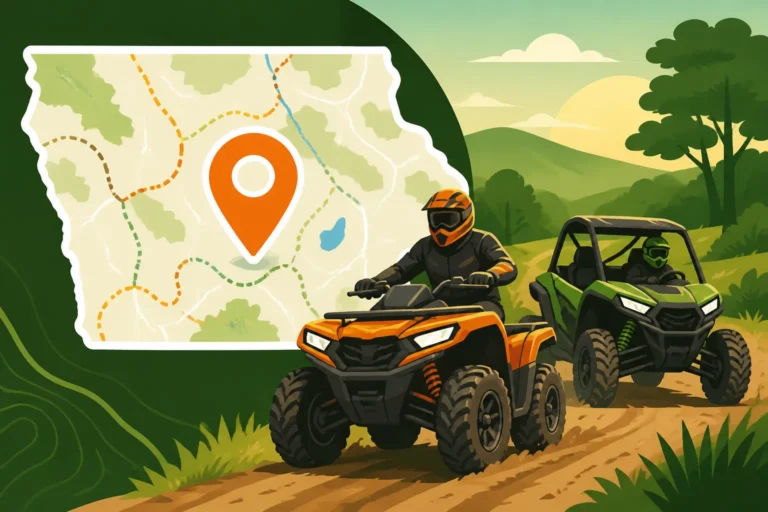
Rathbun OHV Area is near Plano in Appanoose County, within the broader Rathbun Lake area. Before you set out, confirm the exact riding-area entrance and access instructions using current official park or Iowa DNR information. A map pin can get you close, but it may not tell you whether a gate is open or which entrance is intended for riders hauling machines.
This matters especially if you are towing from farther away. A trailer route that looks convenient on a phone may lead to a narrow road, an unsuitable entrance, or a place where you cannot safely turn around. Check where parking and unloading are permitted before you leave, and avoid blocking a gate, roadway, or access used by other visitors.
A mapping app can help you understand the surrounding roads and plan your drive. onX Offroad can be useful as a trip-planning reference, but do not treat a user-generated map or an app’s trail line as permission to ride somewhere. At the park, posted signs, marked routes, and official closures take priority. For a broader overview of the area, see [Rathbun OHV Area at Plano].
Check conditions before loading the trailer
Trail status can change after rain, during maintenance, or when a park needs to protect soft ground. Iowa clay can become slick and easily damaged when wet; a route that was enjoyable the previous weekend may be muddy, rutted, or closed after a storm. Check [Iowa Trail Conditions Before You Ride] and [Iowa Trail Closures to Check First] before committing to the drive.
Use official closure notices and posted information as your final check. onX Offroad may help you orient yourself and compare possible routes, but it should not replace the park’s current status information. If the forecast shows heavy rain, consider calling the park contact listed through official channels before you load. A short confirmation can save a long haul to a closed entrance.
| Before you leave | What to confirm | Why it matters |
|---|---|---|
| Park access | Entrance location and current access instructions | Prevents a wrong turn or unsafe unloading |
| Trail status | Open or closed routes and weather-related notices | Conditions can change quickly after rain |
| Machine eligibility | Allowed machine types, width, and route restrictions | Not every trail suits every ATV or UTV |
| Registration | Iowa registration or the applicable visitor permit | Riding-area requirements depend on your situation |
| Rider requirements | Age, supervision, and safety-certificate rules | Helps avoid arriving unprepared |
| Gear and supplies | Helmet, water, tools, and recovery equipment | Reduces the impact of a breakdown or rough day |
Registration, Rules, and Choosing a Route
Get the machine and rider requirements straight
Do not assume that a machine can ride simply because it is registered in another state or because it is being used only for recreation. Iowa registration and visitor-permit rules can depend on the machine and the rider’s circumstances. Review [Iowa Rules for Riding a Designated Riding Area] before your trip, and check [Your Registration Decal Is the Park Admission] for how the decal relates to riding at Iowa’s designated OHV areas.
If you are visiting from out of state, confirm whether your home-state registration is recognized for the type of riding you plan to do or whether an Iowa nonresident permit is required. The answer can depend on reciprocity and where you intend to ride, so do not rely on a friend’s experience from a different state or a previous season. Start with [Iowa's Permit for a Visiting Machine] and [Does Iowa Honor Out-of-State Registration?].
Rider age matters, too. Iowa has safety-certificate and supervision requirements for some younger riders and machine types. Before bringing a child, check [Iowa ATV Safety Certificate Requirements] and the specific rules for a rider’s age and machine. A family can arrive with every ATV ready to go and still lose riding time if a required certificate or supervising adult is missing.
Match your machine to the day
A UTV, a wide ATV, and a smaller quad do not handle every route the same way. Before unloading, check posted width limits, route designations, and any machine-specific restrictions. Do not assume that a trail suitable for a narrow ATV will also be open to a wider side-by-side. If signs or official information are unclear, ask the park contact rather than testing the restriction on the trail.
Think about the group’s experience as well as the machine. A beginner may be more comfortable on a shorter, easier route with room to stop and regroup. Experienced riders may want to explore more, but should still stay on marked trails and choose routes that fit the day’s conditions. A muddy rut or steep section can feel very different once a machine is loaded with gear or a passenger.
onX Offroad can help you study the area before arrival and get a sense of nearby roads and landmarks. Use that preparation to plan, not to improvise new riding routes. At Rathbun, as at other riding areas, staying on designated trails protects the ground and helps avoid conflict with landowners or other park users. If you want a clearer explanation of what riding-area rules cover, see [Iowa Rules for Riding a Designated Riding Area].
What to Bring and How to Ride Comfortably
Pack for the trail and the weather
A good day starts with more than a full tank. Bring water, food, a basic tool kit, a first-aid kit, a phone, and a way to contact your group if riders become separated. Carry a tire repair option and recovery gear appropriate for your machine and the routes you expect to use. Keep supplies secured so they cannot shift, fall off, or interfere with steering.
Wear a properly fitted helmet and protective clothing even if a particular rule does not require every item for every rider. Eye protection, gloves, sturdy footwear, and layers are especially useful when conditions change during the day. Dust, branches, flying gravel, and sudden cool weather can turn a comfortable ride into an unpleasant one when you are underdressed.
In warm weather, heat and humidity can wear riders down faster than they expect. Take breaks before anyone feels exhausted, drink water regularly, and watch for signs of overheating. Appanoose County summers can also mean insects and ticks, so consider repellent and check clothing and skin after riding. [Ticks on a Summer Trail in Appanoose County] and [Riding in August Humidity at Rathbun] are useful reminders to plan for more than the machine itself.
Ride with the group and respect trail conditions
Set a simple plan before starting: who leads, who rides last, where the group will stop, and what to do if someone has a problem. Keep enough distance to see what the rider ahead is doing without leaving a large gap. Dust, bends, and changes in elevation can quickly separate a group, so pause at safe points and make sure everyone is accounted for.
Ride at a speed that lets you respond to changing surfaces and other trail users. Slow down near blind corners, intersections, wet areas, and places where the route narrows. Do not cut around a muddy section by creating a new track beside it. That shortcut can widen the damaged area, disturb vegetation, and leave an unsafe rut for the next rider.
If rain begins or the ground becomes too soft, turn around rather than forcing your way through. Spinning tires can deepen ruts and make conditions worse for everyone. Clubs, land managers, and park staff may ask riders to stay off trails to prevent damage; respecting that request helps keep the area rideable over time. For a closer look at why weather-related closures matter, read [Iowa's Weather-Driven Trail Closures].
Making Rathbun Part of a Longer Visit
Plan the drive and your backup option
Plano is a small community, so think through fuel, food, and supplies before you get close to the riding area. Do not assume you can find every needed item beside the trailhead. If you are hauling a trailer, check your fuel level before leaving larger service areas, secure the load, and leave enough time for unloading and safety checks.
Choose a backup plan before the day of the ride. If Rathbun is closed or the trails are too wet, you may need to postpone rather than switch to an unapproved nearby road or piece of land. You can look at other designated areas and compare distance, machine suitability, and current status; [Iowa OHV Parks Near Iowa City] may help if your route takes you through the eastern part of the state. Always verify the destination’s current conditions before changing plans.
If you are staying overnight, confirm lodging or camping arrangements separately from trail access. Camping availability and rules can differ from riding-area access, and a campsite near Rathbun Lake does not automatically mean you can ride from the campsite to the trails. For general planning, see [Camping Near an Iowa OHV Park].
Leave the area ready for the next visit
When the ride is over, check your machine for packed mud, loose parts, and damage before loading it. Clean off mud where you are permitted to do so, and avoid washing debris into waterways or onto neighboring property. Secure the trailer before leaving and make sure no gear has been left in the parking area.
A thoughtful visit is also one that leaves the trails as you found them. Stay on marked routes, pack out rubbish, give other riders room, and follow any posted instructions. If a route is closed or deteriorating, do not ride around the barrier. The short-term disappointment of skipping a trail is better than contributing to damage that could keep it closed longer.
Rathbun near Plano can be a rewarding destination when the access, machine, and conditions all line up. Check the official status before you travel, bring the documents and gear your group needs, and adjust your route to the ground you actually encounter. A little preparation makes it much easier to spend the day riding instead of troubleshooting at the trailhead.
Disclaimer
This article is for general informational purposes only and does not constitute professional advice. Laws, prices and regulations vary by location and change over time. Consult a qualified professional for guidance on your specific situation.