Iowa Trails With a Youth Area
Taking a child to an Iowa OHV park can mean juggling two very different needs: a place where a young rider can practice safely and trails the rest of the family will enjoy. This guide explains where Iowa has a specifically identified youth riding area, how to assess other parks, and what to check before loading the trailer.
Where to Find a Youth Riding Area in Iowa
Gypsum City has a dedicated kids’ track
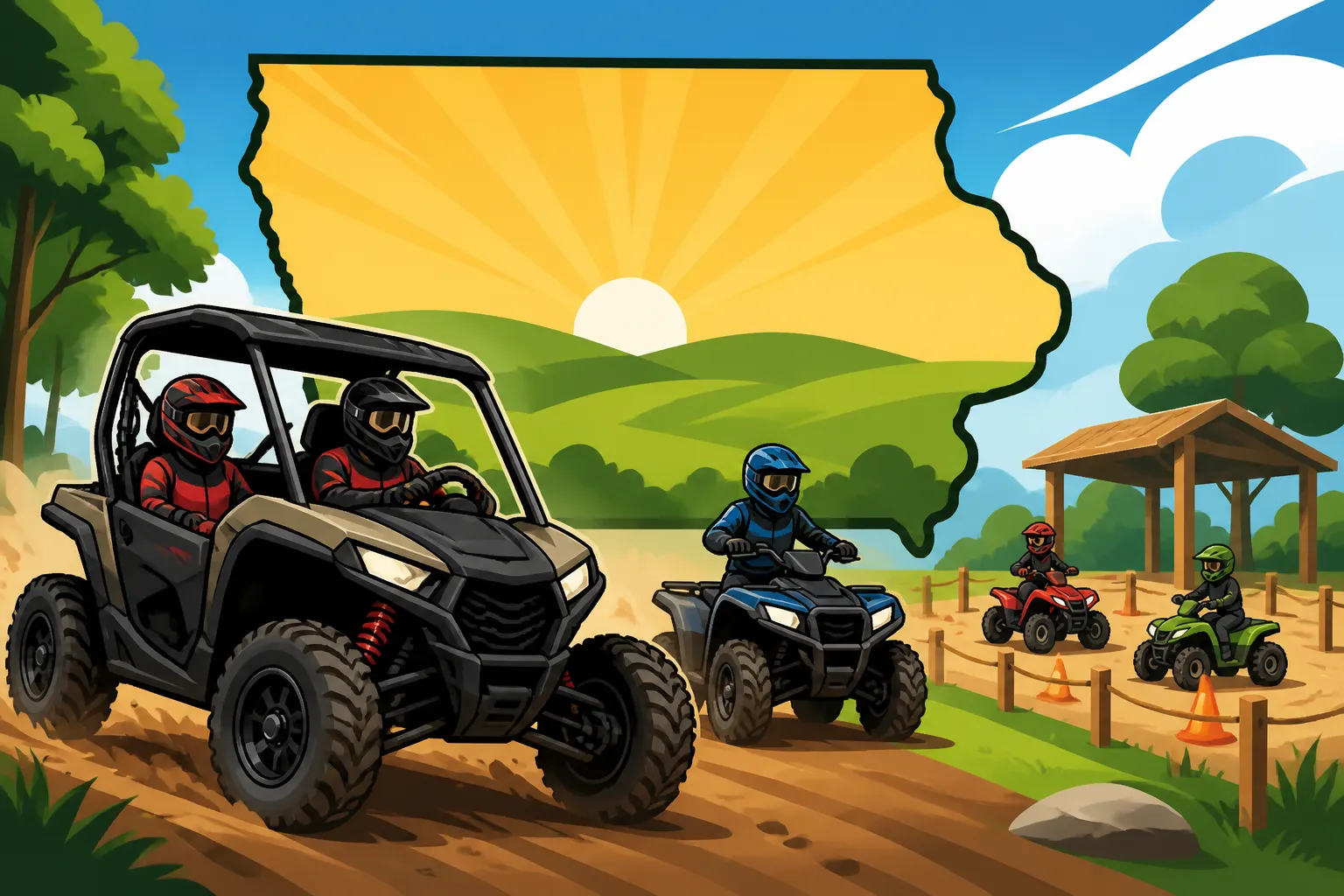
Gypsum City OHV Park, outside Fort Dodge in Webster County, is the clearest Iowa option if you’re specifically looking for a youth riding area. The park has a kids’ track intended for young riders, separate from its larger trail network and motocross track. That separation can make a family visit less stressful: a child can get familiar with riding in a smaller, purpose-oriented space rather than being introduced to a busy adult trail all at once.
A dedicated kids’ track is not a promise that every child, machine, or skill level will be a good fit. Before you go, check the park’s posted rules, current operating information, and any restrictions on machine size or rider conduct. A track that feels manageable to one child may still be too challenging for another, especially if they are new to riding or nervous around other machines.
Plan for the whole visit, not just the youth area. Gypsum City also has trails and a motocross track, so it can suit a group with different interests—but those features do not mean a young rider should move onto a larger trail before they are ready. Keep the child’s first ride focused on comfort, control, and listening to the park’s rules. For more detail on the dedicated facility, see [Gypsum City's Kids' Track for Young Riders] and [Iowa Trails Good for Kids].
A kid-friendly park is not always a park with a kids’ track
Families often use “good for kids” to mean several different things. It might mean a separate youth track, beginner-friendly trail sections, a manageable place to park and unload, or simply a location where adults can supervise without splitting up. Those are not interchangeable. A park can be suitable for a family outing without having a dedicated children’s riding area.
The distinction matters when you are comparing Gypsum City with other Iowa riding areas, such as Bluff Creek OHV Park near Eddyville, Lakeview OHV Park near Solon, or Paul Huting Recreation Area in Waterloo. These are named riding destinations, but don’t assume that each has a youth track just because it has OHV trails. Confirm the specific facility features and rules before making a long drive.
| Riding area | What to know when planning with a young rider |
|---|---|
| Gypsum City OHV Park near Fort Dodge | Has a specifically identified kids’ track. Check current park rules and suitability for your child and machine. |
| Bluff Creek OHV Park near Eddyville | A named OHV destination, but confirm directly whether its current layout suits a beginner or offers a separate youth feature. |
| Lakeview OHV Park near Solon | Check trail descriptions, operating details, and youth-specific facilities before treating it as a first-ride option. |
| Paul Huting Recreation Area in Waterloo | Confirm which trails and facilities are open and appropriate for your child’s age, experience, and machine. |
When a dedicated feature is important, ask the park or managing organization a direct question: “Is there a separate youth track, and what machines and ages is it intended for?” That is more useful than relying on a general description such as “family friendly.” You can also review [Iowa's Eight Designated OHV Parks] to understand the broader range of riding destinations, then verify the details of the particular park you are considering.
Match the park to the child, not the other way around
A child who has ridden around a yard or farm may still be unfamiliar with a managed OHV park. At a park, they may encounter marked routes, changing surfaces, other riders, noise, and rules about where machines can go. A smaller youth area can help ease that transition, but an adult should still watch how the child responds once the engine is running.
Think about more than age. Can your child reach the controls comfortably? Can they stop smoothly, steer around an obstacle, and understand a direction while wearing riding gear? Do they freeze when a machine approaches, or get carried away when excited? A cautious child may need a short visit with plenty of breaks; a confident child may need reminders to keep speed and distance under control.
For a first park outing, it is reasonable to arrive with a simple plan: unload, review the rules, watch the riding area for a few minutes, and let the child practice only where permitted. If the child is overwhelmed, stopping early is a sensible decision—not a failed trip. [Riding With Children at an Iowa Park] offers another useful angle on planning a family ride.
Choosing Trails and Setting Realistic Expectations
Read difficulty information as a starting point
Trail difficulty labels can help narrow your choices, but they cannot tell you exactly how a child will feel on a particular day. A route described as easy may still include tight turns, uneven ground, ruts, or busy intersections with other trails. Recent rain can change the surface, and a child’s comfort can change after the first ten minutes.
Before riding, look for the park’s map and current trail information. Check whether youth riders are allowed on the route you have in mind, whether trails are one-way, and whether there are restrictions based on vehicle type or width. If the park uses different markings for routes, explain them to your child before you start. A map app such as onX Offroad can help with trip planning and route awareness, but use the park’s own posted directions and rules to confirm what is open and permitted.
A useful way to choose is to start with the least demanding option that meets the child’s needs, then reassess. If they are relaxed, following instructions, and handling the terrain comfortably, you can decide whether to continue on an appropriate permitted route. If they are tense, tiring, or making repeated control mistakes, take a break or head back. For more on evaluating routes, see [Iowa Trail Difficulty Ratings].
Conditions can make a familiar trail feel different
Iowa trail conditions can shift quickly, especially after rain. Clay may become slick, low areas may hold water, and ruts can be harder for a small machine to manage. Even a route a family has ridden before may feel more difficult when it is wet, crowded, or unusually rough. A young rider may not have the judgment or experience to recognize that conditions have changed.
Check for closures and trail updates before leaving home and again before you unload. Respect any closure, even if the trail looks passable from the entrance. Riding a closed or muddy route can create safety problems and damage the trail, and it may lead to tighter restrictions for everyone. If you use onX Offroad to orient yourself or plan a route, don’t treat an app view as confirmation that a trail is open; check the park’s official information too.
Have a backup plan that doesn’t depend on riding every trail. You might make the trip a short practice session, choose a different open area, or postpone the ride if weather has made the surface unsuitable. That flexibility is especially helpful with children, who may be disappointed at first but usually benefit from a calmer experience more than a forced ride. [Iowa Trail Conditions Before You Ride] is a useful related topic when you’re deciding whether to travel.
Keep the first outing short and low-pressure
It is easy to picture a full day of riding when you load the machines, pack lunch, and drive to the park. A young rider, though, may be ready for only a short session. Noise, vibration, protective gear, and the concentration required to control a machine can be tiring even when the child is having fun.
Build breaks into the visit before anyone is exhausted. Choose a clear stopping point, such as after a few practice laps or a short ride in an area that the park allows. Ask the child how they feel, but also watch their body language: wandering attention, stiff posture, frustration, and trouble responding to directions are good reasons to pause.
A successful first outing does not have to involve covering miles. It might mean the child learned how to start and stop smoothly, followed trail signs, or simply felt comfortable enough to want to come back. Keeping that first experience manageable can make future rides safer and more enjoyable for the whole family.
Safety, Supervision, and Youth Rider Requirements
Check Iowa’s safety certificate rules before the trip
Iowa has safety certificate requirements for some young off-highway vehicle riders. The exact requirement depends on the rider’s age and the type of machine, so don’t assume that rules for a youth ATV apply identically to a side-by-side or dirt bike. Check the applicable Iowa requirements before riding, and make sure the certificate is completed and available when required.
The certificate question is separate from whether a child is physically ready to operate a particular machine. A course can teach important safety information, but it does not replace adult judgment, practice, or supervision. Likewise, a child having experience on private property does not automatically mean they understand the rules for a designated riding area.
Review [Iowa Safety Certificate Age Range] and [Iowa Supervision Rules for Riders Under 12] as part of your preparation. If you are uncertain how a rule applies to your child or machine, confirm it with the relevant Iowa agency or park before the ride. It is much easier to sort out a document or supervision question at home than at the trailhead.
Choose a machine the child can control
A machine that is too large, too powerful, or awkward for a child can turn a fun day into a nerve-racking one. The child should be able to sit in a stable position, reach the controls, and operate the brakes without struggling. Their size and coordination matter, but so do their attention span and ability to follow directions consistently.
Don’t use an adult’s confidence as a substitute for the child’s control. A parent may be comfortable riding a larger machine through a rough section, while a younger rider may not have the strength or experience to handle the same conditions. If a child has to stretch to reach a control or cannot stop reliably, that is a clear reason to choose a different machine or wait.
Protective gear and a pre-ride check are part of the decision, too. Make sure the helmet fits properly and the child has appropriate clothing, footwear, and eye protection. Check the machine’s controls, brakes, tires, and general condition before each ride. Explain that the rider should stop and tell an adult if anything feels wrong, rather than trying to push through a problem.
Set simple rules before the engine starts
Children absorb instructions better when they are brief and specific. Before riding, explain where they may go, how they should respond if they lose sight of the adult, and what to do when another machine approaches. Make sure they know to stop in a safe spot and wait for help rather than continuing to search for the group on their own.
Agree on a pace that the child can maintain, and keep an adult close enough to supervise effectively. Avoid letting a young rider follow a faster group simply because everyone is eager to keep moving. On a busy day, choose a permitted area where you can monitor the child without blocking other riders or placing them in the path of traffic.
Finally, give the child permission to speak up. “I’m tired,” “I don’t like this section,” or “I need help” should be treated as useful information, not a reason to pressure them into continuing. The adult’s job is to make the ride safe and manageable—not to complete a particular loop.
Planning Your Visit to an Iowa Youth Riding Area
Confirm details before you tow
Park conditions, access, and rules can change. Before leaving, verify that the riding area is open, whether any trails or tracks are closed, and what the facility requires for machines and riders. If your main reason for going is a youth track, specifically confirm that the track is available for your visit rather than assuming it will be open whenever the broader park is operating.
A quick planning checklist can save a frustrating drive:
- Confirm the park is open and check for weather-related closures.
- Ask whether the youth area is available and what machines it is intended for.
- Review registration, decal, certificate, helmet, and supervision requirements.
- Check the park map and identify a suitable starting area.
- Pack water, snacks, basic tools, and the child’s properly fitted riding gear.
- Set a backup plan in case conditions or the child’s comfort level change.
If you’re unsure whether an Iowa registration or decal is needed for your machine, review [Iowa ATV Registration Requirements]—but make sure the information you rely on applies to your vehicle and riding situation. A youth track does not mean registration or other park rules can be ignored.
Make the destination part of a flexible family day
A ride near Fort Dodge can involve more than the time spent on the track. Think about the drive, unloading, weather, meals, fuel, and how your child handles long stretches away from home. If a child is new to the sport, avoid packing the schedule so tightly that there is no room to stop or change plans.
Families coming from central Iowa may also compare Gypsum City with other destinations based on travel time and the group’s experience. Don’t choose a park solely because it is closer if the specific youth feature is essential. Conversely, if your child is ready for a broader trail outing rather than a separate practice area, ask the park which permitted routes are most appropriate and whether there are limitations for the machine you plan to bring.
Use onX Offroad as one possible tool for preparing your route to and around a riding destination, especially when you are organizing a longer trip. Then confirm the trail details with the park itself. That extra check helps avoid the common frustration of arriving with a child who is excited to ride, only to discover that the area you planned around is closed or unsuitable.
Let the child’s confidence guide the next step
After the ride, ask what the child enjoyed and what felt difficult. Their answer may be different from what you expected. A child might love practicing on a small track but dislike a noisy trailhead; another might be ready for a short, easy route but need frequent breaks. Use that feedback to plan the next outing rather than assuming every visit needs to be bigger or longer.
If the child is ready to progress, make one change at a time. You might try a longer visit, a different permitted route, or a new riding area—not all three on the same day. Keep checking that the machine fits, the rules are understood, and the child can control it comfortably.
The best Iowa youth riding experience is not necessarily the one with the most miles or the most challenging terrain. It is the one where the child can learn, the adult can supervise, and everyone can finish the day feeling safe enough to want another ride.
Disclaimer
This article is for general informational purposes only and does not constitute professional advice. Laws, prices and regulations vary by location and change over time. Consult a qualified professional for guidance on your specific situation.