Iowa Trails With Hill Climbs
Iowa’s rolling landscape can make a short ATV or UTV climb feel surprisingly demanding, especially when the trail is slick, rutted, or crowded. The challenge is finding a legal riding area with terrain that matches your machine and experience—not just chasing the steepest slope. This guide explains where to look, how to judge a climb, and how to plan a safer ride.
What to expect from Iowa hill climbs
Iowa climbs are usually about traction and line choice
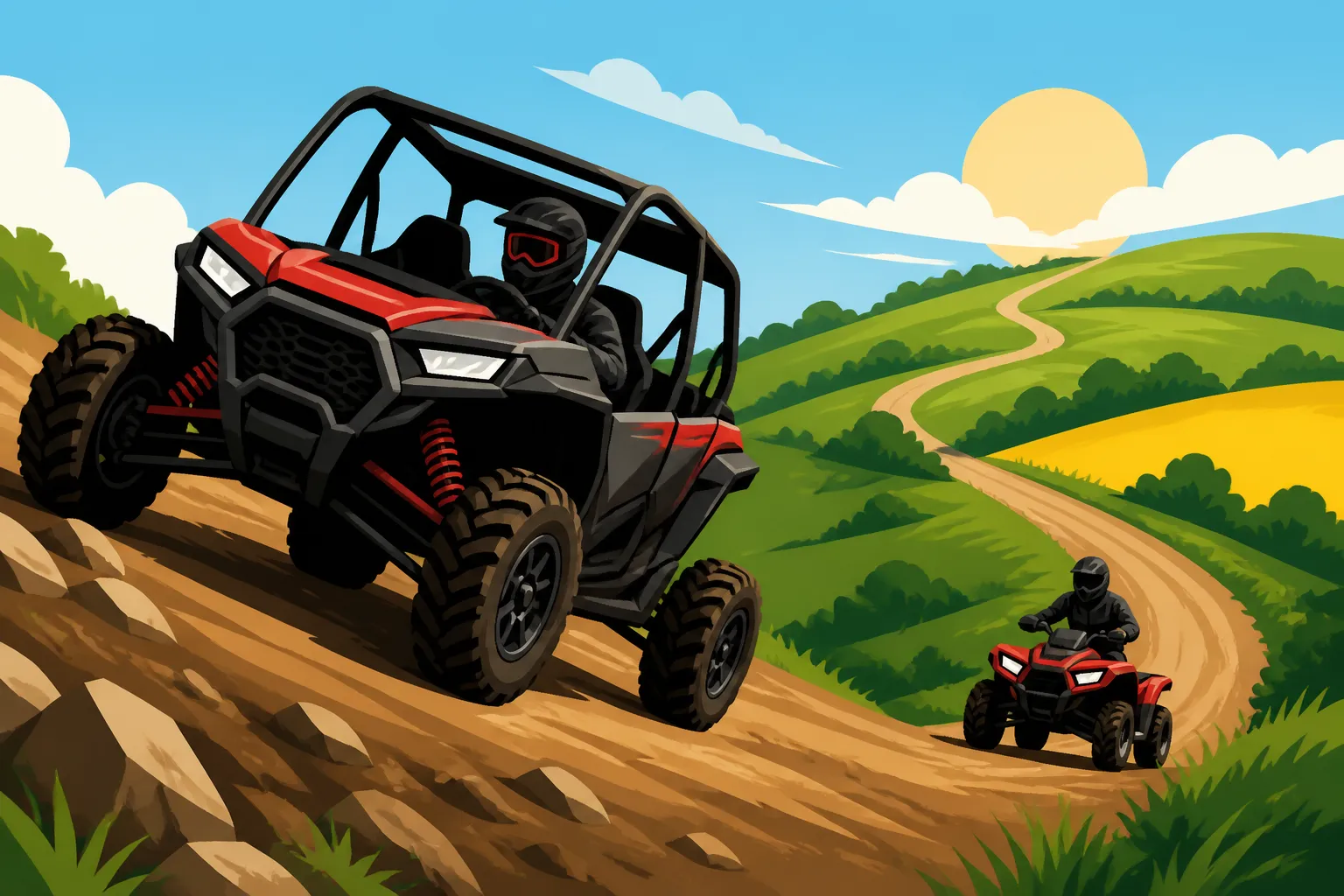
Iowa isn’t a mountain-riding state, so a “hill climb” here may be a short, steep rise rather than a long ascent. The difficulty often comes from what’s under the tires: loose dirt, wet clay, gravel, roots, or ruts can make an otherwise manageable slope feel much tougher. A climb’s angle matters, but so do its length, surface, approach, and the space available to turn around.
Conditions can change the same trail from easy to demanding. A dry slope may offer plenty of grip, while rain can turn Iowa soil slick and leave deep ruts that affect steering and ground clearance. Before heading out, check [Iowa Trail Conditions Before You Ride] and [Iowa Trails Closed After Rain]. If the ground is soft, respecting a closure or choosing a different route helps protect the trail as well as your machine.
Look for legal riding areas, not informal hillsides
A hill that looks inviting from a road, farm lane, or public area is not automatically open to ATV or UTV riding. Stick to designated riding areas and marked routes, and follow posted restrictions. Iowa’s public riding options include a limited group of designated OHV parks, so it’s worth checking [Iowa's Eight Designated OHV Parks] before planning a trip around a particular type of terrain.
Don’t assume a park has a climb suitable for every machine or rider simply because it has varied terrain. Trail layouts and access rules differ, and a route open to one type of vehicle may not be appropriate for another. Check the park’s own information for current maps, machine restrictions, trail conditions, and closures. A quick call before loading the trailer can save a long drive to a closed gate or a park that doesn’t fit your group.
Iowa OHV parks to investigate for climbing terrain
Gypsum City OHV Park near Fort Dodge
Gypsum City is one of the Iowa riding areas worth researching if you want a full day of trail riding and varied terrain. Instead of assuming a certain loop contains a steep climb, review the park’s current map and ask which marked routes have the elevation changes you’re looking for. A park map can help you identify route options, but conditions on the ground still determine how challenging a slope feels.
If you’re bringing a UTV, confirm that the route allows your machine’s size and configuration. A climb that looks straightforward on a map may have a narrow approach, a tight turn, or a surface that’s difficult for a wider vehicle. For trip-planning details, start with [Gypsum City OHV Park at Fort Dodge] and check [Iowa Trail Difficulty Ratings] to think through how trail difficulty applies to your riding group.
Bluff Creek and Rathbun as terrain questions, not guarantees
Bluff Creek OHV Park at Eddyville and the Rathbun riding area near Plano are also places to investigate when comparing Iowa riding destinations. The useful question isn’t simply, “Does this park have hills?” Ask what the current marked routes are like, whether any climbs are open, how those routes are rated, and whether they suit your ATV or UTV. These details can shift with maintenance and trail conditions.
A park’s name or general reputation doesn’t tell you whether a specific climb is appropriate for a new rider, a youth machine, or a full-size UTV. Review [Bluff Creek OHV Park at Eddyville] and [Riding Rathbun Near Plano], then confirm information with the park or managing club before you travel. If you’re hoping for a particular kind of terrain—short climbs, rocky approaches, or muddy sections—ask about that feature directly instead of relying on a broad description.
| Riding area to research | Useful planning question | Before you load |
|---|---|---|
| Gypsum City near Fort Dodge | Which marked routes include the elevation changes you want? | Confirm route access, current conditions, and vehicle fit |
| Bluff Creek near Eddyville | Are the relevant routes open and suitable for your experience? | Check the park map and ask about recent trail conditions |
| Rathbun area near Plano | What surface and climb difficulty should riders expect? | Verify current access and any machine-specific restrictions |
| Another designated OHV park | Does it offer the terrain your group is seeking? | Compare the official map, rules, and closure notices |
How to choose a climb that matches your group
Match the slope to the least-experienced rider
When a group includes different experience levels, choose routes for the person with the least hill-climbing practice—not the rider who is most confident. A novice may be comfortable on a gradual, clear rise but feel pressured on a steep or rutted slope, particularly if other riders are waiting behind them. Agree beforehand that anyone can stop, turn around where permitted, or choose an easier route without being teased or rushed.
It also helps to discuss the plan before the group reaches the climb. Decide who goes first, where everyone will wait, and how the group will communicate if someone needs help. Keep enough space between machines that a rider can stop safely without being crowded by the next vehicle. If you’re bringing children, review [Iowa Trails for Beginners] and check the rules that apply to young riders before choosing a park or route.
Consider vehicle size, tires, and ground clearance
Two machines can behave very differently on the same slope. A lighter ATV may fit through a narrow route but have less stability if the rider takes a poor line. A wider UTV may feel planted in some conditions yet have trouble with tight approaches or deep ruts. Tire condition and pressure, ground clearance, cargo weight, and how the machine is loaded can all affect traction and control.
Avoid treating a hill as a test of horsepower. More power doesn’t solve a slick surface, a poor approach, or an unsuitable route. A heavily loaded rack or passenger can also change how a machine responds as it climbs or slows. If you’re unsure about fit, ask the park operator what types of machines commonly use the route and whether there are width or other access limits.
Plan the ride and climb with safety in mind
Check maps, closures, and recent conditions
Use the official park map and posted signs as your primary guide. A GPS or riding app can help you keep track of your location and plan a route, but it should not replace park rules or show an unofficial path as permission to ride there. onX Offroad can be useful for reviewing routes and organizing a ride, but compare what you see in the app with current information from the park or managing organization.
Before leaving home, check [Iowa Trail Closures to Check First] and confirm that your intended riding area is open. Look at the forecast for the park itself, not only the weather in your hometown; a recent shower can make one area slick while another remains firm. If the park or trail manager recommends staying off wet routes, choose another day or another legal activity. Riding around a closure can damage trails and create problems for future visitors.
Use a deliberate approach and leave room to stop
Before attempting a climb, pause where it is safe and permitted. Look at the route, identify the intended line, and note loose material, ruts, rocks, or a turn near the top. Don’t begin if you can’t see enough of the route to judge what lies ahead, or if another rider is still on the slope. Wait until the way is clear, then climb at a controlled pace that suits the surface and your machine.
Avoid stopping abruptly halfway up unless continuing would be unsafe. If you lose traction or feel that the machine is no longer under control, prioritize a safe response over reaching the top. Don’t let a group pressure you into attempting a slope that exceeds your comfort or ability. A short walk to inspect the route and a decision to take an easier trail can be the smartest part of the ride.
Pack for a day that may not go exactly to plan
Bring the essentials your group may need if a machine gets stuck, a rider needs a break, or conditions change: water, suitable protective gear, a charged phone, and a basic recovery plan. Tell someone where you’re riding and when you expect to return. Cell service can vary by location, so don’t assume you’ll be able to call for help from every trail.
Keep your map accessible and make sure everyone knows how to regroup if the group gets separated. onX Offroad may help with route planning and location awareness, but riders should still understand the park’s marked trails and follow posted directions. For broader riding plans, [Iowa Trail Difficulty Ratings] and [Iowa Trail Conditions Before You Ride] can help you think through whether a route makes sense for your group on that particular day.
The best Iowa hill-climb ride isn’t necessarily the one with the steepest slope. It’s the one where the route is open, the terrain matches the riders and machines, and everyone can enjoy the challenge without feeling rushed. Pick a designated area, confirm conditions, and be willing to choose a different trail when the ground or the group calls for it.
Disclaimer
This article is for general informational purposes only and does not constitute professional advice. Laws, prices and regulations vary by location and change over time. Consult a qualified professional for guidance on your specific situation.