Iowa Rules for Riding After Dark
Riding your ATV or UTV in Iowa after the sun dips below the horizon can be an incredible experience, but it also comes with a unique set of challenges and, more importantly, strict rules. No one wants to get a ticket or, worse, put themselves or others at risk because they weren't aware of Iowa's specific regulations for riding at night. This guide is here to illuminate (pun intended!) everything you need to know to safely and legally enjoy those twilight and nighttime adventures on Iowa's roads.
The Core Rules for Night Riding on Iowa Roads
The shift from daylight to darkness drastically changes how you interact with Iowa's roads on your ATV or UTV. What might be perfectly visible and safe during the day can become a hazard at night if your machine isn't properly equipped or you're not following the letter of the law. Iowa doesn't just ask nicely; it demands that certain safety measures be in place, especially when you're operating an off-highway vehicle (OHV) on public thoroughfares once the sun goes down. Ignoring these rules isn't just a minor infraction; it's a safety gamble that can have serious consequences for you and other road users.
Headlights On All Day, and All Night
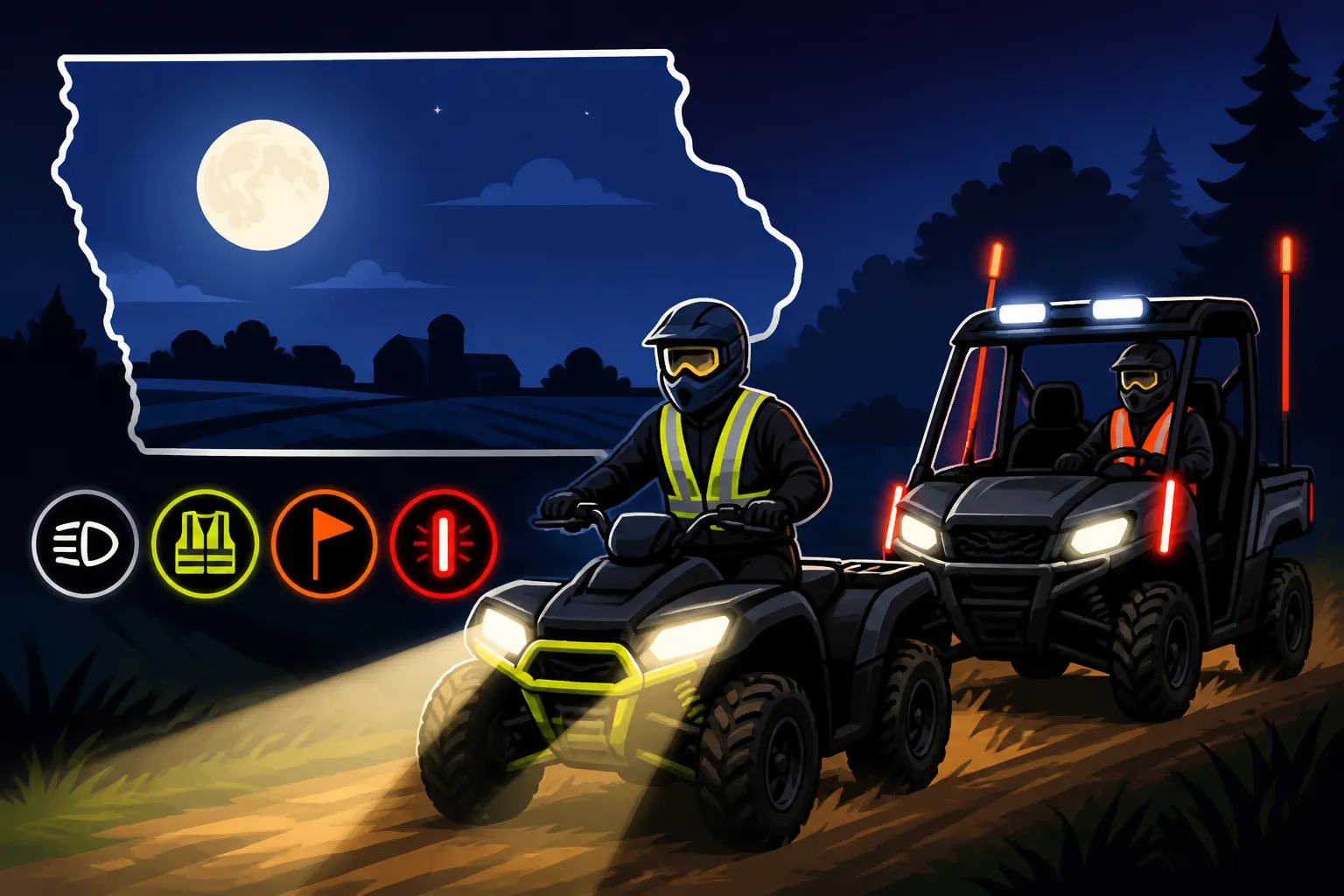
One of the most fundamental requirements for any vehicle operating on Iowa roads, and this absolutely includes ATVs and UTVs, is adequate lighting. For your OHV, this means having at least one functional headlight that emits a white light and is visible from a distance of at least 500 feet to the front. While it's a good practice to ride with your headlights on even during the day for increased visibility, it becomes a non-negotiable legal requirement from sunset to sunrise. This isn't just about you seeing what's ahead; it's crucially about making sure oncoming traffic and pedestrians see you.
Many riders, myself included, find that factory headlights, especially on older machines, just don't cut it for serious night riding. You might be able to see enough to navigate a familiar trail at a slow pace, but on a road, where you're mixing with faster, heavier traffic, you need more. This is where investing in aftermarket lighting can be a real game-changer. High-quality LED light bars or auxiliary driving lights, like those offered by companies such as SuperATV, can dramatically improve your forward vision, making potholes, wildlife, and road debris far more apparent. Just be mindful of local ordinances and state laws regarding the use of auxiliary lights on public roads, as some are intended for off-road use only and can be too blinding for other drivers.
Essential Lighting Beyond Headlights
It's not enough to simply see where you're going; you also need to be seen from behind. Iowa law requires a red taillight that is visible from at least 500 feet to the rear. This single taillight is your primary defense against rear-end collisions, particularly on those dimly lit rural roads where an ATV or UTV might not be expected. Imagine you're on a gravel road, turning into a field entrance, and a larger vehicle comes up behind you. Without a clear, bright taillight, you're practically invisible until it's too late.
Beyond the taillight, Iowa law also mandates a brake light, which should automatically illuminate when you apply the brakes. This is critical for communicating your intentions to anyone following you. If your machine doesn't have a factory brake light, or if it's malfunctioning, it needs to be fixed before you venture out after dark. Some riders also choose to add additional red or amber lights to the rear for even greater visibility, especially if their machine has a large cargo box or other accessories that might obscure the factory lights. The goal here is simple: eliminate any doubt that another driver might have about your presence on the road.
Safety Considerations After Sunset
Riding at night isn't just about meeting the minimum legal requirements; it's about exercising heightened caution. The dynamics of riding change dramatically. Depth perception is altered, shadows can play tricks on your eyes, and fatigue can set in more quickly. Wildlife, like deer, are far more active and harder to spot after dark, posing a significant collision risk. [Riding Home After an Iowa Sunset] requires an entirely different mindset than riding during the day.
Before you even think about hitting an Iowa road after sunset, do a thorough pre-ride inspection of your machine's lighting system. Check that all bulbs are working, lenses are clean, and electrical connections are secure. Carry spare bulbs or a small repair kit if you're venturing far from home. Additionally, consider wearing reflective clothing or a reflective vest yourself, even if you think your machine's lights are sufficient. The more visible you are, the safer your ride will be. Always assume that other drivers might not see you, especially on rural roads where people might not expect an OHV.
Specific Requirements for Road-Legal ATVs and UTVs
When Iowa says your ATV or UTV needs to be "street legal" for certain public roads, they mean more than just having a headlight and taillight. These machines must essentially mimic the safety features of other registered vehicles to integrate safely into traffic, especially after dark. This set of rules helps standardize expectations for all road users, reducing confusion and the potential for accidents. Whether you're making a quick trip down a [Gravel Roads You May Ride Without Asking Anyone] or crossing a [Bridge on an Iowa Secondary Road], these requirements are non-negotiable.
Visible from All Angles: Tail Lamps and Reflectors
While we've already covered the rear taillight, it's important to understand its placement and effectiveness. The Iowa law specifies that the taillight must be red and visible for 500 feet to the rear. It should be mounted firmly and kept free of dirt and debris that could diminish its output. Many older ATVs and UTVs might have small, dim taillights that barely meet this standard, especially as bulbs age. Upgrading to a brighter LED taillight assembly can offer a significant safety boost.
Beyond the powered taillight, some regulations imply the need for passive reflectors. While not always explicitly spelled out for OHVs on roads, it's always a good idea to have amber reflectors on the sides, particularly towards the front, and red reflectors on the sides toward the rear. These passive devices catch the light from other vehicles, providing an extra layer of visibility even if your electrical system fails or your powered lights are obscured. Think of it as an insurance policy for your visibility – an easy and inexpensive addition that could make a difference.
Signal Lamps and the Slow-Moving Vehicle Triangle
Proper signaling is paramount on any road, particularly when turning or changing lanes after dark. Iowa law requires that any OHV operating on public roads be equipped with signal lamps if the vehicle's design or load obscures hand signals. Even if hand signals are technically visible, having clear, bright turn signals (amber to the front, amber or red to the rear) makes your intentions unmistakable, especially in low light conditions. This is a common area where riders add aftermarket kits, sometimes from brands like SuperATV, to ensure full compliance and safety.
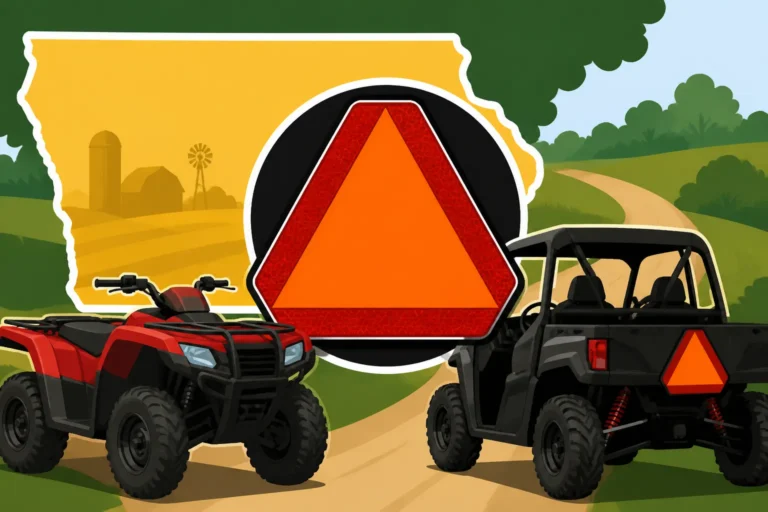
Another crucial, and often overlooked, requirement for ATVs and UTVs on Iowa roads is the slow-moving vehicle (SMV) triangle. This bright orange, reflective triangle must be mounted on the rear of your machine, visible from a distance. The SMV emblem signifies that your vehicle is designed to travel at speeds less than 25 mph. While many ATVs can exceed this speed, their classification often means this emblem is required when on roads, acting as a clear warning to faster-moving traffic. It warns drivers approaching from behind that they need to reduce speed significantly. You often see these on farm equipment, and your OHV, when on a public road, falls into a similar category of needing to clearly communicate its speed profile.
The Importance of Clear Vision: Windshields and Mirrors
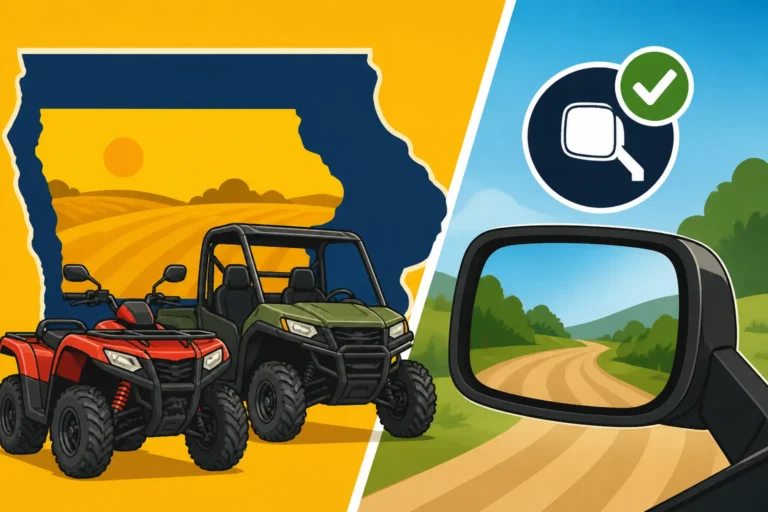
Visibility isn't just about being seen; it's also about you being able to see. On Iowa roads, your ATV or UTV must have at least one mirror that allows you to see at least 200 feet to the rear. While many ATVs come with small handlebar-mounted mirrors, UTVs often have a rearview mirror. For night riding, ensure your mirror is clean and properly adjusted. A dirty or cracked mirror can severely impair your ability to monitor traffic behind you, especially when glare from other vehicles is a factor.
For UTVs, a windshield is also a common feature, and if present, it must be clear and unobstructed. [Iowa Windshield Rules for Road Use] dictate that any tinting must meet specific VLT (Visible Light Transmission) percentages. A heavily tinted windshield might be fine for daytime trail riding, but it's a major safety hazard at night, reducing your forward visibility and making it harder to spot hazards. Always ensure your windshield is kept clean, both inside and out, and that any wipers (if equipped) are functional. Combined with good headlights, a clear windshield and proper mirrors are your essential tools for safe navigation after dark.
Navigating Iowa's Diverse Road Network After Dark
Iowa's road network is a patchwork of gravel, paved secondary roads, and city streets, each with its own set of rules and conditions. Riding your ATV or UTV after dark requires a deep understanding of these distinctions, as what's legal and safe on one type of road might be dangerous or prohibited on another. It's not just about the state laws; [Iowa Cities That Allow ATVs on Streets] and [Iowa Counties That Allow ATVs on Paved Roads] often have their own specific ordinances that can impact your night riding.
Different Road Types and Their Nighttime Rules
Iowa law generally permits ATVs and UTVs on unpaved secondary roads, primarily county gravel roads, from sunrise to sunset. However, counties have the option to allow OHV use after dark on these unpaved roads. This means you absolutely must check with the specific county recorder's office or sheriff's department in the area you plan to ride. Never assume that because one county allows night riding on its gravel roads, another does too. The general state rule is no night riding on these roads unless specifically authorized.
For paved secondary roads, the rules are even stricter. ATVs and UTVs are typically prohibited unless the county Board of Supervisors has passed an ordinance specifically allowing them. Even then, there are often limitations on hours of operation, and night riding might be restricted. If you're considering a night ride on any paved county road, confirm its legality with the county officials. Ignoring these rules, especially after dark, can lead to stiff penalties and dangerous encounters with other traffic. [Iowa Fines for Illegal ATV Road Use] can quickly put a damper on your night out.
| Lighting Feature | Requirement in Iowa (Road Use) | Visibility Distance | Purpose |
|---|---|---|---|
| Headlight(s) | At least one white headlight, forward-facing | 500 feet (front) | Illuminate path, be seen by oncoming traffic |
| Taillight | At least one red taillight, rear-facing | 500 feet (rear) | Be seen by traffic approaching from behind |
| Brake Light | Red, illuminates when brakes applied | 500 feet (rear) | Indicate braking to following traffic |
| Signal Lamps | Amber (front), Amber/Red (rear), if hand signals are obscured | 100 feet (turns) | Clearly indicate turns/lane changes |
| Slow-Moving Vehicle | Orange reflective triangle, rear-mounted | 500 feet (rear) | Warn of vehicle traveling under 25 mph |
| Mirror | At least one, allowing view of 200 feet to the rear | 200 feet (rear) | Monitor following traffic |
City Streets vs. County Gravel: Varying Ordinances
City streets present an entirely different challenge for night riding. While a county might open some of its gravel roads to night use, city councils have the authority to regulate OHV use within their corporate limits. Many cities prohibit ATVs and UTVs on their streets entirely, or restrict them to specific hours, often excluding nighttime. If a city does allow them, like [Riding the Streets of Waukon], there will almost certainly be specific ordinances you must follow, including lighting requirements that might go beyond the state minimums for county roads.
Before you plan any night riding on city streets, you absolutely must contact the city clerk's office for a copy of their specific ATV/UTV ordinance. Assume nothing. A quick call can save you a citation or, worse, an accident. This hyper-local approach to regulation means that two towns just miles apart could have vastly different rules. It's frustrating, I know, but it's the reality of navigating Iowa's diverse landscape of rules.
Planning Your Night Ride: Safety First
Beyond the legalities, responsible night riding demands a significant focus on safety. Always ride within your capabilities and adjust your speed to conditions. What might be a comfortable speed during the day can be too fast at night, even with excellent lighting. Reduce your speed, especially on unfamiliar terrain or when visibility is poor due to fog or rain.
When planning a night ride, consider the full scope of your equipment. Do you have a working horn? [Iowa Horn Requirement for Road Use] means it's mandatory. Is your machine properly registered and do you have your [Carrying the Certificate on an Iowa Ride]? Are your tires in good condition and suited for the terrain? Carrying a small emergency kit, including a first-aid kit, flashlight, and possibly a way to charge your cell phone, is also a smart move. Remember, even if the law doesn't require a helmet on Iowa roads for adults, it's a wise choice for any night ride, providing an extra layer of protection should the unexpected happen. Ultimately, planning and preparation are your best friends when it comes to enjoying Iowa's landscapes safely after dark.
Disclaimer
This article is for general informational purposes only and does not constitute professional advice. Laws, prices and regulations vary by location and change over time. Consult a qualified professional for guidance on your specific situation.