Des Moines County Ordinance Fifty-Six
It can be incredibly frustrating to own an ATV or UTV in Iowa, knowing you want to enjoy the open air and the thrill of the ride, but constantly wondering where you're actually allowed to take your machine. The rules for riding off-highway vehicles (OHVs) on public roads in Iowa are famously complex, varying not just statewide but often down to the individual county and even city. This guide is going to cut through that confusion specifically for riders in Des Moines County, detailing everything you need to know about navigating its unique regulations, particularly Des Moines County Ordinance Fifty-Six, so you can ride confidently and legally.
Understanding Des Moines County Ordinance Fifty-Six
Navigating the legal landscape for riding your ATV or UTV on public roads in Iowa can feel like trying to find your way through a corn maze blindfolded. Many riders just assume that if they can take their machine on gravel roads in one county, they can do the same in the next. But Iowa gives a lot of power to local authorities, meaning counties and cities can set their own rules above and beyond the state's general provisions. Des Moines County is a prime example of this local control, having adopted its own specific set of regulations known as Ordinance Fifty-Six. This ordinance is absolutely critical for anyone who plans to operate an off-highway vehicle on the county's roads.
What the Ordinance Covers
Des Moines County Ordinance Fifty-Six is a specific piece of local legislation designed to regulate the use of ATVs and UTVs on public roads within the county's jurisdiction. It's not a suggestion; it's the law. This ordinance explicitly defines what types of machines are covered, which primarily includes all-terrain vehicles (ATVs) and utility-terrain vehicles (UTVs), sometimes referred to as side-by-sides. These are the machines with four or more wheels, generally designed for off-road use, that many of us love for recreation, farm work, or simply getting around the property. The ordinance outlines where and when these machines can be operated on specific public roads, laying out the framework for legal road use in Des Moines County.
This isn't just about general road rules; it's about the very act of taking your off-road machine onto paved or unpaved secondary roads that are typically reserved for cars and trucks. The ordinance goes into detail about the conditions under which such operation is permissible, covering everything from the type of road to the specific safety equipment required on your machine. For instance, if you're thinking of bolting on some mirrors or a horn, this ordinance is where you'll find the local requirements that might go beyond standard state law. Ignoring it could lead to an unexpected conversation with a sheriff's deputy, and nobody wants that.
Why Des Moines County Enacted It
So, why would a county go to the trouble of creating its own specific ordinance when there are already state laws? The answer lies in the desire for local control and the unique needs and concerns of the community. State law provides a baseline, but it also grants counties and cities the authority to further restrict or, in some cases, open up road access for OHVs. Des Moines County likely enacted Ordinance Fifty-Six to balance the interests of OHV riders with public safety, road maintenance, and the general welfare of its residents. It's a way for local officials to respond directly to the feedback and experiences of their constituents.
Perhaps there was a growing demand from residents who wanted to use their ATVs and UTVs for quick trips to a neighbor's house, to access nearby fields for farming, or to connect to local trail systems. At the same time, there might have been concerns from other residents about noise, dust, or the safety of having these machines alongside traditional vehicles on public roads. Crafting a specific ordinance allows the county supervisors to address these local nuances, creating a regulatory framework that they believe best serves their unique community. It's a localized solution to a statewide issue, trying to create a riding environment that makes sense for Des Moines County.
The General Scope and Limitations
Ordinance Fifty-Six doesn't just throw open all the roads in Des Moines County to ATVs and UTVs. Far from it. Its scope is quite precise, defining which types of roads are permissible for OHV use and which remain off-limits. Generally, you can expect the ordinance to focus on county secondary roads, especially unpaved ones, as these are often the most suitable and least disruptive for OHV travel. The idea is usually to provide access for local residents, particularly those in rural areas, without compromising safety on busier, higher-speed routes.
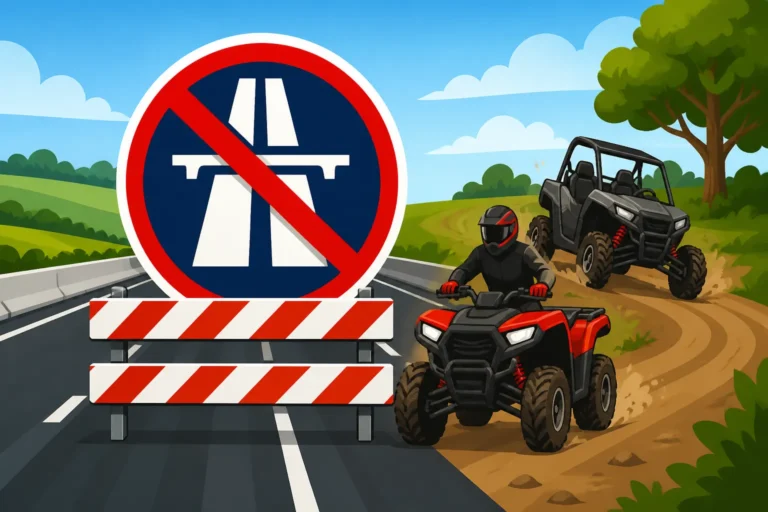
However, there are significant limitations. State highways, for instance, typically remain off-limits, as do multi-lane primary highways and interstates, regardless of county ordinance. These are under state control, and the safety risks associated with mixing slower-moving OHVs with high-speed traffic are considered too great. The ordinance also likely addresses operational hours, speed limits, and specific equipment requirements for your machine, ensuring that even on permissible roads, OHVs operate safely. It's crucial to understand these boundaries, as straying onto a prohibited road, even by accident, can lead to serious consequences. Remember, this ordinance is designed to create specific pockets of access, not a free-for-all across the entire county road network.
Specific Road Access Rules in Des Moines County
When you're looking at riding your ATV or UTV on the roads in Des Moines County, the biggest question on every rider's mind is, "Where exactly can I go?" It's not enough to know there's an ordinance; you need to understand the specifics of which roads are open, which are closed, and how city boundaries might affect your route. This is where the rubber meets the road, so to speak, and where many riders can get tripped up if they're not careful. Knowing these details can save you a lot of hassle and potential fines.
Authorized Roads and Streets
Des Moines County Ordinance Fifty-Six explicitly designates certain roads and streets where ATVs and UTVs are permitted to operate. Typically, these authorized routes are county secondary roads, especially those that are gravel or less heavily traveled. The intention is often to provide a means for residents to access their property, move between farm fields, or reach local points of interest without having to trailer their machines everywhere. It's a recognition of the utility these vehicles provide in rural settings. For example, if you live in a more rural part of the county, you might find that the gravel roads leading to your neighbor's farm or a local fishing spot are open to OHV traffic.
However, don't assume every gravel road is fair game. While many counties generally allow OHVs on unpaved secondary roads, a specific ordinance like Des Moines County's might have precise designations or even require riders to stick to specific speed limits or only operate during daylight hours. It’s always best practice to consult the actual ordinance or contact the Des Moines County Sheriff's Office or County Recorder for the most current and specific map or list of authorized roads. Some counties even require that these roads be marked with specific signage. This attention to detail is paramount, as what's permitted on one road might be strictly prohibited just a few miles down the way.
Prohibited Roads and Highways
Just as important as knowing where you can ride is understanding where you absolutely cannot ride. Des Moines County Ordinance Fifty-Six will clearly outline the roads that remain off-limits for ATV and UTV operation. Without a doubt, state highways, primary roads, and interstates will fall into this category. These are roads with higher speed limits, greater traffic volumes, and are under the jurisdiction of the state, not the county. The risk of an accident between a relatively slower, less protected OHV and high-speed vehicular traffic on these routes is simply too high. [Iowa Rules for Riding a State Highway] unequivocally show this applies statewide.
Furthermore, multi-lane roads, even if they're secondary roads, might also be prohibited for safety reasons, unless specifically authorized. The ordinance is designed to manage risk, and unrestricted access on busy thoroughfares runs counter to that goal. For example, a major paved artery connecting Burlington to another town would likely be off-limits, even if it's technically a county road. Attempting to cross these prohibited highways, except at a designated intersection, is also typically forbidden and incredibly dangerous. Riders must always plan their routes carefully to avoid these restricted areas, as a shortcut across a forbidden road could lead to a hefty ticket or, worse, a serious accident.
Navigating City Limits
Here's where it gets even trickier: county ordinances don't automatically override city ordinances. While Des Moines County Ordinance Fifty-Six might open up certain county roads, if you enter an incorporated city or town within Des Moines County, you're now subject to that city's specific rules. For a city like Burlington, the largest municipality in Des Moines County, it's highly likely they have their own set of regulations regarding ATVs and UTVs on city streets. [Iowa Cities That Allow ATVs on Streets] provides an overview of how cities like Waukon have their own rules.
This means you can't just assume that because you're riding legally on a county road, you can continue into town. Many cities strictly prohibit OHVs on their paved streets, even if the county allows them on its adjacent roads. If a city does allow OHVs, they'll often have their own specific requirements for speed, time of day, and even designated routes. Therefore, if your planned ride involves passing through or into a town in Des Moines County, you absolutely must check with that specific city's clerk or police department beforehand. Failing to do so could mean riding legally one minute and breaking the law the next, with no clear indication of the boundary unless you've done your homework. It's a common point of frustration for riders, but it's the reality of Iowa's layered legal structure.
Operator and Machine Requirements for Road Use
It's not enough for a road to be open; you, as the operator, and your machine must also meet certain criteria before you can legally ride on public roads in Des Moines County. These requirements are in place to ensure safety, minimize risk to other road users, and make sure that OHVs operating on public thoroughfares are adequately equipped and insured. Think of it like getting your driver's license and registering your car – there are baseline expectations.
Driver's License and Age Restrictions
One of the most fundamental requirements for operating an ATV or UTV on Des Moines County roads under Ordinance Fifty-Six, or any public road in Iowa for that matter, is that the operator must possess a valid driver's license. This isn't a suggestion; it's a hard and fast rule. The logic is simple: if you're going to be sharing the road with cars, trucks, and other licensed vehicles, you need to demonstrate that you understand traffic laws and can operate a motor vehicle safely. This means no provisional licenses for this kind of operation, and certainly no unlicensed riders. [Iowa Driver's License Rules for ATVs] clarifies this statewide.
Furthermore, age is a significant factor. Generally, Iowa law, and by extension most county ordinances like Des Moines County's, requires operators to be at least 18 years old to ride an ATV or UTV on public roads. This age restriction is critical and often enforced strictly. The rationale is that younger riders, even if they have an ATV safety certificate, may not possess the same level of judgment, experience, or understanding of complex road situations as an adult. So, while your 16-year-old might be a fantastic rider off-road, they typically cannot legally operate your side-by-side down a county road, even if it's authorized. Always carry your valid driver's license with you when riding on public roads, as deputies will almost certainly ask for it during any stop.
Machine Safety Equipment
Just like any other vehicle on the road, your ATV or UTV needs to be equipped with specific safety features to be considered "street legal" in Des Moines County. Ordinance Fifty-Six will likely detail these requirements, which often mirror or expand upon Iowa's general provisions for OHV road use. At a minimum, you'll need functional headlights and taillights, which must be illuminated even during daylight hours. A working horn is essential for warning other drivers or pedestrians, and at least one mirror (usually on the left side) is typically required to provide a clear view of traffic behind you.
Another critical piece of equipment is the slow-moving vehicle (SMV) triangle. This reflective orange triangle must be prominently displayed on the rear of your machine, signaling to others that your vehicle operates at speeds typically less than 25 mph. While your OHV might be able to go faster, the SMV triangle indicates its design speed for road use. Many riders look to aftermarket accessories to ensure their machines are up to spec, with companies like SuperATV offering a wide range of lights, mirrors, and turn signal kits that can help you meet these road-legal requirements. Before you hit the pavement, conduct a thorough check of all your safety equipment to ensure everything is in proper working order. [Iowa Lighting Requirements for ATVs] and [Iowa Mirror Requirement for Road Use] highlight these essential features.
Insurance and Registration
Operating an ATV or UTV on public roads in Des Moines County requires both proper registration and adequate insurance coverage, just like a car. This isn't just a county rule; it's an Iowa state law requirement for any motor vehicle operating on public ways. Your machine must be properly registered with the Iowa Department of Natural Resources (DNR) through your [Registering at an Iowa County Recorder]. Once registered, you'll receive a registration decal that must be visibly affixed to your machine. This decal serves as proof that your OHV is legally registered to operate in Iowa.
Beyond registration, carrying liability insurance is absolutely mandatory. Iowa law typically requires minimum liability coverage of $20,000 for bodily injury to one person, $40,000 for bodily injury to two or more persons, and $15,000 for property damage (often seen as 20/40/15). [Iowa ATV Insurance Minimum Coverage] further explains these thresholds. This insurance protects you financially in case you're involved in an accident where you are at fault, covering damages or injuries to others. Riding without valid registration and insurance can lead to significant fines and penalties, and if you're involved in an accident, you could face severe financial repercussions. Always carry proof of insurance and your registration certificate with you when riding on public roads.
Operational Guidelines and Restrictions
Even when you're on a road authorized by Des Moines County Ordinance Fifty-Six and your machine is fully equipped and registered, there are still crucial operational rules you must follow. These guidelines are designed to integrate OHVs safely into the flow of traffic and prevent conflicts with other vehicles and pedestrians. Ignoring these rules can negate the privilege of road access and lead to dangerous situations.
Speed Limits and Time of Day Restrictions
One of the most critical operational guidelines for ATVs and UTVs on Des Moines County roads is adhering to strict speed limits. Iowa's state law generally caps the speed of OHVs on public roads at 35 mph, even if the posted speed limit for cars is higher. Des Moines County Ordinance Fifty-Six will likely reinforce this or even impose more restrictive local speed limits on specific roads. This 35 mph cap is a safety measure, recognizing that ATVs and UTVs handle differently than traditional vehicles at higher speeds and can be less stable. Exceeding this limit is not only illegal but dramatically increases your risk of losing control, especially on gravel or uneven surfaces.
Time of day restrictions are also common. While some counties might allow OHV operation from sunrise to sunset, others, and potentially Des Moines County, might have more specific hours. It's often permitted during daylight hours, but night riding on county roads is frequently prohibited unless your machine is equipped with all the necessary street-legal lighting, including proper headlights and taillights that meet specific visibility standards. Even with lights, some ordinances may still restrict night use for safety. Always verify the specific time frames within Ordinance Fifty-Six to ensure you're riding during authorized hours.
Passenger Rules and Other Restrictions
The rules regarding passengers on ATVs and UTVs on public roads are another vital aspect of safe operation. In Iowa, generally, a passenger can only be carried if the machine is specifically designed by the manufacturer to carry more than one person and has appropriate seating. This means no extra riders perched precariously on the fenders or standing in the bed of a UTV. Each passenger must have a designated seat, similar to how car passengers require a seatbelt. Additionally, most ordinances, including Des Moines County's, will prohibit minors from operating or even riding as passengers on ATVs or UTVs on public roads, especially if they don't meet the general age and licensing requirements for operators.
Beyond passengers, other restrictions might include rules about towing, the types of cargo you can carry, or even prohibitions on "stunting" or exhibition driving. The whole point of allowing OHVs on roads is for transportation, not for tricks or reckless behavior. Many counties, for example, will prohibit towing anything other than a small, designated trailer meant for the OHV. It's about treating your off-road machine as a regular vehicle when it's on the road, respecting all standard traffic laws and courtesies.
Enforcement and Penalties
When you're riding on public roads in Des Moines County, you're under the watchful eye of local law enforcement, including the Des Moines County Sheriff's Office and potentially the Iowa State Patrol. They are responsible for enforcing Ordinance Fifty-Six and all other traffic laws. This means if you're caught operating an unregistered, uninsured, or improperly equipped ATV or UTV on a prohibited road, or if you violate any of the operational guidelines, you can expect consequences. Penalties for non-compliance can range from monetary fines to citations that could appear on your driving record. [Iowa Fines for an Unregistered ATV] illustrates some of these potential costs.
In more severe cases, such as reckless operation, riding while intoxicated (OWI), or repeated violations, your machine could be impounded, and you could face more serious legal charges. It's not uncommon for local authorities to conduct patrols specifically looking for OHV violations, especially in areas where there have been complaints or safety concerns. The best way to avoid these penalties is to be fully informed, ensure your machine and your riding practices comply with all aspects of Des Moines County Ordinance Fifty-Six, and always ride defensively and respectfully. Remember, these laws are in place for the safety of everyone on the road.
How Des Moines County's Rules Compare to Other Areas
Understanding Des Moines County Ordinance Fifty-Six is a great start, but it's also important to put it into perspective. Iowa's approach to OHV road use is highly localized, meaning that what's allowed in Des Moines County might be completely different just across the county line or in a neighboring city. This patchwork of regulations can be a headache for riders, but it's a reality that stems from the state's delegation of authority to local governments.
Differences from State-Level Iowa ATV Road Laws
Iowa state law provides a general framework for off-highway vehicle operation, including some provisions for road use. However, it largely empowers counties and cities to pass their own, often more restrictive, ordinances. For example, while state law sets minimum insurance requirements and general age limits, a county ordinance might define specific road types that are open or closed, or add requirements for safety equipment that go beyond the state's baseline. [What Iowa Requires of an ATV on a Public Road] outlines the statewide general rules.
Des Moines County Ordinance Fifty-Six, therefore, isn't just a restatement of state law; it's likely a tailored set of rules designed to fit the specific needs and public safety concerns within Des Moines County itself. This means that if you've previously ridden legally on county roads in, say, Webster County or Mahaska County, don't assume the exact same rules apply in Des Moines County. Every county has the option to pass its own ordinance, and while there might be similarities, the nuances can be significant. This local control is why riders need to research the specific rules for each county they plan to ride in, rather than relying on general state guidelines.
Neighboring County Approaches
The moment you cross a county line, the rules can change dramatically. Take Henry County to the west or Lee County to the south of Des Moines County; they each have the autonomy to enact their own ordinances regarding OHV road use. One county might have an ordinance that permits ATVs and UTVs on nearly all gravel roads, with minimal restrictions, while another might only allow them on specific, designated routes, or even prohibit them entirely on public roads. This can be incredibly frustrating for riders who live near county borders or who want to plan longer rides across multiple counties.
For example, a rider might be able to use their SuperATV-equipped UTV on a gravel road leading out of Burlington, but the moment they enter Henry County, that same road might become off-limits due to a different local ordinance. This makes detailed planning essential. Before embarking on any ride that might take you into a new county, it's always wise to check with that county's Sheriff's Office or County Recorder's Office. Some counties publish their ordinances online, while others may require a phone call. The key takeaway is that local rules are not uniform across Iowa.
The Role of Local Control in Iowa
The reason for this complex, varied regulatory landscape lies in Iowa's strong tradition of local control. The state legislature has chosen to give counties and cities the power to make decisions that best reflect their local communities. This approach allows specific regions to address issues like increased OHV traffic, unique road infrastructure, or particular safety concerns that might not be relevant statewide. For example, a county with a large number of farms might prioritize access for agricultural purposes, while a county with more residential areas might lean towards more restrictive rules to minimize noise and traffic. [Why Iowa Standardised All 99 Counties] explains the broad legislative framework, but the specifics are often left to local bodies.
This means that while it creates a headache for riders trying to keep up with all the different rules, it also allows communities to tailor laws to their specific needs. It's a double-edged sword: flexibility for local governments, but complexity for individuals. Therefore, your best strategy as an ATV or UTV owner in Iowa is always to be proactive in understanding the local ordinances, like Des Moines County Ordinance Fifty-Six, for any area where you plan to ride on public roads.
Comparative Table: Des Moines County vs. General Iowa Road Rules
To help clarify some of the points we’ve discussed, here’s a simplified comparison between what you might generally expect from Iowa’s state-level ATV/UTV road use provisions and how a specific county ordinance like Des Moines County’s might define things. Remember, this is a generalization for Iowa state law; always check the actual ordinance for Des Moines County for precise details.
| Feature | General Iowa State Law (Often Default) | Des Moines County Ordinance Fifty-Six (Likely Specifics) |
|---|---|---|
| Operator Age | 18+ for public roads | Typically 18+ and licensed |
| Driver's License | Required | Valid driver's license required |
| Registration | Required (DNR) | Required, valid DNR decal displayed |
| Insurance | Mandatory (20/40/15 minimums) | Mandatory, proof of coverage required |
| Headlights/Taillights | Required for night, often recommended for day | Required, must be on during operation, even in daylight |
| Horn | Required | Required |
| Mirrors | At least one, typically left side | At least one, left side required for visibility |
| SMV Triangle | Required | Required, displayed on rear |
| Speed Limit | Max 35 mph on approved roads | Max 35 mph (or lower on specific county roads as designated by the ordinance) |
| Authorized Roads | Unpaved secondary roads may be permitted by county/city | Specific county secondary roads (often unpaved) explicitly listed or described as open; paved roads need specific authorization |
| Prohibited Roads | State highways, interstates, multi-lane primaries | State highways, interstates, multi-lane primaries, and any county roads not explicitly authorized |
| City Streets | Dependent on city ordinance | Dependent on individual city ordinances (e.g., Burlington might have its own rules) |
| Time of Day | Generally sunrise to sunset | Specific hours may be defined (e.g., sunrise to sunset, or specific extended hours) |
| Passenger Rules | Machine designed for multiple riders; age restrictions | Machine designed for multiple riders, specific seating; likely no minors as passengers on roads |
| Enforcement Body | State Patrol, County Sheriff | Des Moines County Sheriff's Office primarily, State Patrol |
Disclaimer
This article is for general informational purposes only and does not constitute professional advice. Laws, prices and regulations vary by location and change over time. Consult a qualified professional for guidance on your specific situation.